English हिन्दी
Connect with us

India News

Vande Mataram played before India-Afghanistan T20I, congress questions move

The full six-stanza version of Vande Mataram was played before India’s first T20I against Afghanistan in Delhi, prompting Congress leader Udit Raj to question the move.

Published

on

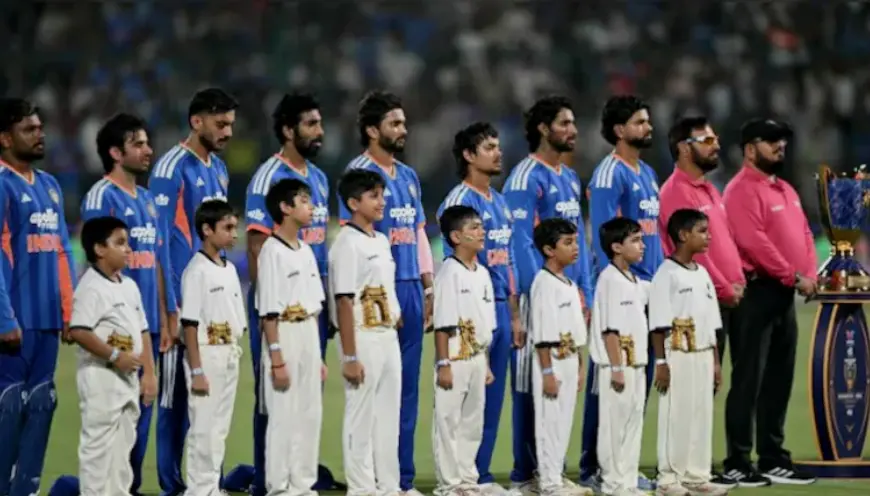
The full version of the national song Vande Mataram was played before the first T20 International between India and Afghanistan at the Arun Jaitley Stadium in Delhi on Sunday. The rendition took place before the start of the match and marked a first at an international sporting event, according to the report.

All six stanzas of Vande Mataram were played before the match. The development drew a reaction from the Congress, which has opposed the playing of all six stanzas and has maintained that only the first two should be used at its party events.

Congress questions the move

Congress leader Udit Raj questioned the reasoning behind playing the complete version of the national song at the India-Afghanistan match.

He asked whether the move would address issues such as employment, the performance of the Indian cricket team, science and technology, exports, rising debt or concerns among Gen Z. He alleged that the move was aimed at creating a particular narrative.

The Congress Working Committee had recently passed a resolution stating that the party would continue to use the first two stanzas of Vande Mataram at its events, referring to the party’s 1937 position on the song.

What happened at the India-Afghanistan match?

The full six-stanza version of Vande Mataram was played at the Arun Jaitley Stadium before India’s first T20I against Afghanistan.

The report also said, citing BCCI sources, that Vande Mataram will subsequently be played before the first match of every home series.

The national song was played before the national anthem. The match was the opening game of India’s three-match T20I series against Afghanistan.

Congress and the two-stanza version

The Congress has recently reiterated its position on the rendition of Vande Mataram. The party’s Working Committee cited its 1937 resolution while deciding to use only the first two stanzas at Congress events.

The first two stanzas were chosen by the Indian National Congress in 1937, while the Constituent Assembly recognised Vande Mataram as the National Song in 1950, according to the report.

The issue has also generated political exchanges between the Congress and other parties in recent weeks over the use of the complete version of the song at public events.

Government guidelines on Vande Mataram

The report noted that the Ministry of Home Affairs issued guidelines on February 6 concerning the rendition of Vande Mataram as part of the 150th-anniversary commemorations of the national song.

The guidelines prescribed an official rendition lasting 3 minutes and 10 seconds and said those present should stand at attention while the song was being played.

They also provided for the complete six-stanza version to be played at specified formal government functions, including certain events attended by the President or Governors.

What did Congress leader Udit Raj say?

Udit Raj questioned the purpose of playing the complete version at the cricket match and linked his criticism to broader concerns such as employment, the economy, technology and issues facing young people. He said the move was intended to create a narrative.

The controversy comes amid a wider political debate over the rendition of Vande Mataram and whether the complete six-stanza version should be used at public and political events.

India News

China reduces PLA deployment along LAC, says Defence Ministry report

The Defence Ministry has reported a significant reduction in Chinese PLA deployment along the northern borders in 2025, while saying Indian Army deployment along the LAC remains robust and prepared for contingencies.
Published

on

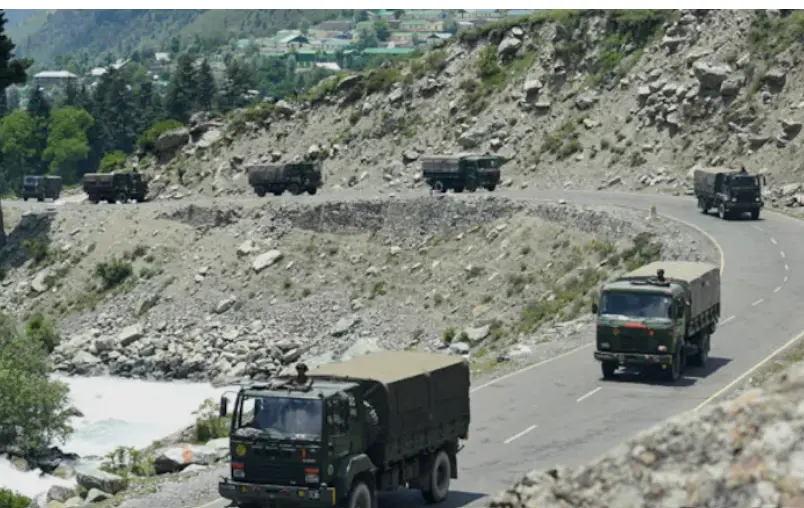
The Defence Ministry has reported a significant reduction in Chinese deployment along the Line of Actual Control (LAC) in 2025, while stating that the Indian Army continues to maintain a robust deployment along the northern borders.

The assessment was included in the Defence Ministry’s annual report for 2025-26, which also highlighted continued political, diplomatic and military engagement between India and China.

Chinese deployment along LAC reduced in 2025

According to the annual report, the People’s Liberation Army (PLA) witnessed a significant reduction in its deployment opposite India’s northern borders during 2025.

The report said the PLA had 10 Combined Arms Brigade-size forces each deployed along the LAC and in traditional training areas.

A brigade typically consists of around 3,000 soldiers along with supporting units. The Defence Ministry described the Indian Army’s deployment across sectors of the LAC as robust, well-positioned and prepared to deal with any emerging contingency.

Combined Arms Brigades bring together different military capabilities, including infantry, armour, artillery and air defence, allowing the formation to operate as a self-contained combat unit.

India-China engagement continued

The Defence Ministry also pointed to continued engagement between India and China during 2025.

The report said the 33rd and 34th rounds of the Working Mechanism for Consultation and Coordination (WMCC) were held in March and July 2025 respectively.

Special Representatives’ talks on the India-China boundary question also resumed, with rounds held in December 2024 and August 2025.

The report said these political, diplomatic and military interactions contributed to positive developments and greater stability along the northern borders.

Military-level talks also held

Military engagement between the two countries continued during the year.

The 23rd Corps Commander Level Meet was held in Eastern Ladakh on October 25 and 26, 2025. The Defence Ministry said Border Personnel Meetings with the PLA also continued across sectors in what it described as a cordial environment aimed at resolving issues of concern.

The report also noted that the positive developments in bilateral relations were reinforced by Prime Minister Narendra Modi’s visit to China for the Shanghai Cooperation Organisation (SCO) Summit in Tianjin in August 2025.

What does the Defence Ministry report say about the LAC?

The report says that Chinese PLA deployment along the northern borders saw a significant reduction in 2025. At the same time, it says the Indian Army’s deployment along the LAC remains robust and prepared for emerging contingencies.

The assessment comes amid continued military and diplomatic engagement between India and China following the disengagement process in eastern Ladakh.

Jammu and Kashmir security situation

The annual report also discussed the security situation in Jammu and Kashmir.

It said the situation remained firmly under control and pointed to lower levels of violence, scaled-down protests and zero incidents of stone-pelting during the period covered by the assessment.

The report said the situation in Jammu and Kashmir and along the Line of Control had changed significantly during Operation Sindoor. It added that the situation stabilised to a large extent after talks between the Directors General of Military Operations of India and Pakistan on May 10 and 12, 2025, while noting that unpredictability remained.

What is the significance of the reduced Chinese deployment?

The Defence Ministry’s assessment indicates a reduction in PLA deployment along India’s northern borders compared with the earlier deployment posture. However, the report simultaneously stresses that the Indian Army remains prepared for emerging contingencies along the LAC.

The development comes alongside continued India-China diplomatic and military-level communication aimed at maintaining stability along the disputed border.

Continue Reading

India News

Opposition questions BRICS outcomes, Congress targets Delhi summit menu

Opposition parties criticised aspects of the BRICS Summit in Delhi, with questions raised over its outcomes and the vegetarian menu.
Published

on

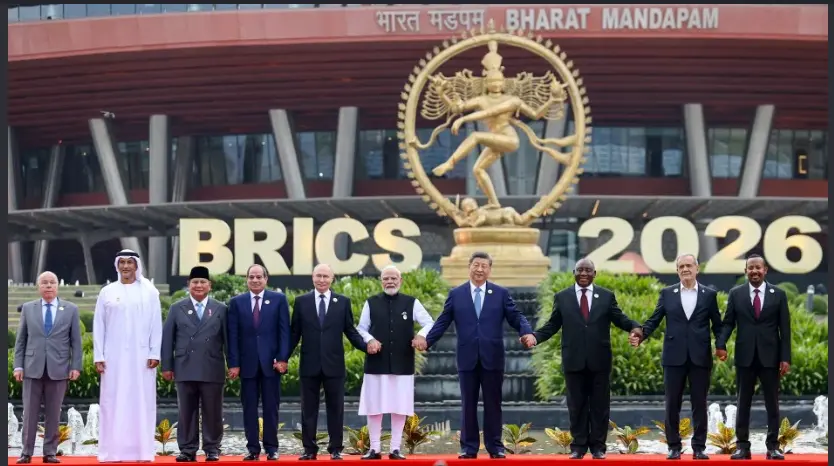
The BRICS Summit in New Delhi has drawn criticism from Opposition parties, with the Samajwadi Party questioning what the meeting achieved and Congress targeting the all-vegetarian menu served during the event.

The criticism came after the 11-member grouping adopted the New Delhi Declaration 2026, which expressed concern over the escalation of conflicts in the Middle East and called for restraint, dialogue and diplomacy.

Samajwadi Party questions BRICS outcomes

Samajwadi Party MP Ram Gopal Yadav questioned the outcome of the BRICS Summit, saying that nothing significant had emerged from the meeting.

Yadav said more could have been done to address the wars affecting the world, including the Russia-Ukraine conflict and the conflict involving Iran. He said these wars were affecting economies globally.

His comments came after BRICS countries adopted the New Delhi Declaration 2026. The declaration expressed serious concern over the escalation in the Middle East and called for maximum restraint, dialogue and diplomacy.

It also called for the protection of civilians and civilian infrastructure and stressed the importance of maintaining global trade, supply chains and energy flows.

Congress criticises all-vegetarian menu

Congress also criticised the food arrangements at the BRICS Summit, particularly the decision to serve an all-vegetarian menu to world leaders attending the event.

Congress leader Pawan Khera accused the BJP of imposing its dietary preferences on international dignitaries. The remarks added a political dimension to the menu served during the summit.

The BJP responded by accusing Congress of trivialising a major diplomatic event by focusing on the food instead of the summit’s policy discussions and resolutions.

Congress seeks details of Modi-Xi talks

Congress also demanded that the government make public details of the talks between Prime Minister Narendra Modi and Chinese President Xi Jinping, who met on the sidelines of the BRICS Summit.

The demand came amid wider political reactions to the summit and its diplomatic engagements.

BRICS Summit and New Delhi Declaration

The BRICS Summit was held in New Delhi, with leaders and representatives of member countries taking part in discussions on global and regional issues.

The summit concluded with the adoption of the New Delhi Declaration 2026. The document addressed the escalation of conflicts in the Middle East and stressed dialogue, diplomacy and restraint.

The summit also saw diplomatic engagements on the sidelines. Iranian President Masoud Pezeshkian and Abu Dhabi Crown Prince Sheikh Khaled bin Mohamed bin Zayed Al Nahyan held a one-on-one meeting in New Delhi.

While the government highlighted the summit’s diplomatic significance, Opposition parties raised questions about its outcomes and criticised aspects of the arrangements surrounding the event.

Continue Reading

India News

UN backs PM Modi’s push for urgent UNSC reform

The UN has backed PM Modi’s call for urgent Security Council reform, saying its current structure no longer reflects 21st-century realities.

Published

on

The United Nations has backed Prime Minister Narendra Modi’s call for urgent reform of the UN Security Council, with a spokesperson for UN Secretary-General António Guterres saying the Council’s existing structure no longer reflects the realities of the 21st century.

UN Secretary-General spokesperson Stéphane Dujarric was responding to PM Modi’s remarks at the 18th BRICS Summit in New Delhi, where the Prime Minister said reform of the Security Council “can no longer be delayed”.

Dujarric said there is a fundamental need to reform the Security Council as well as other international institutions.

He pointed to the Council’s current composition of five permanent members and said it does not adequately represent the world as it exists today. He argued that international institutions need to adapt to the realities of 2026 rather than continue reflecting the circumstances of 1945.

Modi calls for time-bound UNSC reform

Addressing the BRICS session on inclusive global governance and strengthening multilateralism, PM Modi criticised the concentration of power and decision-making in the existing global governance system.

He said countries of the Global South are often at the forefront of global crises but have limited influence over decisions that affect them.

Modi proposed that BRICS countries prepare 10 proposals for global governance reforms, which could subsequently form a BRICS Reform Roadmap at the next summit.

The roadmap, he said, should focus on three broad areas — representation, responsiveness and rule-making.

On representation, Modi specifically called for reform of the UN Security Council, saying the process should be linked to a fixed timeframe and clear outcomes.

BRICS backs greater representation

The New Delhi Declaration adopted at the 18th BRICS Summit also reaffirmed the grouping’s support for reform of global governance institutions.

BRICS called for a more representative and equitable international system and stressed the need for greater participation of developing countries in global decision-making.

On Security Council reform, the grouping backed comprehensive changes aimed at making the body more democratic, representative, effective and efficient, with greater representation for developing countries.

The declaration also said Security Council reform should strengthen the voice of the Global South.

China and Russia, the two permanent members of the Security Council within BRICS, reiterated their support for the aspirations of India and Brazil to play a greater role in the UN, including the Security Council.

UN highlights India’s role

Dujarric also said India has an important role to play in addressing conflicts and helping parties communicate.

He said Guterres and PM Modi discussed conflicts including those in the Middle East and Ukraine during their meeting.

According to Dujarric, the UN Secretary-General believes India can act as a bridge builder and contribute to efforts aimed at helping conflicting sides communicate and reach peaceful settlements.

Dujarric also congratulated Modi on India’s BRICS presidency and said the adoption of a joint declaration was a credit to India’s leadership of the grouping.

India is hosting the 18th BRICS Summit in New Delhi on September 12-13. The summit is being held under India’s chairship with the theme “Building for Resilience, Innovation, Cooperation and Sustainability”.

Continue Reading

Trending

© Copyright 2022 APNLIVE.com