English हिन्दी
Connect with us

India News

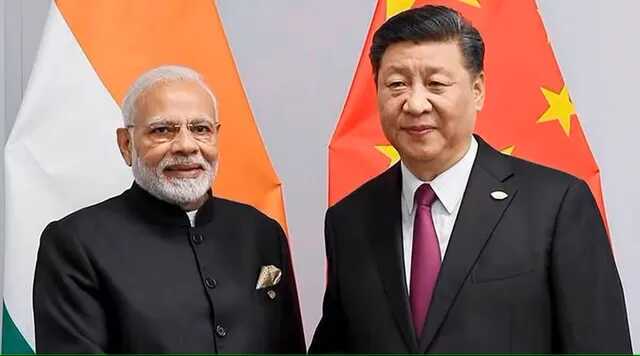
Modi-Xi meeting draws global attention, China says India should be partner

Chinese Foreign Minister Wang Yi said the Modi-Xi meeting at the BRICS summit reached a consensus on partnership, border peace and wider cooperation.

Published

on

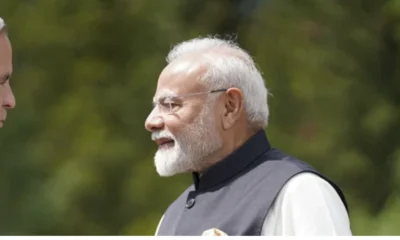
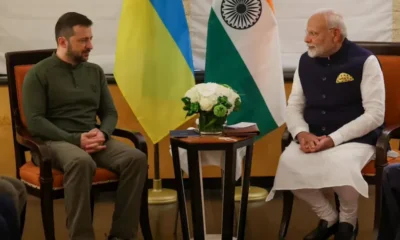
Chinese Foreign Minister Wang Yi has said Prime Minister Narendra Modi and Chinese President Xi Jinping reached a key consensus during their meeting on the sidelines of the 18th BRICS Summit in New Delhi, with both sides viewing India and China as partners rather than rivals.

The meeting between Modi and Xi took place on September 12 during Xi’s two-day visit to New Delhi for the BRICS summit. According to Wang, the two leaders held a candid and in-depth discussion on strategic, long-term and broader issues concerning India-China relations.

India-China partnership highlighted

Wang said the “most important consensus” reached by the two leaders was that China and India should be partners.

According to the Chinese foreign minister, Xi said the two countries could draw on each other’s strengths, support one another and pursue common development.

Wang also said the Modi-Xi meeting attracted widespread international attention.

He described the recent improvement in China-India relations as a shift from a “restart” towards a “renewed elevation”, while saying that cooperation between the two countries has continued to expand.

Focus on border peace

The two countries agreed to jointly maintain peace and tranquility in their border areas, Wang said.

He added that both sides pledged to strengthen political mutual trust, appropriately manage differences and contradictions, and maintain peace along the border.

During his meeting with Modi, Xi called for mutual respect and understanding to help overcome disruptions in bilateral ties. He also advocated progress on India-China relations and border issues, with the two tracks reinforcing each other.

Wang said Modi responded positively and reaffirmed that India approaches its relationship with China from a strategic and long-term perspective.

Modi says India ready to be China’s partner

According to Wang’s account of the meeting, PM Modi said India was ready to be a partner rather than an adversary to China.

Modi also viewed the development of the two countries as an opportunity rather than a challenge, Wang said.

He added that India remains committed to high-level exchanges with China, stronger strategic communication and broader people-to-people ties based on mutual respect and trust.

Cooperation in BRICS and other forums

The two leaders also agreed to support each other’s BRICS chairmanship, according to Wang.

They discussed stronger coordination through multilateral platforms, including the United Nations, the Shanghai Cooperation Organisation and the G20.

The two sides also agreed to expand cooperation in areas including cultural and people-to-people exchanges and direct air connectivity, Wang said.

Wang said China and India should deepen mutually beneficial cooperation and contribute to cooperation across the Global South.

China calls for implementation of consensus

Chinese Foreign Ministry spokesman Guo Jiakun said China would work with India to implement the understandings reached by Modi and Xi.

Guo said Beijing would seek to expand the areas of cooperation, deepen people-to-people exchanges and strengthen coordination in multilateral forums.

He also said China would continue efforts to improve bilateral ties and support each other’s development, with the aim of contributing to peace and prosperity in the region and beyond.

PM Modi and Xi Jinping reached a key consensus that India and China should be partners, not rivals, Chinese Foreign Minister Wang Yi said after their BRICS meeting.

The two sides also discussed border peace, BRICS cooperation and stronger bilateral ties.

India News

Sonia Gandhi explains why she decided to write memoir 

Sonia Gandhi said she wrote her memoir, Belonging: A Journey of Love, partly to address what she described as unreal and hurtful stories about her family and share her own perspective.

Published

on

Sonia Gandhi

Congress Parliamentary Party chairperson Sonia Gandhi has said that the stories circulated about her family, many of which she described as unreal and hurtful, were among the reasons she decided to write her memoir, Belonging: A Journey of Love.

Speaking at the official launch of the book in New Delhi on Monday, November 16, Gandhi said she wanted to share her feelings and offer readers her own understanding of her family, including her mother-in-law, former Prime Minister Indira Gandhi, her husband Rajiv Gandhi, and her children Rahul and Priyanka Gandhi.

She said that several accounts written about her family did not reflect the people she knew personally.

“One reason I chose to write the book was because so much has been said about my family, mother-in-law, husband, son, daughter, and myself; and most of it is unreal,” she said.

Gandhi added that she hoped readers would be willing to listen to her account of the family’s experiences.

Sonia Gandhi explains the meaning behind ‘Belonging’

Explaining the title of her memoir, Gandhi spoke about the experience of being an outsider and the challenges of finding acceptance in a different social and cultural environment.

She said the idea of belonging reflected her own efforts to feel accepted after moving from Italy to India following her marriage to Rajiv Gandhi.

“When you are an outsider, you have this feeling of not being like them, and you have this feeling of always being watched, and not doing it right,” she said while explaining the title.

Drawing a parallel with the experiences of Indian women after marriage, Gandhi said many women also face difficulties adjusting to the customs and expectations of their husbands’ families.

She observed that moving into a different household often requires women to make considerable adjustments, even when they come from a similar cultural background.

Memoir received strong response from readers

Gandhi also spoke about the reception to her book, saying she was overwhelmed by the response from readers.

Belonging: A Journey of Love was released on November 10. More than 200,000 copies were sold in less than a week, making it one of the fastest-selling debut works and memoirs.

She said that while some criticism of the book had been unpleasant, other responses were genuine.

The memoir was officially launched in New Delhi on Monday in the presence of Rahul Gandhi, Priyanka Gandhi Vadra, Congress president Mallikarjun Kharge and several other political leaders.

Among those attending the event were Jharkhand Chief Minister Hemant Soren, Jammu and Kashmir Chief Minister Omar Abdullah, Karnataka Deputy Chief Minister DK Shivakumar, Tamil Nadu Chief Minister Vijay and Samajwadi Party chief Akhilesh Yadav.

Sonia Gandhi recalls her relationship with Rajiv Gandhi

During the interaction, Gandhi also spoke about her relationship with former Prime Minister Rajiv Gandhi, describing their romance as magical.

She recalled that the two first met in Cambridge through a mutual friend.

Gandhi also shared that her father had been strict about her relationship and had even given her a return ticket in case the marriage did not work out.

Recalling that moment, she said she never returned at that time.

Continue Reading

India News

INDIA bloc seeks SC nod to ask election commission 48 questions on SIR

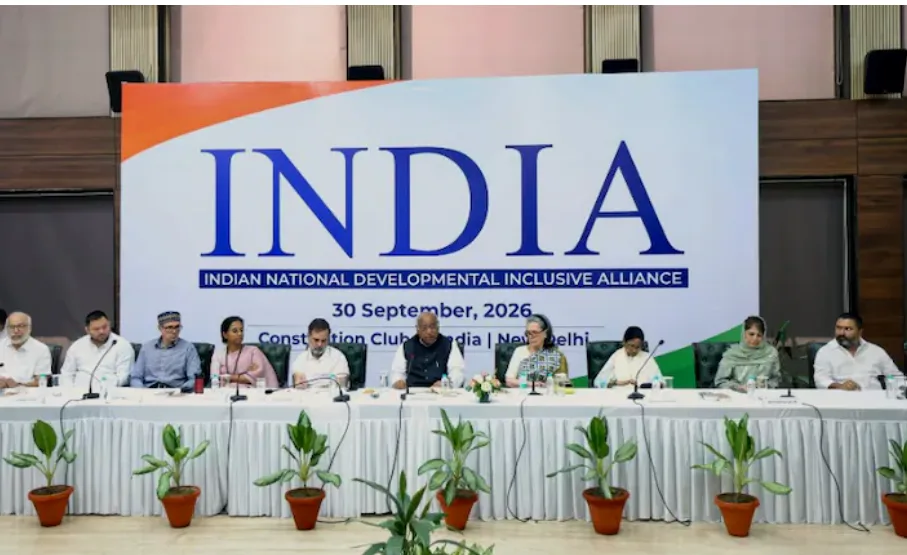
Rahul Gandhi and other INDIA bloc leaders have approached the Supreme Court seeking permission to put 48 questions to the Election Commission over the nationwide Special Intensive Revision of electoral rolls.
Published

on

The Opposition INDIA bloc has approached the Supreme Court seeking permission to formally question the Election Commission of India (ECI) over its decision to conduct the nationwide Special Intensive Revision (SIR) of electoral rolls.

In an application filed before the top court, Congress leader Rahul Gandhi and other Opposition leaders have submitted a list of 48 questions seeking explanations about the decision-making process behind the exercise, alleged irregularities in voter registration and the functioning of the poll body’s electoral databases.

The petition seeks individual affidavits from Chief Election Commissioner Gyanesh Kumar, the two Election Commissioners, Sukhbir Singh Sandhu and Vivek Joshi, and the Election Commission’s Director General (IT).

The Opposition leaders have also sought clarification on whether decisions concerning SIR were taken collectively by the three-member Election Commission or whether certain decisions were made without the knowledge or approval of the other commissioners.

What are the 48 questions about?

The questions submitted by the INDIA bloc cover several aspects of the voter list revision exercise, including the authority behind the nationwide SIR, internal disagreements among Election Commissioners and changes to the online voter registration process.

One of the key questions seeks to establish who decided to conduct the nationwide SIR, when the decision was taken, and whether the approval of all three Election Commissioners was recorded.

The petitioners have also sought details of instances in which Election Commissioners Sukhbir Singh Sandhu and Vivek Joshi allegedly recorded objections or disagreements concerning SIR, ECINET, Form 6 and appeals related to electoral roll inclusion in West Bengal.

They have further questioned whether decisions linked to the revision exercise were unanimous or taken through majority voting, and whether any dissenting views were recorded before the relevant orders were issued.

Another set of questions concerns the authorisation of specific orders issued in July 2026, including the July 28 office order and the joint direction issued by two Election Commissioners on July 30.

Opposition raises questions over ECINET and Form 6

The INDIA bloc’s application also seeks information about the Election Commission’s digital systems, particularly ECINET and ERONET, which are connected to electoral roll management.

The petitioners want details about who authorised the centralisation of these systems and who has the authority to add, delete or restore entries in voter databases.

They have also sought information about the access available to officials, vendors and contractors, along with details of whether records of changes made to electoral rolls have been preserved.

Questions have also been raised about Form 6, which is used for registering new voters.

The petitioners want to know who authorised the incorporation of an additional declaration into the online Form 6 process, when it was introduced and whether the Election Commission formally approved the change.

They have also sought details of applications that were rejected, kept pending or not processed because applicants did not provide the additional declaration or electoral mapping details.

Questions over voter deletions and objections

Another important part of the application concerns the deletion of names from electoral rolls during SIR.

The petitioners have sought state-wise and gender-wise details of electors excluded between the pre-SIR, draft and final electoral rolls, along with the reasons for their exclusion.

They have also questioned the objections filed through Form 7 during the revision exercise, including instances of allegedly excessive or false objections and the action taken under Section 31 of the Representation of the People Act, 1950.

The application further seeks information about corrective measures introduced after the petitions were filed, particularly additional opportunities provided to voters marked as absent, shifted, dead or duplicate.

The Opposition has also asked whether electronic communications, including WhatsApp messages and emails, were used to obtain approvals from Election Commissioners and whether such communications have been preserved.

Election Commission’s stand and Supreme Court hearing

The latest application comes amid an ongoing legal dispute over the SIR exercise and allegations of irregularities in the preparation of electoral rolls.

In its counter-affidavit before the Supreme Court, the Election Commission maintained that key decisions concerning SIR were taken unanimously by its three members.

The poll body has also defended its position on Form 6, maintaining that the statutory form used for voter registration was not amended.

The petitioners, however, have argued that the Election Commission’s response does not provide the specific dates, file numbers, minutes and records needed to establish how important decisions were approved.

The controversy has also intensified following reports that Election Commissioners Sukhbir Singh Sandhu and Vivek Joshi had recorded objections to certain decisions concerning SIR.

The Supreme Court is scheduled to hear the petitions on November 17.

Continue Reading

India News

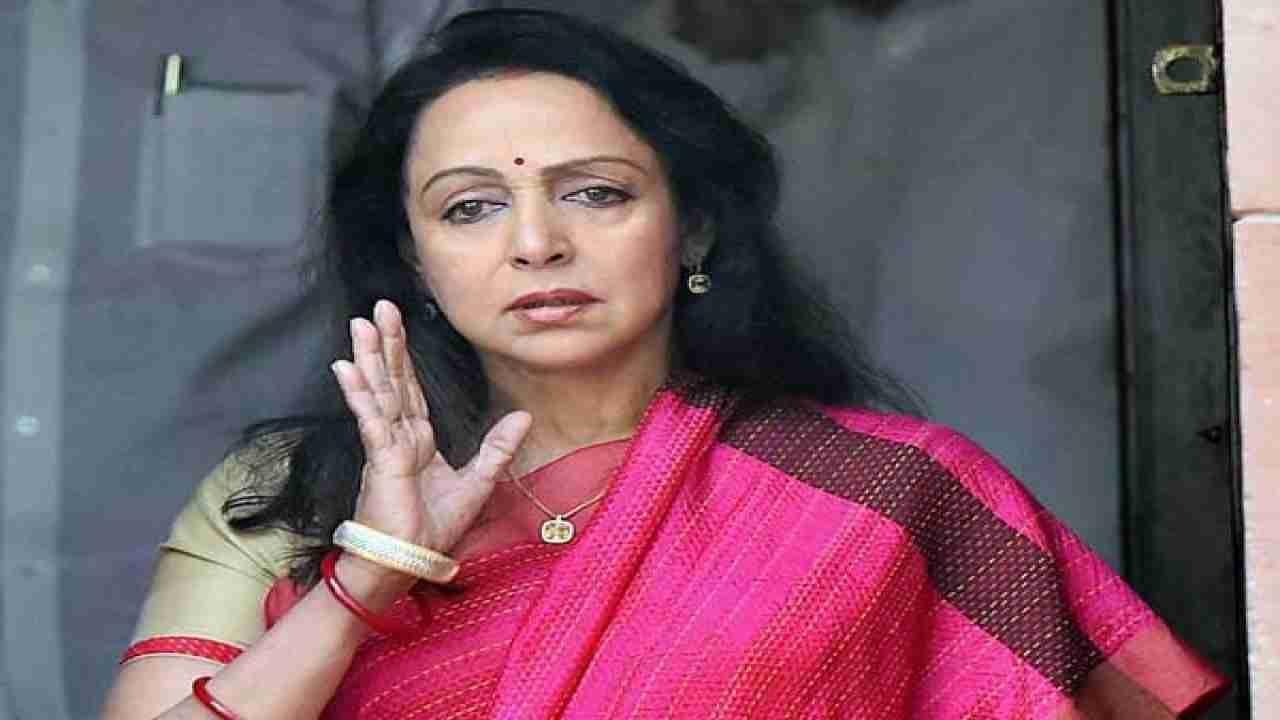
Hema Malini takes swipe at Opposition over vote theft claims

BJP MP Hema Malini criticised Opposition parties over allegations of vote theft and backed the BJP’s record during a strategy meeting in Mathura ahead of the 2027 UP Assembly elections.
Published

on

BJP MP Hema Malini

BJP MP Hema Malini has criticised Opposition parties over allegations of vote theft, saying they begin questioning the electoral process when they do not receive enough votes.

Speaking during the BJP’s two-day strategy meeting in Mathura, Ms Malini said the BJP was proud of its leadership and its record of delivering on its promises. She also expressed her support for Prime Minister Narendra Modi and Uttar Pradesh Chief Minister Yogi Adityanath. 

Hema Malini on ‘vote theft’ allegations

Responding to the Opposition’s allegations, Hema Malini said parties start claiming that votes were stolen when they fail to get the votes they expected.

Her remarks came as BJP leaders from across Uttar Pradesh gathered in Mathura to discuss the party’s electoral strategy ahead of the 2027 Assembly elections. Around 50 leaders were part of the meeting, which is focused on preparing a roadmap for the upcoming polls.

“We have to win with a big margin,” Ms Malini said, describing the objective of the meeting.

BJP’s UP election preparations

Hema Malini also defended the record of the Yogi Adityanath government, particularly on investment and industrial development in Uttar Pradesh.

She said the state had undergone a significant transformation and that investors who were previously reluctant to come to Uttar Pradesh were now showing greater interest.

The BJP’s Mathura meeting comes as the party begins preparations for the 2027 Uttar Pradesh Assembly election. Discussions are expected to cover the electoral roadmap, governance, development, law and order and the party’s response to the Opposition’s political narrative.

Hema Malini on Mathura temple question

During the interaction, Hema Malini was also asked about the political discussion around the possibility of another Shri Krishna temple in Mathura, following the Ram Temple in Ayodhya and developments in Kashi.

She highlighted Mathura’s association with Lord Krishna and expressed confidence that things would move in a positive direction with his blessings.

She also welcomed Samajwadi Party chief Akhilesh Yadav’s proposed visit to Ayodhya. On the Ram Temple, she credited Prime Minister Narendra Modi and pointed to the large number of devotees visiting Ayodhya after its construction.

On Sonia Gandhi’s memoir

Hema Malini was also asked whether she had read former Congress president Sonia Gandhi’s memoir. She said she had not read it yet but intended to do so.

She described Sonia Gandhi as a good friend and said she was looking forward to reading the book.

Continue Reading

Trending

© Copyright 2022 APNLIVE.com