English हिन्दी
Connect with us

India News

PM Modi courts investors with India’s $30 billion chipmaking push

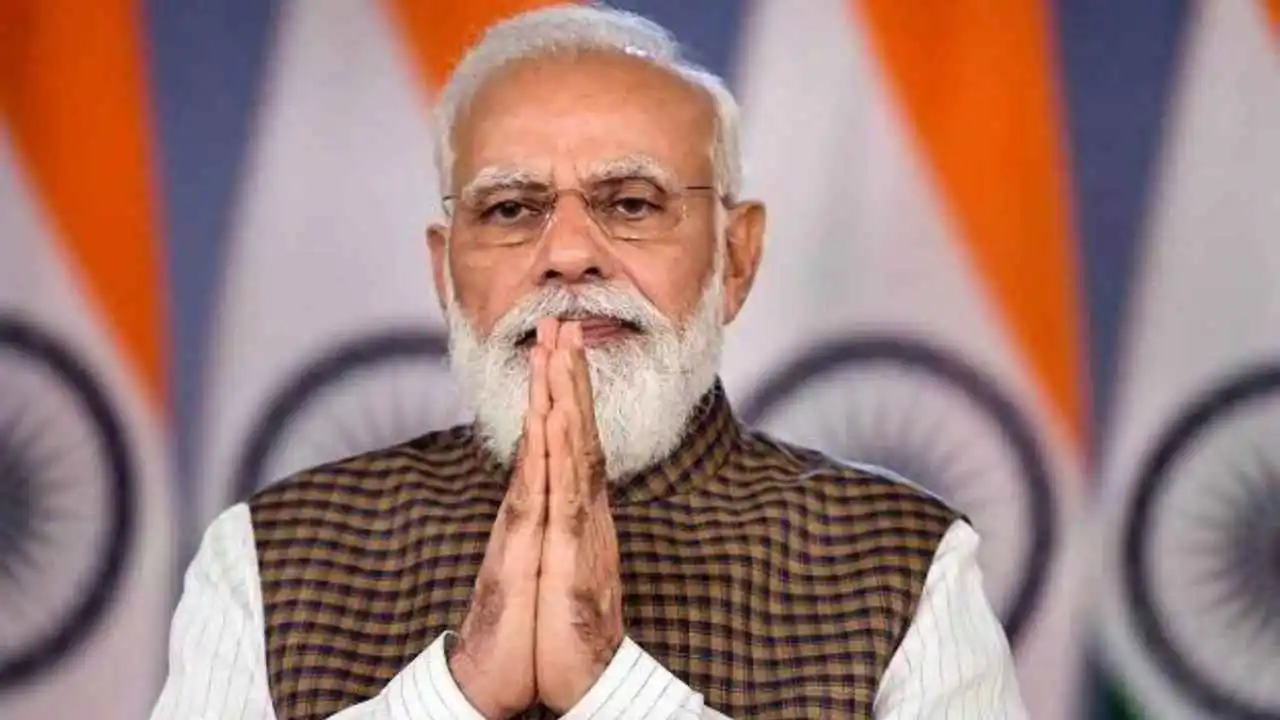
PM Modi is pitching India’s semiconductor ambitions to global investors at Semicon 2026, as the country expands efforts to build a domestic chipmaking ecosystem.

Published

on

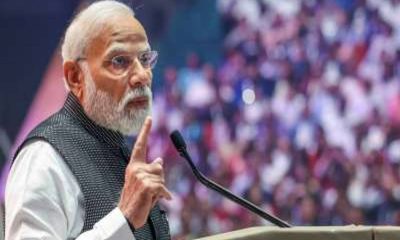
Prime Minister Narendra Modi is set to use Semicon 2026 in New Delhi to showcase India’s growing semiconductor and electronics industry and attract global investment into the sector.

The three-day event brings together semiconductor companies, potential partners, customers, equipment makers and parts suppliers as India seeks to establish itself as a player in the global chipmaking industry.

More than 600 exhibitors, over 150 speakers and 300 global companies are expected to participate at the event, which is being held across 15,000 square metres at a convention centre in New Delhi. The programme also includes startup showcases and a student hackathon.

India’s semiconductor investment push

India has recently committed an additional Rs 1.9 trillion, or about $19.8 billion, in subsidies to strengthen domestic chip and electronics production. The latest allocation comes after an initial $10 billion semiconductor fund launched in 2020-21.

The earlier incentives helped expand electronics manufacturing in India, including Apple’s iPhone production. According to the report, Apple now manufactures 25% of its flagship device in India.

India is seeking to replicate that manufacturing momentum in semiconductors by developing capabilities across the wider supply chain.

Tata, Murugappa and Micron expand chip operations

Some of India’s early semiconductor projects are beginning to move forward.

Tata Group and Murugappa Group have started packaging and assembling chips, while US-based memory chipmaker Micron Technology has also commenced production.

Tata is additionally building a semiconductor fabrication plant in Gujarat, which is expected to become operational in early 2028.

India seeks bigger role in global chip industry

India’s semiconductor programme is part of a wider effort to expand manufacturing and move into higher-value industries.

The government is supporting startups developing semiconductor products and providing assistance for chipmaking equipment, fabrication plants and assembly facilities.

The push comes as countries including Taiwan, South Korea, the US and Malaysia continue to invest heavily in semiconductor manufacturing amid growing demand for computing resources and artificial intelligence applications.

India’s domestic industry remains at an early stage compared with established chipmaking centres. The country initially focused on less sophisticated legacy semiconductors used in electronics and power systems, while seeking to develop capabilities in advanced chips and packaging.

India News

Rs 500 crore notice to Aaditya Thackeray, Anil Deshmukh in Disha Salian case

Satish Salian has issued a Rs 500 crore legal notice to Aaditya Thackeray and Anil Deshmukh in connection with the Disha Salian death case.
Published

on

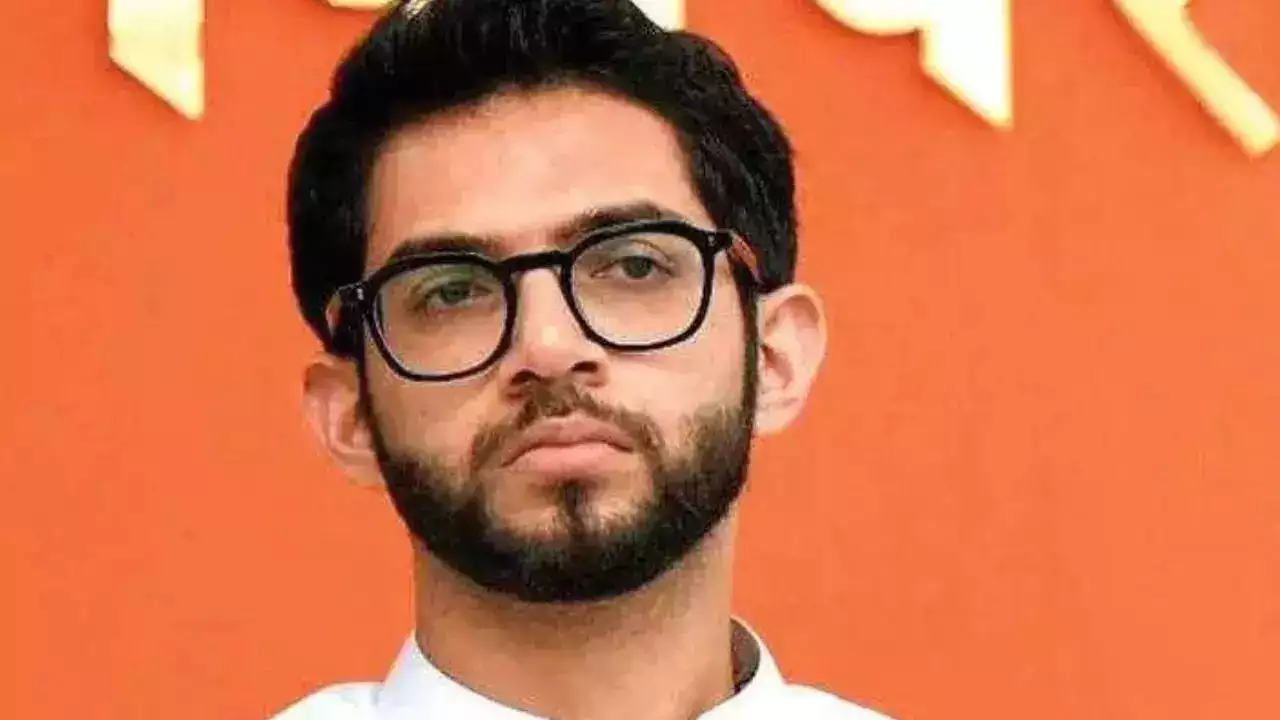
Aaditya Thackeray

Satish Salian, father of Disha Salian, has sought Rs 500 crore in damages from Shiv Sena (UBT) leader Aaditya Thackeray and NCP (SP) leader and former Maharashtra Home Minister Anil Deshmukh in connection with his daughter’s death case.

The legal notice alleges that the two leaders attempted to portray Satish Salian’s pursuit of justice as politically motivated. It seeks damages over what it describes as defamatory and false claims concerning his efforts to seek an investigation into his daughter’s death.

What happened in the Disha Salian case

Disha Salian, the former manager of actor Sushant Singh Rajput, died on June 8, 2020, after falling from a high-rise residential building in Mumbai’s Malad area. Police initially treated the incident as an accidental death and registered an Accidental Death Report.

Sushant Singh Rajput died six days later.

Satish Salian later approached the Bombay High Court seeking registration of an FIR and a fresh investigation. His petition included allegations involving several people, including Aaditya Thackeray, Dino Morea and Sooraj Pancholi.

Six years after Disha Salian’s death, the Central Bureau of Investigation has taken over the probe.

What the Rs 500 crore notice alleges

According to the legal notice, Aaditya Thackeray questioned Satish Salian’s motives and allegedly attempted to portray his pursuit of justice as politically motivated and intended to damage his reputation.

The notice also alleges that Thackeray falsely represented that the CBI had already investigated the Disha Salian case and given him a clean chit.

It further cites a statement allegedly made by Anil Deshmukh on March 23, 2025, describing the Disha Salian case as a conspiracy to defame Aaditya Thackeray.

Satish Salian has described these claims as false and defamatory in the notice and has sought Rs 500 crore in damages.

Public apology demanded

Apart from the monetary damages, Satish Salian has demanded an unconditional written and public apology from Aaditya Thackeray and Anil Deshmukh.

The notice calls for the apology to be published and broadcast across major print, television and digital media platforms. It also demands that a video apology of at least three minutes be posted on the two leaders’ official social media accounts.

Aaditya Thackeray denies link to Disha Salian

Aaditya Thackeray denied any link to Disha Salian on Wednesday, two days after the CBI named him in its FIR in the case.

He said he had never met or known Disha Salian and described the repeated linking of his name to the case as an attempt at character assassination.

Thackeray also said the official re-investigation should proceed without what he described as political distractions.

The CBI registered the FIR on Monday under sections of law relating to murder and criminal conspiracy, among others. The FIR lists Aaditya Thackeray, actors Dino Morea, Sooraj Pancholi and Rhea Chakraborty, along with doctors and staff associated with the delayed post-mortem, among people whose roles require investigation.

The allegations in the legal notice and FIR remain subject to investigation and do not by themselves establish criminal liability.

Continue Reading

India News

UPI fee may push India back towards cash economy, retailers warn

The Retailers Association of India has warned that the new UPI merchant fee could encourage some small retailers to return to cash transactions.

Published

on

The Retailers Association of India (RAI) has raised concerns over the impact of the new Merchant Discount Rate (MDR) on certain UPI transactions, warning that the additional cost could encourage some small retailers to reconsider digital payments.

The concern comes after the introduction of a 0.4% MDR on select UPI transactions above Rs 2,000, with the charge applicable to merchants rather than consumers. The new framework is scheduled to take effect from October 15.

Retailers warn of shift towards cash

Kumar Rajagopalan, CEO of the Retailers Association of India, said the additional cost could make small merchants reconsider whether to accept UPI or cash for certain transactions. The association has warned that this could risk reversing some of the shift towards digital payments.

The concern is particularly relevant for smaller businesses operating on narrow margins, where even a relatively small transaction cost can add to operating expenses.

What the new UPI MDR means

Under the new framework, a 0.4% merchant discount rate applies to eligible UPI transactions above Rs 2,000, subject to a maximum charge of Rs 300 for the applicable category. The MDR is a merchant-side charge rather than a direct fee imposed on consumers.

The government has also stated that banks have been advised to ensure that merchants do not pass the MDR charge on to customers for UPI payments.

The change has prompted concerns from several industry groups, particularly ahead of the festive shopping season, over its potential impact on merchants and the continued adoption of digital payments.

Continue Reading

India News

Revanth Reddy orders probe into KCR family land holdings

Telangana Chief Minister Revanth Reddy ordered an inquiry into land linked to KCR’s farmhouse and cited alleged family holdings of around 440 acres.

Published

on

Telangana Chief Minister Revanth Reddy on Wednesday ordered an inquiry into land linked to former chief minister K Chandrashekar Rao’s farmhouse during a debate in the state Assembly.

Reddy was speaking during a discussion on the 22-A prohibited properties list when he targeted the opposition Bharat Rashtra Samithi (BRS) and alleged that the party had sought to stall the Assembly session. He said several contentious issues, including alleged government land encroachment, fee reimbursement and drought-related concerns, were expected to come up for discussion.

Revanth Reddy orders inquiry into KCR farmhouse land

Turning his attention to KCR and his extended family, Reddy said the government had identified substantial landholdings associated with members of the former chief minister’s family and their associates.

“I am ordering an inquiry into the lands of KCR’s farmhouse,” Reddy said in the Assembly. He added that if the landholdings were found to be in violation of the law, the government would take possession of the land and distribute eligible land to Dalits.

According to figures cited by Reddy in the Assembly, KCR and his extended family members allegedly hold around 440 acres across nine districts, 24 mandals and 31 villages.

Revanth Reddy targets BRS in Assembly

During his speech, Reddy also accused the BRS of trying to disrupt the Assembly session. He referred to several issues that he said were expected to be discussed, including alleged plundering of government land, fee reimbursement and drought-related matters.

Reddy also spoke about the history of Hyderabad under the Nizam and described the Nizam government as an effective administrator while discussing the region’s historical development.

KCR’s absence from Telangana Assembly

The Monsoon session of the Telangana Assembly began on September 7 and has been marked by disruptions. Twenty-two BRS MLAs were suspended for the remainder of the session.

KCR, who is the BRS chief and Leader of the Opposition, has not attended the current session. According to the report, KCR last appeared in the Assembly in December 2025, with the ruling Congress and Revanth Reddy questioning his absence.

Continue Reading

Trending

© Copyright 2022 APNLIVE.com