
Latest business news
Projects being shelved at unprecedented pace, stalled projects at record high, says CMIE report


The claims of Modi government and the calls for more projects and investments and promotion of ‘self-employment’ instead of providing jobs, seem to have come a cropper, the much touted ‘unprecedented’ rise in India’s Ease of Doing Business (EOB) rank notwithstanding: The number of stalled projects in the country has reached a record level, according to a new report.
Citing a report by Centre for Monitoring Indian Economy (CMIE), Quartz India said, “India Inc is mothballing projects at a record pace.”
In the 12 months ending March 2018, India saw an unprecedented number of projects being shelved by companies, said the report.
In financial year 2017-2018, investments worth Rs7.63 lakh crore ($117.35 billion) were scrapped.
Over 40% (worth Rs3.3 lakh crore) of which were dropped from January-March, the last three months alone, the report said.
 Whereas earlier the projects usually got delayed due to hurdles in getting regulatory approvals, now the reason was subdued economic growth leading to lack of demand, said the Quartz report quoting, chief economist at India Ratings & Research Devendra Kumar Pant.
Most companies were using only 71.8% of their existing capacities, according to a Reserve Bank of India (RBI) survey conducted towards the end of the July-September 2017 quarter. In such a scenario, adding more factories and manufacturing units may not be viable.
“In the power sector, for instance, there is surplus supply. This has affected the distribution companies’ financial position. Similarly, rising input costs and falling demand have taken the wind out of the steel sector. Therefore, companies in the power and steel sector are unlikely to take up any new projects in the coming months,” the report said.
It said that overall, with output and new orders declining, manufacturing activity in March grew at the slowest pace in the last five months, the Nikkei India manufacturing Purchasing Managers’ Index (PMI), compiled by IHS Markit, showed.
Mounting debt and languid demand have also resulted in subdued growth in corporate earnings in the last few years. Things worsened in financial year 2018 due to the lingering effect of demonetisation and the introduction of the goods and services tax.
There was more bad news. Quarterly profit growth for listed Indian firms fell from 16.4% in the January to March quarter last year to a negative 13.9% in the October to December quarter, according to the CMIE data.
Tepid demand and slow sales have, in turn, added to the massive debt pile. At the end of March 2017, India’s corporate debt inched up to a seven-year high, underlining their stress levels.
With investments on hold, there is little generation of employment and demand. The economy is already staring at a job crisis with unemployment rising steadily.

The problem is not new. Exactly a year ago, it was reported that the number of stalled projects had reached the highest level since Narendra Modi assumed office as the prime minister in May 2014.
How was the government taking it? ‘Change the label’ was the recommendation of the Prime Minister’s Office (PMO), to ‘shelved’ or ‘dropped’ or ‘abandoned’ if the promoters have no further intention to start implementation instead of calling it ‘stalled’, said a report in The Indian Express in February this year. The IE report quoted the communique to ministries from the PMO’s Project Monitoring Group (PMG): “Wherever the project proponents have decided not to pursue the projects, the same should be explicitly stated on the (e-suvidha) portal to help Private Economic Databases (PEDs) to appropriately reclassify the project.”
“Continued classification of mere project ideas as ‘implementation stalled’ projects in public domain has been reflecting the investment scenario in poor light even though the promoters themselves have not taken any concrete/firm step towards the project implementation for a variety of reasons,” the report said, quoting the note.
The PMG believed that these projects in reports released by PEDs were “negatively impacting the sentiments about the ongoing investments in the economy and portraying an unduly gloomy scenario of increase in ‘implementation stalled’ projects”.








Latest business news
Xbox announces 3,200 layoffs as Asha Sharma outlines major restructuring plan
Xbox has announced plans to lay off 3,200 employees over the next year while introducing a major restructuring programme that includes management changes, studio restructuring and cost-cutting measures.


India News
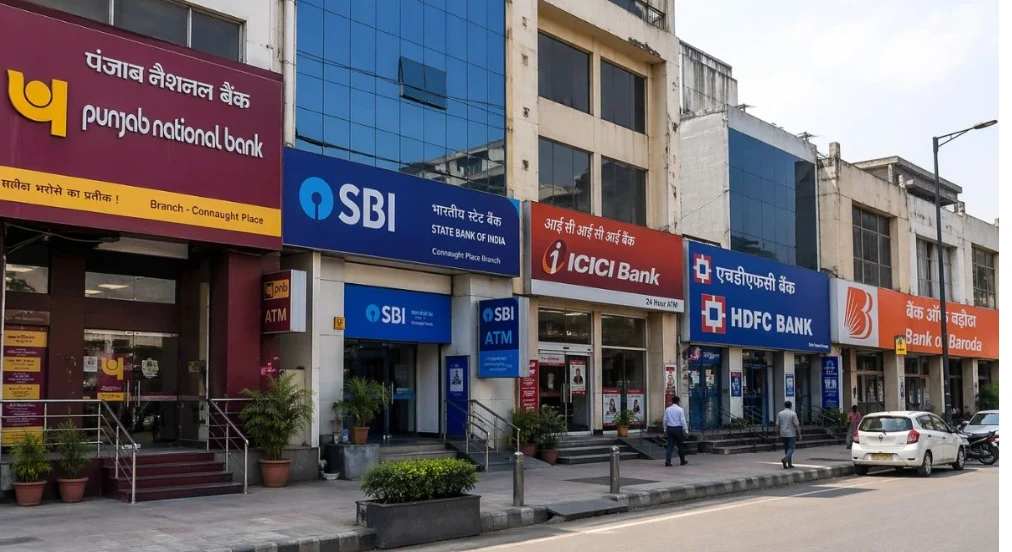
Bank holiday today: Are banks open or closed on June 29? Here’s what RBI calendar says
Banks in Himachal Pradesh and Mizoram will remain closed on June 29, 2026, due to regional holidays, while banking operations will continue normally in most other states.
India News
Union Budget 2026 highlights: Nirmala Sitharaman Raises Capex to Rs 12.2 Lakh Cr, West Bengal Gets Major Allocation
Finance Minister Nirmala Sitharaman is presenting the Union Budget 2026 in Parliament today. Follow this space for live updates, key announcements, and policy insights.


Punjab strike hits public services as 3 lakh employees and roadways workers protest

Two election commissioners complained against senior poll officer, RTI reveals

Om Prakash Mathur sworn in as Keralam Governor

PM Modi to inaugurate Rs 169-crore RBI data centre in Odisha on October 25

Delhi High Court rejects Neha Bora’s plea against peace bond notice

MEA responds after ITBP chief flags ongoing face-offs with China in Arunachal
Delhi High Court rejects Neha Bora’s plea against peace bond notice
PM Modi to inaugurate Rs 169-crore RBI data centre in Odisha on October 25
Om Prakash Mathur sworn in as Keralam Governor
Two election commissioners complained against senior poll officer, RTI reveals

Afghan Men Try To Hang With The Jet Engine Of The Aircraft in Kabul- Afghanistan News – Kabul News
Trending Top 10 News: 10000 Crore Fine on Flipkart, Apple to Launch Unique Feature, Hdfc Bank Job Ad

Trending Top 10 News: Nokia 6310, Apple sales, Bachpan ka Pyar Video Kid, Dainik Bhaskar IT Raid

Trending Top 10 News: Canada bans Indian flights, Rain in Delhi NCR, AIMIM Twitter hacked, Raj Kundra case

Trending Top 10 News: Shein India, Apple New Service, Pocket Oxygen, Oppo Launched New Phone
-
 India News18 hours ago
Punjab strike hits public services as 3 lakh employees and roadways workers protest
-
 India News18 hours ago
Two election commissioners complained against senior poll officer, RTI reveals
-
 India News7 hours ago
Om Prakash Mathur sworn in as Keralam Governor
-
 India News6 hours ago
PM Modi to inaugurate Rs 169-crore RBI data centre in Odisha on October 25
-
 India News5 hours ago
Delhi High Court rejects Neha Bora’s plea against peace bond notice
-
 India News5 hours ago
MEA responds after ITBP chief flags ongoing face-offs with China in Arunachal
