English हिन्दी
Connect with us

Gadgets

Chandrayan-2 moon-landing mission called off due to technical snag

Published

on

Chandrayaan-2

The Chandrayan-2 mission to put a rover on the moon was called off due to a ‘technical snag’ detected just about 56 minutes before launch (T minus 56, or T-56) from Satish Dhawan Space Centre (SHAR) in Sriharikota, announced Indian Space Research Organisation (ISRO) early morning today (Monday, July 15).

The countdown was halted 56 minutes and 24 seconds before the planned lift-off at 2:51 am. The snag was in the cryogenic stage or last stage of the rocket before it separates, reported NDTV, quoting sources. ISRO had announced one hour before launch that the filling of liquid hydrogen fuel had been completed, the report said.

The announcement of the launch being called off came just about four minutes later. It disappointed the large number of spectators and created commotion in the media gallery of the SHAR where journalists from not only different parts of the country but abroad came to cover the most high-profile launch. More importantly, President Ram Nath Kovind had come to Sriharikota to witness the launch.

ISRO tweeted around 3 am: “A technical snag was observed in launch vehicle system at 1 hour before the launch. As a measure of abundant precaution, #Chandrayaan2 launch has been called off for today. Revised launch date will be announced later,” ISRO tweeted around 3 am.

Third postponement

The postponement of the launch of Chandrayan-2, the first after a countdown, is the third time since April 2018 that the complex launch has been delayed due to multiple factors, reported Deccan Herald.

Its launch was first scheduled in April 2018 but was postponed to October 2018. This too did not happen as ISRO found that the vehicle required further tests. The Mission’s Comprehensive Technical Review meeting eventually decided that the launch could be carried out only in the first half of 2019 because a whole lot of changes in the configuration and landing sequence had to be incorporated.

During one of the multiple tests on the Chandrayaan-2 components, two Lander legs suffered minor damage in February this year, showing that its legs were not strong enough to support the weight. ISRO deduced that additional mass due to new configuration could have caused the imbalance.

The anomaly was eventually addressed by a task force set up under Srinivasan RK from the UR Rao Satellite Centre.

After rectifying all anomalies, July 15 was finalised as a suitable launch window, but it had to be called off due to a technical snag.

Signifinace of Chandrayan-2

Had the launch been successful and the lunar craft landed on the moon on its scheduled date of September 6-7, India would have become the fourth country in the world after USSR, US and China to land on the moon.Israel had tried earlier this year but failed.

India has ambitious plans: Prime Minister Narendra Modi has vowed to launch a manned space mission by 2022.

Chandrayaan-2 will follow Chang’e-4, launched by India’s regional rival China, which in January became the first spacecraft to land on the far side of the Moon.

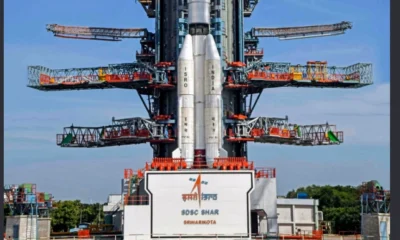
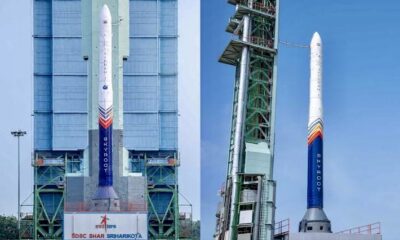
The 3.8-tonne Chandrayaan 2 spacecraft comprising an orbiter, the lander and the rover was to lift off on the 640-tonne GSLV Mark III (nicknamed “Baahubali”), India’s most powerful rocket that’s as high as a 15-storey building.

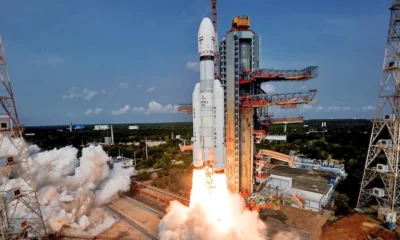
Once it is launched, Chandrayaan 2 has to separate from the rocket and orbit the Earth several times before being slung towards the moon – a3.84 lakh-km journey. The orbiter is to circle the moon for about a year.

When the spacecraft reaches the moon 54 days after lift-off, it will engage a 1.4 4-tonne lander Vikram named after Vikram A Sarabhai, the father of India’s space programme, which will head to the lunar south pole.

Vikram will in turn set the 27-kilogramme rover Pragyan down on a high plain between two craters on the lunar south pole. After touchdown on the moon, the rover is expected to conduct experiments for one Moon day, equal to 14 Earth days, primarily to check if the lunar south pole has primordial water reserves.

Indigenous and costs less than a Hollywood blockbuster

All the equipment involved in the Chandrayaan 2 mission have been designed and manufactured in India. It is the sequel to the successful Chandrayaan 1, which helped confirm the presence of water on the moon in 2009.

India’s mission to the moon will cost less than a Hollywood blockbuster. An analysis published by Sputnik International claimed that the approximate $124-million price tag of the Chandrayaan 2 is less than half the budget of Hollywood blockbuster Avengers Endgame ($356 million). The Indian space agency has a budget that’s 20 times less than NASA, its US counterpart.

ISRO is becoming known worldwide for running effective and inexpensive projects. According to estimates, America spent $ 25 billion on its Apollo missions, total 15 in number, to Moon. The US missions included 6 Moon missions that put Neil Armstrong and other astronauts to the Moon. China spent $8.4 Billion on its entire space programme in a year. Erstwhile USSR which launched an unmanned craft to the Lunar surface in 1966 spent over $20 billion at the current value between 1960s and 70s.

India’s first lunar mission, Chandrayaan-1, in 2008 did not land on the Moon, but orbited it searching for water using radar.

It follows another high-profile but low-cost Indian mission, Mangalyaan, which put a spacecraft in orbit around Mars in 2014 at a fraction of the cost of comparable projects by established space powers like the United States, which often cost billions of dollars.

New Delhi also has ambitions to land a probe on Mars, following the success of the Mangalyaan orbiter.

Lunar exploration has been in focus in recent months with the looming 50th anniversary of the first human landing on the Moon and US President Donald Trump giving NASA a 2024 deadline to return astronauts to its surface.

Gadgets

OnePlus India CEO Robin Liu steps down, shutdown rumours resurface

OnePlus India confirms business continuity after CEO Robin Liu’s resignation sparks shutdown rumours online.

Published

on

The resignation of Robin Liu as India CEO of OnePlus has triggered fresh speculation online about the company’s future, even as the firm has firmly denied any plans to shut down operations.

Liu will step down from his role effective March 31, 2026. His exit comes months after he publicly dismissed similar rumours about the company withdrawing from certain markets.

Google searches spike after leadership exit

Following news of Liu’s departure, search trends for terms like “OnePlus shutdown”, “OnePlus shutting down”, and “OnePlus India shutdown” saw a noticeable surge, indicating rising public concern.

However, OnePlus India clarified that there is no change in its business operations and dismissed the shutdown claims as misinformation.

In a public statement, Liu said the company is “operating as usual” and urged stakeholders to rely on official sources rather than unverified reports. He reiterated that claims about the company shutting down are false.

Company says operations remain unchanged

The company stated that Liu’s decision to step down was due to personal reasons and not linked to any strategic withdrawal or operational challenges in India.

OnePlus further emphasized that its India business continues normally, with no immediate changes expected in its strategy or market presence.

Restructuring within OPPO group

Industry observers suggest Liu’s exit may be part of a broader restructuring within the OPPO group, which owns OnePlus.

The restructuring is believed to focus on streamlining operations, reducing costs, and accelerating product development amid challenges such as rising component costs and supply constraints.

Reports also indicate that OnePlus experienced a decline in shipments in 2025, which may have contributed to internal changes.

Reports hint at global strategy shift

According to a report by 9to5Google, the company may scale back its presence in some global markets, including parts of Europe, as early as April 2026.

At the same time, OnePlus is reportedly planning to strengthen its focus on India and expand further into the mid-range smartphone segment.

Continue Reading

Gadgets

Oppo K14 5G launched in India with 7000mAh battery, starts at Rs 17,999

Oppo has launched the K14 5G in India with a 7000mAh battery, fast charging and durability features, starting at Rs 17,999.

Published

on

oppo K14 5G

Oppo has launched its latest mid-range smartphone, the K14 5G, in India, positioning it as an “endurance powerhouse” with a strong focus on battery life, smooth performance and long-term reliability.

The smartphone starts at Rs 17,999 for the 6GB + 128GB variant, while the 6GB + 256GB and 8GB + 256GB models are priced at Rs 19,999 and Rs 21,999 respectively. It will be available for purchase starting March 20 via Flipkart and the company’s official online store. Buyers can also avail an instant discount of up to Rs 1,000 along with no-cost EMI options for up to three months.

Focus on battery life and endurance

A key highlight of the Oppo K14 5G is its 7000mAh battery, designed to support extended daily usage without frequent charging. The company claims the device can deliver up to 738.8 hours of standby time. It also supports long usage across activities such as voice calls, video streaming, navigation and messaging.

The device comes with 45W fast charging, which can charge the battery from 1 percent to 37 percent in around 30 minutes, with a full charge taking about 92 minutes. Oppo says the battery is engineered to maintain durability for up to five years. Reverse wired charging is also supported for added convenience.

Built for durability and everyday use

The smartphone is designed with durability in mind, featuring SGS 5-star certification and MIL-STD-810H military-grade testing. It has undergone multiple drop tests and transportation shock testing to ensure resistance against accidental falls and rough usage conditions.

The device also carries IP66, IP68 and IP69 ratings, offering protection against dust, water immersion and high-pressure water exposure. Additional features like water-repellent camera coating and glove and splash touch support further enhance usability in different environments.

Display and design

The Oppo K14 5G features a 6.75-inch display with a 120Hz refresh rate and brightness of up to 1125 nits in high brightness mode. It is available in three colour options — Icy Blue, Prism Violet and Prism White — with a matte finish and subtle reflective design elements.

Performance and cooling

Powered by the MediaTek Dimensity 6300 chipset, the smartphone is designed to handle everyday tasks such as browsing, streaming and multitasking efficiently. It runs on ColorOS 15, which includes system optimisation features aimed at maintaining smooth performance over time.

To manage heat during extended usage, the device includes a vapor chamber cooling system with graphite layers for improved thermal management. This helps maintain stable performance during gaming and heavy usage.

Camera and AI features

The smartphone is equipped with a 50MP main camera, supported by a 2MP monochrome sensor, along with an 8MP front camera. It offers AI-powered features such as portrait retouching, AI eraser, AI clarity enhancement and dual-view video recording.

These tools are designed to improve image quality, assist in editing and enhance overall photography experience for users.

Availability and after-sales support

The Oppo K14 5G will be available starting March 20 with launch offers including discounts and EMI options. The company is also offering a 30-day inspection and replacement policy in case of manufacturing defects, supported by its nationwide service network.

Continue Reading

Gadgets

OnePlus Freedom Sale 2026 brings discounts on 15, 15R, 13, Nord 5 and tablets

OnePlus Freedom Sale 2026 begins Jan 16 with discounts on phones, tablets, and audio products across online and offline stores.

Published

on

OnePlus has announced its Freedom Sale, offering discounts on smartphones, tablets, and audio products across online and offline platforms. The deals include the recently launched OnePlus 15 series, Nord lineup, Buds audio devices, and other gadgets.

When and where to shop

The OnePlus Freedom Sale starts on Jan. 16 and will run both online and offline. Shoppers can purchase smartphones through OnePlus.in, OnePlus Experience Stores, Amazon, as well as offline retailers including Croma, Reliance Digital, Vijay Sales, and others. Tablets are available on Flipkart during the sale period.

Discounts on OnePlus smartphones

  • OnePlus 15: Launched at Rs 72,999, buyers can get an instant Rs 4,000 discount, lowering the effective price to Rs 68,999. Additional benefits include six months of no-cost EMI and a bundled OnePlus Nord Buds 3.
  • OnePlus 13: Originally priced at Rs 69,999, the phone receives an Rs 8,000 price drop, plus a bank discount of Rs 4,000, bringing the price down to Rs 57,999.
  • OnePlus 15R: Listed at Rs 47,999, buyers can avail Rs 3,000 off until Jan 26. After the date, the effective price is Rs 45,999.
  • OnePlus 13R: Launched at Rs 42,999, this device gets up to Rs 6,000 price cut and an additional Rs 1,000 bank discount.

Discounts on OnePlus tablets

  • OnePlus Pad 2: Rs 2,000 instant bank discount reduces the price to Rs 34,999.
  • OnePlus Pad 3: Eligible for a Rs 3,000 instant discount, making the price Rs 44,999. Purchases until Jan 26 include a free Stylo 2 stylus.
  • OnePlus Pad Go 2: Rs 1,000 price drop plus Rs 2,000 bank discount, now Rs 23,999.
  • OnePlus Pad Go: Price reduced to Rs 13,999 after Rs 3,000 cut and Rs 1,000 bank discount.
  • OnePlus Pad Lite: Available for Rs 11,999 after a Rs 2,000 price drop and Rs 2,000 bank discount.

Audio devices on offer

  • OnePlus Buds 4: Rs 700 price cut with Rs 300 bank discount, bringing the effective price to Rs 4,999.
  • OnePlus Buds Pro 3: Now Rs 9,999 after Rs 1,000 price drop and Rs 1,000 bank discount. No-cost EMI options are available for both Buds 4 and Buds Pro 3.

Additional discounts are also applicable to the Nord Buds series — including Nord Buds 3, Nord Buds 3 Pro, and Nord Buds 3R — and neckband devices such as Bullets Wireless Z2 ANC and Bullets Wireless Z3.

Continue Reading

Trending

© Copyright 2022 APNLIVE.com