English हिन्दी
Connect with us

India News

Dawood Ibrahim has remarried, a Pak Pathan; Nephew details fugitive don’s family tree

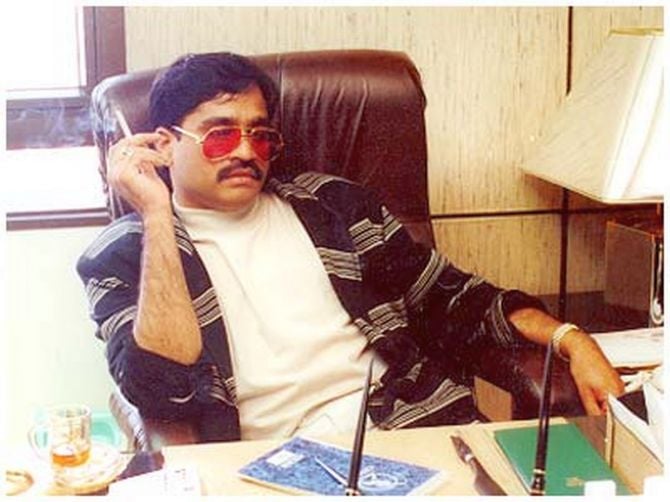
Dawood Ibrahim has relocated to another location in Pakistan’s Karachi city and has taken a Pakistani Pathan woman as his second wife, claimed the fugitive gangster’s nephew Alishah Parkar, according to reports.

Published

on

Dawood Ibrahim

Dawood Ibrahim has relocated to another location in Pakistan’s Karachi city and has taken a Pakistani Pathan woman as his second wife, claimed the fugitive gangster’s nephew Alishah Parkar, according to reports.
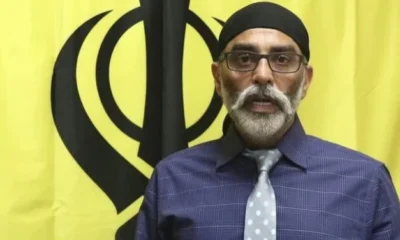
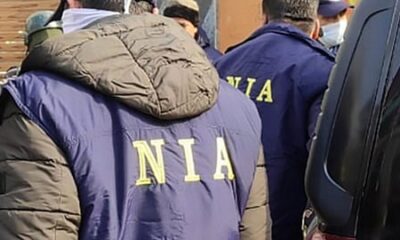
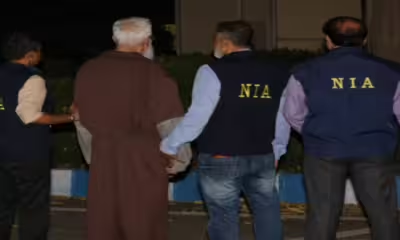
Alishah Parkar, son of Dawood’s sister Haseena Parkar, has made the claims in details he gave out about his infamous uncle’s family tree to the National Investigation Agency (NIA).

Parkar claimed that Dawood is still married to his first wife Maizabin and she gets in touch with people through WhatsApp calls.

NIA has filed a chargesheet against Dawood Ibrahim and his close aides for terror funding leading to several arrests.

According to the report, NIA had viable intel that Dawood Ibrahim was forming a special team to carry out attacks on major leaders and businessmen in India.

Alishah Parkar was called in by the agency in this connection and in his statement, detailed Dawood’s family tree revealing that the notorious underworld don has four brother and four sisters including Parkar’s mother Haseena.

Parkar told NIA that Dawood Ibrahim has taken a second wife, a Pakistani Pathan but was still married to his first wife Maizabin, adding that Dawood was telling people that he has divorced his first wife, which is not true.

He also revealed that Dawood Ibrahim has relocated to Defence Colony area near Rahim Faki located behind Abdullah Ghazi Baba Dargah in Karachi.

Currently, Dawood Ibrahim Kaskar, Haji Anees alias Anees Ibrahim Shaikh and Mumtaz Rahim Faki along with their families live behind Abdullah Ghazi Baba Dargah in Defense Colony, Karachi, Pakistan.

However, according to Parkar, Dawood does not keep in touch with anyone.

He further stated that he met Maizabin in Dubai in July 2022, adding that she frequently calls Parkar’s wife on WhatsApp, especially on festivals and occasions.

Parkar told NIA that Dawood Ibrahim has three daughters and a son from his first wife, Maizabin; Marukh (married to Javed Miandad’s son Junaid), Mehrin and Maziya (unmarried) and a son, Mohsin Nawaz.

Giving details about the gangster’s brothers, Parkar revealed that Sabir Ibrahim Kaskar died during the 1983-84 gang-war in Mumbai. Sabir’s wife’s name is Shenaaz. He has two children. A son named Shiraz and a daughter Shahziya. Shiraz died in 2020 due to COVID-19 in Pakistan, Shahziya lives in Agripada with her husband Mozzam Khan who is an estate agent.

Noora Ibrahim Kaskar died in Pakistan seven or eight years ago in Pakistan. His first wife’s name was Shafika who is also deceased. Noora had a second wife, Reshma. He has a daughter from Shafika named Saba. Sohel and Sarfaraz are living in Pakistan, Parkar said.

Iqbal Kaskar, who is in Thane Jail from the past five years; his wife’s name is Rizwana who lives in Dubai. The couple have five children, girl Hafsa who lives in Dubai, Zara who lives in Spain, Aiman who lives with her mother in Dubai, son Rizwan who is lodged in Arthur Road Jail in Mumbai and another son Aban who is also in Dubai.

Alishah Parkar said that Anees Ibrahim’s wife’s name is Tehsin, who has five children, including three daughters, whose name is Shamim (married to Shahdab Khan from Mumbai and lives in Dubai). The second daughter Yasmin (married to Asgar, who is Pakistani and lives in Karachi), and the third daughter Aana (married to Salik, who is also Pakistani and lives in Karachi) and two sons named Ibrahim (who is married to a Pakistani girl Qurtarulain), and another son Mehran (who is studying in London and unmarried). Anees’s family lives in Pakistan.

“Mustkeen Ibrahim Kaskar’s wife’s name is Seema. He has two daughters. The first daughter’s name is Seher (who married Khalid in Lucknow), and lives in Lucknow. The second daughter, Ammina, (who is unmarried and done LLB, LLM from London), practicing in Dubai. She has two sons named Owais (he is married to Guddu Pathan’s daughter) and Humza (studying) lives in Dubai,” the statement said.

Parkar revealed that Humayun Ibrahim Kaskar died about four-five years ago. His wife’s name is Shahin, he has two daughters, namely Mariya and Samiya (both unmarried), living in Karachi.

Alishah Parkar also gave detailed information about Dawood’s sisters.

The first sister Saida Hassan Miya Waghle and her husband Hassan Miya are both dead, he said. The couple had two daughters; Nazma and Pinky and two sons namely Sajid and Sameer alias Lala.

Alishah’s mother Haseena Ibrahim Parkar and his husband Ibrahim Parkar are both dead. They’ve two sons Danish and Alishah and two daughters Kaushiya and Umera.

He said that another sister Zaitun Hamid Antule married Hamid Antule, who was accused by the CBI in a case and owns Manikchand agency in Dubai. Zaitun has two sons; Sabir and Hussain and daughter Saida. All of them live in Dubai.

Farzana Saud Tungekar married with Saud Tungekar. They have two sons, named Junaid and Mohammad Ali, and two daughters, one named Sahila and the other daughter named Erum.

Mumtaz Rahim Faki is married to Rahim Faki. Rahim Faki is wanted in JJ shootout case. She has two sons Aniq and Sami, and a daughter Zainab.

India News

PM Modi takes aim at critics with Dimagi Naxal remark at SRCC centenary address

PM Modi revived his dimagi Naxal remark at SRCC’s centenary celebrations and spoke about India’s development journey.

Published

on

PM Modi

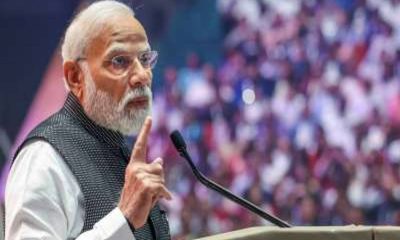
Prime Minister Narendra Modi revived his ‘dimagi Naxal’ remark while addressing the centenary celebrations of Shri Ram College of Commerce (SRCC) in Delhi on Saturday, using the term to criticise his opponents.

Speaking to students at the Delhi college, PM Modi described the phrase as a “homeopathic pill” and said it had prompted those he described as “dimagi Naxals” to come forward and reveal their views.

The prime minister also used his address to speak to Gen-Z about India’s development journey and asked students to consider the challenges the country had faced in the past.

PM Modi recalls past crises

During his speech, PM Modi referred to the 2013 Kedarnath disaster and the 2008 global financial crisis while criticising the handling of national emergencies by previous governments.

He said the government at the time of the Kedarnath disaster was shaken and questioned its ability to respond to the crisis.

Referring to the 2008 banking crisis, PM Modi alleged that the government of the time failed to effectively deal with the situation and claimed that India’s banking system was pushed close to collapse.

Prime minister lists challenges faced by his government

PM Modi also highlighted several major global crises that occurred during his government’s tenure.

He mentioned the COVID-19 pandemic, the Russia-Ukraine war, disruptions to global trade and supply chains, and the crisis in West Asia.

The prime minister said there had been concerns that India would struggle during these crises but argued that the country had continued to move forward.

PM Modi’s earlier SRCC visit

PM Modi had earlier visited SRCC in 2013, when he was the chief minister of Gujarat. His speech at the college received significant attention, particularly on social media, ahead of the 2014 Lok Sabha election.

His latest visit came during the college’s centenary celebrations, where his address focused on young people, India’s development ambitions and the challenges faced by the country.

Continue Reading

India News

India Metro Rail Network May Overtake US in 2 Years

India’s metro rail network has reached 1,170 km across 26 cities. Union minister Manohar Lal said the country could overtake the US in network length within two years.

Published

on

Manohar Lal Khattar

India is on track to become the country with the second-largest metro rail network in the world after China, with Union Minister Manohar Lal saying the country could overtake the United States within the next two years.

India’s metro rail network has now expanded to 1,170 km across 26 cities. The network is only 216 km shorter than the US metro rail network, which stands at 1,386 km, according to figures cited by the minister.

India’s metro network expands rapidly

Speaking after the inauguration of an extended metro service in Indore, Manohar Lal highlighted the pace at which metro connectivity has grown in India.

He said metro services were operational across just 245 km in five cities when Prime Minister Narendra Modi assumed office in 2014. The network has since expanded to 1,170 km across 26 cities.

The minister said India could overtake the US in terms of metro rail network length in the next two years and become the world’s second-largest country in this segment after China.

China currently has around 8,000 km of metro rail lines, according to the figures cited by the minister.

Indore metro extension inaugurated

The minister made the remarks after inaugurating an extended section of the Indore metro. The project was built at a cost of around Rs 2,850 crore.

The Indore metro was earlier operating commercially on a six-km stretch between Gandhi Nagar and Super Corridor-3 stations. Following the extension, the service will operate on a 17-km route between Gandhi Nagar and Malviya Nagar Chauraha.

Madhya Pradesh Chief Minister Mohan Yadav said the metro service would mark a new phase in Indore’s development. He also said the network would eventually be extended to Ujjain and other nearby areas.

India’s metro rail network: Key figures

  • India currently has 1,170 km of operational metro rail network.
  • Metro services are operational across 26 cities.
  • The US has around 1,386 km of metro rail network.
  • India is currently 216 km behind the US.
  • China has around 8,000 km of metro rail lines.
  • India’s operational network stood at 245 km across five cities in 2014.

Continue Reading

India News

PM Modi returns to SRCC after 13 years, revisits 2013 glass full speech

PM Narendra Modi returned to SRCC after 13 years for its centenary celebrations, revisiting themes from his landmark 2013 address.

Published

on

PM Narendra Modi

Prime Minister Narendra Modi returned to Delhi University’s Shri Ram College of Commerce (SRCC) on Saturday, 13 years after his previous visit to the institution as Gujarat chief minister. 

His latest visit came as SRCC marked its centenary celebrations. Modi’s 2013 address at the college had attracted significant attention as he spoke about India’s youth, governance and the country’s demographic potential.

In 2013, Modi was Gujarat chief minister and had not yet been named the BJP’s prime ministerial candidate. He returned to the same campus this year as Prime Minister, having completed 12 years as Prime Minister and serving his third consecutive term. 

What PM Modi said at SRCC in 2013

The 2013 lecture was titled Emerging Business Models in the Global Scenario. The address also covered governance and India’s young population.

He described India’s youth as a source of national strength rather than simply a group of new-age voters. He also highlighted India’s demographic advantage and argued that the country needed to make better use of its young population.

One of the notable moments from the speech involved a glass of water.  Modi contrasted the conventional descriptions of a glass as half full or half empty and said he viewed it as full, with half containing water and the other half air.

The speech also included his remarks on technology and young Indians. Referring to an anecdote from a visit to Taiwan, Modi used the phrase “mouse-charmers” to describe Indians using computers and suggested that young Indians had the ability to influence the world through technology.

‘Minimum government, maximum governance’

Modi’s 2013 address also touched on governance. He spoke about the role of government and the need for better governance.

He also spoke about India’s potential in the 21st century. 

Modi returns as PM for SRCC centenary

The September 5 visit coincided with Teachers’ Day and SRCC’s 100th anniversary. The Prime Minister’s Office had announced that Modi would participate in the college’s centenary celebrations and address the gathering. SRCC was established in 1926 by industrialist and philanthropist Sir Shri Ram.

Earlier this year, Modi also met the SRCC governing body at his residence in April in connection with the college’s centenary celebrations and released a commemorative postage stamp marking the occasion. 

The return to SRCC came 13 years after his 2013 appearance at the college, when he addressed students as Gujarat chief minister.

Continue Reading

Trending

© Copyright 2022 APNLIVE.com