English हिन्दी
Connect with us

India News

Father’s Day 2026: date, history, significance and budget-friendly gift ideas for dads

Father’s Day 2026 falls on June 21. Learn about its history, significance, celebration traditions and affordable gift ideas to honour fathers and father figures.

Published

on

Father’s Day 2026 will be celebrated on Sunday, June 21, offering families an opportunity to honour fathers and father figures for their love, support, guidance and sacrifices. In India, as well as in several countries including the United States, the United Kingdom and Canada, the occasion is observed on the third Sunday of June every year.

The day is dedicated not only to fathers but also to grandfathers, stepfathers, guardians and mentors who play an important role in shaping lives and supporting families.

When is Father’s Day 2026?

Father’s Day 2026 falls on June 21, which is the third Sunday of June. The date changes each year, but the tradition of celebrating it on the third Sunday of June remains the same in many countries, including India.

History of Father’s Day

The modern observance of Father’s Day is widely linked to Sonora Smart Dodd of Spokane, Washington. Inspired by Mother’s Day celebrations, she wanted to honour her father, William Jackson Smart, a Civil War veteran who raised six children as a single parent after his wife’s death. Her efforts led to one of the earliest Father’s Day celebrations in Spokane on June 19, 1910.

Over the following decades, support for the observance grew across the United States. Father’s Day was officially recognised as a national holiday in 1972 when then-US President Richard Nixon signed a proclamation establishing it as an annual celebration.

Significance of Father’s Day

Father’s Day serves as a reminder to acknowledge the contribution of fathers and father figures in family life. The occasion recognises their role in providing emotional support, guidance, protection and encouragement. It is also an opportunity for families to express gratitude and strengthen their bonds through meaningful interactions and shared experiences.

How is Father’s Day celebrated?

People celebrate Father’s Day in different ways, depending on family traditions and personal preferences. Common celebrations include:

  • Spending quality time with family
  • Organising a special meal or outing
  • Giving greeting cards and gifts
  • Sharing heartfelt messages and memories
  • Planning activities based on a father’s hobbies and interests

Many families are increasingly choosing experiences such as dining outings, creative workshops and family gatherings over traditional gifts.

Budget-friendly Father’s Day gift ideas

You do not need to spend a large amount of money to make Father’s Day special. Some thoughtful and affordable gift options include:

  • A handwritten letter expressing gratitude
  • A personalised photo frame or photo collage
  • A notebook, planner or quality pen
  • A customised coffee mug
  • A favourite book
  • Homemade snacks or a special meal
  • A keychain with a personal message
  • A DIY greeting card
  • A playlist featuring your father’s favourite songs
  • A family memory scrapbook

Personalised and heartfelt gifts often carry more emotional value than expensive presents and can become cherished keepsakes.

Father’s Day 2026, which falls on June 21, is an occasion to celebrate the love, sacrifices and guidance provided by fathers and father figures. Whether through a thoughtful gift, a heartfelt message or simply spending time together, the day offers a meaningful opportunity to show appreciation and create lasting memories.

Continue Reading

India News

UP Chief Electoral Officer responds to CM Yogi Adityanath claim of 1.27 crore Hindu voters missing from rolls

Uttar Pradesh Chief Electoral Officer responds to CM Yogi Adityanath’s claim that 1.27 crore Hindu voters are missing from the electoral rolls.
Published

on

Yogi Adityanath

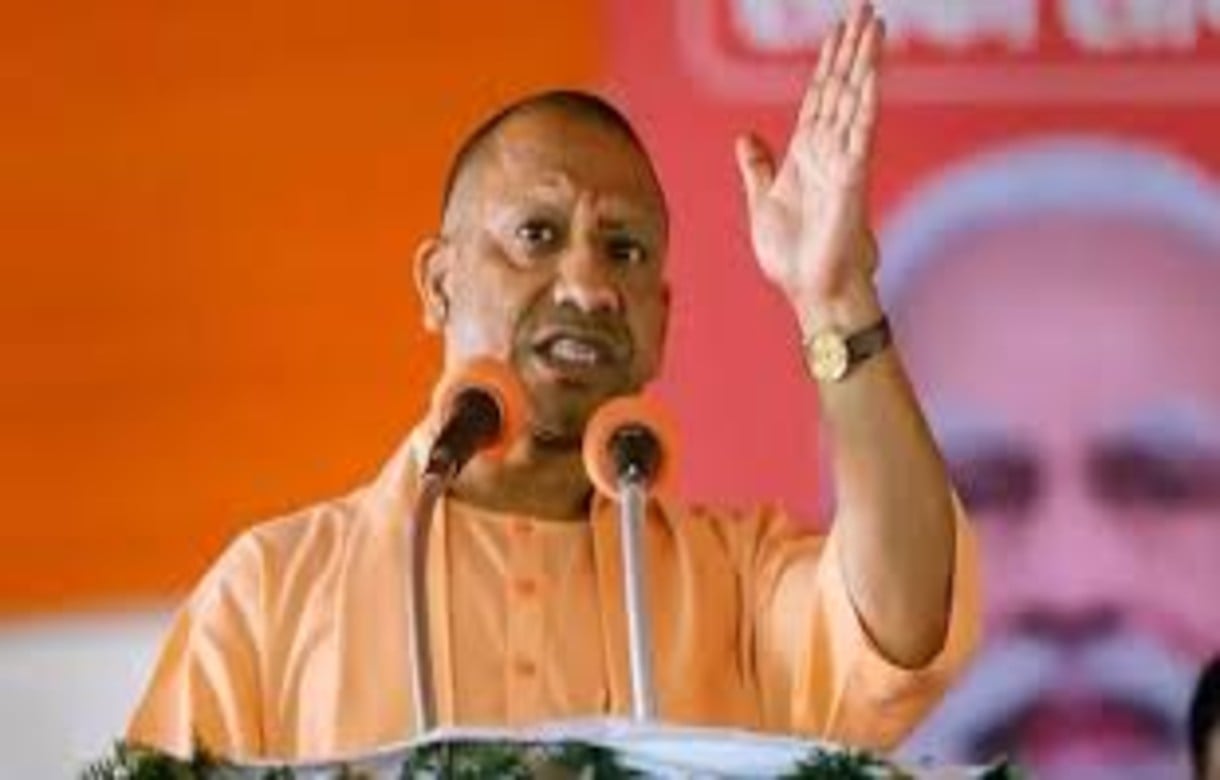
Uttar Pradesh Chief Electoral Officer Navdeep Rinwa has responded to Chief Minister Yogi Adityanath’s claim that 1.27 crore Hindu voters are missing from the state’s electoral rolls amid the Special Intensive Revision (SIR).

The CEO’s response centres on the fact that electoral rolls do not contain information about an elector’s religion. This means the official voter database does not provide a religion-wise count of voters.

What did Yogi Adityanath claim?

Yogi Adityanath had raised concerns over the number of voters allegedly missing from the electoral rolls during a discussion on the ongoing revision exercise in Uttar Pradesh.

The Chief Minister claimed that around 1.27 crore Hindu voters were missing from the rolls. He also raised questions over the gap between the state’s population and the number of voters currently reflected in the electoral database.

Yogi urged BJP workers and other party functionaries to coordinate with Booth Level Officers (BLOs) and work to ensure that eligible voters are included in the electoral rolls.

UP CEO’s response

Responding to the claim, UP Chief Electoral Officer Navdeep Rinwa said electoral rolls contain details of electors but do not record their religion.

As a result, the Election Commission’s voter database does not have a separate category showing how many Hindu voters are present or missing from the electoral rolls.

The clarification is significant because the figure cited by Yogi specifically refers to Hindu voters, while the electoral-roll data itself is not maintained on the basis of religion.

The issue comes amid UP’s SIR

The exchange comes amid the Special Intensive Revision of electoral rolls in Uttar Pradesh ahead of the 2027 Assembly election.

The revision process has become a major political issue in the state, with parties raising concerns over names being removed or excluded from voter lists and the Election Commission maintaining that the exercise is aimed at ensuring accurate electoral rolls.

The controversy over the 1.27 crore figure is therefore separate from the broader question of whether eligible voters’ names have been left out of the electoral rolls.

Why the CEO’s clarification matters

The UP CEO’s response does not amount to an assessment of whether the 1.27 crore figure is correct or incorrect. Instead, it points to a limitation in the electoral-roll data: voter lists do not identify electors by religion.

Therefore, a religion-specific figure for missing voters cannot be established from the electoral-roll database simply by looking at the official voter records.

The dispute over Yogi’s claim is likely to remain part of the wider political debate surrounding the voter-list revision in Uttar Pradesh ahead of the 2027 Assembly election.

Continue Reading

India News

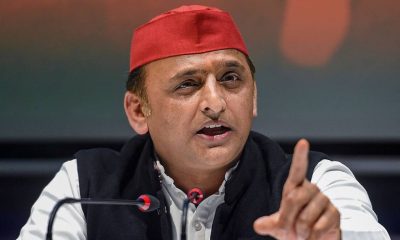
Akhilesh Yadav’s Yamuna dig after BJP’s Mathura temple challenge

Akhilesh Yadav responded to Keshav Prasad Maurya’s Mathura challenge by sarcastically advising BJP leaders to take a dip in the Yamuna and arrange a doctor if anyone fell ill.

Published

on

Samajwadi Party chief Akhilesh Yadav took a sarcastic swipe at the BJP after Uttar Pradesh Deputy Chief Minister Keshav Prasad Maurya challenged him to visit Mathura and participate in the proposed kar seva for a grand Krishna temple.

The exchange came as senior BJP leaders gathered in Mathura for a two-day brainstorming meeting ahead of the 2027 Uttar Pradesh Assembly election.

Asked about the BJP’s meeting in the temple town, Akhilesh Yadav suggested that those attending should begin their programme by taking a dip in the Yamuna and performing aachman with its water.

He added sarcastically that if anyone fell ill, they should arrange for a good doctor.

Yadav’s remarks were seen as a dig at the BJP over the condition and pollution of the Yamuna.

Keshav Maurya’s Mathura challenge to Akhilesh Yadav

Maurya had challenged Akhilesh Yadav to come to Mathura and participate in kar seva for the proposed Krishna Janmabhoomi temple.

Speaking after the first session of the BJP meeting, Maurya said the party had already achieved its objective in Ayodhya and that Mathura was next.

He also said that if Akhilesh Yadav was a true Krishna devotee, he should participate in the kar seva and offered to join him.

Maurya’s remarks came as the BJP held its two-day Chintan Shivir in Mathura, with 54 senior party leaders, including leaders from western Uttar Pradesh, attending the meeting.

Chief Minister Yogi Adityanath and Uttar Pradesh BJP president Pankaj Chaudhary were among those present.

BJP’s Mathura push ahead of UP polls

The Mathura meeting has put the Krishna Janmabhoomi issue in focus ahead of the Uttar Pradesh Assembly election.

Maurya said a grand temple would be built at Lord Krishna’s birthplace along the lines of the Ram Temple in Ayodhya. His remarks added a clear political dimension to the BJP’s Mathura meeting.

The BJP’s challenge to Akhilesh also followed his announcement of a proposed visit to the Ram Temple in Ayodhya on December 12 with his wife and MP Dimple Yadav. He has also indicated that he would visit Vrindavan.

Mathura is part of western Uttar Pradesh, where the BJP has remained strong in the last two Assembly elections. The region is also gaining political importance with the entry of the Asaduddin Owaisi-Chandrashekhar Azad alliance, which is seeking support among Muslim and Dalit voters.

Continue Reading

India News

Krishna Janmabhoomi temple to be key issue in UP polls, says Keshav Maurya

Keshav Prasad Maurya said the Krishna Janmabhoomi temple issue would be a major factor in the 2027 Uttar Pradesh Assembly election.
Published

on

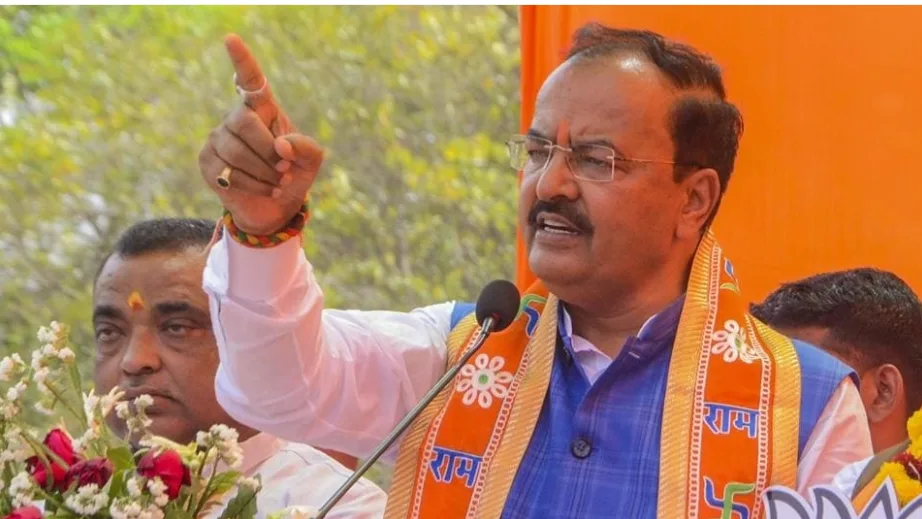
The Krishna Janmabhoomi temple issue in Mathura is likely to become a major political issue ahead of the 2027 Uttar Pradesh Assembly election, Uttar Pradesh Deputy Chief Minister Keshav Prasad Maurya said on Monday.

Speaking to reporters during a two-day BJP organisational meeting in Mathura, Mr Maurya said a grand temple dedicated to Lord Krishna would be built at the deity’s birthplace either through a judicial process or through dialogue.

He also indicated that the issue would assume importance in the upcoming state election.

Maurya links temple issue to 2027 election

Mr Maurya said the Krishna Janmabhoomi issue would be a major poll issue and added that the BJP would pursue the construction of a grand temple in Mathura.

Maurya also said that if Samajwadi Party leader Akhilesh Yadav wanted to join the effort, he would be taken along.

The BJP’s two-day organisational meeting was held in Mathura, the birthplace of Lord Krishna. BJP state in-charge Vinod Tawde, Chief Minister Yogi Adityanath, national general secretary (Organisation) B.L. Santosh, national general secretary Smriti Irani and state party president Pankaj Chaudhary were among those who attended the meeting.

BJP discusses organisational and election matters

The meeting at the Pandit Deendayal Upadhyaya Cow Research Institute covered organisational programmes, booth-level events and efforts to ensure that public welfare schemes reach households, the report said.

Discussions on the upcoming election were also held with senior government and party leaders, including the Chief Minister and Deputy Chief Ministers.

Vinod Tawde later said on X that he had attended the meeting organised by the Uttar Pradesh BJP unit in Mathura and that discussions were held with the Chief Minister, Deputy Chief Minister Keshav Prasad Maurya and Brajesh Pathak, as well as state government officials, regarding the upcoming election.

BJP looks to strengthen outreach

The meeting also focused on organisational preparations and reaching out to different sections of society, according to the report.

The BJP’s Mathura meeting comes ahead of the 2027 Uttar Pradesh Assembly election, with the party discussing booth-level programmes and other organisational activities.

Continue Reading

Trending

© Copyright 2022 APNLIVE.com