English हिन्दी
Connect with us

India News

Indian Air Force sacks serviceman for refusing to vaccinate against Covid-19

Vyas also said since corporal Yogendra Kumar has responded to the show cause notice, he can either appear before a proper authority or the Armed Forces Tribunal, under provisions of the Armed Forces Tribunal Act.


Published

on

Cancer vaccine

The Central government on Thursday told the Gujarat High Court that the Indian Airforce has sacked one of its servicemen for refusing to get vaccinated against Covid-19. Getting vaccinated against the virus has been made a service condition.

IAF corporal Yogendra Kumar at Jamnagar moved a plea in the Gujarat High Court on which Additional Solicitor General Devang Vyas in his submission to the Court said across India, nine personnel had refused to get vaccinated and they were given show-cause notices. The matter was heard by division bench of Justices AJ Desai and AP Thaker.

Across India, only nine personnel have refused to take the vaccine. All of them were given show cause notice, one did not respond, so in view of the lack of response, his service is already terminated, Vyas told the court.

He said as far as the vaccine in general is concerned, it is optional, but the Indian Air Force has made it mandatory and a service condition for its servicemen which is in continuation of the oath taken at the time of enrollment in the service.

Vyas also said since corporal Yogendra Kumar has responded to the show cause notice, he can either appear before a proper authority or the Armed Forces Tribunal, under provisions of the Armed Forces Tribunal Act.
Cpl. Kumar had challenged the IAF’s show cause notice dated May 10, 2021, after his unwillingness to get vaccinated against Covid-19. Hearing his plea on Wednesday, the High Court directed the IAF to consider his case afresh.

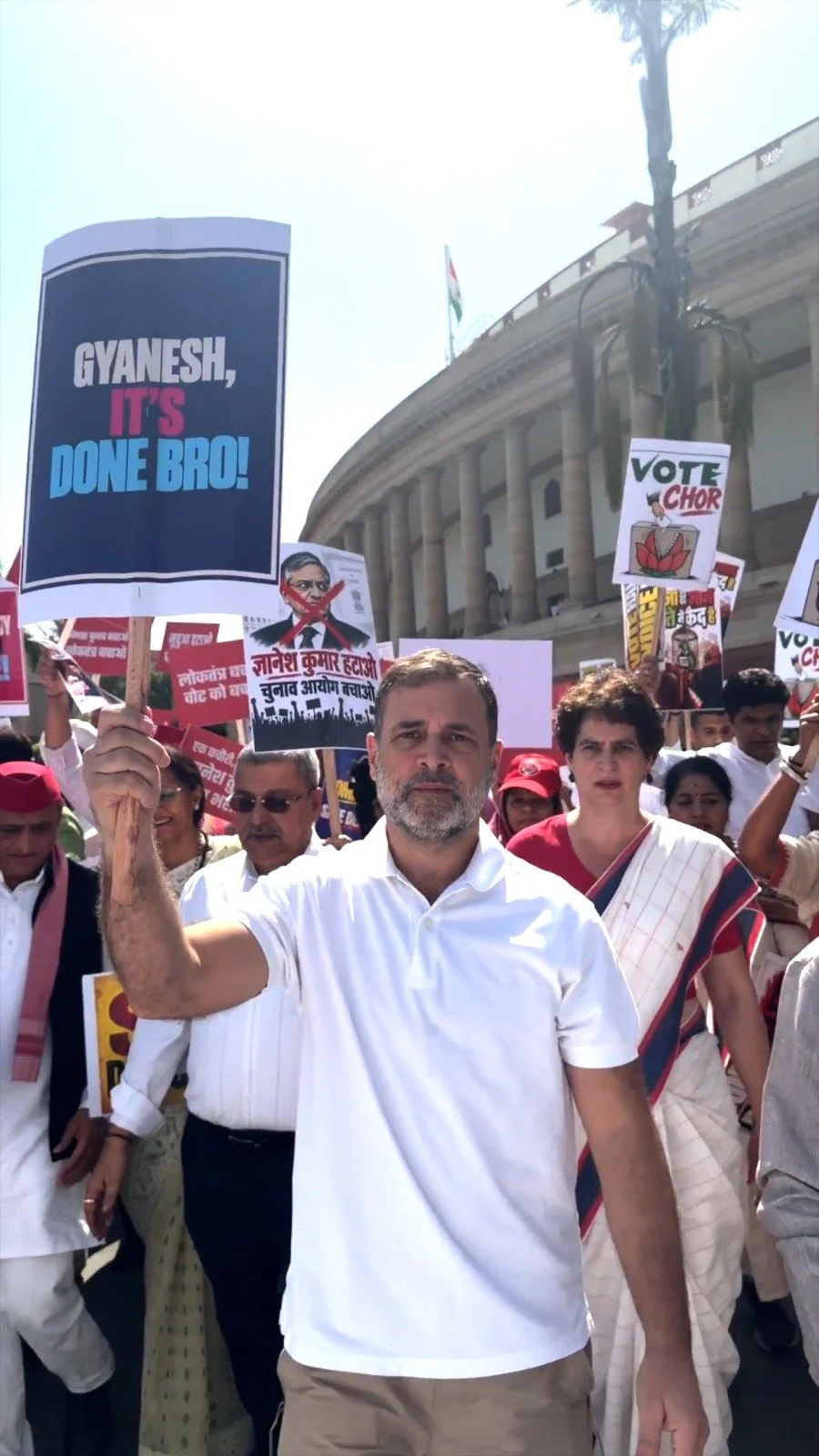
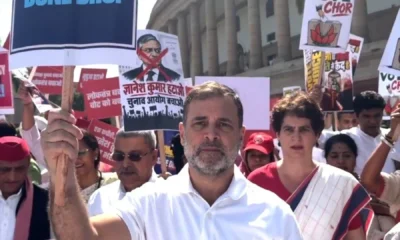
Read Also: Opposition leaders take out march against abrupt end to Parliament session, Rahul Gandhi calls it murder of democracy

The court disposed of his plea after ordering that the interim relief granted to the petitioner unwilling to get vaccinated shall continue until his case is decided by the IAF, and the same shall not be implemented for a period of two weeks from the date of service of the order to the petitioner.

Cpl. Kumar also requested the court to direct the IAF to follow the central government’s order that the vaccine is purely voluntary and not mandatory.

In other India news, the abrupt end to the monsoon session as the murder of democracy, said former Congress president Rahul Gandhi 

India News

iPhone 18 Pro sale begins in India as buyers queue up across cities

Apple’s iPhone 18 Pro and iPhone 18 Pro Max went on sale in India, with buyers arriving early and forming queues outside Apple stores across major cities.

Published

on

Apple’s latest Pro iPhones have officially gone on sale in India, with customers turning up early at Apple stores to get their hands on the new devices.

The iPhone 18 Pro and iPhone 18 Pro Max went on sale in India on September 18, with long queues reported at Apple stores in cities including Delhi, Mumbai, Bengaluru and Noida. Some buyers arrived several hours before stores opened, hoping to be among the first customers to collect the new iPhones.

The launch-day rush comes despite the higher starting prices of Apple’s latest Pro models. The iPhone 18 Pro starts at Rs 1,64,900 in India, while the iPhone 18 Pro Max starts at Rs 1,79,900.

Buyers arrive early for iPhone 18 Pro sale

Customers gathered outside Apple stores well before the start of sales. In Bengaluru, one buyer said he reached the store at around 5 am and described the annual iPhone launch as a festival.

In Noida, a customer who travelled from Punjab said he had been waiting since 6 am to buy the new iPhone. As per the report he purchased three iPhone 18 Pro Max devices.

The first-day demand was not limited to customers who were upgrading from older iPhones. Buyers also travelled from other cities to collect their pre-booked devices.

iPhone 18 Pro, Pro Max price in India

The iPhone 18 Pro is available in four storage configurations in India.

VariantIndia price
iPhone 18 Pro 256GBRs 1,64,900
iPhone 18 Pro 512GBRs 1,89,900
iPhone 18 Pro 1TBRs 2,39,900
iPhone 18 Pro 2TBRs 3,14,900

The iPhone 18 Pro Max starts at Rs 1,79,900 for the 256GB model. The 512GB version costs Rs 2,04,900, while the 1TB and 2TB versions are priced at Rs 2,54,900 and Rs 3,29,900, respectively.

What is new in the iPhone 18 Pro?

The iPhone 18 Pro and iPhone 18 Pro Max feature a 48MP Fusion Main camera with variable aperture and new Pro camera controls.

The phones are powered by Apple’s A20 Pro chip and feature a new vapour chamber aimed at supporting performance, AI capabilities and battery life. The latest Pro models are available in black, silver, glacier and a new burgundy finish.

Apple also launches its first foldable iPhone

Apple’s new lineup also includes the iPhone Duo, the company’s first foldable iPhone.

The foldable device has a 7.6-inch inner Super Retina XDR display and a 5.4-inch outer display. Apple says it is its thinnest iPhone when fully opened.

In India, pre-orders for the iPhone Duo are scheduled to begin at 5:30 pm IST on October 16, while sales are set to start on October 23. The device starts at Rs 2,99,900.

Why are buyers queuing for the iPhone 18 Pro?

Several buyers interviewed during the launch said they arrived early because they wanted to be among the first customers to receive the new iPhones.

Several buyers interviewed during the launch said they had arrived early because they wanted to be among the first customers to receive the new model. One Bengaluru buyer, who said he has purchased iPhones since the iPhone 7, described the annual launch as a festival.

Continue Reading

India News

Rahul Gandhi attacks Election Commission over TMC symbol freeze

Rahul Gandhi accused the Election Commission of colluding with the BJP after the poll panel froze the Trinamool Congress’ election symbol ahead of West Bengal bypolls.

Published

on

Rahul Gandhi

Congress leader and Leader of Opposition Rahul Gandhi has criticised the Election Commission after it froze the Trinamool Congress’ election symbol ahead of the upcoming West Bengal bypolls.

Rahul Gandhi accused the poll panel of “colluding” with the BJP and linked the development to his broader allegations concerning “vote chori”. The remarks came a day after the Election Commission froze the Trinamool Congress’ “flower” symbol amid competing claims from two factions of the party.

The two factions are led by former West Bengal Chief Minister Mamata Banerjee on one side and a group involving Ritabrata Banerjee and others on the other. Neither faction can use the party’s existing symbol for the Nandigram and Rejinagar bypolls scheduled for October 6.

What Rahul Gandhi said

Rahul Gandhi drew parallels with earlier disputes involving the Shiv Sena and Nationalist Congress Party while alleging a similar pattern in the Trinamool Congress case.

He alleged that the BJP and Election Commission work together to split political parties and take away their election symbols.

Gandhi also said the Election Commission’s constitutional responsibility was to protect the people’s mandate. He accused the poll panel of instead helping forces that, according to him, overturn electoral verdicts.

Backing Mamata Banerjee, Gandhi said the issue was not only her fight but also concerned political parties and voters seeking free and fair elections. He also connected the TMC dispute with his repeated allegations of “vote chori”.

Why the Election Commission froze the TMC symbol

The Election Commission’s interim action followed competing claims over control of the recognised political party.

According to the poll panel, a substantive determination under Paragraph 15 of the Election Symbols (Reservation & Allotment) Order, 1968, is required to decide which group represents the recognised party. The interim arrangement will remain in place until that determination.

Both groups were asked to submit three preferred party names and three free symbols by 11 am on September 18 for the upcoming bypolls.

The Election Commission’s proceedings involve rival claims over the party’s organisational control, name and election symbol. The dispute emerged after the Trinamool Congress split following its defeat in the West Bengal Assembly election in May, according to the report.

Reference to Shiv Sena and NCP disputes

Rahul Gandhi also referred to earlier disputes involving the Shiv Sena and NCP, where rival factions had contested control over the parties and their election symbols.

In those cases, the factions led by Eknath Shinde and the late Ajit Pawar received the respective party names and symbols, while the Uddhav Thackeray and Sharad Pawar factions continued with new party names and symbols.

Continue Reading

India News

PM Modi courts investors with India’s $30 billion chipmaking push

PM Modi is pitching India’s semiconductor ambitions to global investors at Semicon 2026, as the country expands efforts to build a domestic chipmaking ecosystem.

Published

on

Prime Minister Narendra Modi is set to use Semicon 2026 in New Delhi to showcase India’s growing semiconductor and electronics industry and attract global investment into the sector.

The three-day event brings together semiconductor companies, potential partners, customers, equipment makers and parts suppliers as India seeks to establish itself as a player in the global chipmaking industry.

More than 600 exhibitors, over 150 speakers and 300 global companies are expected to participate at the event, which is being held across 15,000 square metres at a convention centre in New Delhi. The programme also includes startup showcases and a student hackathon.

India’s semiconductor investment push

India has recently committed an additional Rs 1.9 trillion, or about $19.8 billion, in subsidies to strengthen domestic chip and electronics production. The latest allocation comes after an initial $10 billion semiconductor fund launched in 2020-21.

The earlier incentives helped expand electronics manufacturing in India, including Apple’s iPhone production. According to the report, Apple now manufactures 25% of its flagship device in India.

India is seeking to replicate that manufacturing momentum in semiconductors by developing capabilities across the wider supply chain.

Tata, Murugappa and Micron expand chip operations

Some of India’s early semiconductor projects are beginning to move forward.

Tata Group and Murugappa Group have started packaging and assembling chips, while US-based memory chipmaker Micron Technology has also commenced production.

Tata is additionally building a semiconductor fabrication plant in Gujarat, which is expected to become operational in early 2028.

India seeks bigger role in global chip industry

India’s semiconductor programme is part of a wider effort to expand manufacturing and move into higher-value industries.

The government is supporting startups developing semiconductor products and providing assistance for chipmaking equipment, fabrication plants and assembly facilities.

The push comes as countries including Taiwan, South Korea, the US and Malaysia continue to invest heavily in semiconductor manufacturing amid growing demand for computing resources and artificial intelligence applications.

India’s domestic industry remains at an early stage compared with established chipmaking centres. The country initially focused on less sophisticated legacy semiconductors used in electronics and power systems, while seeking to develop capabilities in advanced chips and packaging.

Continue Reading

Trending

© Copyright 2022 APNLIVE.com