English हिन्दी
Connect with us

India News

Premium petrol price rises to Rs 160 per litre, ATF briefly doubled before revision

Premium petrol and ATF prices surge in Delhi, with LPG rates also seeing multiple hikes since January.

Published

on

petrol price

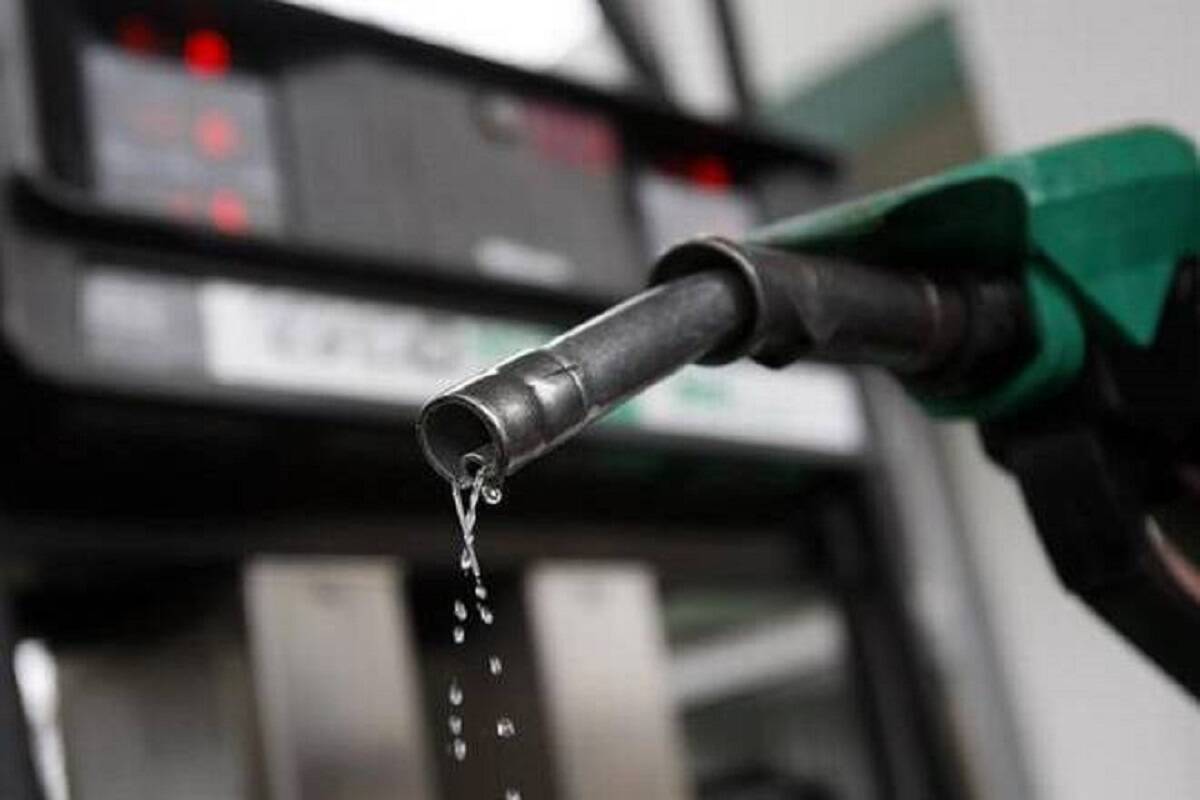
Premium-grade fuel prices in Delhi have been increased, with Indian Oil Corporation revising rates for high-performance variants. The price of XP100 petrol has gone up to Rs 160 per litre from the earlier Rs 149, marking a notable jump. Similarly, Xtra Green premium diesel now costs Rs 92.99 per litre, compared to Rs 91.49 previously.

XP100, a 100-octane fuel, is primarily used in high-end vehicles and superbikes, offering improved engine efficiency and performance.

No official reason has been provided for the hike. However, the revision comes amid rising global crude oil prices, driven by geopolitical tensions in the Middle East and disruptions in supply chains.

Earlier in March, the government had reduced excise duty on regular petrol and diesel by Rs 10 per litre. This move helped maintain stability in standard fuel prices despite increasing global pressure.

ATF prices spike, then partially rolled back

Aviation turbine fuel (ATF) prices witnessed a sharp but short-lived surge. Rates in Delhi were initially raised to Rs 2,07,341.22 per kilolitre from Rs 96,638.14 per kl, crossing the Rs 2 lakh mark for the first time.

Within hours, however, prices for domestic airlines were revised downward to Rs 1,04,927 per kl.

According to the oil ministry, global factors — including disruptions in key shipping routes like the Strait of Hormuz — were expected to push prices up by over 100 per cent. Oil companies, however, implemented only a partial increase to avoid a sudden financial burden on airlines.

Even after the revision, ATF prices remain among the highest levels recorded. The previous peak was around Rs 1.1 lakh per kl in 2022, following global oil price spikes linked to the Russia-Ukraine conflict.

Commercial LPG rates also climb

Commercial LPG cylinder prices have also seen a steep increase. In Delhi, a 19-kg cylinder now costs Rs 2,078.50, up from Rs 1,768.50 on March 1.

This marks the third hike in March and the fifth increase since January 1, 2026, adding pressure on businesses dependent on commercial gas usage.

Continue Reading

India News

Over 43 lakh names removed from Jharkhand draft voter rolls after special revision

The Election Commission has released Jharkhand’s draft electoral rolls after the Special Intensive Revision, with over 43 lakh names removed and 83.51% of registered voters submitting enumeration forms.

Published

on

The Election Commission on Wednesday published the draft electoral rolls for Jharkhand following the completion of the enumeration phase of the Special Intensive Revision (SIR), with more than 43 lakh names removed from the voter list.

Jharkhand Chief Electoral Officer (CEO) K Ravi Kumar said the state had 2,64,63,236 registered voters before the Special Intensive Revision exercise began. Following the completion of the enumeration process, the draft electoral roll now contains 2,21,01,249 electors.

According to the CEO, 2,21,01,249 electors, or 83.51 per cent of the total registered voters, submitted their enumeration forms by July 29, reflecting strong participation in the revision exercise.

Door-to-door verification conducted during revision exercise

The enumeration exercise for the Special Intensive Revision began on June 30 and continued until July 29. During this period, Booth Level Officers (BLOs) carried out door-to-door visits to distribute, collect and verify enumeration forms submitted by eligible voters.

Why over 43 lakh names were removed

A total of 43,61,987 names were deleted from the draft electoral rolls after being identified under the Absent, Shifted, Dead or Duplicate (ASDD) category.

The CEO said the deleted names include:

  • 7.63 lakh voters who had died.
  • 15.92 lakh voters who had permanently shifted.
  • 14.50 lakh voters who were untraceable or remained absent during the verification exercise.
  • 4.38 lakh voters whose names were found registered at multiple locations.

In addition, around 1.16 lakh voters refused to sign the enumeration forms and did not return the completed forms to Booth Level Officers during the enumeration phase, the CEO added.

Continue Reading

India News

Lok Sabha passes Bankers’ Books Evidence Bill, 2026 to recognise digital bank records as evidence

The Lok Sabha has passed the Bankers’ Books Evidence Bill, 2026, replacing the colonial-era law and recognising digital, electronic and cloud-based bank records as admissible evidence in courts.

Published

on

The Lok Sabha on Wednesday passed the Bankers’ Books Evidence Bill, 2026, paving the way for digital and electronic bank records to be recognised as admissible evidence in courts. The proposed law aims to replace the colonial-era Bankers’ Books Evidence Act, 1891 and update the legal framework in line with modern banking practices.

Bill passed amid opposition protests

The legislation was passed through a voice vote after persistent disruptions in the House prevented a detailed discussion.

When the Lok Sabha reconvened at 2 pm following an earlier adjournment, opposition members continued raising slogans despite repeated appeals from the Chair to take up the Bill for discussion.

Finance Minister Nirmala Sitharaman moved the Bill for consideration and passage amid the disruptions. With the protests continuing, the House passed the legislation without a debate. The Bill had been introduced in the Lok Sabha on Monday.

What the new Bill proposes

The proposed law, to be known as the Bankers’ Books Evidence Act, 2026, seeks to modernise the legal framework governing bank records used in legal proceedings.

According to the statement of objects and reasons, rapid technological advancement and the growing use of digital banking have made it necessary to update the existing law, which was enacted when banking records were maintained primarily in physical form.

The Bill expands the definition of “bankers’ books” to include records maintained in physical, electronic, digital, virtual, cloud-based and other formats. This aims to create a technology-neutral and future-ready legal framework for the banking sector.

Key provisions of the legislation

The Bill also proposes standardised certificate formats and allows authentication through manual, digital or electronic signatures. It expressly recognises electronic bank records as admissible evidence and permits their production in either physical or electronic form during legal proceedings.

Another provision empowers the central government to extend the applicability of the law to other entities or classes of entities operating in the financial sector, subject to specified conditions.

The legislation also defines the term “special cause”, under which a court may direct a bank officer to produce bankers’ books or appear as a witness to prove transactions, accounts or other matters in legal proceedings where the bank is not a party.

Why the law is being replaced

The existing Bankers’ Books Evidence Act, 1891 was enacted during the pre-independence period to allow certified copies of bank records to be accepted as evidence without requiring the original records to be produced before the court.

Since the law was framed when banking records were predominantly maintained in physical form, the government has proposed replacing it with legislation better suited to today’s digital banking ecosystem.

Continue Reading

India News

Meta executive Joel Kaplan apologises over restriction of PM Modi’s social media post

Meta’s Chief Global Affairs Officer Joel Kaplan apologised to IT Minister Ashwini Vaishnaw after the company admitted it mistakenly restricted Prime Minister Narendra Modi’s social media post before restoring it.

Published

on

Meta’s Chief Global Affairs Officer Joel Kaplan on Wednesday apologised to Union IT Minister Ashwini Vaishnaw on behalf of the company after Prime Minister Narendra Modi’s social media post was mistakenly restricted.

Kaplan said he conveyed the apology to the minister over what he described as an error that led to the restriction of the Prime Minister’s post.

Meta says restriction was an error

Prime Minister Narendra Modi had shared a vertical video on July 23 in which he addressed the public directly. According to Meta, the video was briefly removed from Facebook and Instagram before being restored.

The company attributed the removal to a technical glitch and said the content had been taken down in error before being reinstated on its platforms.

Government found explanation inadequate

The Ministry of Electronics and Information Technology (MeitY) reviewed the incident and described Meta’s initial explanation as “inadequate”. The company subsequently maintained that the removal was unintentional and restored the post.

India remains Meta’s largest user market, with hundreds of millions of people using Facebook, Instagram and WhatsApp.

Continue Reading

Trending

© Copyright 2022 APNLIVE.com