English हिन्दी
Connect with us

Latest Politics News

AAP leaders allege BJP of attempt to murder on party’s women councillor, demand FIR

The newly elected mayor of Delhi, Shelly Oberoi spoke to the media on what escalated in the Delhi Civic Centre and accused BJP of attacking her as BJP leaders climbed on stage. Oberoi further added and said that the standing committee elections were held in accordance with the BJP yet the party turned to chaos and attacked AAP leaders.

Published

on

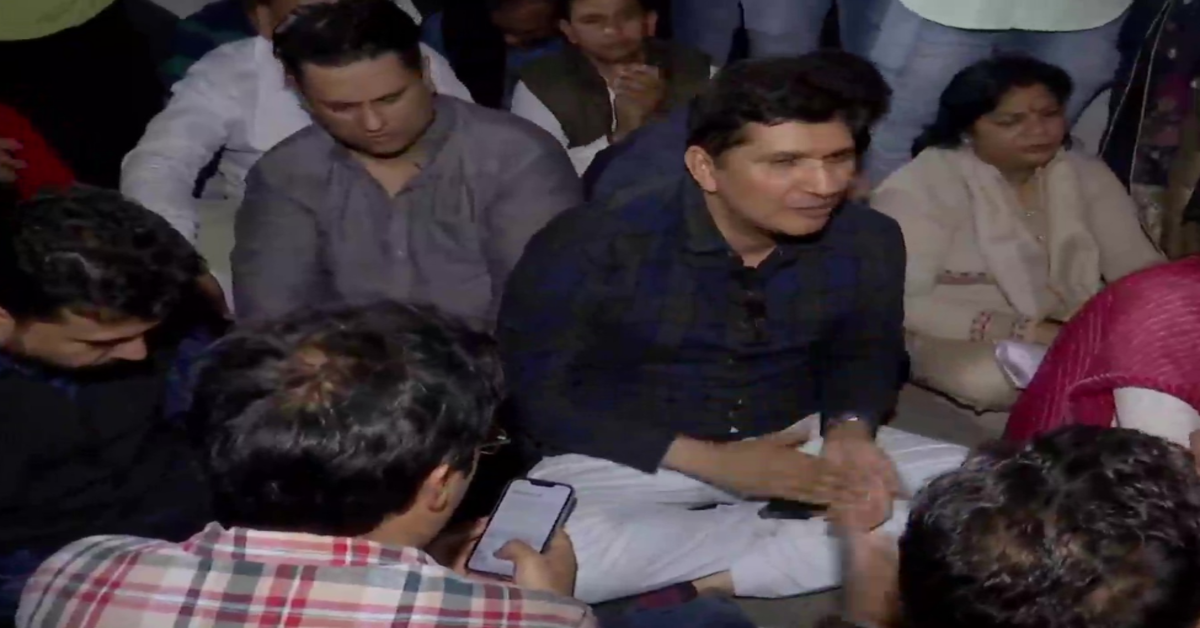
Aam Aadmi Party leaders of Friday assembled at the Kamla Market police station seeking FIR against BJP. The AAP has accused the BJP of attempting to murder on party’s women councillor, said reports.

The move by the AAP comes in the wake of the clash that escalated between the BJP and AAP at the Delhi Civic centre over a key election.

The newly elected mayor of Delhi, Shelly Oberoi spoke to the media on what escalated in the Delhi Civic Centre and accused BJP of attacking her as BJP leaders climbed on stage. Oberoi further added and said that the standing committee elections were held in accordance with the BJP yet the party turned to chaos and attacked AAP leaders.
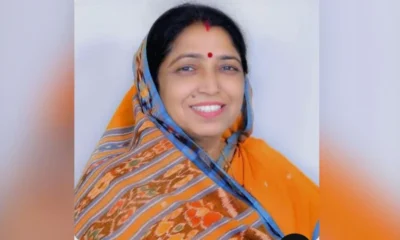
The Delhi Mayor, while speaking to the media, accused BJP members of assaulting Aam Aadmi Party’s women members. She also urged BJP to come to terms with the defeat.
As per the reports, AAP’s Ashok Kr Maanu, who fell unconscious during the commotion between AAP and BJP, was also in attendance when the police station. While talking to the media, Maanu termed the BJP of being shameless for allegedly attacking the women councillors, as well as the Delhi Mayor. He further said that the party won’t allow this and will approach the court.

AAP Leader Atishi also came forward to allege the male BJP leaders of assaulting the new mayor Shelly Oberoi in the Civic Centre. The AAP leader also demanded the counterpart BJP to stop ‘goondaism’ in Civic centra and echoed Delhi Mayor as she urged the BJP to accept defeat.

The demand for FIR against the BJP comes a day after the clashes between BJP and AAP continued on for the 3rd consecutive day in the Delhi Civic centre over the election of six members to the standing committee.

As per the reports, the councillors of both parties threw punches, manhandled and shoved each other.

India News

Rahul Gandhi faces expulsion demand in Lok Sabha over trade deal remarks

BJP MP Nishikant Dubey has moved a notice seeking Rahul Gandhi’s expulsion from the Lok Sabha. Here is how the disqualification and expulsion process works.

Published

on

Rahul Gandhi

Nishikant Dubey, a Member of Parliament from the Bharatiya Janata Party, has sought the expulsion of Congress leader Rahul Gandhi from the Lok Sabha. Dubey has submitted a notice calling for a substantive motion against Gandhi over his remarks concerning the India–US trade deal.

The BJP MP has demanded cancellation of Gandhi’s Lok Sabha membership and has also called for a lifetime ban on him from contesting elections. The development has raised questions about the procedure for removing a sitting Member of Parliament from the House.

How can a Lok Sabha MP be expelled

The process for expelling a Member of Parliament involves several procedural steps within the House:

Submission of complaint
The process begins when a member or political party files a formal complaint against a sitting MP.

Reference to committee
The Lok Sabha Speaker may refer the matter to the Committee of Privileges for examination. The committee is tasked with conducting a detailed inquiry into the allegations.

Investigation and findings
The committee can examine evidence, call witnesses, and allow the concerned MP to present a defence. After completing its review, it submits a report outlining its findings and recommendations.

Consideration by the House
The committee’s report is tabled in the Lok Sabha. If it recommends expulsion, a motion is moved in the House to adopt the recommendation.

Voting on expulsion
For the motion to pass, it must secure a majority of members present and voting. If approved, the MP stands expelled from the House.

Rahul Gandhi’s disqualification in 2023

In 2023, a court in Surat sentenced Rahul Gandhi to two years in prison in a criminal defamation case related to a remark about the “Modi surname”. Under Section 8(3) of the Representation of the People Act, 1951, any MP convicted and sentenced to two years or more faces automatic disqualification from Parliament.

Following the conviction, Gandhi was disqualified as a Member of Parliament. However, he later challenged the verdict in the Supreme Court of India, which stayed his conviction. After the stay order, his Lok Sabha membership was restored and he resumed his role as an MP.

Continue Reading

India News

Vijay targets DMK over Rs 2,000 scheme, calls on voters to blow the whistle

Vijay accused the DMK of trying to influence voters through financial promises and urged people to back TVK in the upcoming Tamil Nadu elections.

Published

on

Actor vijay

With the Tamil Nadu elections approaching, Tamilaga Vettri Kazhagam (TVK) chief and actor Vijay launched a strong attack on Chief Minister M K Stalin and the ruling Dravida Munnetra Kazhagam (DMK), accusing them of attempting to influence voters through financial promises.

Addressing a massive gathering in Salem, Vijay questioned the timing of the state government’s transfer of Rs 3,000 to women beneficiaries under a welfare initiative, describing it as an “advance payment”. He also criticised the announcement of an additional Rs 2,000 per woman as part of a so-called “summer special”, suggesting the payout was linked to the election outcome.

“Will you vote for ‘good’ TVK or ‘evil’ DMK?” Vijay asked supporters, framing the contest as a moral battle.

‘Take the money, but blow the whistle’

Claiming the DMK was attempting to buy votes, Vijay urged people to accept the financial assistance but support his party at the ballot box. Referring to TVK’s election symbol, he said, “Take the money, but blow the whistle.”

He questioned the rationale behind calling it a “summer allowance”, asking whether summer occurred only this year. According to him, the announcement was prompted by the growing popularity of the TVK and its whistle symbol across the state.

Vijay alleged that Stalin feared increasing support for his party, particularly among women voters. Taking a swipe at the DMK’s experience in governance, he remarked that while the ruling party had experience in corruption, his party was “inexperienced in that”.

Rally restrictions and Karur stampede reference

The TVK leader also criticised restrictions imposed on attendance at the Salem rally, including a reported cap of 4,998 participants and identity verification measures.

Authorities cited a stampede at a rally in Karur last year, in which 41 people lost their lives, as the reason for stricter norms. The DMK accused Vijay of failing to follow standard operating procedures during that event. However, TVK leaders have alleged that the violence was orchestrated to damage the actor’s political prospects.

Vijay dismissed the revised guidelines as politically motivated, quipping that he was familiar only with “Stalin Operating Procedure”. He pledged to continue fighting for justice for those who died in Karur.

TVK’s positioning in a Dravidian-dominated landscape

Vijay and the TVK have emerged as potential challengers in a political landscape long dominated by the DMK and the All India Anna Dravida Munnetra Kazhagam (AIADMK), which have alternated in power since the late 1960s.

The actor has ruled out any alliance with the DMK, describing it as his political adversary. His criticism of the AIADMK, however, has been comparatively restrained, a move seen as an attempt to attract swing voters and draw on the legacy of its founder M G Ramachandran.

National parties remain aligned with the state’s principal Dravidian forces for now, though political observers note ongoing discussions and potential shifts in seat-sharing arrangements.

As campaigning gathers pace, Vijay’s rhetoric signals an aggressive push to convert his popularity into electoral gains, positioning the TVK as an alternative to established players in Tamil Nadu politics.

Continue Reading

Latest Politics News

Tarique Rahman-led BNP set for landslide win in Bangladesh elections

BNP led by Tarique Rahman has crossed the majority mark in Bangladesh’s national elections, with projections suggesting a two-thirds majority. Jamaat has conceded defeat.

Published

on

Tariq Rehman

The Bangladesh Nationalist Party (BNP), led by Tarique Rahman, is heading towards a decisive victory in Bangladesh’s national elections, with projections indicating a clear parliamentary majority.

Early media projections at 8:00 am local time suggested that the BNP had comfortably crossed the 150-seat mark required to form the government in the 300-member parliament. One projection placed the party at 212 seats, putting it well on course for a two-thirds majority.

The BNP has already declared that it is prepared to form the next government after securing what it described as a majority mandate from voters.

Meanwhile, the Islamist-led alliance headed by Shafiqur Rahman of Jamaat-e-Islami was projected to win 70 seats. Although a significant improvement compared to its previous performance, the tally fell short of its expectations. Shafiqur Rahman conceded defeat and said his party would avoid confrontational opposition politics, adding that it would engage in “positive politics.”

Final results awaited, US extends congratulations

The Election Commission is yet to announce the final results for 299 constituencies where voting took place. An additional 50 seats reserved for women will be allocated based on party lists.

Even before the official declaration, the United States embassy in Dhaka congratulated Tarique Rahman and the BNP, describing the outcome as a “historic victory.”

Political transition under way

Bangladesh’s interim leader Muhammad Yunus is expected to step down once the new government assumes office. The Nobel Peace Prize winner has led the country since the ouster of Sheikh Hasina in August 2024 following a mass student-led uprising.

Yunus’s administration had barred the Awami League from contesting the elections by suspending its registration.

This election marked the first in decades without the participation of two dominant political figures — Sheikh Hasina and former prime minister Khaleda Zia, who passed away in December last year.

After nearly 17 years in exile, Tarique Rahman, 60, returned to Bangladesh following his mother Khaleda Zia’s death and quickly emerged as the frontrunner for the prime minister’s post.

Referendum on reforms held alongside polls

Voters also participated in a referendum on the July National Charter, a reform package negotiated by the Yunus-led interim administration and multiple political parties. The proposals include limiting prime ministers to two terms, forming an upper house of parliament, and restoring a caretaker government system to oversee elections for 90 days to ensure neutrality.

Sheikh Hasina criticised the election process, calling it “deceptive” and alleging low voter turnout. In a statement, she demanded cancellation of what she described as an “illegal and unconstitutional election” and sought Yunus’s resignation.

India watching developments closely

India is closely monitoring the situation due to its strategic and diplomatic interests in the region. Following recent political shifts in Dhaka and concerns over minority safety, New Delhi has emphasised that it will assess the mandate once results are officially declared.

When asked about the polls, MEA spokesperson Randhir Jaiswal said India would wait for the final outcome before commenting further.

With final results expected soon, Bangladesh appears set for a major political transition, with the BNP poised to return to power in a significant comeback.

Continue Reading

Trending

© Copyright 2022 APNLIVE.com