English हिन्दी
Connect with us

India News

Bihar voter list revision: Supreme Court questions SIR’s timing and Aadhaar exclusion

Published

on

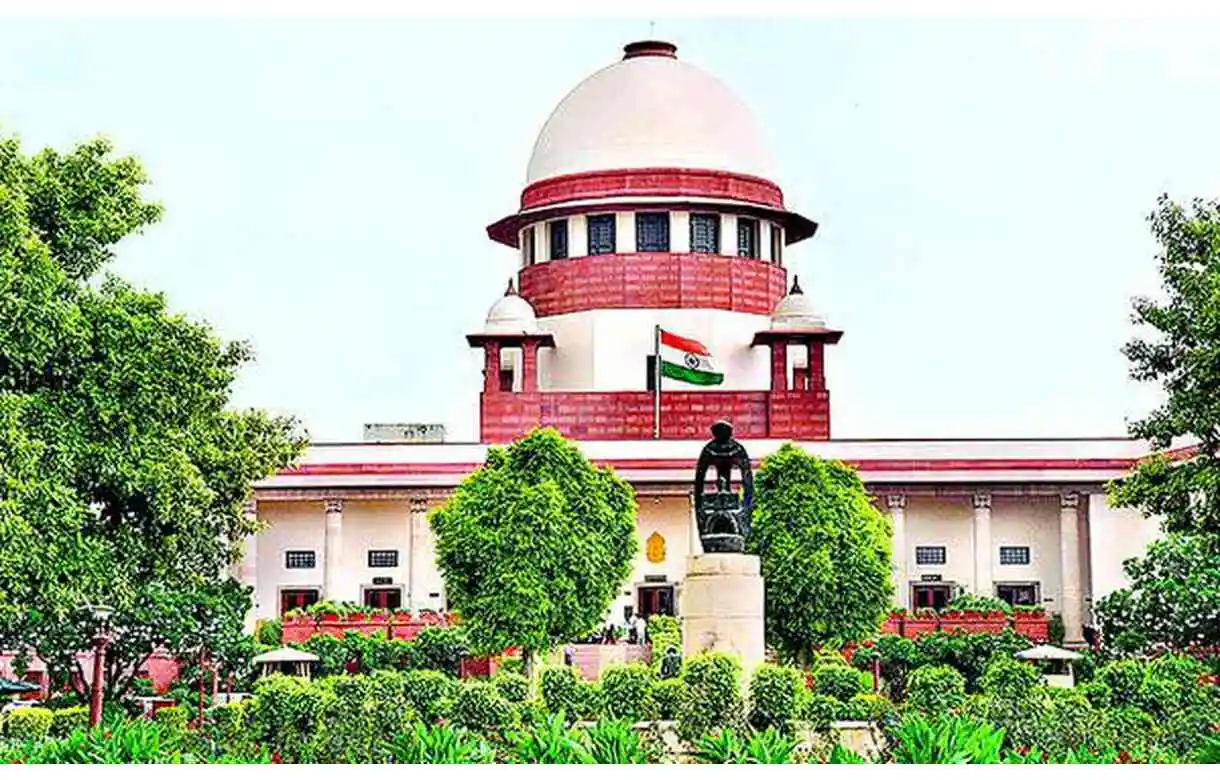
The Supreme Court of India heard multiple petitions challenging the Election Commission of India’s (ECI) Special Intensive Revision (SIR) of electoral rolls in Bihar, on Thursday, 10 July. ECI described this move as constitutionally mandated and an eradication of “foreign illegal migrants.” The timing and exclusion of Aadhaar as a verification document has sparked significant political dispute.

Petitioners – Opposition leaders, activists, and NGOs- are arguing that the SIR is premature, ill-timed, and risks widespread disenfranchisement of citizens, particularly among marginalized communities.

A central issue is the exclusion of Aadhaar from the accepted list of identification documents, despite its widespread use. Petitioners have pointed out ECI’s decision to consider only 11 specific documents, many of which do not show date or place of birth, and an arbitrary 2003 cut-off date for proving citizenship.

Senior advocate Sankaranarayan raised concerns about the rushed 30-day completion period stating the last revision was in 2003 when Bihar’s population was 4 crore people. Now it is about 7.9 crore and about 10 elections have happened since, highlihting the timing of the exercise ahead of the state’s assembly elections scheduled for October-November 2025.

The petitioners assert that the ECI lacks jurisdiction to determine citizenship and that responsibility of proving non-citizenship rests with the state once an individual is on the electoral roll.

Justices Sudhanshu Dhulia and Joymalya Bagchi, have questioned the timing of the SIR and the exclusion of Aadhaar. Justice Dhulia noted that while the revision itself is not problematic, its timing could prevent individuals from appealing their exclusion before the elections. However, the Court also urged petitioners to refrain from labelling the ECI’s exercise as “artificial,” acknowledging that there is “logic” behind it.

The ECI emphasized that the revision is part of a broader effort to verify elector eligibility with participation of all political parties. The ECI told the Supreme Court that citizenship is one of the requirement for a person to qualify as a voter under Article 326 of the Constitution.

The Opposition, including figures like Rahul Gandhi and Tejashwi Yadav, have protested the SIR, alleging it is an attempt to “steal vote and future.” BJP on the other, has questioned the Opposition’s motives for calling a “Bihar bandh” on a judicial matter. Prashant Kishor of Jan Suraaj has also questioned the necessity of the revision so soon after the 2024 Lok Sabha elections.

India News

Indian Army Agniveer CEE Result 2026 declared, ARO-wise merit list released

The Indian Army has announced the Agniveer CEE Result 2026. Candidates can now download the ARO-wise merit list and check their eligibility for the next stages of recruitment.

Published

on

Indian Army Agniveer Result

The Indian Army has announced the Agniveer Common Entrance Examination (CEE) Result 2026, allowing candidates to check their qualifying status through the official recruitment portal. The Army Recruitment Office (ARO)-wise merit lists have been uploaded on joinindianarmy.nic.in, where candidates can download the PDF corresponding to their recruitment region.

The merit lists contain the names and roll numbers of candidates who have successfully cleared the written examination and become eligible for the next phase of the Agniveer recruitment process.

How to check Indian Army Agniveer CEE Result 2026

Candidates can access their results by following these steps:

  • Visit the official Indian Army recruitment website.
  • Click on the Agniveer CEE Result 2026 link available on the homepage.
  • Select the relevant Army Recruitment Office (ARO) or recruitment region.
  • Download the merit list PDF.
  • Search for your roll number or name to confirm your qualification status.

What happens after the Agniveer CEE result?

Candidates shortlisted in the Common Entrance Examination will now have to undergo the remaining stages of the recruitment process. These include:

  • Physical Fitness Test (PFT)
  • Physical Measurement Test (PMT)
  • Document Verification (DV)
  • Medical Examination

Only candidates who successfully clear every stage will be considered for final selection under the Agniveer recruitment programme.

Candidates advised to verify details carefully

After downloading the merit list, candidates should carefully check all the information mentioned in the document. If they notice any discrepancy related to their result or personal details, they should immediately contact their respective Army Recruitment Office (ARO) for assistance.

Candidates are also advised to keep checking the official Indian Army recruitment portal for updates regarding the schedule, venue and instructions for the upcoming physical tests, document verification and medical examination.

Continue Reading

India News

Delhi air quality slips to poor as AQI reaches 261, highest in over 85 days

Delhi’s air quality entered the ‘poor’ category after AQI touched 261, its highest level since April 17. Authorities attributed the spike to transnational dust from Afghanistan, Iran and Pakistan.

Published

on

Delhi air quality

Delhi’s air quality fell into the ‘poor’ category on Sunday after the city’s Air Quality Index (AQI) climbed to 261, marking its highest level in more than 85 days, according to official data.

The reading was the highest since April 17, when the AQI stood at 263. Just a day earlier, Delhi had recorded an AQI of 140, while air quality had largely remained in the ‘moderate’ and ‘satisfactory’ categories for most of the month.

Transnational dust behind spike in pollution

The Commission for Air Quality Management (CAQM) said the sudden deterioration in Delhi-NCR’s air quality was mainly caused by long-range winds carrying mineral dust generated by storm activity in Afghanistan, Iran and Pakistan.

According to the commission, these dust-laden winds reached northwestern India, including Delhi, resulting in a significant rise in PM10 concentrations. Strong surface winds across the Indo-Gangetic Plain also contributed to the increase in pollution levels.

The CAQM said Delhi’s air quality is expected to remain in the ‘poor’ category for the next few days before improving once the transnational dust spell weakens.

No GRAP Stage-I restrictions for now

Despite the worsening air quality, the CAQM decided not to implement GRAP Stage-I restrictions, stating that the current pollution episode has been triggered by transnational dust rather than local emission sources.

However, the commission directed the Delhi Pollution Control Committee (DPCC) to intensify dust control measures across the city.

As per the Central Pollution Control Board (CPCB), an AQI between 201 and 300 falls under the ‘poor’ category.

Delhi experiences humid weather

The India Meteorological Department (IMD) said the maximum temperature at Safdarjung reached 36.8 degrees Celsius, which was 1.3 degrees above normal, while the minimum temperature settled at 28.3 degrees Celsius, one degree above the seasonal average.

Although the actual maximum temperature remained below 37 degrees Celsius, high humidity pushed the feels-like temperature to 45.7 degrees Celsius by 5:30 pm.

Among other weather stations, maximum temperatures were recorded at 37 degrees Celsius at Lodhi Road, 36.6 degrees Celsius at Palam, 36.2 degrees Celsius at Ayanagar and 36 degrees Celsius at Ridge.

Minimum temperatures stood at 27.1 degrees Celsius in Palam, 27.2 degrees Celsius in Lodhi Road, 27.4 degrees Celsius in Ayanagar and 25.6 degrees Celsius at Ridge.

Weather outlook

The IMD has forecast strong surface winds during the daytime on Monday, with the maximum and minimum temperatures likely to remain around 37 degrees Celsius and 27 degrees Celsius, respectively.

Relative humidity varied between 64 per cent at 8:30 am and 52 per cent at 5:30 pm.

Continue Reading

India News

Red Fort bomb threat declared hoax after extensive security checks in Delhi

Delhi Police declared a bomb threat targeting the Red Fort a hoax after conducting a detailed security search following an alert received from Mumbai Police.

Published

on

Red fort

Delhi’s iconic Red Fort witnessed heightened security on Saturday after authorities received a bomb threat targeting the historic monument. Following a detailed inspection and sanitisation drive, Delhi Police confirmed that the threat was a hoax and no explosives were found.

Threat call routed through Mumbai Police

According to officials, the threat was initially received by the Mumbai Police Control Room. The caller allegedly claimed that the Red Fort would be blown up.

Mumbai Police immediately shared the information with the Delhi Police Control Room, which alerted the North District Police. Security personnel were deployed at the monument, and a comprehensive search operation was launched to ensure public safety.

After completing the inspection, officials ruled out any security risk and declared the threat to be false.

Security concerns remain high after previous terror incident

The latest threat comes around eight months after a deadly vehicle-borne improvised explosive device (IED) blast near the Red Fort Metro Station claimed 15 lives and left several others injured.

Investigators had alleged that the blast was carried out by Umar-un-Nabi, a Kashmiri doctor associated with Al-Falah University in Faridabad, who was driving a Hyundai i20. The explosion occurred on the same day security agencies recovered around 2,900 kg of explosives, including ammonium nitrate, from neighbouring Faridabad in Haryana.

According to investigators, the accused allegedly triggered the explosion after two suspected associates were arrested and the explosives were seized during the operation.

Authorities had identified several other accused linked to the case. Investigators alleged that the group was part of a white-collar terror module associated with Ansar Ghazwat-ul-Hind, an al-Qaeda-affiliated terrorist organisation.

Earlier arrests linked to alleged attack plots

In May, Delhi Police’s Special Cell arrested nine men who were allegedly linked to Pakistan’s Inter-Services Intelligence (ISI) and fugitive gangster Dawood Ibrahim.

Police alleged that the accused were planning attacks on critical infrastructure and security personnel in Delhi, Mumbai and other parts of the country. According to investigators, potential targets included airports, railway stations, power plants and other vital installations.

Although Saturday’s bomb threat was found to be fake, the incident once again prompted swift security measures at one of the country’s most significant heritage sites.

Continue Reading

Trending

© Copyright 2022 APNLIVE.com