English हिन्दी
Connect with us

LATEST SPORTS NEWS

ICC Men’s T20 World Cup 2026: South Africa outclass India with smart slower-ball strategy in Super 8

South Africa registered a commanding 76-run win over India in the T20 World Cup 2026 Super 8 match, using disciplined slower deliveries and a key Miller-Brevis partnership.

Published

on

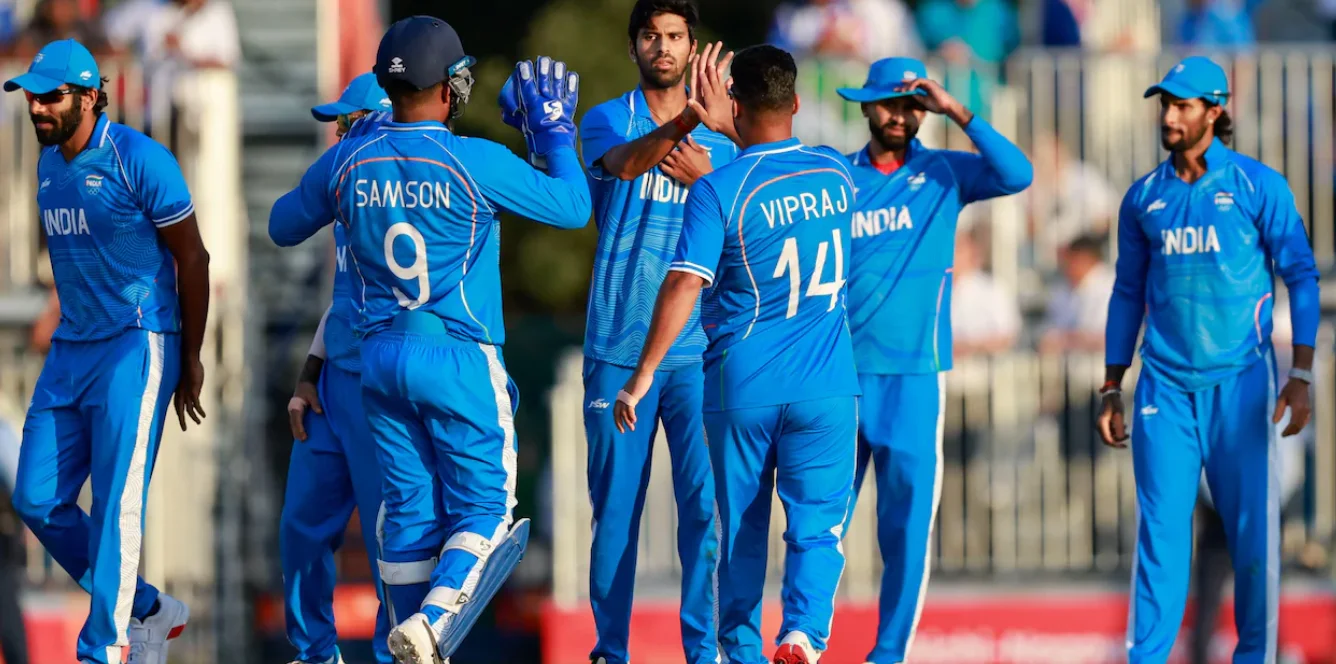
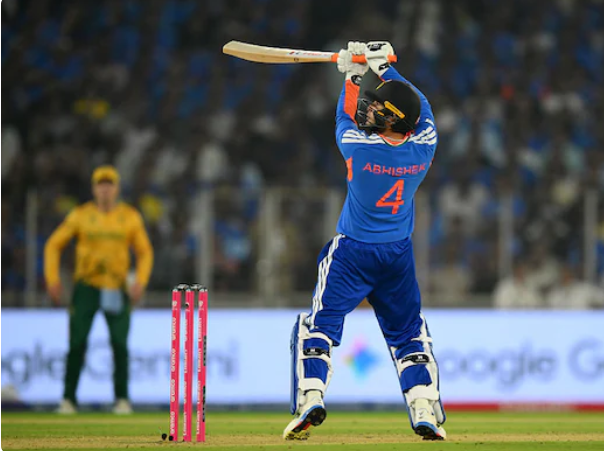
South Africa delivered a clinical performance to defeat India by 76 runs in the Super 8 stage of the T20 World Cup 2026, exposing tactical gaps in Suryakumar Yadav’s side. At the Narendra Modi Stadium, the much-anticipated clash turned into a lesson in adaptability as the Proteas executed their plans to near perfection.

Despite the home support, India struggled to counter South Africa’s disciplined bowling attack, particularly the consistent use of slower deliveries on a pitch that offered grip and uneven bounce.

The slower-ball ploy that stalled India

If one bowler embodied South Africa’s methodical approach, it was Lungi Ngidi. Though his figures of 4-0-15-0 did not include wickets, his spell applied relentless pressure. Recognising that the black-soil surface was holding up, Ngidi shifted away from outright pace and relied heavily on off-cutters and slower bouncers without altering his arm speed.

Indian batters found it difficult to time the ball, and boundaries dried up. Forced to manufacture shots, they took risks that failed to pay off, leading to a collapse against a disciplined attack.

Complementing Ngidi’s control was Marco Jansen, who used his height to extract uneven bounce. Jansen’s 4/22 came from a heavy length that proved hard to negotiate, particularly with slower balls dropping sharply from a higher release point. South Africa’s sharp fielding further tightened the screws, with minimal errors in the field.

Former India spinner Ravichandran Ashwin said the team appeared underprepared for South Africa’s strategy. He noted that Suryakumar Yadav faced a majority of slower deliveries and highlighted the absence of back-of-a-length balls, crediting South Africa’s execution with both bat and ball.

Miller and Brevis rebuild after early setback

South Africa’s innings had begun shakily at 20/3, but David Miller and Dewald Brevis steadied the ship with a calculated partnership. The duo focused on rotating strike and exploiting gaps before accelerating.

They targeted spinners Washington Sundar and Varun Chakaravarthy during the middle overs, with Chakaravarthy conceding 47 runs in his four overs.

Proteas captain Aiden Markram later said the pair put aside individual ambition to focus on partnerships and running between the wickets. Miller, who struck 63 off 35 balls, explained that they had planned to attack Chakaravarthy if he erred, adding that the surface did not offer excessive turn, allowing them to trust the line and play with intent.

The 97-run stand shifted momentum decisively in South Africa’s favour, setting up a commanding total that India ultimately failed to chase.

The emphatic win not only strengthened South Africa’s campaign but also underlined the importance of preparation and tactical flexibility at the highest level of T20 cricket.

Cricket news

Shreyas Iyer calls India’s T20I struggles a transition phase after England seal series

Shreyas Iyer admitted India failed in execution after England’s nine-wicket victory sealed the T20I series, describing the current squad as one in transition.

Published

on

Shreyas Iyer

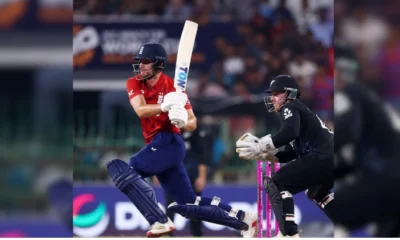
England clinched the T20I series against India with a convincing nine-wicket victory, leaving India captain Shreyas Iyer disappointed with his team’s overall performance despite scoring an unbeaten 80.

India posted 158 for 7 after Iyer anchored the innings with the highest score. However, England made light work of the chase, reaching the target in just 13.5 overs to take an unassailable lead in the series.

Iyer rues poor execution across departments

Following the defeat, Iyer admitted India failed to execute their plans with both bat and ball.

He said 158 was not an ideal total on the board and acknowledged that England’s rapid chase reflected India’s shortcomings. According to the skipper, the bowlers were instructed to repeatedly target a difficult length around the top of middle and leg stump, but the team failed to execute those plans consistently.

Although satisfied with his personal contribution, Iyer said individual performances hold little value when the team ends up on the losing side.

He added that his priority is always to contribute to victories and expressed hope of bouncing back in the next match.

‘This is a transition phase,’ says India captain

Iyer described the current Indian side as a team in transition and stressed that mistakes are part of the learning process.

He said the players need to understand the importance of adapting quickly and expressed confidence that the squad has enough quick learners who will assess their performances and improve from the experience.

Harry Brook praises England’s adaptability

England captain Harry Brook credited his team’s success to its ability to adjust to the conditions and the communication between the players and coaching staff.

Brook said the team had enjoyed the contest and was delighted to secure the series against India. He identified adaptability and strong communication as the two biggest reasons behind England’s dominant performances.

The England skipper also praised fast bowlers Jofra Archer and Josh Tongue for once again making an early impact with the ball before expressing his ambition of seeing England rise to the No. 1 spot in the ICC T20I rankings.

England now have the opportunity to complete a 4-0 series sweep in Southampton on Saturday, a result that would also see them replace reigning world champions India at the top of the T20I rankings.

Continue Reading

Football news

Kylian Mbappe becomes first player to score 20 World Cup goals before turning 30

Kylian Mbappe became the first player to score 20 FIFA World Cup goals before turning 30 as France defeated Morocco 2-0 to reach the 2026 World Cup semi-finals.

Published

on

France captain Kylian Mbappe etched his name into FIFA World Cup history after becoming the first footballer to score 20 World Cup goals before the age of 30 during France’s 2-0 quarter-final victory over Morocco in Boston.

Mbappe broke the deadlock in the second half with his eighth goal of the ongoing tournament. The strike also saw him draw level with Lionel Messi in the race for the Golden Boot while reaching a milestone never previously achieved in World Cup history.

According to the available records, Messi is the only other player to have reached the 20-goal mark at the FIFA World Cup, having scored 21 goals in the competition.

Mbappe recovers after first-half penalty miss

The France skipper had an opportunity to score earlier in the match after winning a penalty following a challenge from Noussair Mazraoui. However, Moroccan goalkeeper Yassine Bounou denied him from the spot.

The penalty award sparked debate as television replays appeared to indicate that Mbappe had gone to ground before any contact from Mazraoui.

Despite the setback, Mbappe responded in the second half by opening the scoring and later set up France’s second goal, which was finished by reigning Ballon d’Or winner Ousmane Dembele.

France march into World Cup semi-finals

Mbappe was substituted in the 76th minute after appearing to experience some discomfort, with head coach Didier Deschamps deciding not to take any risks.

France’s victory sends Les Bleus into the FIFA World Cup 2026 semi-finals, where they will take on either Spain or Belgium in Dallas next Tuesday.

The 2018 world champions and 2022 runners-up remain on course for a third successive World Cup final under Deschamps, who is overseeing his final World Cup campaign as France coach.

Morocco, playing without injured Ismael Saibari, struggled to create enough attacking opportunities as France controlled the contest to seal another place in the last four.

Mbappe once again underlined his reputation as one of football’s leading goal-scorers, adding another historic achievement to his World Cup career.

Continue Reading

Cricket news

Anil Kumble criticises India’s batting, team management after 125-run loss to England

Anil Kumble has criticised India’s batting collapse, team management decisions and frequent bowling changes following the 125-run defeat to England in the third T20I.

Published

on

Former India captain and ex-head coach Anil Kumble has strongly criticised India’s performance following their crushing 125-run defeat to England in the third T20I, describing the display as an “abject surrender” by the Shreyas Iyer-led side.

India were bowled out for just 76 while chasing, suffering one of their heaviest defeats in T20Is. The result also left them without a win in the five-match series at that stage, meaning they could only level the contest by winning the remaining two matches.

Reacting to the defeat, Kumble questioned the batting approach and said the players failed to show the patience required under pressure.

“It was an abject surrender by the Indian team. You don’t expect a world champion side to cave in like that,” Kumble said on JioHotStar.

He added that although the required run rate was above 10 an over, one of the batters needed to anchor the innings instead of everyone opting for an attacking approach.

“The Indian batters needed to show more patience and application, but everyone just tried to attack instead of absorbing the pressure. Yes, the required rate was over 10, but someone had to take responsibility and bat deep. Instead, they went the aggressive route and paid the price with a batting collapse,” he said.

Kumble questions batting order decision

The former India skipper also criticised the team management’s decision to promote Harshit Rana ahead of Shivam Dube during the run chase.

According to Kumble, India should have backed one of their established batters instead of sending a lower-order player into a difficult situation.

“In T20 cricket, you put your best batters up front. Sending out Harshit Rana to bat ahead of a more complete batter like Shivam Dube was wrong. You can’t expect a number eight guy to win you a game by sending him to bat ahead of a proven guy. That’s not how things work in modern-day cricket,” he said.

Calls for consistency in bowling selection

Kumble also expressed concern over India’s frequent changes to the bowling attack, saying constant chopping and changing could affect players’ confidence.

He pointed out that Prasidh Krishna was dropped after one poor outing against Ireland, while Prince Yadav impressed with three wickets in the second T20I but still found himself in a side that lost the match.

“The Indian team has made too many changes to its lineup, and that needs to stop. The bowlers keep changing. Prasidh Krishna was dropped after one bad game against Ireland. Prince Yadav came in, bowled well, and picked three wickets in the second T20I, but India still lost that game. As a new captain, you need to stick with your five bowlers. Batters will score runs, but bowlers win you matches,” Kumble said.

He further stressed the importance of backing players through difficult phases rather than dropping them after isolated failures.

“When you pick players, you need to keep backing them. Ups and downs are part and parcel of life. They keep happening, but that doesn’t mean failures end up with you getting dropped from the squad,” he added.

Continue Reading

Trending

© Copyright 2022 APNLIVE.com