
Latest world news
Iraqi Kurds pledge to abide by Supreme Court order banning separate homeland


[vc_row][vc_column][vc_column_text]KRG eager for direct dialogue with Baghdad
In a major development which may resolve the issue of a separate homeland for Kurds in Iraq, Kurdistan Regional Government (KRG) has on Tuesday pledged to abide by a recent Supreme Court ruling which bans any secession from the country. It has also expressed hope that apex court’s decision will pave the way for a dialogue between central government in Baghdad and KRG headquarter in Erbil.
This is a major development after the controversial independence referendum held on September 25 by Kurdistan Regional Government. KRG chief Masoud Barzani did not heed Baghdad’s appeal not to conduct the referendum. Iran, Turkey and Syria also opposed referendum in Iraqi Kurdistan.
The statement released on Tuesday says that KRG conceded that it would respect the November 6 Supreme Federal Court order banning secession of any region or province from Iraq.
“We believe that this decision must become a basis for starting an inclusive national dialogue between Erbil and Baghdad to resolve all disputes through implementation of all constitutional articles and in a way that guarantees all rights, authorities and status mentioned in the constitution,” the statement said.
The Supreme Court’s ruling came after central government requested the highest judicial body to end any “wrong misinterpretation” of the Iraqi constitution and assert the country’s unity.
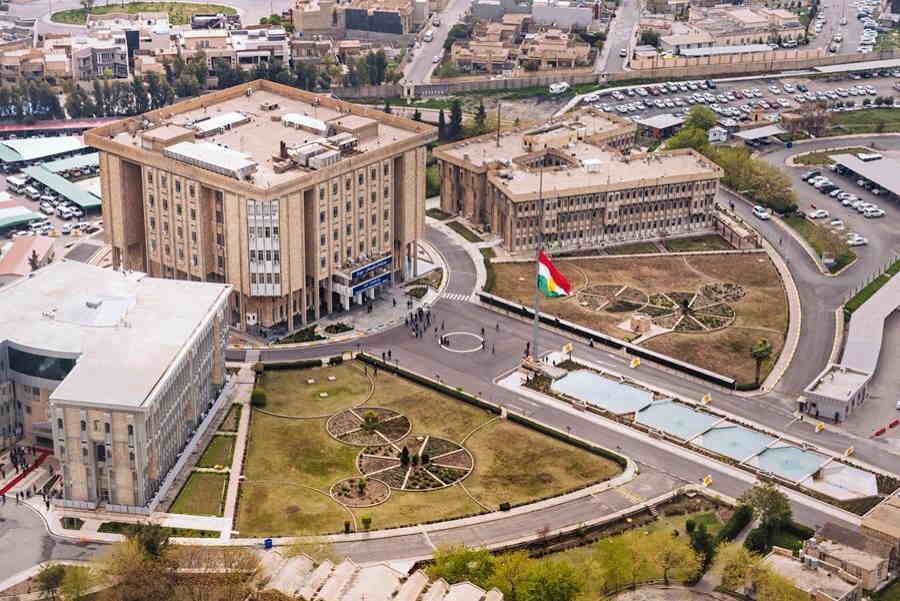
Immediately after the September 25 independence referendum, Baghdad asked all countries to stop flight operation to the two international airports in the region:Erbil and Sulaymaniah. Iraqi army conducted joint exercise with Turkish army along the Iraqi Kurdistan border.
Iran had stopped flight operations and closed its airspace for the flights originating from or destined to the region. Tehran had also threatened to stop supplies through its land routes into Iraqi Kurdistan.
Moreover, the referendum was also followed by smooth taking over oil rich Kirkuk province from the KRG control. Earlier KRG used to claim Kirkuk to be Kurdish area which could be the backbone of the proposed Kurdistan. It is believed that the two major Kurdish groups had differed on their demand for secession from mainland Iraq.
After the debacle, Masoud Barzani resigned from Presidency of KRG and handed over his powers to parliament and executive of the semi-autonomous region.
The referendum was conducted at a time when Iraqi army was engaged in a military campaign to retake the territories rune over by Kurdish Peshmarga militants in the course of the fight against Daesh (IS).
Iraqi Prime Minister Haider al-Abadi had previously called on the Kurdish region to honour the court ruling.
Israel was the only country supporting the independence referendum in Iraqi Kurdistan. Reuters, in one of its analysis had also disclosed that US was also supportive of a separate Kurdistan in the region. However, Washington did not announce its intent around the referendum. [/vc_column_text][/vc_column][/vc_row]









Latest world news
Magnitude 7 earthquake strikes Russia’s Kamchatka Peninsula
A magnitude 7 earthquake struck Russia’s Kamchatka Peninsula region on Friday. The initial report placed the earthquake at a depth of 140 kilometres.


Latest world news
S Jaishankar says India is a natural option for Russia amid Europe tensions
External Affairs Minister S Jaishankar said India remained a natural option for Russia as Moscow increasingly turned towards Asia amid strained relations with Europe. He highlighted the continuity of India-Russia ties and their significance for the balance of power in Asia.

Latest world news
Putin praises PM Modi, says he has very good ideas on Ukraine war
Russian President Vladimir Putin has praised Prime Minister Narendra Modi for repeatedly raising the need to end the Ukraine war, describing his ideas for a settlement as “very good”.


India-US trade deal first phase finalised, drafting underway

Election Commission orders voter roll revision in 17 states, UTs

Actor Imran Khan asked to leave India after CJP protest

Delhi Police offers 11-person limit for CJP’s Connaught Place protest

Mallikarjun Kharge’s ‘Your Friends’ jab at Rahul Gandhi over congress exits

Magnitude 7 earthquake strikes Russia’s Kamchatka Peninsula

Delhi deploys 25,000 personnel, installs CCTV cameras ahead of CJP march
Mallikarjun Kharge’s ‘Your Friends’ jab at Rahul Gandhi over congress exits
Delhi Police offers 11-person limit for CJP’s Connaught Place protest
Actor Imran Khan asked to leave India after CJP protest

Afghan Men Try To Hang With The Jet Engine Of The Aircraft in Kabul- Afghanistan News – Kabul News
Trending Top 10 News: 10000 Crore Fine on Flipkart, Apple to Launch Unique Feature, Hdfc Bank Job Ad

Trending Top 10 News: Nokia 6310, Apple sales, Bachpan ka Pyar Video Kid, Dainik Bhaskar IT Raid

Trending Top 10 News: Canada bans Indian flights, Rain in Delhi NCR, AIMIM Twitter hacked, Raj Kundra case

Trending Top 10 News: Shein India, Apple New Service, Pocket Oxygen, Oppo Launched New Phone
-
 India News23 hours ago
India-US trade deal first phase finalised, drafting underway
-
 India News21 hours ago
Election Commission orders voter roll revision in 17 states, UTs
-
 India News21 hours ago
Actor Imran Khan asked to leave India after CJP protest
-
 India News20 hours ago
Delhi Police offers 11-person limit for CJP’s Connaught Place protest
-
 India News8 hours ago
Mallikarjun Kharge’s ‘Your Friends’ jab at Rahul Gandhi over congress exits
-
 India News8 hours ago
Delhi deploys 25,000 personnel, installs CCTV cameras ahead of CJP march
-
 Latest world news8 hours ago
Magnitude 7 earthquake strikes Russia’s Kamchatka Peninsula
