English हिन्दी
Connect with us

Latest world news

US airstrikes hit Iranian children’s cancer hospital as IRGC claims downing of American MQ-9 drone

A major military escalation in the Middle East has seen US overnight airstrikes hit several Iranian cities, damaging a children’s cancer facility in Ahvaz, while the IRGC claims it has intercepted a US military drone over Andimeshk.


Published

on

Iran us strikes

A fresh round of intense military escalation has unfolded in the Middle East as the United States launched a new wave of overnight airstrikes across Iran. The military action coincided with a renewed American blockade of Iranian ports, prompting Tehran to strike back at regional allies and reaffirm its vow to keep the vital Strait of Hormuz closed until the US halts its military campaign.

Multi-city bombardment impacts medical facility and military sites

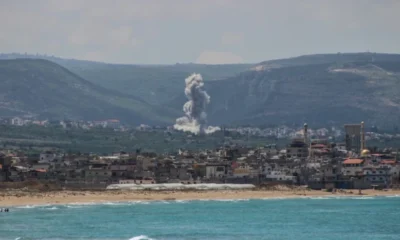
Explosions rattled numerous locations across Iran, including major centers and coastal zones such as Qeshm Island, Bandar Abbas, Sirik, Chabahar, Konarak, Rask City, Khondab, and the western city of Khorramabad.

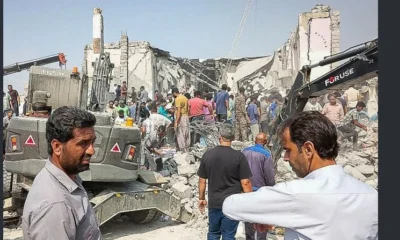
A severe consequence of the operation occurred in the city of Ahvaz, where local media reported that the Shahid Baghaei Hospital sustained damage from the American bombardment. The strike impacted the hospital’s specialized children’s cancer treatment department, forcing an emergency evacuation of the facility which provides critical chemotherapy treatments.

Beyond civilian infrastructure, Iranian officials stated that the airstrikes hit an army barracks, resulting in the deaths of at least seven troops. According to Tehran, the total casualties from the ongoing US campaign have reached at least 35 dead and more than 300 injured. In response to the aerial incursions, state media confirmed that air defence systems were activated over the capital city of Tehran. Fresh strikes were also reported in Bushehr, the location of Iran’s lone civilian nuclear power plant, following earlier blasts near southern maritime hubs.

Maritime confrontation and regional retaliation

US Central Command (CENTCOM) stated that its operations targeted Iranian military assets that directly threaten commercial vessels navigating the strategic waterway. Furthermore, the US military confirmed it disabled a Curacao-flagged oil tanker, the M/T Belma, by firing Hellfire missiles into its smokestack after the vessel attempted to breach the naval blockade. CENTCOM confirmed via social media that the ship is no longer moving toward Iran.

In retaliation, the Islamic Revolutionary Guard Corps (IRGC) launched attacks targeting the US Fifth Fleet stationed in Bahrain, triggering air sirens as incoming threats were intercepted. Additionally, Jordan’s armed forces reported intercepting and downing three missiles launched from Iran.

The IRGC also claimed a major defensive success via media reports, stating its aerospace force utilized a newly deployed air defence system to intercept and destroy an “enemy” MQ-9 drone over the southwestern city of Andimeshk. Meanwhile, in northern Iraq, Kurdish forces reported that the US-led coalition successfully shot down eight explosive-laden drones over Erbil, near the US consulate, with no casualties reported.

Washington increases regional arms sales and signals next steps

Against the backdrop of active hostilities, the US State Department announced the provisional approval of a $1.96 billion weapons sale to Saudi Arabia, alongside a separate $484 million aircraft sustainment package for Kuwait. The proposed Saudi agreement includes up to 20,000 Advanced Precision Kill Weapon System guidance sections for both air-to-air and air-to-ground configurations, alongside launchers, warheads, and logistical support. The package for Kuwait focuses on the sustainment of C-17 aircraft. Both deals must pass congressional review before final finalization.

Following the third wave of American strikes within a 24-hour window, Donald Trump commented during a defence summit at the US Army War College that Iran appears willing to settle, though he remained ambiguous about the path forward. However, in a later media interview, he sharpened his rhetoric, threatening potential strikes on power plants and bridges if Tehran refuses to return to negotiations, warning that the situation would worsen significantly next week.

Diplomacy remains active amid the Hormuz crisis

Despite the surge in kinetic actions, mediated talks between Washington and Tehran have not officially collapsed. Iran’s top negotiator, Mohammad Bagher Ghalibaf, emphasized that any memorandum of understanding requires valid implementation of its clauses to remain meaningful, warning that Iran will not adhere to the agreement if it receives no tangible benefits.

Concurrently, Iranian Deputy Foreign Minister Kazem Gharibabadi stated that the reimposed US naval blockade has effectively compromised the interim Islamabad memorandum established last month.

In what was described as a goodwill gesture, Iran released US-Iranian dual citizen Dena Karari, who had been detained since 2024 on espionage charges related to her work running a non-profit organization. her legal counsel confirmed her release following Trump’s initial announcement.

The conflict remains anchored around the Strait of Hormuz, a critical bottleneck for global energy shipping. Iran originally blockaded the strait following the outbreak of conflict via US-Israeli strikes on February 28. While briefly opened under last month’s diplomatic understanding, the waterway is once again restricted by Tehran until US operations cease. Consequently, maritime data indicates traffic has plummeted to just 21 transits on Tuesday, sparking an upward trend in global oil prices.

Latest world news

Iran pushes back against new US sanctions, warns of possible retaliation

Iran has warned of retaliation after the US widened economic sanctions, with Tehran saying it is prepared to counter Washington’s pressure and maintain ties with major trading partners.

Published

on

Iran has threatened retaliation following the United States’ decision to widen economic sanctions against Tehran, with senior officials insisting that the new measures will not easily isolate the country from its major trading partners.

Iranian Parliament Speaker Mohammad Bagher Ghalibaf dismissed the latest US pressure, arguing that Washington was not in a position to further restrict Iran’s economic ties with other nations. He also said Iran’s trading partners had indicated that they would not be swayed by the US statements.

The comments came after US Treasury Secretary Scott Bessent announced measures aimed at cutting off Iran’s economic lifeline. He warned that countries continuing to trade with Iran could eventually face restrictions that would affect their access to the dollar-based financial system.

However, Bessent did not identify the countries that could face such penalties or specify when they would be imposed. The US Treasury Department separately announced sanctions against 60 individuals, entities and vessels.

Notably, the sanctions list did not include Chinese financial institutions suspected of helping facilitate Iran’s oil trade. China remains Iran’s biggest trading partner.

Tehran says it is ready to counter US pressure

Following the US announcement, Ghalibaf said Iran’s partners were not taking Washington’s latest statements seriously.

Iranian Economy Minister Ali Madanizadeh also said Tehran was “fully prepared” to deal with the expanded sanctions. He argued that Iran had developed its own economic tools after years of sanctions and warned that its response could extend beyond defence.

Madanizadeh further said that neither China nor Russia had accepted the US measures and predicted that other countries would also resist Washington’s pressure.

Iran has also warned of possible military retaliation and indicated that it could further reduce oil exports from the Gulf if its infrastructure comes under threat.

Iran warns of attacks on US interests and energy routes

Brigadier General Hossein Mohebbi, a spokesperson for Iran’s Islamic Revolutionary Guard Corps, warned that Iran could deliver heavy blows against US vital interests and energy chokepoints if its infrastructure is threatened.

The warning comes amid continued tensions involving shipping and energy routes in the region. Tehran has previously indicated that it could use its military capabilities and control over strategically important areas to respond to threats.

What is the current situation in the Iran conflict?

The conflict remains unresolved despite a reduction in major strikes in recent weeks. The US administration is continuing to pursue economic pressure against Tehran while also seeking ways to address Iranian attacks on ships in the Gulf and, through its allies, in the Red Sea.

The conflict has placed further pressure on energy markets, while years of US and international sanctions have already caused significant economic difficulties for Iran.

Iran’s conventional military capabilities have also been affected by the conflict. However, Tehran is reported to retain missile and drone capabilities that could threaten Gulf neighbours and shipping through the Strait of Hormuz.

The condition of Iran’s nuclear programme remains unclear, while the US and Israel continue to seek its dismantling.

Continue Reading

Latest world news

US plans proposed $103,265 H-1B fee hike, Indians among those affected

The US is planning to propose a $103,265 H-1B visa fee, along with possible changes to F-1 OPT and the H-1B grace period.

Published

on

donald-trump

The US Department of Homeland Security is planning to propose a major increase in the H-1B visa fee to $103,265, according to a notice posted in the Federal Register on Monday.

The proposed changes could significantly increase the cost of employing foreign nationals in the United States if they are implemented. They could also affect students moving from universities into employment and employers sponsoring H-1B workers.

The proposals are particularly significant for Indians, who accounted for 71 per cent of H-1B beneficiaries among the petitions approved by the US Citizenship and Immigration Services in 2024.

Proposed H-1B and OPT fees

The Trump administration is planning new fees related to the H-1B and F-1 Optional Practical Training (OPT) programmes.

According to immigration services firm Fragomen, the proposed rules have already moved through the White House Office of Management and Budget (OMB).

Fragomen said a proposed rule concerning an OPT fee was sent to the OMB on August 20 and was under review. A separate proposal concerning a fee on certain H-1B petitions was received by the OMB and cleared review on August 19.

The contents of the proposed regulations have not yet been officially released.

Fragomen also noted that the Department of Homeland Security could propose a $100,000 fee on OPT applications. The proposed H-1B fee could also be linked to ongoing legal proceedings concerning the administration’s previously blocked $100,000 H-1B petition fee.

Indians account for over 70% of H-1B beneficiaries

The proposed fee increase could have a substantial impact on Indian nationals because they make up the largest share of H-1B beneficiaries.

US Citizenship and Immigration Services approved 399,402 H-1B petitions in 2024, with Indian-born beneficiaries accounting for 71 per cent of them.

If the proposed regulations are eventually implemented, the higher costs could affect foreign workers as well as US employers that sponsor H-1B employees.

More than 5.2 million people of Indian origin live in the United States, according to recent estimates based on US Census data.

Proposed end to 60-day H-1B grace period

The potential fee increases come alongside another proposed immigration change affecting H-1B workers.

Earlier this month, the Department of Homeland Security proposed eliminating the existing 60-day grace period for certain H-1B workers whose employment ends before their authorised period of stay expires.

Under the proposal, affected workers and their dependants could be required to leave the US almost immediately if the regulation is finalised.

The proposed change would remove the existing 60-day grace period for certain workers and their dependants when the employment supporting their immigration status ends before their authorised stay expires.

Continue Reading

Latest world news

Hindu family killed in Bangladesh, suspects stayed overnight after killings

Two suspects have been arrested in the killing of a Hindu family of four in Bangladesh’s Rangpur. Police said they allegedly stayed overnight inside the victims’ home after the murders.

Published

on

Four members of a Hindu family were killed inside their locked home in Bangladesh’s Rangpur city, with police saying two neighbours remained inside the house overnight after the killings.

The victims were identified as retired schoolteacher Ganapati Chakraborty, 65, his wife Pritilata Chakraborty, 50, their daughter Agami Chakraborty Prarthi, 23, and their 12-year-old son Priyam Chakraborty.

Their bodies were recovered from their home on Saturday. Police said the victims’ faces had been burned using an inflammable substance.

According to police, the killings took place late on Thursday night after two neighbours, also Hindu, allegedly went to the rooftop of the Chakraborty family’s two-storey house in the Machuapara area to consume yaba, a methamphetamine-based drug.

Two suspects arrested

Rangpur Metropolitan Police Commissioner Mohammad Abdul Mabud said two maternal cousins, Siddhartha Das, 19, and Mugdha Das, 23, had been arrested in connection with the killings.

Police said the two men allegedly went to the family’s rooftop to consume yaba. After hearing noises upstairs, Ganapati Chakraborty went to check what was happening.

According to the police account, the suspects allegedly used a towel that Chakraborty was carrying to strangle him.

When his wife followed him after hearing the commotion, she was allegedly attacked and killed on the staircase.

The couple’s daughter also came out of her room to find out what was happening and was allegedly attacked. Police said the two suspects struggled with her for several minutes before allegedly strangling her with a rope.

The couple’s 12-year-old son was subsequently killed because the suspects allegedly feared that he could identify them, police said.

Suspects allegedly stayed overnight

Police said they believe the two suspects did not immediately leave the house after the killings.

According to the police account, the suspects allegedly stayed inside the home overnight and left the following day when the streets were relatively empty during Jummah, or Friday prayers.

During their alleged stay, the suspects reportedly bathed inside the house and took dates and cucumbers from the family’s refrigerator.

Police also said the suspects consumed drugs, which were found on a table inside the house.

Before leaving, the two men allegedly opened cupboards and drawers and scattered clothes and other belongings around the home in an apparent attempt to mislead investigators into believing that a robbery had taken place.

Gold jewellery allegedly looted

Police said gold jewellery was allegedly taken from the victims’ home. Investigators also found evidence suggesting that an attempt had been made to test a gold bangle using fire.

According to the source text, Siddhartha runs a fish business, while Mugdha works as a goldsmith.

Police said the two suspects have confessed to the killings and that gold jewellery allegedly looted from the house has been recovered.

The family’s two mobile phones were also allegedly destroyed by submerging them in water mixed with detergent, police said.

Investigators have seized date pits from inside the house and are conducting DNA testing as they continue to investigate the case.

Continue Reading

Trending

© Copyright 2022 APNLIVE.com