English हिन्दी
Connect with us

Latest world news

US says it played direct role in India-Pakistan ceasefire as Rubio praises Trump as president of peace

Published

on

Donald Trump

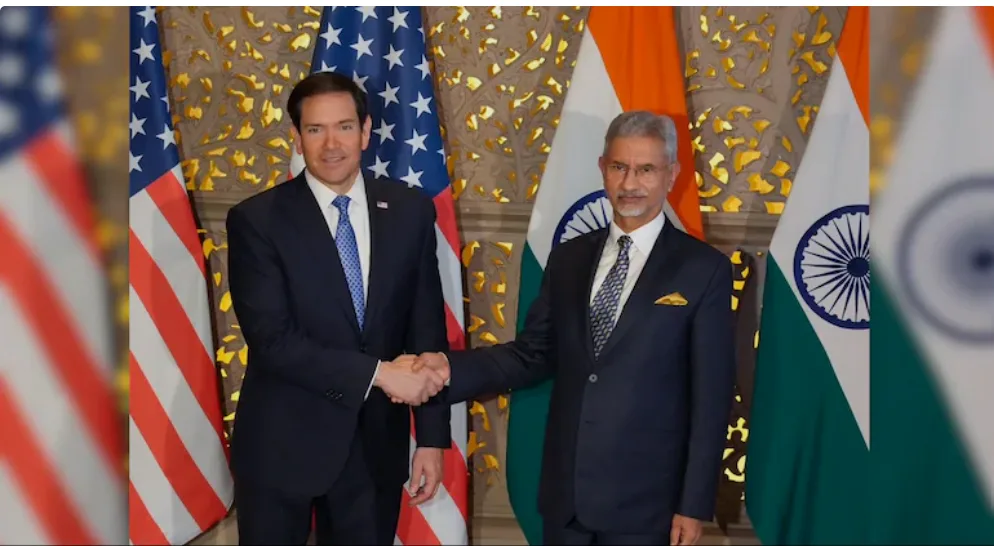
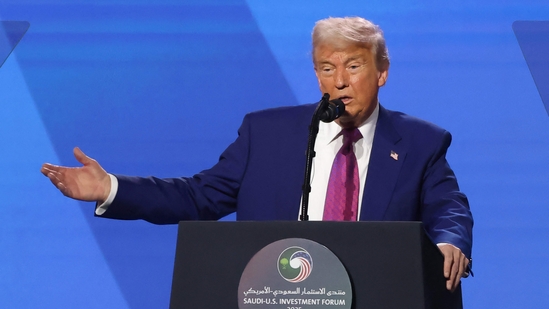
In a recent statement, US Secretary of State Marco Rubio reiterated that the United States was directly involved during a phase of heightened tensions between India and Pakistan, claiming that President Donald Trump played a key role in bringing about peace between the two nuclear-armed countries.

Speaking to EWTN’s The World Over on Thursday, Rubio stated that when India and Pakistan went to war, the United States became directly involved, and that the president was able to deliver peace between the two countries. He praised Trump’s diplomatic efforts, referring to him as the president of peace and describing him as deeply committed to resolving conflicts.

Since May 10, Trump has repeatedly claimed that he played a role in settling disputes between New Delhi and Islamabad. He has said that he assured both countries the United States would engage in a lot of trade with them if they agreed to end hostilities.

However, India has consistently maintained that the ceasefire agreement with Pakistan was reached through direct engagement between the Directors General of Military Operations (DGMOs) of the two militaries, without any third-party mediation.

Rubio also pointed to other global conflicts in which, according to him, the Trump administration played a peacemaking role. These included conflicts between Cambodia and Thailand, Azerbaijan and Armenia, and the prolonged hostilities between the Democratic Republic of Congo and Rwanda, the latter of which he said concluded with a peace deal mediated by the United States.

Rubio noted that a significant amount of time was dedicated to stopping and ending wars, adding that the administration continued to focus on larger ongoing challenges, including the Russia-Ukraine conflict.

Continue Reading

Latest world news

Twin earthquakes strike Venezuela within 39 seconds, triggering panic in Caracas

Venezuela witnessed two powerful earthquakes within 39 seconds, triggering panic in Caracas, damaging infrastructure and leading authorities to declare a state of emergency.

Published

on

Two powerful earthquakes struck Venezuela within just 39 seconds, causing widespread panic, damaging buildings and disrupting key infrastructure in and around the capital, Caracas.

According to the United States Geological Survey (USGS), the first earthquake measured magnitude 7.2 and struck on Wednesday evening near the coastal town of Moron. Just 39 seconds later, a stronger 7.5-magnitude tremor hit roughly 45 kilometres away, creating what seismologists described as a “doublet” earthquake sequence.

The back-to-back quakes sent residents rushing into the streets as buildings shook violently across Caracas. Several structures suffered severe damage, with reports of building collapses in parts of the capital. Rescue workers were deployed to search through rubble while emergency teams assessed the extent of the destruction.

Visuals shared on social media showed scenes of chaos at Simon Bolivar International Airport, where parts of the terminal roof reportedly collapsed, filling sections of the facility with dust and smoke. Passengers were seen evacuating the airport as power flickered during the tremors. Authorities later announced the closure of the airport because of significant damage.

More than 20 aftershocks were recorded following the twin earthquakes, raising concerns about additional structural damage. The USGS warned that the disaster could result in significant casualties and economic losses, while landslides were also reported in affected areas.

Venezuela’s interim president Delcy Rodriguez declared a state of emergency following the earthquakes and urged citizens to remain cautious as emergency response efforts continued. Opposition leader Maria Corina Machado also expressed solidarity with those affected by the disaster.

The earthquakes are being described as among the strongest to strike Venezuela in more than a century. Authorities continue to assess the full scale of the damage and search for possible victims trapped beneath collapsed structures.

Continue Reading

Latest world news

London court orders Nirav Modi to pay Bank of India over $11.5 million in loan guarantee case

A London court has ruled that fugitive businessman Nirav Modi must pay Bank of India more than $11.5 million, including interest, in a loan guarantee dispute.

Published

on

Fugitive diamond merchant Nirav Modi has been ordered by a London court to pay Bank of India more than $11.5 million, including accrued interest, in connection with a personal guarantee linked to a loan extended to one of his Dubai-based firms.

In a significant ruling delivered by the London Circuit Commercial Court, Justice Simon Tinkler held that Modi remained liable under the personal guarantee issued for a loan granted to Firestar Diamond FZE, a Dubai-incorporated company associated with him. The court rejected Modi’s challenge to the enforceability of the guarantee.

The court examined whether Modi had been properly served with a demand notice, whether the demand related to a liability owed to the bank, and whether the personal guarantee was legally enforceable. Justice Tinkler ruled in favour of Bank of India on all three issues.

According to the judgment, Modi is liable for the principal outstanding amount of $4.1 million. After adding accumulated interest, the total payable amount has risen to an estimated $11.5 million as of March 2026, with additional interest continuing to accrue.

The public sector lender has been pursuing recovery proceedings against Modi since 2018, following the emergence of allegations involving companies linked to the businessman. Modi, who has largely represented himself in the proceedings, is currently lodged in a UK prison while contesting his extradition to India in a separate Punjab National Bank fraud and money laundering case.

Law firm Fladgate LLP, representing Bank of India, clarified after the verdict that the proceedings were strictly related to a commercial banking recovery claim and did not deal with the wider allegations connected to the Punjab National Bank fraud case.

Continue Reading

Latest world news

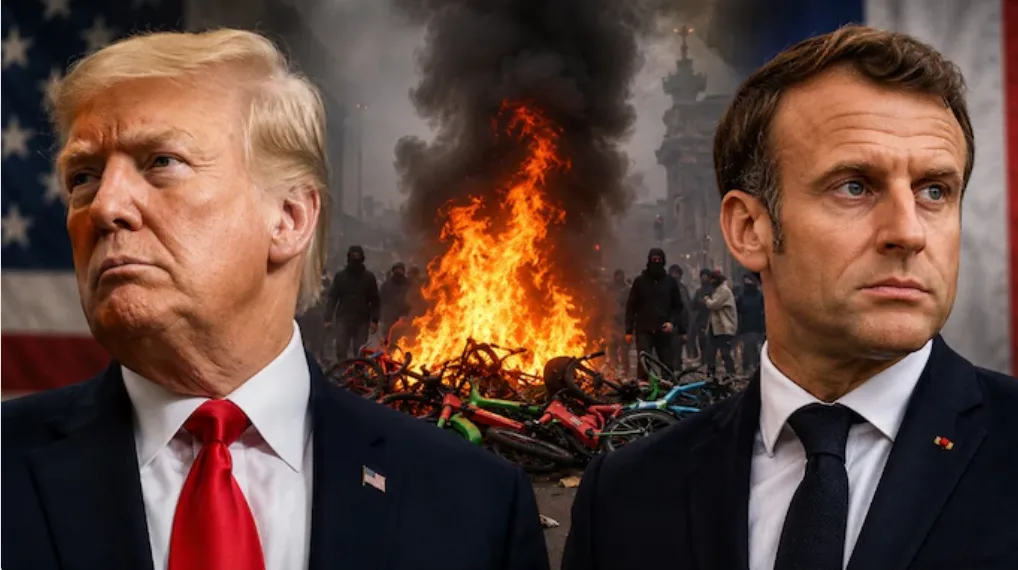
Trump rejected JD Vance’s proposal for Indian peacekeepers in Ukraine, says new book

A newly published book claims Donald Trump rejected JD Vance’s proposal to include Indian troops in a potential Ukraine peacekeeping mission.

Published

on

trump

US President Donald Trump reportedly dismissed a proposal by Vice President JD Vance to involve Indian troops in a potential peacekeeping mission in Ukraine, according to a newly released book detailing internal White House discussions on the Russia-Ukraine conflict.

The revelation appears in “Regime Change: Inside the Imperial Presidency of Donald Trump”, authored by journalists Maggie Haberman and Jonathan Swan. The book claims that the discussion took place during an Oval Office meeting held shortly after Trump’s return to the White House, when senior officials were considering options to end the war in Ukraine.

Vance suggested India and Saudi Arabia

According to the book, retired Lieutenant General Keith Kellogg, Trump’s special envoy for Ukraine and Russia, presented a peace proposal that included deploying foreign troops to monitor a possible ceasefire between Russia and Ukraine. Initial plans reportedly considered personnel from European countries, including France, Britain and the Netherlands.

However, Vance is said to have raised concerns over deploying troops from NATO countries, arguing that such a move could escalate tensions with Russia. He then reportedly suggested that countries outside Europe, such as India and Saudi Arabia, could contribute troops for the mission.

Trump’s reported response

The book claims Trump laughed off the suggestion and responded by saying, “The Indians won’t do that,” adding that India would not be willing to bear the costs associated with such a deployment. The authors further state that Trump remarked on his relationship with Prime Minister Narendra Modi while expressing doubts about India’s participation.

There has been no official response from the Indian government regarding the claims mentioned in the book.

The reported exchange comes amid ongoing international efforts to secure a ceasefire and find a diplomatic solution to the prolonged Russia-Ukraine war. Several proposals involving multinational peacekeeping arrangements have been discussed in recent years, though no agreement has yet been reached.

Continue Reading

Trending

© Copyright 2022 APNLIVE.com