English हिन्दी
Connect with us

Latest world news

US Wants UN to Impose Tough Sanctions on North Korea

Published

on

US Wants UN to Impose Tough Sanctions on North Korea

US responsible for the North Korean “self-defence acts, says Julian Assange

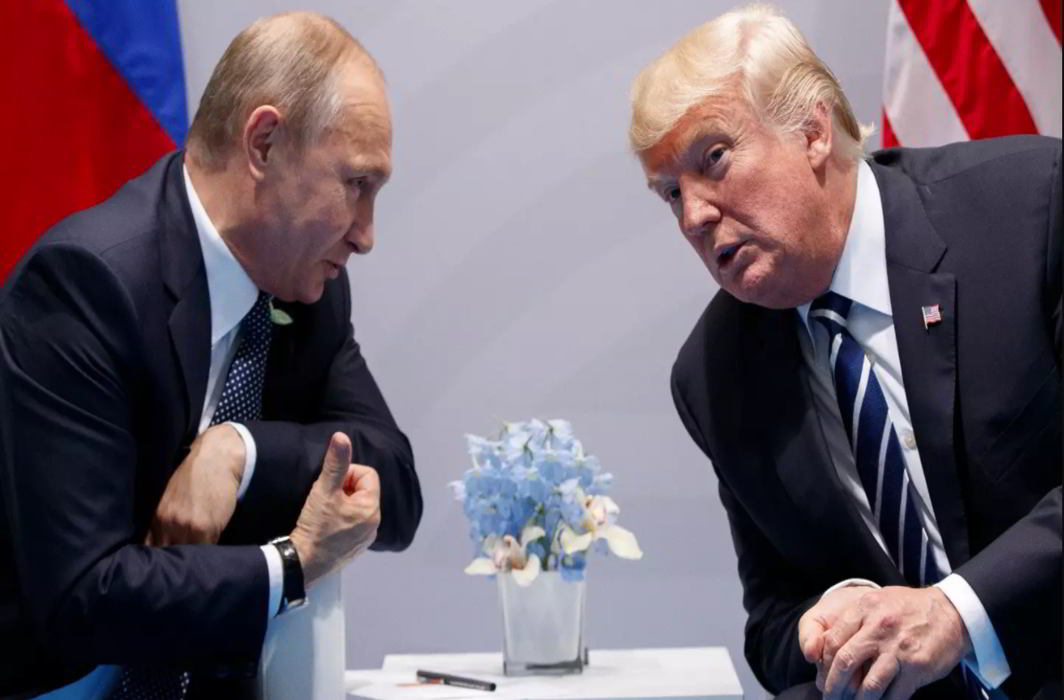
The Donald Trump administration has claimed that North Korea was “begging for war” and urged United Nations Security Council to adopt the strongest sanctions possible to stop Pyongyang’s nuclear program.

Speaking at Security Council’s emergency meeting on Monday, US Ambassador to UN Nikki Haley said that North Korea’s sixth nuclear test was a clear sign that “the time for half measures” from the UN had to end.

“Enough is enough. We have taken an incremental approach, and despite the best of intentions, it has not worked,” she said.

Haley recalled all the Security Council resolutions passed against North Korea that could not stop its nuclear progress. She said that US does not want war but will defend itself when North Korea is issuing threats with missiles pointed at US territories.

She was quoted saying, “War is never something the US wants—we don’t want war now. But our country’s patience is not unlimited. We will defend our allies and our territory.”

She informed the Security Council that US would circulate a resolution in response to the nuclear test, with plans for a vote on it next week. “I think that North Korea has basically slapped everyone in the face in the international community that has asked them to stop,” Haley said.

According to North Korea Times, the nuclear bomb tested on Sunday was claimed to be seven times bigger and more powerful than the atomic bomb that the US dropped on Japan’s Hiroshima near the end of the World War II, razing the entire city and killing hundreds of thousands of civilians.

Meanwhile KCNA Watch published a note written by Kim Myong Gil, an officer of the  Korean People’s Army on Tuesday saying, “ Another thrilling nuclear thunder of Songun Korea is heavy punishment and sledgehammer blows to the US imperialists who are bringing the worst touch-and-go situation on the Korean peninsula while being carried away by ill-advised bravery.”

The Army officer further said, “It is time for the war hawks of the US to acknowledge again that its whole mainland and the operational area in the Pacific are within the annihilating and merciless nuclear fist of the powerful Paektusan revolutionary army.”

He further said, “If they persist on extremely dangerous war drills around the Korean peninsula and provoke a nuclear war on this land, the powerful Paektusan revolutionary army will annihilate the source of aggression and evil on the earth with the nuclear strategic force consolidated with the great line of simultaneously developing the two fronts.”

US and South Korea have been engaged in joint military exercise for last few weeks. Washington has also indicated its intention to deploy most modern jet fighters and other weapons in South Korea.

The term Paektusan is derived from Mount Paektu, which means “white topped mountain.”  The mountain, situated on the border between North Korea and China, is having an active volcano. This is also the highest mountain in the Korean Peninsula and the Northeast China.

According to UK based Express, Julian Assange has claimed that bomb testing by North Korea was an “act of self-defence.”  He tweeted “constant US threats against DPRK have put on a total war footing massively boosting its missile R & D (research and development), unity and support for the regime.”

Julian Assange, an Australian computer programmer, is founder of the Wikileaks bringing thousands of US secret documents in public domain.  He is currently escaping deportation by staying in Ecuadorian Embassy in London since August 2012.

Latest world news

Magnitude 7 earthquake strikes Tibet after floods

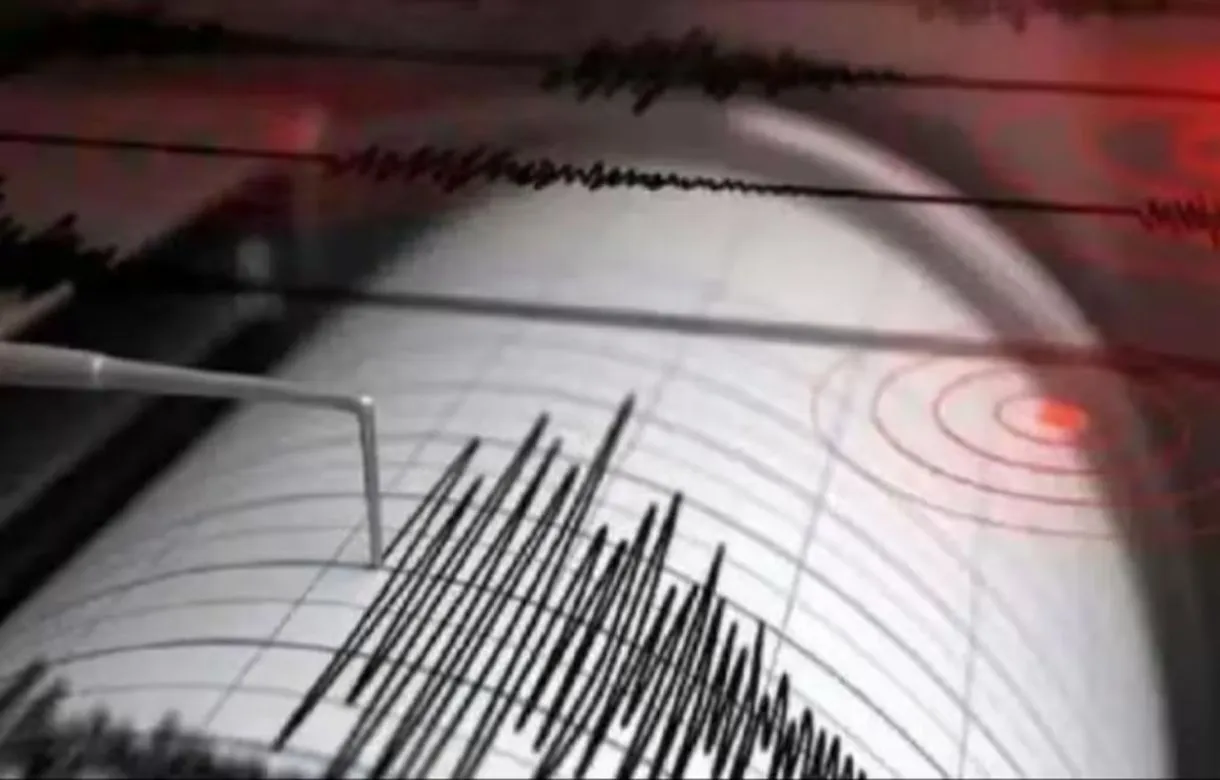
A magnitude 7 earthquake struck northern Tibet on Thursday, October 22. The tremor came weeks after deadly flash floods and landslides hit the mountainous region near the Nepal-China border. Initial reports did not confirm casualties or damage from the earthquake.

Published

on

earthquake-tremors

A powerful earthquake measuring magnitude 7 struck northern Tibet on Thursday, October 22, weeks after deadly flash floods and landslides devastated parts of the mountainous region near the Nepal-China border.

The earthquake struck the Nagqu region of Tibet, according to initial reports from earthquake monitoring agencies. The tremor occurred at around 10:33 pm local time in China, with the epicentre located in a county in northern Tibet.

The earthquake was reported at a depth of around 10 kilometres by China’s Earthquake Networks Center. The United States Geological Survey also reported the magnitude 7 tremor, placing its depth at approximately 18 kilometres.

There were no immediate confirmed reports of casualties or property damage following the earthquake, according to initial information available after the tremor.

Earthquake strikes northern Tibet

The earthquake occurred in the Nagqu region, approximately 400 kilometres from Lhasa, the capital of Tibet.

The tremor was recorded on Thursday evening, with monitoring agencies reporting slightly different estimates of its depth. China’s Earthquake Networks Center placed the epicentre at a depth of 10 kilometres, while the US Geological Survey reported a depth of 18 kilometres.

Further information about the earthquake’s impact was awaited at the time of the initial reports.

Tibet earthquake follows deadly flash floods

The earthquake struck weeks after devastating flash floods and landslides affected the mountainous region along the Nepal-China border in late August.

The earlier disaster followed an ice-and-rock avalanche near the border on August 26, triggering flash floods that swept through downstream areas. Homes, roads, bridges and power infrastructure were among the structures affected, while rescue and recovery operations continued in the aftermath.

The floods caused extensive destruction and left thousands of people dead or missing across the affected region, according to reports published after the disaster.

The latest earthquake is a separate event from the earlier avalanche and flooding disaster. An assessment of its effects was not immediately available.

Continue Reading

Latest world news

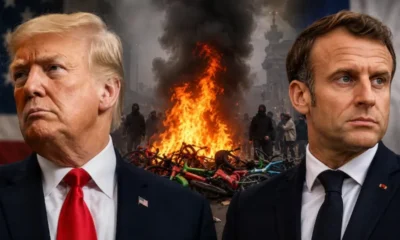
Macron rejects Trump’s immigration claims over France riots

French President Emmanuel Macron criticised Donald Trump and other foreign leaders over their comments on France’s recent unrest. Macron rejected claims that the country was being overrun by migrants and Islamists, calling such assertions false.
Published

on

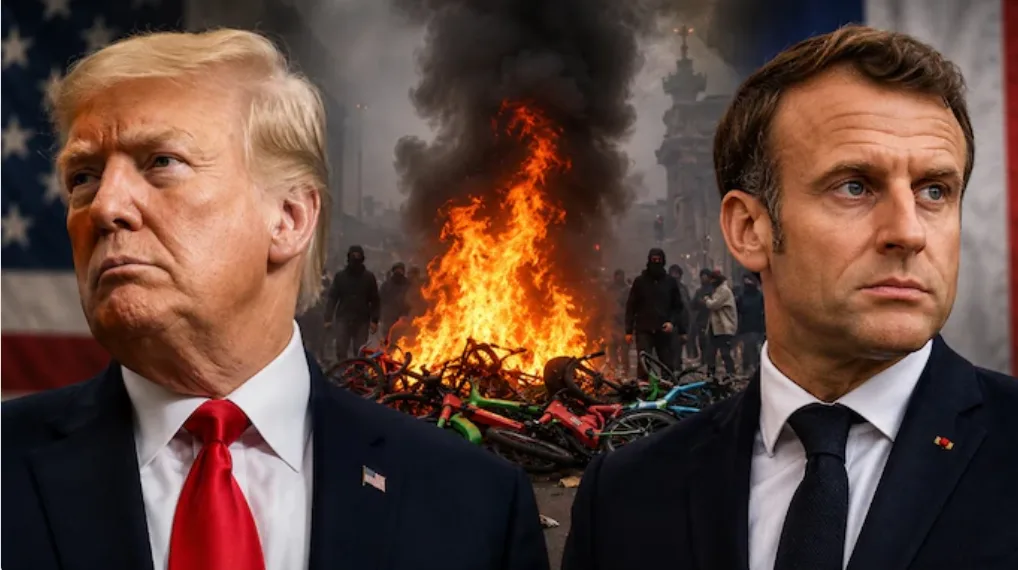
French President Emmanuel Macron has criticised US President Donald Trump and other foreign leaders for their remarks about the recent unrest in France, accusing them of using the situation to advance their political agendas.

Speaking to reporters in Doha on Wednesday, October 21, Macron said foreign manipulation of information following the violence and looting had led to comments he described as “unacceptable” and “stupid”.

When asked whether he was referring to Trump, Macron replied, “Among others.”

The remarks came after Trump attributed the unrest in France to immigration and urged European countries to tighten their borders. Macron rejected claims that France had been overrun by migrants and Islamists, describing them as false.

Macron rejects claims linking unrest to immigration

Trump had argued that immigration was responsible for the violence in France, dismissing other explanations related to education and social concerns. He also urged Macron to close France’s borders, warning that the country faced serious consequences if it failed to act.

In a post on his social media platform Truth Social, Trump claimed that immigration had damaged France and called on the country to regain control of its borders.

Macron pushed back against this narrative, saying that some foreign leaders were repeating misleading claims about the situation. He also highlighted the circulation of artificial intelligence-generated images that depicted events he said had never taken place in France.

The French president said claims that the country had been invaded by large numbers of migrants and Islamists were “completely false”.

Macron argued that some politicians were using France’s domestic situation to support their own political campaigns, particularly as elections approach in their respective countries.

French minister offers to counter misinformation

French Foreign Minister Jean-Noel Barrot said his office could provide clarification to countries concerned about the situation.

He said the aim was to help prevent the spread or amplification of false information and unsupported claims on social media.

Macron also criticised those speaking negatively about France during the unrest, saying that foreign leaders should not exploit the country’s difficulties for political purposes.

Protests driven by rising living costs

The unrest followed demonstrations over rising living costs, inflation and concerns about public services. The protests initially involved students demanding more teachers and better school conditions before expanding to include trade unions and others concerned about economic pressures.

Violence and looting subsequently affected Paris and other French cities.

The French interior ministry estimated that 550,000 people took part in the nationwide demonstrations, while the CGT trade union put attendance at 800,000. The demands reported in connection with the demonstrations centred on living costs and public services rather than immigration.

The French government has faced pressure to prevent further violence, with additional demonstrations planned in the coming days.

Macron said France had the means to maintain order and indicated that a state of emergency was not necessary at that stage.

Continue Reading

Latest world news

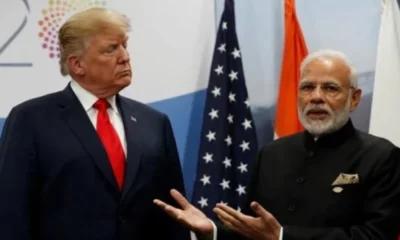
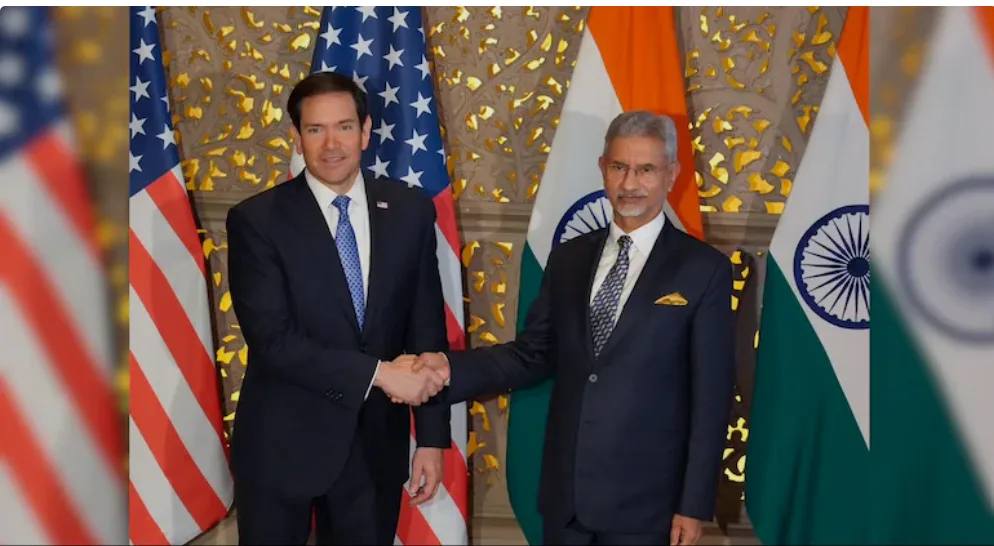
Marco Rubio says India and US share extraordinary alignment on key issues

US Secretary of State Marco Rubio said India and the United States share an extraordinary alignment on core issues, even though disagreements between the two countries may arise.
Published

on

US Secretary of State Marco Rubio has described the relationship between India and the United States as one marked by an “extraordinary alignment” on important national interests, while acknowledging that the two countries may disagree on certain matters.

Speaking at a ‘Freedom 250’ reception in Mumbai on Tuesday during his visit to India, Rubio said the partnership between the two countries could play a significant role in shaping the 21st century. He emphasised the importance of cooperation between the two nations on issues that affect their respective national interests.

Rubio highlights shared priorities in the Indo-Pacific

Rubio identified the need for a free and open Indo-Pacific as a key area of common ground between New Delhi and Washington. He said both countries had an interest in ensuring that no nation claimed dominance over international shipping routes.

He acknowledged that disagreements between countries were inevitable but said the alignment between India and the US on core issues remained significant, particularly given the size and influence of both nations.

Rubio also described India as a powerful, influential and advanced country, calling it a strong geopolitical partner for the United States.

India-US relationship could shape the 21st century

Rubio said the partnership between the two countries could help shape the course of the coming decades. He pointed to shared values, including individual dignity, democratic principles and the rule of law, as common ground between the two nations.

He also noted that decisions being taken today on geopolitics, economics, trade and commerce would have consequences for future generations.

The US Secretary of State said he believed the relationship between India and the United States could positively influence what the 21st century looks like.

Trade ties remain an important part of the relationship

Rubio’s remarks come amid ongoing discussions between India and the United States over trade and other bilateral issues.

Earlier on Tuesday, he said the two countries were very close to signing a bilateral trade agreement, with a small number of outstanding points still to be resolved.

Trade relations have faced challenges over tariffs, India’s purchases of Russian oil and US immigration policies. Despite these differences, Rubio’s comments underscored Washington’s emphasis on the broader strategic partnership with New Delhi.

Continue Reading

Trending

© Copyright 2022 APNLIVE.com