
India News
Name of Bhopal’s Habibganj Railway Station changed! The station is named after THIS queen, why?
The state government’s decision to rename Bhopal’s Habibganj Railway Station comes just after Pragya Singh Thakur, a BJP MP from Bhopal who urged that the station should be renamed after former Prime Minister late Atal Bihari Vajpayee.

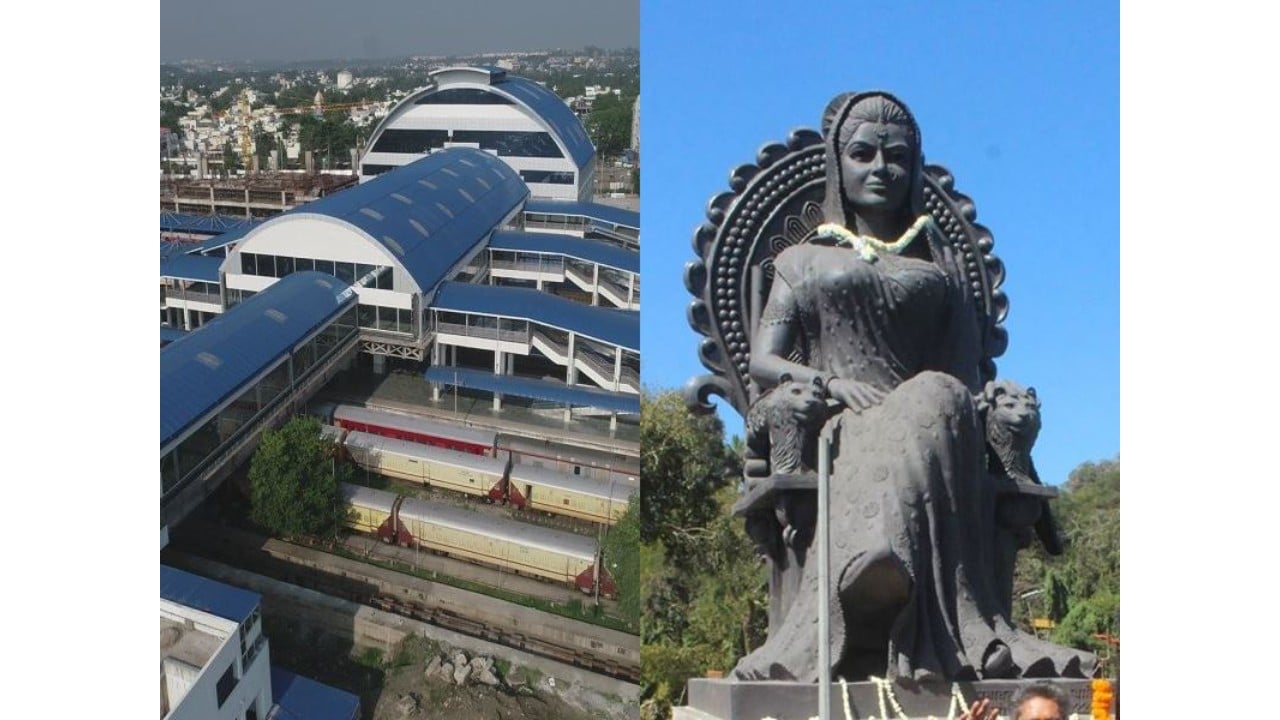
Bhopal’s recently redeveloped Habibganj Railway Station has been renamed Rani Kamlapati Railway Station. Prime Minister Narendra Modi is set to inaugurate the station on November 15.
The step for renaming the railway station turned up when the Madhya Pradesh government sent a letter to the Union home ministry to rename Habibganj railway station after Rani Kamlapati, the 18th Century Gond (Hindu) queen of the region who served as the state’s guardian after her husband died.
The state government in a letter also revealed why the proposal for renaming the Habibganj railway station was made. According to the letter, the station will be renamed to honour Rani Kamlapati’s heritage and valour.
The state government’s decision to rename the station as Rani Kamlapati station comes just after Pragya Singh Thakur, a BJP MP from Bhopal, urged that the station should be renamed after former Prime Minister late Atal Bihari Vajpayee.
According to the letter from the state’s transportation department, renaming the station is also in keeping with the Indian government’s decision to commemorate November 15 as ‘Janjatiya Gaurav Diwas’ in honour of renowned tribal leader and freedom fighter Birsa Munda.
Who was Rani Kamlapati?
Rani Kamlapati was the Gond queen of the region in the 18th century. She was Nizam Shah’s widowed Gond ruler and Ginnorgarh’s chief. She constructed the seven-storey Kamlapati Palace, which presently serves as an ASI-protected monument and overlooks the Upper and Lower Lakes. A Gond legend says that on moonlight evenings, Rani Kamlapati would emerge from her waterside castle and float on the lake, held afloat by a lotus flower and attended to by 500 maidens in rowing boats.
The Gond community is India’s largest tribal group, having a population of about 1.2 crore people. Linguistically, the Gonds are part of the Gondi–Manda subgroup of the Dravidian language family’s South Central branch.
From Monday, the government will conduct a week-long celebration of the pride of India’s Scheduled Tribes.
The Bansal Group created the Habibganj railway station as part of a public-private partnership. It was built on the same lines as Germany’s Heidelberg railway station at a cost of about Rs 450 crore.
A total of 160 CCTV cameras have been placed at the station to provide 24-hour surveillance. There are also escalators and lifts to go to the platform.
Notably, the name of Allahabad railway station in Uttar Pradesh was changed to Prayagraj, while Mughalsarai railway junction was renamed Pt Deen Dayal Upadhyay.
India News
Delhi Police offers 11-person limit for CJP’s Connaught Place protest
Delhi Police has offered to facilitate a group of 11 people at Central Park in Connaught Place for the Cockroach Janata Party’s October 16 protest, while warning that violations of prohibitory orders could invite legal action.


India News
Actor Imran Khan asked to leave India after CJP protest
Actor Imran Khan has been asked to leave India by October 28, days after participating in a protest called by the Cockroach Janta Party (CJP) in Mumbai.
India News
Election Commission orders voter roll revision in 17 states, UTs
The Election Commission has ordered a Special Summary Revision of electoral rolls in 17 states and Union Territories. Draft rolls are scheduled for November 12, with final rolls due on January 4, 2027.

Supreme Court questions EC over missing records in Sringeri election dispute

Dhruv Rathee gets fresh summons in 2018 BJP IT cell video case

Nobody can browbeat judiciary, Chief Justice warns over Rahul Gandhi’s march

India-US trade deal first phase finalised, drafting underway

Election Commission orders voter roll revision in 17 states, UTs

Delhi Police offers 11-person limit for CJP’s Connaught Place protest

Actor Imran Khan asked to leave India after CJP protest
Election Commission orders voter roll revision in 17 states, UTs
India-US trade deal first phase finalised, drafting underway
Nobody can browbeat judiciary, Chief Justice warns over Rahul Gandhi’s march

Afghan Men Try To Hang With The Jet Engine Of The Aircraft in Kabul- Afghanistan News – Kabul News
Trending Top 10 News: 10000 Crore Fine on Flipkart, Apple to Launch Unique Feature, Hdfc Bank Job Ad

Trending Top 10 News: Nokia 6310, Apple sales, Bachpan ka Pyar Video Kid, Dainik Bhaskar IT Raid

Trending Top 10 News: Canada bans Indian flights, Rain in Delhi NCR, AIMIM Twitter hacked, Raj Kundra case

Trending Top 10 News: Shein India, Apple New Service, Pocket Oxygen, Oppo Launched New Phone
-
 India News24 hours ago
Supreme Court questions EC over missing records in Sringeri election dispute
-
 India News12 hours ago
Dhruv Rathee gets fresh summons in 2018 BJP IT cell video case
-
 India News8 hours ago
Nobody can browbeat judiciary, Chief Justice warns over Rahul Gandhi’s march
-
 India News4 hours ago
India-US trade deal first phase finalised, drafting underway
-
 India News2 hours ago
Election Commission orders voter roll revision in 17 states, UTs
-
 India News1 hour ago
Actor Imran Khan asked to leave India after CJP protest
-
 India News6 mins ago
Delhi Police offers 11-person limit for CJP’s Connaught Place protest
