English हिन्दी
Connect with us

India News

New Year 2022: Here are 5 budget places to go for New Year’s eve

Let’s have a sneak peek at the list of best places in India, which is far away from hustle and bustle to celebrate this new year. Check out these places;

Published

on

New Year 2022: Here are 5 budget places to go for New Year's eve

It’s mid-December and the new year is going to soon pop up after Christmas. Everybody is planning for the new year 2022 as it’s round the corner. Exploring places have always been the best thing for the people in the new year.

So what are you waiting for! Fret not, if you are worried about the expenses. We have curated some amazing places in India that will make your trip happen.

Let’s have a sneak peek at the list of best places in India, which is far away from hustle and bustle to celebrate this new year. Check out these places;
  1. Goa
  2. Diu
  3. Kasol
  4. Pondicherry
  5. Manali
  6. Ladakh

1. Goa: Party Capital Of The Country

What better place to ring in the new year than the country’s party capital? There is no shortage of fascinating ways to ring in the new year, from boho beach parties to spectacular nightclub events! Without a question, Goa stands at the top of the list of the greatest new year’s locations in India.

Goa has the solution to everything, whether it’s beaches, hills, resorts, cruises, or bars. It is without a doubt one of the most exciting new year’s locations in India.

2. Diu: The Adventurous Souls

If you are planning for something adventurous then get ready to explore Diu. Start planning for paragliding, surfing, diving, parasailing, and windsurfing at one of India’s inexpensive places for New Year’s Eve 2021. Dive into the beautiful waters of Nagoa beach while lying on the golden dunes of Diu island. Diu has everything you could want in terms of adventure at very reasonable pricing. All of the craziness makes it the greatest venue in India to celebrate the New Year.

3. Kasol: Get High On Life

Are you still seeking the finest New Year’s Eve party in India? Kasol, trippy heaven, will get you high on its breathtaking beauty of nature. Since it appeals mostly to young people, there is always a buzz in the air. As the new year approaches, the energy level rises. New Year’s Eve in Kasol may be filled with hippie parties or a tranquil bonfire session by your campfire beneath a starlit sky, whichever you like!

4. Pondicherry: French Style Celebration

The variety of things to do in Pondicherry makes it a fantastic place, from riding on the beaches to carousing on rooftop cafés. The Riviera of the East is distinguished by French colonial-style architecture and sophistication, which is distinct from boomtown India. And don’t be concerned about the cost.

The former French capital is one of the most affordable destinations to visit on New Year’s Eve in India, and it gives plenty of inspiration for a memorable New Year’s Eve in Puducherry. Pondicherry’s tranquillity and quiet make it one of the greatest spots in India to celebrate the New Year.

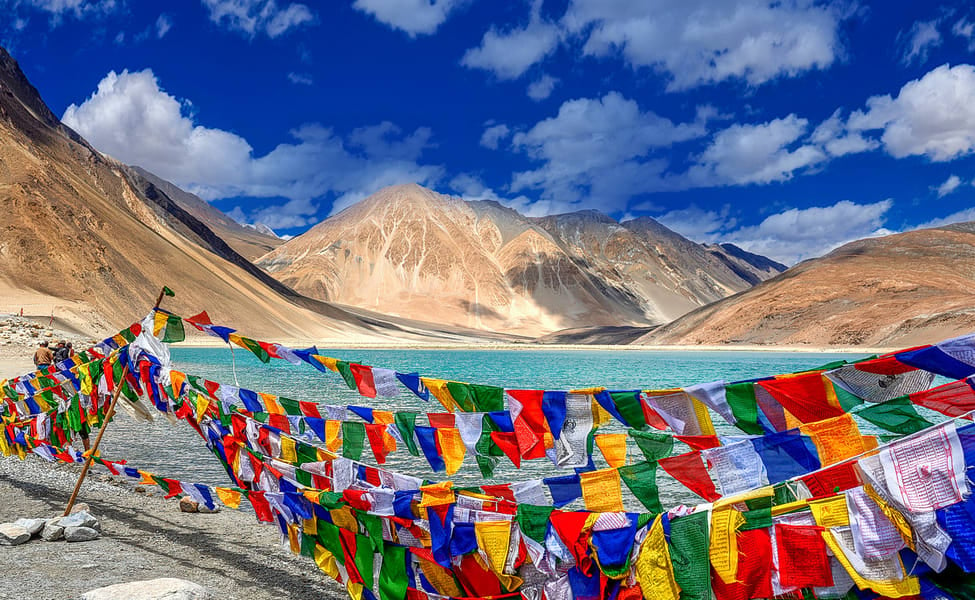
5. Ladakh: Faint-hearted beauty

The beauty and peacefulness of Ladakh can only be described by the eyes. Pictures and films just do not do Ladakh’s stunning beauty justice. The fact that it caters to all types of audiences adds to the uniqueness of the venue.

Ladakh is ideal for everybody, from feeding the desire of motorbike enthusiasts to providing spirituality to those seeking tranquilly. The Himalayan town of Leh is a biker’s dream, but it’s not for the faint-hearted person.

Leh was previously an important stopover on crucial trade routes connecting Tibet to the east, Kashmir to the west, and India to China. Today, Leh is the ideal Himalayan town to visit if you want to see unspoilt natural beauty.

India News

Lok Sabha passes Bill allowing government to permit charges on UPI and digital payments

The Lok Sabha has passed a Bill amending the Payment and Settlement Systems Act, allowing the government to permit charges on UPI and other notified digital payment modes by removing the legal restriction on Merchant Discount Rate.

Published

on

The Lok Sabha on Thursday passed the Taxation and Other Laws (Amendment) Bill, 2026, paving the way for the central government to permit banks and payment service providers to levy charges on Unified Payments Interface (UPI) and other notified electronic payment modes.

The amendment changes provisions of the Payment and Settlement Systems Act, 2007, removing the existing legal restriction that barred banks and payment system providers from charging Merchant Discount Rate (MDR) on specified electronic payment methods.

The Bill was passed by voice vote after the House resumed proceedings at 2 pm following an earlier adjournment.

What changes under the Bill?

The amendment replaces the reference to electronic payment modes prescribed under Section 269SU of the Income Tax Act with a provision allowing the central government to notify one or more electronic payment modes for which charges may be permitted.

The revised provision states that the government may specify the applicable electronic payment modes through an official notification after the law comes into force.

At present, Section 10A of the Payment and Settlement Systems Act prohibits banks and payment system providers from imposing any direct or indirect charges on prescribed electronic payment modes.

Meanwhile, Section 269SU of the Income Tax Act requires businesses with an annual turnover exceeding ₹50 crore to provide specified digital payment options, including BHIM-UPI QR codes and RuPay debit cards.

UPI remains free for now

While RTGS and NEFT transactions already attract service charges in certain cases, UPI payments have so far remained exempt from Merchant Discount Rate (MDR).

The amendment itself does not immediately introduce charges on UPI transactions. Instead, it authorises the government to notify eligible electronic payment modes and permit charges in the future.

Government cites sustainability of digital payments ecosystem

According to the government, the proposed changes aim to create a sustainable revenue model for banks, payment service providers (PSPs) and payment infrastructure companies that support India’s rapidly expanding digital payments ecosystem.

The proposal seeks to balance the interests of consumers and small businesses while ensuring adequate investment in payment infrastructure.

RBI Governor: Too early to discuss MDR rollout

A day before the Bill was passed, Reserve Bank of India Governor Sanjay Malhotra described discussions on imposing MDR on digital payments as “premature”.

He said investment in payment infrastructure must be funded either through taxation or by adopting a “user pays” model through Merchant Discount Rate.

Malhotra noted that the government is currently bringing the legislative amendment and said it would be appropriate to wait for further developments before drawing conclusions.

He also said that under the user-pays principle, the merchant or person using the service bears the cost, whereas in the absence of MDR, the expenses are effectively supported through public taxation.

Industry has long sought MDR on UPI

The question of introducing MDR on UPI has remained a key issue for banks and payment industry stakeholders, who have argued for a sustainable compensation mechanism as digital payment volumes continue to rise.

Some industry observers have suggested that, if introduced in the future, MDR could apply only to higher-value merchant transactions rather than peer-to-peer UPI transfers. However, the Bill does not specify any such threshold or implementation framework.

Continue Reading

India News

RSS chief Mohan Bhagwat says Gen Z protesters are our own people, not anti-national

RSS chief Mohan Bhagwat said Gen Z protesters should not be called anti-national, describing protests as a democratic form of dialogue and urging engagement with young people.

Published

on

Mohan Bhagwat

The Rashtriya Swayamsevak Sangh (RSS) chief Mohan Bhagwat on Thursday said members of Generation Z (Gen Z) should not be labelled anti-national merely because they participate in protests. Speaking at the Mumbai Conference titled ‘The Role of Youth in Uniting the World, the Indian Way’, he said young protesters are “our own people” and their concerns should be addressed through dialogue.

Bhagwat said that while protests are part of democracy, they should be carried out through democratic means. He also expressed confidence in the younger generation, describing Gen Z and Gen Alpha as more honest and receptive to the values of patriotism and public service.

Bhagwat calls dialogue essential in a democracy

Addressing the conference, Bhagwat said Gen Z should not be viewed as anti-national for raising concerns.

“If the Gen Z is agitating, they certainly aren’t anti-nationals; they are our own people, our next generation,” he said, adding that a sense of belonging and continuous dialogue are necessary to resolve differences.

He also said that while he would not discourage protests, democracy provides appropriate ways to express dissent.

Says protest is a legitimate form of dialogue

Bhagwat described protests as a democratic mechanism when regular communication fails to resolve issues.

He said that if discussions do not produce results, people naturally raise their voices to draw attention to unresolved concerns, calling protests another form of dialogue in a democratic society.

RSS chief compares Gen Z with earlier generations

Reflecting on generational differences, Bhagwat said today’s youth are more inclined to question authority than previous generations.

According to him, earlier generations generally accepted what elders said without questioning, whereas Gen Z and Gen Alpha seek logical explanations before accepting viewpoints.

He also remarked that he considers the younger generation more honest and said he would readily place his trust in Gen Z.

Remarks come after student protests in Delhi

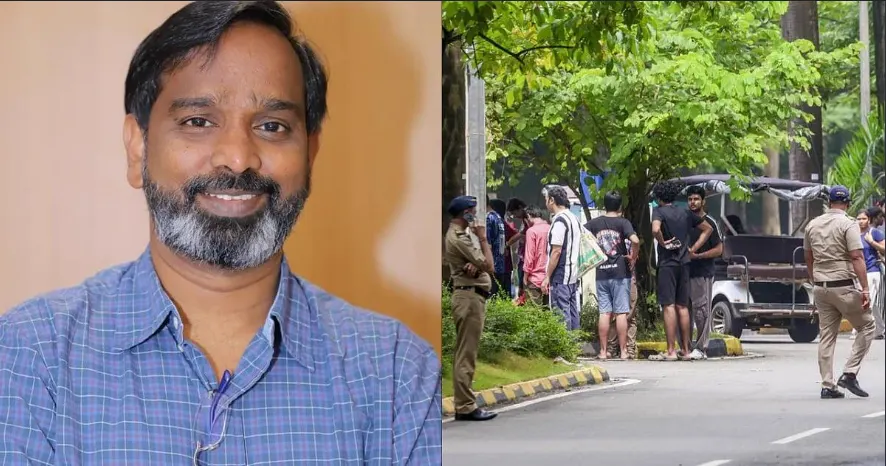
Bhagwat’s comments come days after student protests in Delhi over alleged undergraduate medical entrance examination paper leaks. The demonstrations, led by the Cockroach Janta Party, resulted in the resignation of Education Minister Dharmendra Pradhan.

When asked whether earlier dialogue could have prevented the situation from escalating, Bhagwat said that if an undesirable situation develops, there must have been shortcomings somewhere that need to be identified and corrected.

On pellet gun allegations

Responding to a question about the reported use of pellet guns against protesting students, Bhagwat said he did not have complete information about the incident.

He said he would need to examine the facts before commenting on what happened or determining where responsibility lay.

Continue Reading

India News

Assam floods death toll rises to 95; over 1.6 lakh affected, 14 districts on high alert

Assam’s flood death toll has climbed to 95 after six more fatalities were reported. More than 1.6 lakh people have been affected, while 14 districts remain on high alert as relief operations continue.

Published

on

The flood situation in Assam remained critical on Wednesday after six more people lost their lives over the past 24 hours, taking the death toll during this year’s monsoon season to 95.

According to the state’s Disaster Reporting and Information Management System (DRIMS), widespread flooding continues to affect rural and urban areas, with more than 1.6 lakh people impacted across 563 villages.

Of the six latest deaths, five were linked to the general flood situation. Two fatalities each were reported from Biswanath and Sivasagar districts, while one person died in Golaghat. Another person lost their life due to urban flooding in the Mayong revenue circle of Morigaon district. One person has also been reported missing in Udalguri district.

The Dhansiri (South) river at Numaligarh continues to flow above the danger level, prompting authorities to keep 14 districts on high alert. These districts are Golaghat, Lakhimpur, Charaideo, Sivasagar, Biswanath, Dhemaji, Kamrup (M), Jorhat, Sonitpur, Tinsukia, Nagaon, Darrang, Karbi Anglong and Udalguri.

Sivasagar remains the worst-hit district

Among the affected areas, Sivasagar has recorded the highest number of affected residents, with more than 57,000 people impacted. Golaghat and Jorhat are the next worst-affected districts.

Floodwaters have also caused significant damage to infrastructure. According to DRIMS, seven major embankment breaches have been reported, including five in Biswanath at Brahmajan and two in Darrang’s Mangaldoi area. A steel bridge at Cholapothar in Charaideo and a footbridge in Tangla, Udalguri, have also sustained damage.

Agricultural losses have mounted as nearly 16,951 hectares of cropland remain submerged. The floods have also affected more than 35,000 livestock, while around 8,500 animals, mostly in Sivasagar district, have been washed away.

Urban flooding disrupts normal life

Urban flooding continues to affect Kamrup, Kamrup (M), Morigaon and Jorhat districts, impacting 734 people.

In Kamrup (M), State Disaster Response Force (SDRF) and District Disaster Response Force (DDRF) personnel used boats to evacuate 80 people from waterlogged localities, including Satgaon and Hatigaon. Partial waterlogging continues to disrupt daily life in Guwahati’s Juripar and Anil Nagar areas.

The state government has stepped up relief measures by operating 45 relief camps, where 12,356 people are currently taking shelter. Another 59 relief distribution centres are supplying essential items, including rice, dal, salt and cattle feed, to more than 32,000 people.

Authorities are continuing to monitor river levels as the meteorological department has forecast more rainfall in the catchment areas, raising concerns that the flood situation could worsen further.

Continue Reading

Trending

© Copyright 2022 APNLIVE.com