English हिन्दी
Connect with us

India News

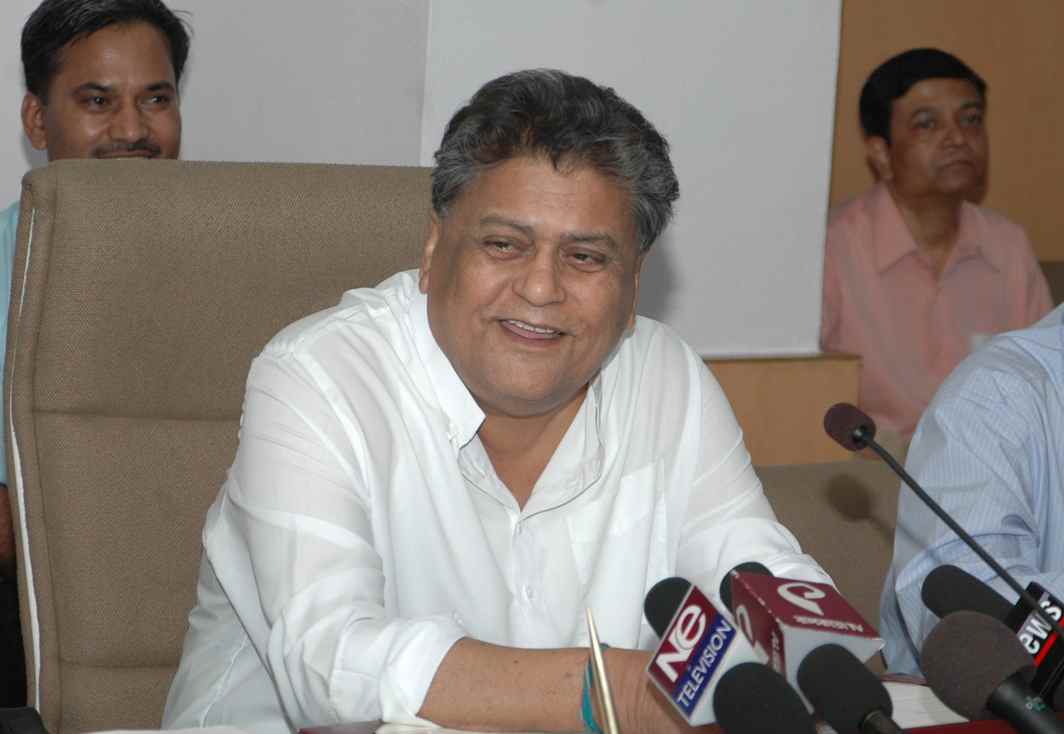
Veteran Congress leader Santosh Mohan Dev passes away at 83

Published

on

Santosh Mohan Dev

He made immense contribution to build the party right from grassroots level in the Northeast

~By Sujit Bhar

Santosh Mohan Dev, a veteran Congress leader and a pillar of support for the party in Assam’s Silchar as well as in Tripura, died at a hospital on Wednesday (August 2). He was 83.

The former Union heavy industries and steel minister and seven-time MP from the area died in a local hospital. His daughter, Sushmita Dev, also an MP, tweeted: “Nothing could have prepared me for this moment. I lost him at 6.06 am today (Wednesday). Thank you, everyone, for your prayers, your love for him,” as per agency reports.

Apart from heavy industries and steel, he had also held the Minister of State (MoS) for Communications from 1986-1988 and MoS for Home between 1988and 1989. It was during the PV Narasimha Rao government in 1991 that he got independent charge of Steel.

Prime Minister Narendra Modi has said: “Saddened by the passing away of Santosh Mohan Dev. He was a veteran political leader who worked extensively for the welfare of people. My thoughts are with the family and supporters of Santosh Mohan Dev in this hour of grief.”

Congress President Sonia Gandhi said: “In a political career spanning five decades, Dev held numerous crucial political assignments in the Congress party and in the government, including that of a Union Cabinet Minister. His immense contribution to building the party in the Northeast, right from the grassroots level, would always be remembered.”

What Sonia was talking about was the other side of Dev that the Congress benefitted from. Dev had great knowledge of and influence on the intricate politics of the north eastern region, especially the tribal areas. Apart from his ministerial work, he also delved in issues such as the Bodo agitation that took shape at the time. With the usual Congress method of neglect growing in contentious areas, Dev was asked to step in and provide appeasement with money.

This correspondent had been around when hard cash was dumped on the movement and dissent soon dampened. Dev was instrumental in bringing civic relief, albeit through means that would not have any lasting effect. However, as long as Dev was active – in the latter stages of his life he somewhat withdrew from public life, leaving the political work mostly to his daughter – he wielded the great influence that his family had in the area in containing any form of dissent. Unfortunately, such methods of containment, over time, yielded to more dissent and ulterior motives of the Congress in keeping dissent alive in the area were alleged, though never proved.

Technically, Silchar remains an underdeveloped town, with little communication and sparse facilities for the public at large. This correspondent had been around in the town during Dev’s heydays, when the water supply of the town became so putrid and dangerous, this correspondent was tied to bed with blood dysentery. Doctors diagnosed the water supply of the town as the culprit. Diseases were rampant and the presence of an important Union minister in town was barely noticeable.

What Dev did excel in was in the inside working of the party, specific to his area, where he held sway on several counts. He managed intricate small fiefdoms of minor leaders with aplomb, but he was more adept at knitting into his design the presence of senior Congress leaders from New Delhi. Back home in Silchar, this was a large selling point for influence-garnering.

He hailed from a freedom fighter’s family. He was a third generation Congressman and his father Satindra Mohan Dev was a freedom fighter of repute and was close to Jawaharlal Nehru, being jailed more than once for his opposition to British rule, while his grandfather Kali Mohan Dev was also an active member of the Indian freedom struggle and a member of the first ever Silchar Municipal council in 1913. That had installed his family as virtually the first family of Silchar. His sphere of influence was so immense in that area that he became one of the rare cases where he was elected as MP from two different states – Assam and Tripura – and he did use his influence to stymie popular uprisings in the area with ease.

While tensions have remained in the area, the pipe-chewing, suave image of Dev will remain imprinted in the minds of many who have known him. He was the quintessential Congressman as history in India has recorded. They don’t make any like them anymore. Not in the Congress.

India News

Congress suspends 5 Haryana MLAs over cross-voting in Rajya Sabha polls

Congress suspends five Haryana MLAs for cross-voting in Rajya Sabha elections, citing serious indiscipline and anti-party activities.

Published

on

The Congress has suspended five of its MLAs in Haryana for cross-voting during the recent Rajya Sabha elections, taking disciplinary action over what it described as “anti-party activities”.

The move came after the state unit reviewed the conduct of certain legislators during the polls, where some were found to have voted against the party’s authorised candidate.

Five MLAs suspended after disciplinary process

According to party sources, the MLAs were issued show-cause notices seeking an explanation for their actions. After reviewing their responses, the Congress disciplinary committee recommended suspension.

The decision was approved by the party leadership, including Congress president Mallikarjun Kharge, and has been implemented with immediate effect.

Party calls it ‘grave indiscipline’

Haryana Congress chief Udai Bhan said the action was necessary to uphold party discipline, stressing that defying the official party line during elections weakens organisational unity.

He said the party takes such violations seriously and will continue to act against any form of indiscipline.

Leadership backs strict action

Senior Congress leader and Leader of Opposition Bhupinder Singh Hooda supported the decision, saying it was taken after due consideration.

He noted that while Rajya Sabha elections are conducted through an open ballot system, allowing legislators some flexibility, the party retains the authority to initiate internal disciplinary action in cases of deviation.

Background

The action follows cross-voting reported during the recent Rajya Sabha elections in Haryana, which led to internal concerns within the party. The development has highlighted organisational challenges and prompted the leadership to take corrective steps to reinforce discipline.

Continue Reading

India News

Harivansh set to be elected Rajya Sabha Deputy Chairperson unopposed

Harivansh is set to be elected unopposed as Rajya Sabha Deputy Chairman after no opposition nominations were filed before the deadline.

Published

on

Former Rajya Sabha Deputy Chairman Harivansh is set to be re-elected to the same post unopposed in the election due to be held later today.
The date has been fixed by the Chairman under the relevant rules governing the conduct of business in the Upper House.
According to sources, the deadline for submitting motions for the election was 12 noon on April 16. A total of five notices were received within the stipulated time, all proposing Harivansh for the post.

Multiple nominations, single candidate
The motions were submitted by members across parties, including Jagat Prakash Nadda, Nitin Nabin, Nirmala Sitharaman, Sanjay Kumar Jha, and Jayant Chaudhary, each backed by seconding members.
All five motions explicitly state that Harivansh be chosen as the Deputy Chairman of the Rajya Sabha.

No opposition nomination filed

Notably, no motion was submitted by the Opposition before the deadline. This effectively clears the path for a unanimous election, as there is no contest for the position.
As per parliamentary procedure, motions will be taken up one by one. Once any one motion is adopted by the House, the remaining motions will not be put to vote.

Likely to be elected by voice vote
In line with established practice, the first motion — expected to be moved by Nadda — may be adopted through a voice vote. Following this, the Chairman will formally declare Harivansh as elected Deputy Chairman.
After the declaration, Harivansh will be escorted to the Chair by members from both the Treasury and Opposition benches, adhering to parliamentary convention.

Continue Reading

India News

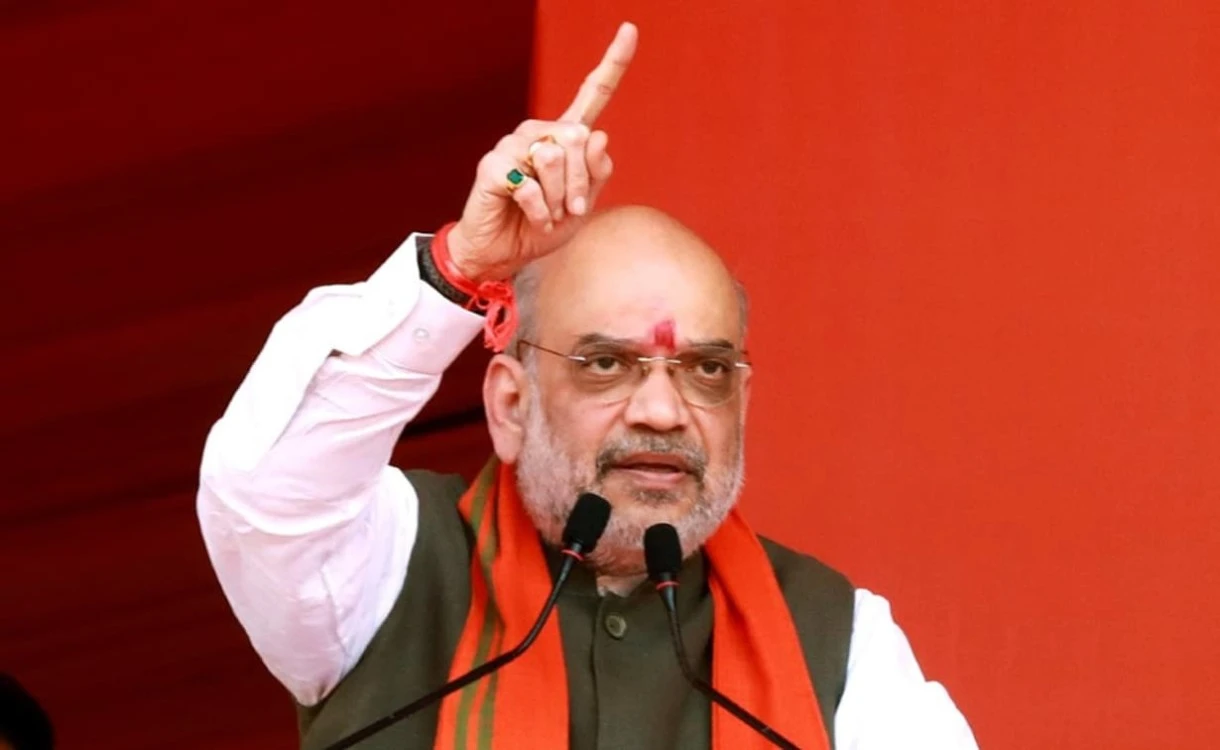
Amit Shah counters delimitation concerns, says southern states to gain Lok Sabha seats

Amit Shah assures Parliament that southern states will gain Lok Sabha seats after delimitation, countering opposition criticism during the women’s reservation debate.

Published

on

Amit Shah

Union Home Minister Amit Shah on Thursday addressed concerns over the proposed delimitation exercise, asserting in the Lok Sabha that southern states will not lose representation but instead see an increase in their number of seats.

His remarks came during a heated debate linked to the implementation of women’s reservation, where opposition parties have raised fears that population-based delimitation could reduce the political weight of southern states.

Shah rejected these claims, calling them misleading, and said the proposed framework ensures fairness while expanding the overall strength of the Lok Sabha.

Seat count to rise with expansion of Lok Sabha

The government has indicated that the total number of Lok Sabha seats could increase significantly as part of the delimitation process. In this expanded House, the combined representation of southern states is expected to rise from 129 seats at present to around 195 seats.

Shah emphasised that no state will lose seats in absolute terms, and the exercise is designed to reflect population changes while maintaining balance across regions.

State-wise projections shared in Parliament

During his address, Shah also provided indicative figures for individual southern states, suggesting notable increases in representation. According to the projections:

  • Tamil Nadu could see its seats rise substantially
  • Kerala, Telangana, and Andhra Pradesh are also expected to gain additional seats
  • Karnataka’s representation may increase as well

These figures were presented to counter the argument that delimitation would disproportionately favour northern states.

Political debate intensifies over linkage with women’s quota

The delimitation exercise has been closely linked to the rollout of women’s reservation, which proposes one-third seats for women in Parliament and state assemblies.

Opposition leaders have questioned this linkage, arguing that tying reservation to delimitation could delay its implementation and raise federal concerns. Some leaders have also warned that the move could impact national unity if apprehensions among states are not addressed.

The government, however, maintains that the reforms are necessary to ensure equitable representation and to align the electoral system with demographic realities.

Centre dismisses ‘false narrative’ on southern states

Shah reiterated that concerns about southern states losing influence are unfounded. He said the delimitation process will increase representation across regions and described the criticism as a “false narrative” aimed at creating confusion.

The issue is expected to remain a key flashpoint as Parliament continues discussions on the women’s reservation framework and related legislative changes.

Continue Reading

Trending

© Copyright 2022 APNLIVE.com