English हिन्दी
Connect with us

India News

Pollution punch: Diesel generators banned in Delhi, four-fold hike likely in parking charges

Published

on

Delhi Air Pollution

[vc_row][vc_column][vc_column_text]Environment Pollution Prevention and Control Authority advises Delhiites to wear masks, wherever possible

Diesel generators have been banned, the Badarpur power plant has been shut and hundreds of brick kilns ordered to stop work under the Graded Response Action Plan (GRAP) of the Supreme Court-appointed Environment Pollution Prevention and Control Authority (EPCA).

The measures stipulated for the GRAP’s ‘very poor’ and ‘severe’ categories of air quality came into effect today, and they will remain in force till March 15, 2018, the EPCA announced following a review meeting chaired by Bhure Lal, a former IAS officer.

In November 2016, the Supreme Court of India directed the government to frame and implement a Graded Response Action Plan (GRAP) to control air pollution. The Union environment ministry notified the Plan on January 17, 2017.

Designed like a disaster alert system, GRAP directs governments to take tougher and tougher actions based on the level of air pollution. Key measures listed under the Moderate and Poor categories, have been in force through the year, with state governments monitoring progress. Now, from October 17, 2017 to March 15, 2018 the Very Poor and Severe categories have come into force.

The measures come on top of steps taken recently to curb pollution, most notably and recently, the ban on the sale of firecrackers. Before this, the government had prohibited stubble burning or burning of crop residues by farmers of Punjab and Haryana to the west of Delhi.

The EPCA has said if the air quality worsens, Delhiites may have to shell out more as parking fee, possibly four times the current amount and that if pollution reaches ‘emergency’ levels, it may enforce the ‘odd-even’ plan, order cars off roads, and shut schools.

EPCA secretary Sunita Narain said while the GRAP proposes a hike in parking fee under its ‘very poor’ segment, it cannot be immediately implemented as the Delhi government’s parking policy has not yet been finalised. However, the EPCA will enforce the measure if pollution levels show any rapid spike, even if a formal policy is not in place, she said.

“As per the action plan, several measures will be taken till March 15 to avoid the ‘severe+’ category that the region had suffered over the last year when a public health emergency was declared, warranting measures such as the ‘odd-even’ car rationing policy or closure of schools,” said Sunita Narain, the Director-General of Centre for Science and Environment (CSE), and member secretary, EPCA.

EPCA expects 32 air monitoring systems to be in place in the region over the next few weeks. “The AQI from these monitoring stations will look at PM 2.5 levels,” said A Sudhakar from the Central Pollution Control Board (CPCB). “With this, combined with information from other agencies, we will be able to formulate a daily action plan to target problem areas,” he said.

Weather conditions are expected to worsen the morning after Diwali, he warned. “On October 20 morning, we expect moisture-laden south-easterly winds to blow into Delhi-NCR and increase pollution levels,” he said.

EPCA chairman Bhure Lal said the diesel generator ban will not apply to essential services such as the Delhi Metro, mobile phone towers, and hospitals in the city.

Brick kilns, which have implemented the zigzag technology that helps reduce black carbon emission, have also been allowed to function, said Bhure Lal.

The Badarpur plant used to supply around 400 MW electricity to discoms but, according to power officials, its closure will not affect Delhi’s electricity supply as the city has surplus power. CPCB wanted the plant shut down by September, but it was postponed since the Jawaharlal Nehru Stadium, which hosted matches of the U-17 FIFA World Cup, drew electricity from the plant.

The Bawana gas-based plant has been directed to be run at full capacity.

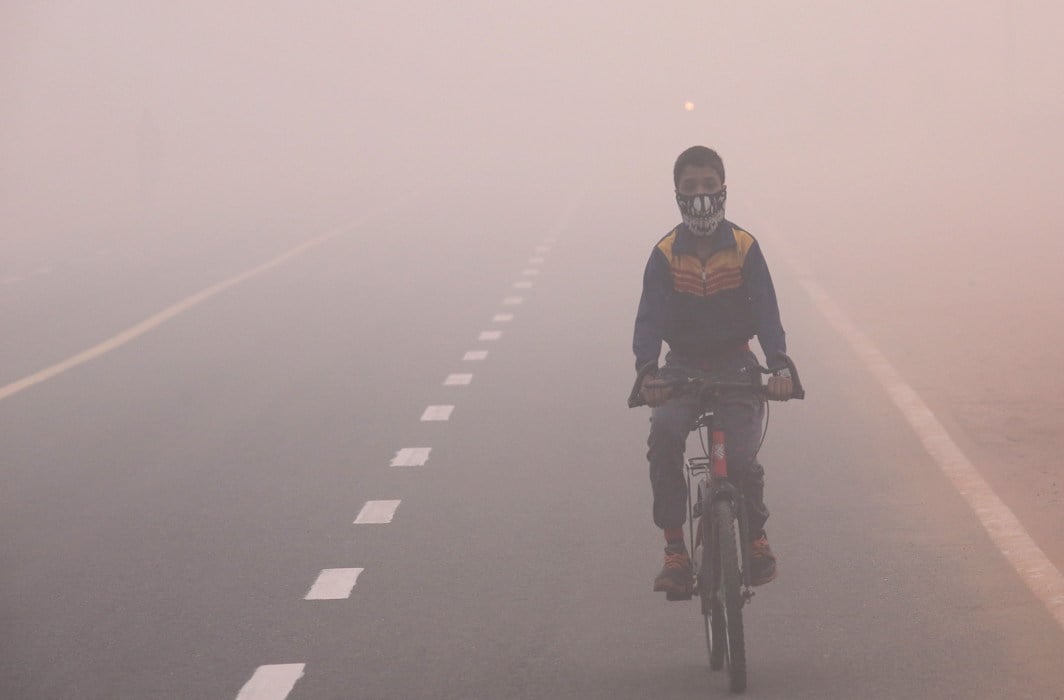
The EPCA also advised the residents of Delhi-NCR to use face masks whenever possible. It also raised concerns over the existing landfill sites in the capital.

The EPCA said the two other thermal power plants in the region, at Dadri and Jhajjar, will also have to be shut if pollution reaches emergency levels.

If air quality worsens further, the action will be more widespread, including closure of hot mix plants in Haryana and Uttar Pradesh, stone crushers in Haryana and Rajasthan, and industries using Furnace Oil and Pet Coke, which are rich in Sulphur, across the region.

Under the GRAP, measures under ‘very poor’ and ‘severe’ categories are rolled out when levels of PM2.5 are between 121-250 micrograms per cubic metre, and above 250 micrograms per cubic metre respectively. PM10 levels have to be between 351-430 micrograms per cubic metre for very poor and going down to severe if they cross 430 micrograms per cubic metre.

The severe plus or the emergency action plan under GRAP, which proposes a ban on construction activities, odd-even scheme, ban on entry of trucks and closure of schools, shall come into force when PM2.5 levels cross 300 micrograms per cubic metre or PM10 levels cross 500 micrograms per cubic metre (five times above the standard level) and persist for 48 hours or more.

The 24-hour-average safe standards of PM2.5 and PM10 are 60 and 100 respectively and anything beyond that can harm living beings.

EPCA added that further action will be taken based on the reports released each day by the task force. Other long-term measures include providing electric heaters to society guards in order to prevent burning of firewood and closure of hot mix as well as stone crushers.

In addition, trucks entering Delhi will be monitored and those not destined for the city to be sent back. EPCA also said measures to prevent burning of open waste and construction dust will be intensified with offenders to be fined. The Delhi Pollution Control Committee (DPCC) has created a Whatsapp helpline number (9717593574) for people to submit photographs and complaints regarding waste burning.[/vc_column_text][/vc_column][/vc_row]

India News

Lok Sabha clears bill to levy cess on pan masala and similar goods for health, security funding

The Lok Sabha has passed a bill to impose a cess on pan masala manufacturing units, aiming to create a dedicated revenue source for public health and national security initiatives.

Published

on

Nirmala Sitharaman

The Lok Sabha has approved the Health Security se National Security Cess Bill, 2025, paving the way for a new cess on pan masala manufacturing units. The legislation aims to generate dedicated funds for strengthening national security and improving public health, both areas identified as critical national priorities.

Bill aims to create predictable funding stream

Finance Minister Nirmala Sitharaman, responding to the debate before the bill was passed by voice vote, said that the cess will be shared with states because public health falls under the state list.

The new cess will be applied over and above the GST, based on production capacity and machinery used in units manufacturing pan masala and similar goods. The minister clarified that this cess will not affect GST revenue, and that pan masala already attracts the maximum GST slab of 40 per cent.

According to the bill text, the objective is to build a “dedicated and predictable resource stream” to support expenditure related to health and national security.

Sitharaman also mentioned that cess collection as a percentage of gross total revenue currently stands at 6.1 per cent, lower than the 7 per cent average between 2010 and 2014.

Continue Reading

India News

Simone Tata passes away at 95: A look at the visionary who shaped Lakme and modern retail

Simone Tata, the pioneering business leader who built Lakme and helped shape India’s modern retail sector, passed away at 95. Here’s a look at her legacy.

Published

on

simone tata

Ratan Tata’s stepmother and celebrated business leader Simone Tata passed away on December 5, 2025, at the age of 95. Known for her pioneering role in building Lakme and transforming India’s retail landscape, she leaves behind a remarkable legacy that redefined Indian consumer culture.

A legacy that shaped Indian business

Simone Tata, born in Geneva in 1930, first came to India at the age of 23. Two years later, in 1955, she married Naval H. Tata and gradually became an integral part of the Tata family’s business vision. Her journey with the Tata Group began in the 1960s, when she was appointed to Lakme—then under Tata Oil Mills.

Under her leadership, Lakme quickly grew into one of India’s most trusted cosmetic brands. She rose to the position of managing director and later chairperson, introducing global formulations and modernising beauty products for the Indian market. Lakme’s rise was also rooted in a strong national vision—launched on former Prime Minister Jawaharlal Nehru’s suggestion to reduce foreign exchange spent on imported makeup.

Transforming retail through Trent and Westside

After Lakme was sold to Hindustan Lever Limited in 1966, Simone moved to Trent, where she helped build one of India’s earliest modern retail chains. This later gave birth to Westside, a brand that has become synonymous with contemporary Indian shopping culture.

She also played a key role in philanthropic initiatives, guiding organisations such as the Sir Ratan Tata Institute and supporting cultural and children-focused foundations.

Family, personal life and final farewell

Simone Tata is survived by her son Noel, daughter-in-law Aloo Mistry, and grandchildren Neville, Maya and Leah. She also drew public attention in recent years for being the only member of the Tata family to attend Cyrus Mistry’s funeral, despite the widely known strained ties between the families.

Her funeral will take place on Saturday morning at the Cathedral of the Holy Name Church in Colaba, Mumbai.

Continue Reading

India News

Centre orders probe into IndiGo crisis, expects normal flight operations in three days

Amid record cancellations by IndiGo, the Centre has ordered a high-level inquiry and expects flight schedules to stabilise by Saturday, with full normalcy in three days.

Published

on

indigo

The Centre has initiated a high-level inquiry into the massive disruption of IndiGo’s operations, with the government projecting that flight schedules will begin stabilising by Saturday and full normalisation is expected within three days. The announcement comes as cancellations by the airline crossed 500 for the second consecutive day, severely impacting passengers across major airports.

Civil Aviation Minister Ram Mohan Naidu said the government has directed urgent measures to ensure swift restoration of services. Within minutes of his statement, the aviation regulator DGCA announced the formation of a four-member committee to examine the circumstances leading to the delays and cancellations.

DGCA forms committee as cancellations spark scrutiny

The DGCA said IndiGo was given sufficient time to implement revised Flight Duty Time Limitations (FDTL), yet the airline recorded the highest number of cancellations in November. The regulator added that the pattern suggested gaps in the carrier’s internal oversight and preparedness, warranting an independent probe.

The committee will review the sequence of events that triggered disruptions and recommend measures to prevent a recurrence.

Flight duty rules relaxed; minister defends move

Amid criticism from the Opposition and experts, the DGCA temporarily suspended certain FDTL rules, increasing pilot duty limits from 12 to 14 hours. The changes were widely questioned, with allegations that the government was yielding to pressure from IndiGo.

Naidu defended the decision, stating the move was taken solely to safeguard passengers and that safety standards would not be compromised.
He reiterated that passenger care and convenience remain the top priority.

Assurance of refunds, real-time updates, and support

Highlighting steps taken to ease passenger distress, the minister said airlines must:

  • Provide accurate, real-time updates before travellers leave for airports
  • Initiate automatic refunds for cancelled flights without requiring follow-ups
  • Arrange hotel accommodation for passengers stranded for extended periods

Senior citizens and persons with disabilities have been accorded special priority, including access to lounges and additional assistance. Refreshments and essential services are to be provided to all affected travellers.

Inquiry to determine accountability

The government said the high-level probe will identify what went wrong at IndiGo, establish responsibility, and recommend systemic corrections to ensure such disruptions do not occur again.

Continue Reading

Trending

© Copyright 2022 APNLIVE.com