
Latest world news
US shutdown ends after three days, Next deadline Feb 8


[vc_row][vc_column][vc_column_text]Trump remained low-profile on first anniversary in White House
US government shutdown has ended after three days with President Donald Trump signing a bill on Monday night. The House and Senate voted to end the shutdown, approving the latest short-term funding bill. The Democrats accepted Republicans’ promises for a broad debate later on the future of young illegal immigrants, the “Dreamers”.
The fourth temporary funding bill since October easily passed the Senate and the House of Representatives. The positive vote came largely after negotiations among Senate leaders.
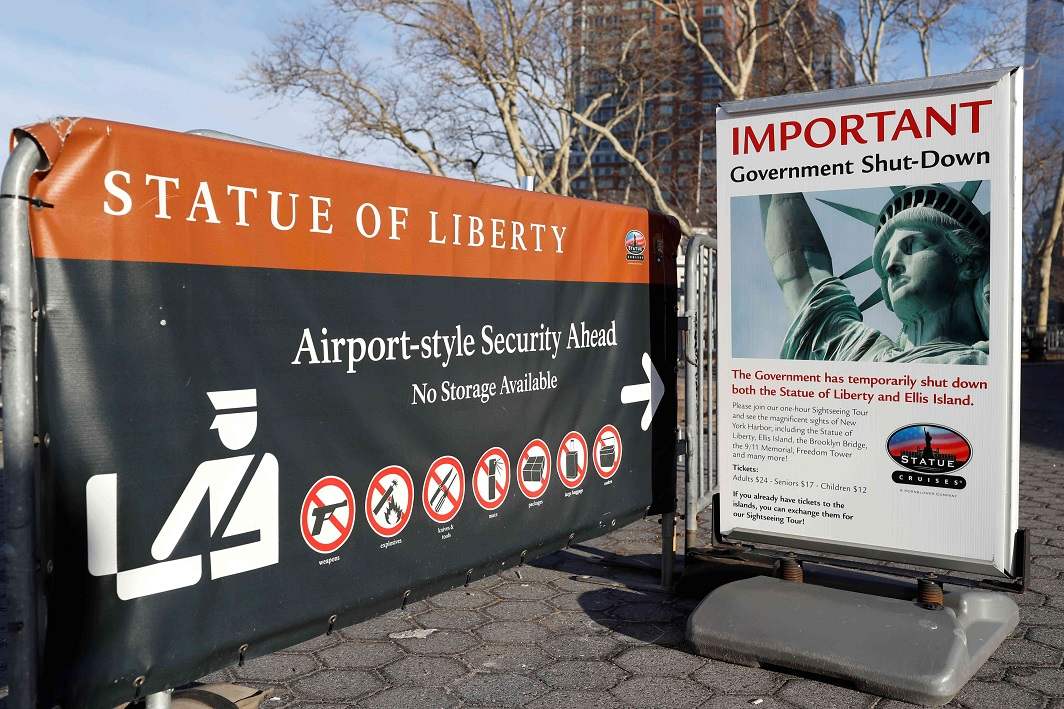 According to Reuters, enactment by Trump of the bill allowed the government to reopen fully on Tuesday and keep the functioning till Feb. 8, when the Republican-led Congress will have to revisit budget and immigration policy,
The funding bill was approved by a vote of 266-150 just hours after it passed the Senate by a vote of 81-18. It was made possible after a deal between Senate Minority Leader Chuck Schumer and Senate Majority Leader Mitch McConnell regarding assurances about immigration.
Big win for Republicans as Democrats cave on Shutdown. Now I want a big win for everyone, including Republicans, Democrats and DACA, but especially for our Great Military and Border Security. Should be able to get there. See you at the negotiating table!
— Donald J. Trump (@realDonaldTrump) January 23, 2018
On Friday midnight, The US administration was forced to shut down federal government as senators continued to scramble to reach a deal to fund the government. In a late night vote, Democrats had joined to block a bill that could have kept the government running for another four weeks.
Trump’s attempts to negotiate an end to the shutdown with Senate Democratic leader Chuck Schumer were collapsed on that day.
After signing the bill President Donald Trump said in a statement on Monday night, “I am pleased that Democrats in Congress have come to their senses. We will make a long term deal on immigration if and only if it’s good for the country.”
After 3 days of a government shutdown, a bipartisan majority has brought the Democratic Leader’s extraordinary filibuster to an end. pic.twitter.com/xe2fAdjEaZ
— Leader McConnell (@SenateMajLdr) January 22, 2018
Senate Minority Leader Chuck Schumer said in his latest tweet:
Soon, the govt will reopen, and we have a lot to do:
• #ProtectDreamers
• Write a budget
• Address health care, veterans, disaster relief, pensions & the opioid epidemic.The #TrumpShutdown will soon end, but the work goes on.
— Chuck Schumer (@SenSchumer) January 22, 2018
Senate Minority Leader Chuck Schumer, while talking to media persons before voting, said “We will vote today to reopen the government,” saying he and McConnell had reached an “arrangement.”
McConnell reiterated the same on the Senate floor, adding the shutdown was distracting senators from focusing on passing legislation.
He said, “I respect the passion that many of my friends in this chamber, Democrat and Republican alike bring to the major issue before the Senate, all of these issues. But we should not let the political feuds or policy disagreements obscure the simple fact that every member of this body cares deeply about the challenges facing our country.”
McConnell continued: “It’s evident that this government shutdown is doing nothing, absolutely nothing to generate bipartisan progress on the issues the American public care about.”
Reports say that Immigration and the budget are entangled because of Congress’ failure to approve a full-scale budget on time by Oct. 1, 2017, just weeks after Trump summarily ordered an end by March to Obama-era legal protections for young immigrants known as the “Dreamers.”
In US politics a government shutdown occurs when Congress and the President fall to pass appropriations legislation funding government operations and agencies.
During Ronald Reagan administration, there were three funding gaps leading to shutdowns lasting one day or less. A funding gap in 1990 during George H.W. Bush administration caused a weekend shutdown. Bill Clinton administration also faced two full government shutdowns during 1995 and 1996 lasting five and twenty days. During Barack Obama presidency, government shutdown occurred during October 1-16, 2013.[/vc_column_text][/vc_column][/vc_row]







Latest world news
Trump waives Russia-related sanctions, tariffs in relief for India
Donald Trump has waived several Russia-related sanctions, restrictions and duties under a new US law, potentially easing tariff pressure on India and China, two major buyers of Russian energy.

Latest world news
Magnitude 7 earthquake strikes Russia’s Kamchatka Peninsula
A magnitude 7 earthquake struck Russia’s Kamchatka Peninsula region on Friday. The initial report placed the earthquake at a depth of 140 kilometres.

Latest world news
S Jaishankar says India is a natural option for Russia amid Europe tensions
External Affairs Minister S Jaishankar said India remained a natural option for Russia as Moscow increasingly turned towards Asia amid strained relations with Europe. He highlighted the continuity of India-Russia ties and their significance for the balance of power in Asia.


LK Advani, 98, hospitalised in Delhi with chest infection

Trump waives Russia-related sanctions, tariffs in relief for India

ED summons Pinarayi Vijayan in money laundering case

Anirudh Ravichander to marry Kavya Maran in November, reception on November 21

Delhi court orders release of CJP founder Abhijeet Dipke

Journalist files police complaint against Rahul Gandhi over push allegation
Delhi court orders release of CJP founder Abhijeet Dipke
Anirudh Ravichander to marry Kavya Maran in November, reception on November 21
ED summons Pinarayi Vijayan in money laundering case
LK Advani, 98, hospitalised in Delhi with chest infection

Afghan Men Try To Hang With The Jet Engine Of The Aircraft in Kabul- Afghanistan News – Kabul News
Trending Top 10 News: 10000 Crore Fine on Flipkart, Apple to Launch Unique Feature, Hdfc Bank Job Ad

Trending Top 10 News: Nokia 6310, Apple sales, Bachpan ka Pyar Video Kid, Dainik Bhaskar IT Raid

Trending Top 10 News: Canada bans Indian flights, Rain in Delhi NCR, AIMIM Twitter hacked, Raj Kundra case

Trending Top 10 News: Shein India, Apple New Service, Pocket Oxygen, Oppo Launched New Phone
-
 India News20 hours ago
LK Advani, 98, hospitalised in Delhi with chest infection
-
Latest world news21 hours ago
Trump waives Russia-related sanctions, tariffs in relief for India
-
 India News19 hours ago
ED summons Pinarayi Vijayan in money laundering case
-
 India News9 hours ago
Anirudh Ravichander to marry Kavya Maran in November, reception on November 21
-
 India News9 hours ago
Delhi court orders release of CJP founder Abhijeet Dipke
-
 India News8 hours ago
Journalist files police complaint against Rahul Gandhi over push allegation
