English हिन्दी
Connect with us

Top Stories

VIRAL: Undertrial prisoner cuts birthday cake in Maharashtra Police van, probe ordered

The man, who cut his birthday cake inside the Police van, has been identified as Roshan Jha, a 35-year-old attempt-to-murder accused, is a resident of Ulhasnagar of Maharashtra.

Published

on

Undertrial prisoner cuts birthday cake

Maharashtra police on Sunday ordered after an undertrial prisoner cut birthday cake inside the police van when he was taken to session court in Maharashtra’s Thane district.

A video of an undertrial prisoner cutting birthday cake inside the Maharashtra police van has gone viral on social media.

The police has started its investigation into the case. The police escort team that brought him to the court belonged to Thane Rural police, a senior police official said.

The man, who cut his birthday cake inside the Police van, has been identified as Roshan Jha, a 35-year-old attempt-to-murder accused, is a resident of Ulhasnagar of Maharashtra. He celebrated his birthday by cutting a cake passed by his friend through the window of the police escort van stationed near the court premises, the police official said.

Read Also: Amid row, Zomato removes ad starring Hritik Roshan

Jha has been facing dozens of cases, including on charges of murder and extortion. Thane police arrested him in 2019, following which he was sent to Adharwadi Jail in Kalyan. Titwala police of Thane rural jurisdiction arrested Jha under Section 307 (attempt to murder) of the IPC in 2019, a police officer said.

After watching the viral video, he informed the Thane city and Thane rural police to check which team produced Jha in court.

DCP Prashant Mohite has ordered a departmental inquiry into the case. The Police will take the strictest action against those officers. It’s negligence in their duty and they will take appropriate action, he said.

Patna: 13 arrested for pelting stones at Bihar’s CM Nitish Kumar’s carcade

Delhi Police detain farmer leader Rakesh Tikait

India News

BJP’s Ritu Tawde set to become Mumbai mayor, Shiv Sena’s Sanjay Ghadi named deputy

BJP’s Ritu Tawde is set to take charge as Mumbai mayor, marking the first break in Shiv Sena’s 25-year dominance of the post. Shiv Sena’s Sanjay Ghadi will serve as deputy mayor.

Published

on

BJP corporator Ritu Tawde is set to take over as the next Mumbai mayor, marking a significant political shift in the Brihanmumbai Municipal Corporation (BMC). This will be the first time in 25 years that the mayor’s post will not be held by the Shiv Sena.

Tawde, who represents Ghatkopar, has previously served as chairperson of the BMC’s education committee. Her name was announced by BJP leader Amit Satam on Saturday.

Shiv Sena to hold deputy mayor’s post

Shiv Sena leader Sanjay Shankar Ghadi will be the Deputy Mayor of Mumbai. Elected from Ward No. 5 in the January 15 civic elections, Ghadi will serve a 15-month term. The Shiv Sena has decided to rotate the deputy mayor’s post among four of its corporators.

Ghadi was among the leaders who joined Maharashtra Deputy Chief Minister Eknath Shinde’s faction in 2022, a move that led to the collapse of the Maha Vikas Aghadi government.

The Shiv Sena announced Ghadi’s candidature through party leader Rahul Shewale.

BJP-led alliance crosses majority mark

In the 227-member civic body, the BJP emerged as the single largest party with 89 seats, while the Shiv Sena secured 29 seats. Together, the ruling alliance has 118 corporators, comfortably crossing the majority mark of 114 and ensuring control over the mayoral post.

The Shiv Sena (UBT), which governed the BMC continuously since 1997, won 65 seats. Its allies, the Maharashtra Navnirman Sena (MNS) and the Nationalist Congress Party (Sharad Pawar faction), secured six and one seats, respectively.

The Congress won 24 seats, AIMIM eight, the NCP (Ajit Pawar faction) three, and the Samajwadi Party two seats.

Civic polls held after nine-year gap

The high-stakes BMC elections were conducted after a nine-year gap. The civic body had been under a state-appointed administrator since March 7, 2022, following the end of the previous term.

The BMC remains the country’s richest civic body, with its budget for the 2025–26 financial year pegged at Rs 74,450 crore.

Continue Reading

Latest world news

PM Modi thanks President Trump, says India-US trade framework reflects strong partnership

PM Modi said the India-US interim trade framework reflects growing trust between the two countries and offers tariff relief and new opportunities for Indian exporters.

Published

on

Modi trump

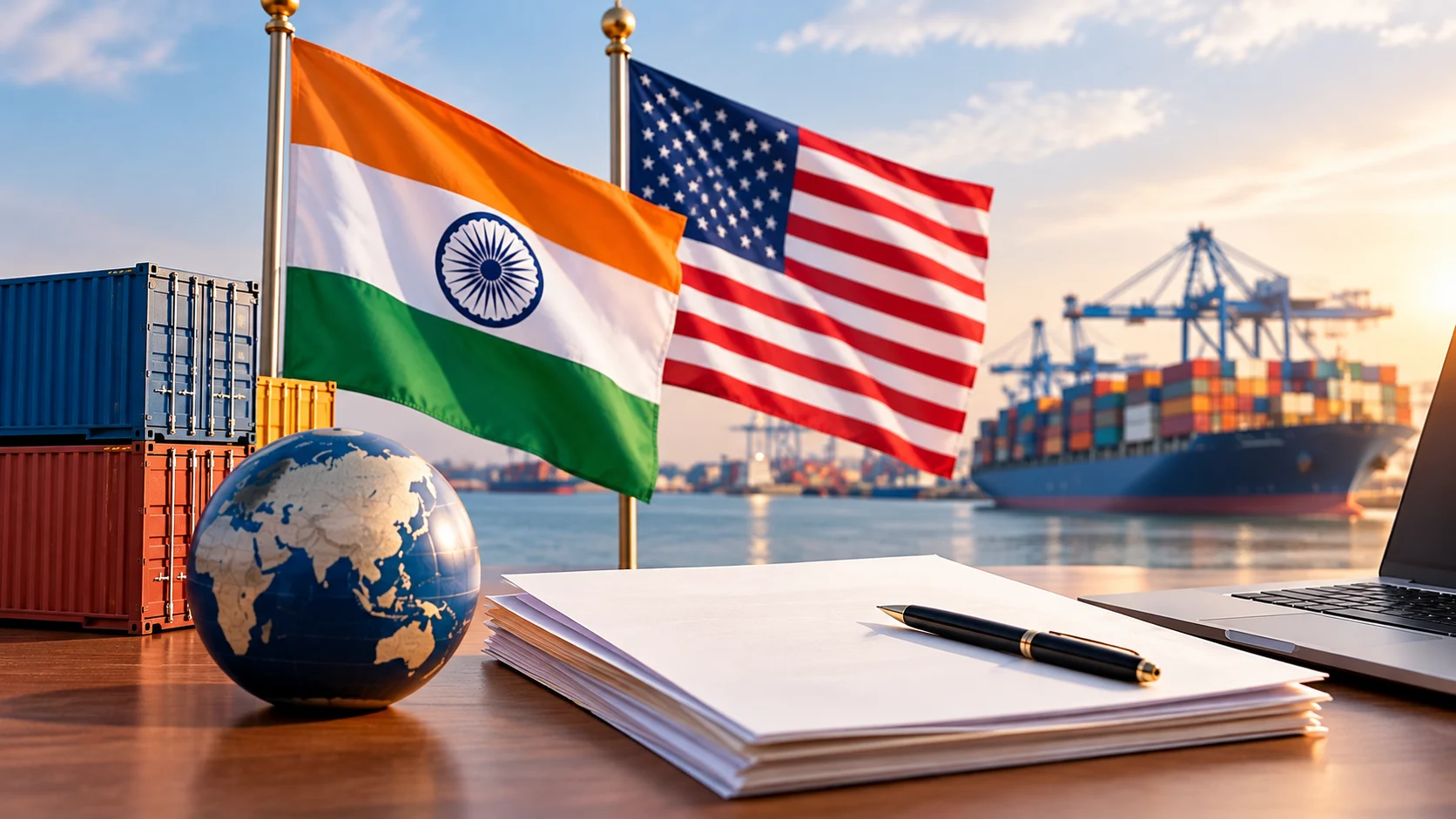
Prime Minister Narendra Modi has welcomed the newly announced interim trade framework between India and the United States, describing it as a reflection of the “growing depth, trust and dynamism” in bilateral relations.

The Prime Minister said the agreement highlights US President Donald Trump’s “personal commitment to robust ties between our countries” and opens up fresh opportunities across multiple sectors of the Indian economy.

Under the framework, the United States will apply a reciprocal tariff rate of 18 per cent on Indian goods. The uniform rate places India in a comparatively stronger position than several countries in the region and provides a competitive advantage for Indian exporters.

Focus on employment, innovation and supply chains

In a post on X, PM Modi said the interim framework is expected to generate large-scale employment, particularly for women and young people. He added that the agreement would deepen cooperation in investment and technology while strengthening resilient and trusted supply chains.

According to the Prime Minister, both countries share a commitment to promoting innovation, and the framework would contribute to global economic growth by enhancing trade and industrial collaboration.

Key sectors set to benefit from tariff relief

The 18 per cent tariff rate is expected to support Indian exporters in sectors such as textiles, apparel, leather goods, chemicals and engineering products. The framework also strengthens India’s position against regional competitors that rely heavily on cost-based exports.

The agreement further opens a path to tariff removal on a wide range of Indian goods, including generic pharmaceuticals, gems and diamonds, and aircraft parts. These sectors already have a strong global presence and face steady demand in the US market.

Washington will also remove tariffs on certain Indian aircraft and aircraft components, while India will receive a preferential tariff rate quota for automotive parts. However, outcomes related to generic drugs and pharmaceutical ingredients will depend on the findings of a US Section 232 investigation.

Preferential market access beyond tariffs

Beyond tariff measures, both countries have agreed to provide preferential market access in sectors of sustained mutual interest, marking another step toward closer economic cooperation under the interim framework.

Continue Reading

India News

Trump lifts additional 25% tariff on India after deal on Russian oil imports

The United States has lifted an extra 25% tariff on Indian goods after India committed to stopping Russian oil imports as part of a new trade agreement.

Published

on

trump

US President Donald Trump has moved to remove an additional 25 percent tariff imposed on Indian goods following a trade agreement between the two countries, according to an executive order signed on Friday.

The extra duty, which had been levied over India’s purchases of Russian oil, will be lifted at 12:01 am Eastern Time on Saturday. The order states that India has committed to stopping the direct or indirect import of oil from the Russian Federation.

The decision comes days after Trump announced a broader trade deal with India, saying Prime Minister Narendra Modi had assured Washington that New Delhi would halt Russian oil purchases amid the ongoing Ukraine war.

As part of the agreement, India has also committed to buying energy products from the United States. The executive order further noted that New Delhi has recently agreed to a framework aimed at expanding defence cooperation between the two countries over the next decade.

Tariff reduction still to be rolled out

While the additional 25 percent tariff is being removed immediately, the wider reduction in so-called reciprocal tariffs is yet to be implemented. Under the agreement, US duties on Indian products are expected to be reduced to 18 percent from the earlier level of 25 percent.

Other provisions of the deal include the removal of tariffs on certain aircraft and aircraft parts. A separate joint statement released by the White House said India intends to purchase goods worth $500 billion from the United States over the next five years. These purchases are expected to include energy products, aircraft and parts, precious metals, technology products and coking coal.

The move marks a sharp decline in US tariff levels on Indian goods, which had stood at as high as 50 percent late last year. The agreement also helps ease months of strain between the two countries over India’s oil imports, which Washington has argued help finance the conflict in Ukraine.

The deal signals a reset in ties between Trump and Prime Minister Modi, whom the US President has previously described as one of his closest friends.

Trade experts have noted that the proposed 18 percent tariff rate could offer Indian exporters a slight advantage in the US market compared to regional competitors facing duties of around 19 to 20 percent.

Continue Reading

Trending

© Copyright 2022 APNLIVE.com