English हिन्दी
Connect with us

Top Stories

EaseMyTrip co-founder Prashant Pitti calls out man who rejected job offer, CRED founder reveals MacBook bind

Prashant Pitti wrote that someone should solve this hiring issue. This was hugely prevalent and ended up wasting so much time and resources. Once a candidate accepts offer-letter, companies wait for months and rejects all other potential candidates. But candidate decided on very last day, that they won’t be joining.

Published

on

EaseMyTrip co-founder Prashant Pitti

An opinion polarization like situation occurred on Twitter on Wednesday when EaseMyTrip’s co-founder Prashant Pitti shared a What’s App chat of a man who rejected employment opportunity of his company at the last moment.

Defending the employer’s interest in the job market, Prashant Pitti wrote that someone should solve this hiring issue. This was hugely prevalent and ended up wasting so much time and resources. Once a candidate accepts offer-letter, companies wait for months and rejects all other potential candidates. But candidate decided on very last day, that they won’t be joining.

Read Also: Delhi bans sale and use of firecrackers till January 1, tweeple react

He further wrote that it was very common. Around 25-40 per cent of the hired candidates said they won’t be joining at the last minute. And it was not just the juniors, happening at senior level equally. If this was happening to an organisation as big as their; he could not even fathom what was happening at newly launched startups!

Meanwhile, CRED founder Kunal Shah also participated in this online debate on the labour crisis issue. He wrote that they solved this issue uniquely. They gave a MacBook to everyone with their offer letter. If they didn’t want to join they could return the MacBook. Most people were not used to being trusted first. Around 99 per cent joined. Only zero per cent laptops lost. Blaming was worst way to solve a problem.

One Kishore wrote on Twitter that It was life. No one could fix hiring issues. People always went for better option. No judgement. People left company after 30 days joining. Also companies canceled offer letter at the end moments. Better to check with those other potential candidates. They might join.

Criticizing EaseMyTrip’s co-founder, another user wrote that contract has value in India. Signing offer letter contract was valid from the day employee joined the company. It’s not from the day when he signed offer letter. If employees were 5 per cent wrong, companies would drag them in court. Don’t make people fool by saying something which was not correct.

Khadi scam case: AAP leader Sanjay Singh tears Delhi LG’s defamation notice

West Bengal: CBI raids residence of Law Minister Moloy Ghatak

India News

Kharge, Rahul Gandhi skip Independence Day event for 2nd straight year

Congress chief Mallikarjun Kharge and Rahul Gandhi skipped the 80th Independence Day celebrations at the Red Fort for the second consecutive year.

Published

on

Rahul Kharge

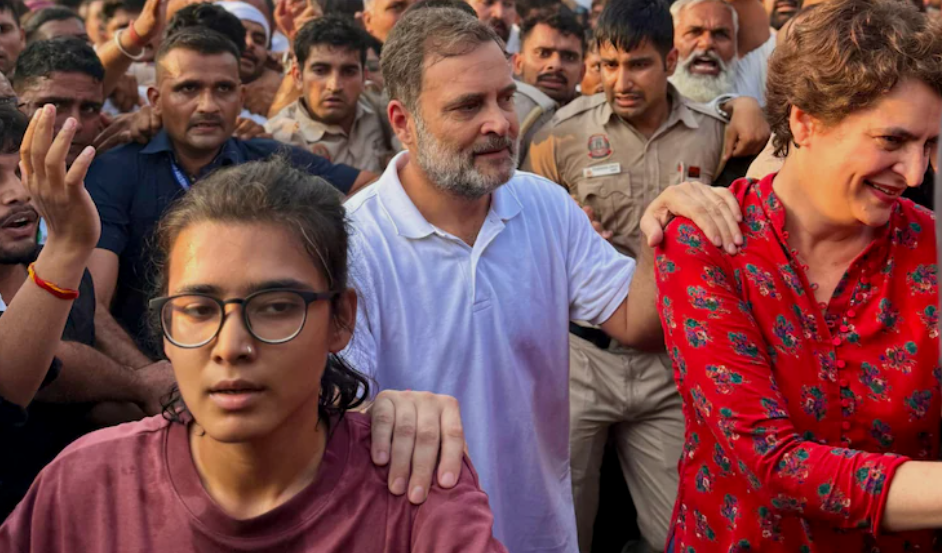
Congress president Mallikarjun Kharge and Leader of Opposition in the Lok Sabha Rahul Gandhi skipped the 80th Independence Day celebrations at Delhi’s Red Fort for the second consecutive year.

Prime Minister Narendra Modi led the Independence Day celebrations at the historic venue on Saturday.

The absence of the two senior Congress leaders comes amid strained relations between the ruling party and the Opposition, which further deteriorated during the Monsoon Session of Parliament that concluded on Thursday.

2024 seating controversy

Rahul Gandhi had attended the Independence Day celebrations in 2024 but his seating arrangement triggered a controversy. The Congress leader, who holds the status of a Cabinet minister as Leader of the Opposition in the Lok Sabha, was seated in the second-last row during the ceremony at the Red Fort.

The Opposition had criticised the seating arrangement, calling it an insult to the people. The Defence Ministry, which organised the event, said the arrangement had been modified to accommodate Olympians at the venue.

According to protocol, the Leader of the Opposition is seated in the front row during ceremonial events.

Opposition-ruling party tensions

Relations between the government and the Opposition remained tense during the Monsoon Session, which ended on Thursday.

The session saw repeated clashes between the two sides, with both the Opposition and the ruling party blaming each other for the low productivity of Parliament.

The session began on July 20, with students marching towards Parliament on the first day. Twelve bills were passed during the session, while detailed discussion took place on only one legislation, concerning paper leaks.

The Congress, along with the Trinamool Congress and Samajwadi Party, also boycotted the customary tea party hosted by Lok Sabha Speaker Om Birla after the House was adjourned sine die.

Continue Reading

India News

PM Modi’s Saptadhara Vision: 7 streams driving India’s next growth phase

PM Modi outlined “Shakti Ki Saptadhara”, identifying seven streams including manufacturing, farming, technology, defence, green energy and soft power.

Published

on

PM modi speech

Prime Minister Narendra Modi, in his Independence Day address from the Red Fort on Saturday, outlined “Shakti Ki Saptadhara”, describing seven key streams that he said can drive India’s next phase of growth and strengthen its journey towards self-reliance and development.

The seven streams identified by the Prime Minister are manufacturing, farming, technology, Gatishakti, Raksha Shakti, green and blue economy, and soft power.

Calling on the country to focus on these areas, PM Modi said the seven streams represent India’s strength and can help the country become more self-reliant.

Manufacturing as the engine of growth

PM Modi called manufacturing the first stream of Saptadhara and stressed the need to significantly strengthen the sector.

He said India needs to produce both components and complete products and should emerge as a key destination in global supply chains.

The Prime Minister highlighted cost, quality and scale as important factors for Indian manufacturers to compete globally. He also stressed the importance of attractive packaging and precision in manufacturing.

Farming and food processing

Agriculture and food processing were identified as the second stream.

PM Modi said global markets are increasingly accessible to Indian farmers and called for greater efforts to take agricultural products from farms to international markets.

He highlighted traditional foods, millets, spices, fruits and vegetables, saying these products should be developed into global brands.

Technology and innovation

Technology and innovation form the third stream of Saptadhara, according to PM Modi.

He highlighted areas such as data centres, robotics and emerging technologies, saying India should aim to become a hub for these sectors.

Referring to the country’s experience with UPI and Digital Public Infrastructure, PM Modi said India has already demonstrated its technological capabilities and must now take the next leap in next-generation communication technology.

He also spoke about the goal of Made-in-India 6G reaching across the country.

Gatishakti and faster connectivity

The fourth stream is Gatishakti, with the Prime Minister stressing the importance of speed and connectivity for India’s growth.

PM Modi called for greater emphasis on roads and expressways to support businesses and said the country needs seamless, high-speed connectivity.

He also highlighted high-speed rail connectivity between cities and port-led development as areas requiring greater focus.

Raksha Shakti and self-reliant defence

Defence is the fifth stream of Saptadhara.

PM Modi called for greater self-reliance in defence manufacturing and highlighted the need to develop advanced technologies in the sector.

He particularly stressed the importance of drone and counter-drone technology, saying India needs to invest in these areas.

The Prime Minister also said India should move beyond being a market for defence equipment and work towards becoming a global supplier by developing next-generation defence technologies.

Green and blue economy

Green energy forms the sixth stream of Saptadhara.

PM Modi called for greater innovation in green energy and said India should aim for global leadership in green hydrogen, renewable energy and energy storage while continuing to contribute solutions to global challenges.

He also highlighted opportunities in the Blue Economy, particularly in fisheries, coastal tourism and ocean technology, saying these areas can create new pathways for India’s growth.

Soft power

Soft power is the seventh stream identified by PM Modi.

He cited Yoga, handicrafts, films, animation, gaming, digital content and the creative sector as examples of India’s soft power.

The Prime Minister also highlighted India’s potential to attract global tourists and called for greater focus on the country’s tourism opportunities, including its national parks and other attractions.

With “Shakti Ki Saptadhara”, PM Modi outlined a broad growth framework covering manufacturing and agriculture, emerging technology, connectivity, defence, sustainable energy, the blue economy and India’s cultural and creative influence.

Continue Reading

India News

Dream Big to Achieve Big: PM Modi’s Independence Day message from Red Fort 

PM Modi, addressing the nation from the Red Fort, said India will achieve Viksit Bharat by 2047 and urged Indians to dream big.

Published

on

Prime Minister Narendra Modi on Saturday called on Indians to dream big and work with a strong resolve to achieve bigger goals, as he addressed the nation from the Red Fort on Independence Day.

“Dream big to achieve big,” the Prime Minister said, stressing that when a nation sets ambitious goals and remains determined, it makes greater efforts to turn those aspirations into reality.

PM Modi confident of Viksit Bharat by 2047

Expressing confidence in India’s development journey, PM Modi said the country is dreaming of scaling new heights and will turn its vision of “Viksit Bharat” into reality by 2047.

He said the goal has to be achieved collectively by all Indians and added that accomplishing it would demonstrate the country’s courage and change how the world views India.

The Prime Minister also acknowledged the contribution of different sections of society to the country’s development journey. He said Dalits, the oppressed, poor, middle class and youth have contributed to efforts to take India to new heights.

According to PM Modi, these efforts have helped more than 25 crore people move out of poverty.

He said every Indian is making efforts in their own way to take the country forward and acknowledged their contribution.

‘Dream big and achieve big’

PM Modi said the ability to dream big and achieve bigger goals is a defining feature of what he described as the “new India”.

He said the world has taken note of India’s efforts and emphasised that a strong resolve helps people find ways to overcome challenges and problems.

The Prime Minister said determination should remain strong and that India must continue working towards its goals despite difficulties.

PM Modi stresses self-reliance and ‘Vocal for Local’

Highlighting the importance of aatmanirbharta, or self-reliance, PM Modi said India should not remain dependent on other countries.

He called for a commitment to swadeshi, self-reliance and “Vocal for Local”, while stressing the need to improve and protect the country’s capabilities.

Earlier on Saturday, PM Modi paid tributes to Mahatma Gandhi at Rajghat before reaching the Red Fort for the Independence Day celebrations.

This year’s Independence Day celebrations also saw Vande Mataram being played at the Red Fort for the first time since Independence.

Continue Reading

Trending

© Copyright 2022 APNLIVE.com