English हिन्दी
Connect with us

India News

Former Union Minister Sharad Yadav dies at 75, PM Narendra Modi, Rahul Gandhi, Nitish Kumar offer condolence

The news of Sharad Yadav’s demise was learned after his daughter shared the news on social media in which his daughter Subhashini Sharad Yadav wrote that her father is no more.

Published

on

Sharad Yadav

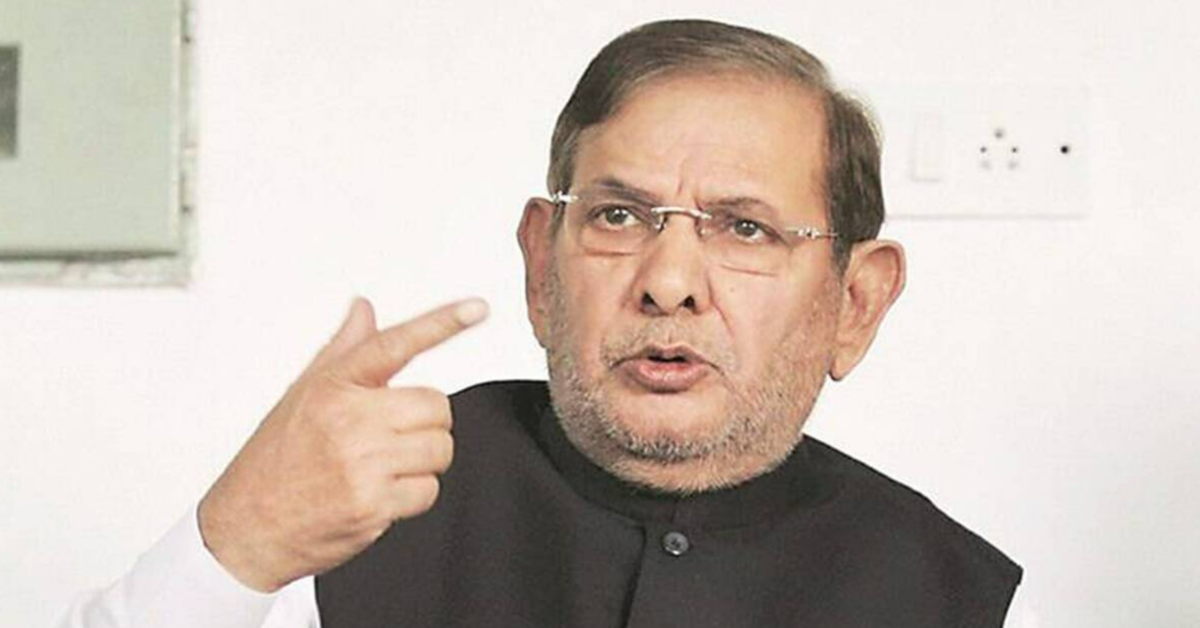
Ex Union Minister Sharad Yadav died in a hospital in Gurugram’s Fortis Memorial Research Institute. According to the reports, the 75-year old leader’s health was deteriorating for a long time and had even collapsed at his home in Delhi before being rushed to the hospital. He was considered to be among the significant socialist leaders in the country.

Reports say that Yadav had reached the Gurugram’s hospital in an unconscious state and after examination, the doctor’s were not able to find any pulse or blood pressure. The doctor’s performed a procedural CPR in accordance with ACLS protocols. However, the doctor’s couldn’t revive the RJD leader and was declared dead at 10:19 pm on Thursday.

The news of Sharad Yadav’s demise was learned after his daughter shared the news on social media in which his daughter Subhashini Sharad Yadav wrote that her father is no more.

Twitter reactions

After the unfortunate news of the 7-time MP surfaced, various leaders from across party lines including Prime Minister Narendra Modi, Rahul Gandhi, Nitish Kumar came forward to offer their condolences.

Bihar Chief Minister Nitish Kumar took to twitter and wrote that he is saddened by the demise of former Union Minister Sharad Yadav. Kumar also wrote that he had very good relations with him and was shocked and in pain after hearing about his demise.

Nitish Kumar in his Tweet also wrote that the 7-time MP was a strong socialist leader and his death comes as an irreparable loss in the sphere of social and political fields. The Bihar Chief Minister further prayed for the late leader’s soul to rest in peace.

Read Also: Retail inflation drops to 5.72 per cent in December 2022, relief due to reduction in prices of food items

Former Congress chief and Congress MP Rahul Gandhi also offered his condolences as he wrote on Twitter, remembering the late leader, that Sharad Yadav was also a humble person aside from being a socialist leader. Gandhi also said that he learnt a lot from him.

The Congress leader in his Tweet also offered condolences to his bereaved family members and also wrote that the late leader’s contribution to the country can never be forgotten.

Prime Minister Narendra Modi also took to Twitter to add his condolence on the loss of former Union Minister Sharad Yadav as he wrote that he was pained by the passing away of the late leader. Prime Minister wrote that in Yadav’s long years in public life, he distinguished himself as MPand Minister. The PM also added and wrote that the former Union Minister was very much influenced by Dr Lohia’s ideals.

PM Modi also wrote and said that he will always cherish the interactions he and the late leader had during their political stints. He further offered condolences to his family and his admirers.

Lohri 2023: Best wishes, quotes to share with your friends and family

Karnataka: Security breach during PM Modi’s roadshow in Hubbali | WATCH

India News

Thick smog engulfs Delhi, flights and trains delayed as air quality slips to very poor

Delhi remained under a thick smog cover as air quality dipped into the very poor category, causing delays in flights and train services due to low visibility.

Published

on

delhi-air-quality

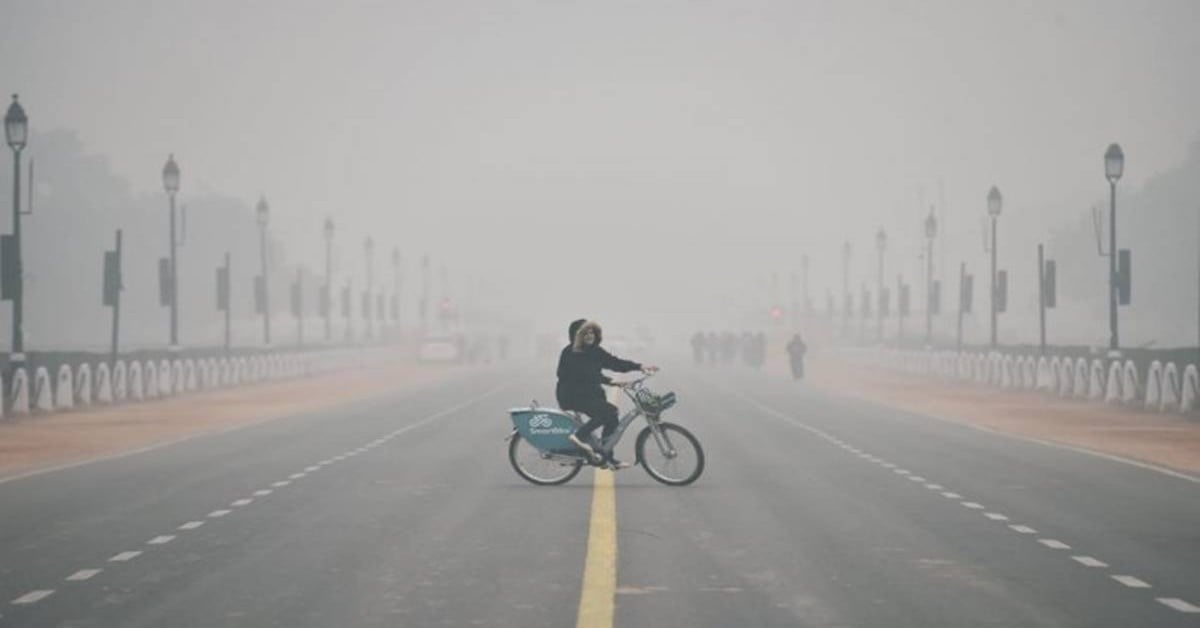
A dense blanket of smog covered Delhi on Saturday morning, pushing air quality into the ‘very poor’ category and disrupting flight and train operations across the national capital and adjoining areas. Reduced visibility due to smog led to delays in air and rail traffic, while authorities warned that pollution levels could worsen further in the coming days.

The Air Quality Index (AQI) in Delhi was recorded at 380, placing it in the ‘very poor’ bracket. Visuals from Bhairav Marg near Pragati Maidan showed motorists using headlights during early hours, as visibility remained low. At around 7 am, the AQI at this location stood at 433.

Nearly half of Delhi’s air quality monitoring stations reported ‘severe’ pollution levels. Anand Vihar recorded an AQI of 428 with PM2.5 as the dominant pollutant, while Jahangirpuri reported an AQI of 425.

Transport services hit by low visibility

Flight operations at Delhi airport were impacted due to low visibility conditions. The airport issued an advisory asking passengers to check with their respective airlines for updated flight information, as low visibility procedures were in place. Runway visibility was reported to be between 800 and 1,200 metres.

Live flight tracking data showed multiple flights running behind schedule. One airline also warned passengers about possible disruptions at several airports in northern and eastern India, including Delhi, due to dense fog conditions. Travellers were advised to verify flight status before heading to the airport, with options offered on select flights to reschedule or seek refunds without additional charges.

Rail services were also affected, with more than 30 trains running late by an average of three to four hours. Some long-distance trains reported delays of over six to eight hours, causing inconvenience to passengers travelling to and from the capital.

Air quality likely to worsen

The weather department had earlier forecast dense to very dense fog at isolated places over Delhi and several parts of north and central India. According to the Air Quality Early Warning System for Delhi, pollution levels are expected to remain in the ‘very poor’ category on Saturday and may slip into the ‘severe’ category on Sunday and Monday. In view of the deteriorating conditions, an ‘orange’ alert has been issued for Saturday.

Continue Reading

India News

PM Modi inaugurates India’s first nature-themed airport terminal in Assam

Prime Minister Narendra Modi inaugurates the new nature-themed terminal at Guwahati airport, the largest in Northeast India, built around bamboo, orchids and regional heritage.

Published

on

PM modi in Assam

Prime Minister Narendra Modi is set to inaugurate the new terminal building of Lokapriya Gopinath Bordoloi International (LGBI) Airport in Guwahati today, marking a major milestone for aviation infrastructure in the Northeast. Built at an estimated cost of around Rs 4,000 crore, the facility is being projected as the largest airport terminal in the region and a key boost to connectivity, tourism and economic activity in Assam.

The Prime Minister is scheduled to arrive in Guwahati around 3 pm as part of his two-day visit to the state.

Northeast’s largest airport terminal takes shape in Guwahati

The newly constructed terminal is nearly seven times larger than the existing one and has been designed to cater to the region’s rapidly growing air traffic. Once fully operational, it is expected to handle up to 13.1 million passengers annually by 2032.

Officials said the terminal is planned as a regional connectivity hub, with a focus on strengthening air links between India and Southeast Asia. The airport will be capable of handling up to 34 air traffic movements per hour, the highest capacity among airports in the Northeast. The facility will also be equipped with one of the most advanced Instrument Landing Systems to support safer and more efficient operations.

Nature-inspired design rooted in Assam’s identity

What sets the Guwahati terminal apart is its distinctive nature-themed architecture. Conceptualised under the theme “Bamboo Orchids”, it is being described as India’s first airport terminal inspired entirely by natural and cultural elements.

The interiors draw from the landscapes of Northeast India, with design elements reflecting indigenous orchids, locally known as Kopou Phool, and the flow of the Brahmaputra river. The terminal incorporates more than 2,000 species of plants, includes a dedicated zone inspired by Kaziranga National Park, and features artefacts representing Majuli Island.

A key architectural highlight is the expansive bamboo vault, created using around 140 metric tonnes of locally sourced bamboo. The space has been envisioned as a multifunctional cultural centre aimed at encouraging community interaction and showcasing the region’s heritage. Design elements such as japi motifs, the iconic rhino symbol and 57 orchid-inspired columns further reinforce the cultural narrative.

Arriving passengers will also experience a unique “Sky Forest”, featuring nearly one lakh plants of indigenous species, designed to create an immersive forest-like ambience within the terminal.

Focus on digital integration and passenger convenience

Spread over nearly 1.4 lakh square metres, the integrated new terminal has been designed to handle around 1.3 crore passengers annually. It is supported by significant upgrades to the runway, airfield systems, aprons and taxiways.

The terminal places strong emphasis on digital integration, with 14 entry points, including four DigiYatra gates, aimed at easing passenger movement. Facilities such as full-body scanners for non-intrusive security checks, automated baggage handling systems, fast-track immigration and AI-driven airport operations have been incorporated to ensure smoother travel experiences.

Other engagements during PM Modi’s Assam visit

During his two-day stay, the Prime Minister will also lay foundation stones for multiple development projects and address public gatherings. He is scheduled to visit the Swahid Smarak Kshetra to pay tribute to the martyrs of the historic Assam Movement.

Later in the day, PM Modi will perform the bhoomipujan for a new brownfield Ammonia-Urea Fertiliser Project at Namrup in Dibrugarh district, within the existing premises of the Brahmaputra Valley Fertiliser Corporation Limited.

Continue Reading

India News

Assam train accident: Eight elephants killed after Rajdhani Express derailment in Hojai

Eight elephants were killed after the Rajdhani Express collided with a herd in Assam’s Hojai district, causing multiple coaches to derail and disrupting train services.

Published

on

assam train accident

At least eight elephants were killed and a calf was injured after a herd collided with the Sairang–New Delhi Rajdhani Express in Assam’s Hojai district, leading to the derailment of the locomotive and five coaches early Saturday. Railway officials confirmed that no passengers were injured in the incident.

Forest department officials said the collision occurred when the New Delhi-bound Rajdhani Express struck a herd of elephants on the tracks. The impact caused multiple coaches to derail, disrupting rail traffic on the busy route connecting the Northeast with the national capital.

Train services hit, passengers shifted to other coaches

Following the derailment, rail movement towards Upper Assam and other parts of the Northeast was affected due to damaged coaches and elephant remains scattered on the tracks. Accident relief trains and senior railway officials rushed to the site to restore services.

Passengers travelling in the affected coaches were temporarily accommodated in vacant berths in other coaches of the same train. Officials said that once the train reaches Guwahati, additional coaches will be attached to ensure all passengers can continue their journey.

Collision occurred outside designated elephant corridor

According to officials, the accident took place at a location that is not marked as a designated elephant corridor. The loco pilot reportedly applied emergency brakes after spotting the herd on the tracks, but the elephants ran into the train, resulting in the collision and derailment.

Forest authorities confirmed that eight elephants died on the spot, while one injured calf was rescued. Local residents said the herd consisted of around eight elephants at the time of the accident.

Elephant deaths in train accidents remain a concern

The incident comes amid continued concerns over wildlife deaths on railway tracks. Data shared by the Environment Ministry in Parliament earlier showed that at least 79 elephants have died in train collisions across India over the past five years, based on reports from states and Union Territories.

The ministry has said that several preventive steps are being taken in coordination with the Railways, including speed restrictions in elephant habitats, use of sensor-based detection systems, and construction of underpasses, ramps and fencing at vulnerable locations. Guidelines and capacity-building programmes have also been introduced to reduce human-animal conflict along railway lines.

Continue Reading

Trending

© Copyright 2022 APNLIVE.com