English हिन्दी
Connect with us

Top Stories

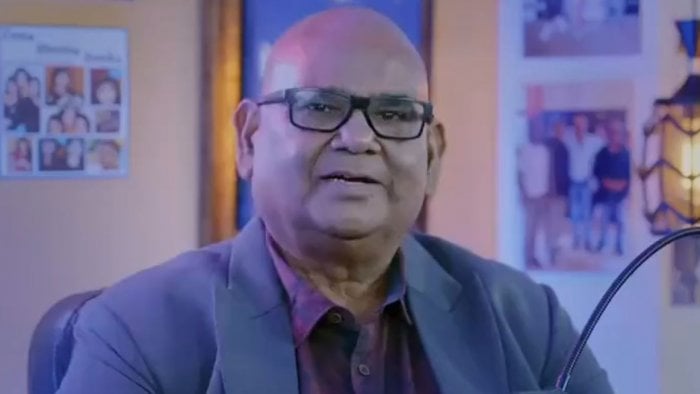
Satish Kaushik death: Farmhouse owner’s wife claims husband’s role behind actor’s death

Published

on

filmmaker Satish Kaushik

Veteran actor Satish Kaushik who died on Wednesday due to a heart in Delhi unveiled a new angle in connection with his death. This comes after when an owner of the farmhouse Vikas Malu’s second wife puts serious allegations against his husband, saying he played a major role in the actor’s death as both of them had business links and there was a monetary dispute between Kaushik and Malu.

The woman also registered a complaint to the Delhi police regarding the same, after which the police started investigating the matter on the basis of her complaint. The police also released an official statement, under which it confirmed that a team has been set up that will start investigating the matter following the sudden death of the veteran actor which left the entire nation in shock. The lady will record her statement later, the statement added.

Talking to the media, Malu’s wife informed that she has registered a complaint against him and alleged that her husband was the reason behind Satish Ji’s death. She revealed that the actor came to her husband’s farmhouse in order to celebrate Holi. After a while, his health started getting deteriorated. She also told the media that some objectionable drugs also has been found in the farmhouse premises where they were partying.

She further told the media that in August 2022, they both also had a heated argument broke over money after which Satish ji demanded Rs 15 crores that he gave him for business purposes but he refused to pay him and said he will clear his due soon.

When Malu’s wife asked him about the fight and money which Kaushik was talking about then, he admitted and told her that he did borrow a large amount of money from Kaushik but somehow the amount smoked and went in a huge went for loss during the coronavirus times. She further revealed that her husband was not in the mood to repay the borrowed money. She also alleged he used the money for his own benefit and spent it in a cheap manner.

Meanwhile, Kaushik along with his few friends went to Malu’s farmhouse for a Holi party. After the celebration, he went to sleep somewhere around 9 or 9:30 pm. Around 12, he started feeling uneasy after which he called his manager and told him about his health issue. Then he rushed him to Gurugram’s Fortis Hospital where he died.

India News

Can’t lathicharge a peaceful protest, says Supreme Court

Published

on

By

Supreme Court

The Supreme Court on Monday questioned the Delhi Police action leading to lathicharges during the student protest at Jantar Mantar on July 20.

The bench of Chief Justice of India Justice Surya Kant, Justice Joymalya Bagchi and Justice V. Mohana observed that a peaceful protest can’t be net with a lathicharge. The court made the remarks while hearing petitions against excessive force used by Delhi Police against students protesting irregularities in the NEET-UG 2026 examination and other public examinations.

The court said the right to peaceful and lawful protest is under the protection of the Constitution. The court observed that the presence of a protest can’t be a ground for police action and said that any allegation of police excess has to be independently examined.

The petitions concern the events of July 20, when thousands of students and supporters of the Cockroach Janta Party tried to march from at Jantar Mantar to Parliament as the Monsoon Session opened. The protesters were demanding action on paper leaks, examination system reforms and government accountability.

Police said they had stopped the march because of security concerns and restrictions in central Delhi. There was a clash later and police used tear gas and lathi charge to disperse the crowd. Over a 100 protesters and a similar number of police were injured in the incident.

The petitioners had sought an independent probe into the police action during the hearing. They also demanded the retention of CCTV footage, body-camera recordings and other electronic evidence, as well as compensation for those injured in the crackdown.

The case comes amid a nationwide debate over reforms of examinations and the handling of student protests. The Centre has brought in legislative measures to strengthen anti-paper leak laws, even as student organizations continue to demand greater accountability.

Continue Reading

India News

Bill against paper leaks eclipsed by Opposition push for Amit Shah reply

Published

on

By

Amit Shah

The Monsoon Session of Parliament witnessed Opposition-Government scenes on Monday as Union Minister Dr. Jitendra Singh introduced the Public Examinations (Prevention of Unfair Means) Amendment Bill, 2026 in the Lok Sabha.

The Bill aims to strengthen laws against examination paper leaks and organized cheating following the NEET-UG 2026 controversy.

During the discussions, the Opposition Congress demanded Home Minister Amit Shah’s reply to allegations of police excesses on July 20 during the Cockroach Janta Party (CJP) march to Parliament. Over 100 students were treated for injuries ranging from fractures to pellet wounds. CRPF personnel have confirmed seven rounds of pellets were fired and five rounds were fired at the students.

Congress leader Pawan Khera said such force should not have been used against the students and the Home Minister must reply to the allegations. Following disruptions, the House was adjourned several times.

The legislation seeks to impose stricter penalties for paper leaks, organized examination fraud, and other unfair practices. It also provides for faster investigations, time-bound trials, and the establishment of a STF to investigate major examination-related offenses. According to the government, the amendments are intended to improve transparency, protect the credibility of public examinations, and restore students’ confidence in the system.

The Congress and several Opposition parties demanded a detailed discussion in both the Lok Sabha and the Rajya Sabha, arguing that the government must be held accountable for both the examination irregularities and the police response.

The debate comes days after the resignation of former Union Education Minister Dharmendra Pradhan, following weeks of nationwide protests over paper leaks and examination malpractice. While the Centre has announced reforms and introduced the amendment Bill, Opposition leaders maintain that legislative changes alone are insufficient without fixing responsibility for the controversy and the police action against students.

The government defended its response, stating that it has initiated investigations into examination fraud, introduced stricter legal provisions, and taken steps to strengthen the security of public examinations. Parliamentary Affairs Minister Kiren Rijiju urged MPs to participate in the debate and allow the House to function smoothly instead of disrupting proceedings.

Continue Reading

India News

Parliament Monsoon Session 2026: Bill against paper leaks to be introduced in Lok Sabha today

The Lok Sabha will introduce and consider the Public Examinations (Prevention of Unfair Means) Amendment Bill, 2026, proposing stricter punishment, fast-track courts and stronger safeguards against paper leaks.

Published

on

The Lok Sabha is set to take up the Public Examinations (Prevention of Unfair Means) Amendment Bill, 2026 for consideration and passage on Monday as the Centre moves to tighten laws against paper leaks and examination-related fraud.

Union Minister Dr Jitendra Singh will seek the House’s permission to introduce the Bill before moving it for consideration and passing during the day’s legislative business.

The proceedings of the Lok Sabha are scheduled to begin at 11 am with the Question Hour, during which ministers will respond to listed oral questions.

Bill proposes stricter action against paper leaks

The proposed amendment aims to strengthen transparency and integrity in the public examination system through stricter legal provisions while safeguarding the interests of students.

Among its major provisions are:

  • Imprisonment of up to 10 years for those found guilty.
  • A fine of up to Rs.10 crore.
  • Confiscation of assets of convicted offenders.
  • A mechanism to ensure verdicts in such cases are delivered within three months through fast-track courts.

The proposed changes follow the Union Cabinet’s approval of the legislation and related measures aimed at tackling paper leaks and examination fraud with stricter punishment and expedited trials.

Supreme Court judges amendment Bill also on agenda

Apart from the anti-paper leak legislation, the Lok Sabha is also scheduled to consider the Supreme Court (Number of Judges) Amendment Bill, 2026.

Union Law Minister Arjun Ram Meghwal will move the Bill for consideration. It seeks to further amend the Supreme Court (Number of Judges) Act, 1956.

Ministers to present implementation reports

Several Union ministers are also expected to place statements before the House on the implementation of recommendations made by various Parliamentary Standing Committees.

Among them:

  • Gajendra Singh Shekhawat will present an update on recommendations related to the Ministry of Tourism.
  • Jayant Chaudhary will report on recommendations concerning the Ministry of Skill Development and Entrepreneurship.
  • Pankaj Chaudhary will table a statement on recommendations relating to the Ministry of Finance.
  • Suresh Gopi will present implementation updates on recommendations made by the Standing Committee on Petroleum and Natural Gas.

Continue Reading

Trending

© Copyright 2022 APNLIVE.com