English हिन्दी
Connect with us

Top Stories

Tamil Nadu Budget 2023-24: Free bus ride for women, Rs 1,000 monthly assistance to women, free breakfast scheme for primary students

The CM Stalin-led government said reforms led to the decline in revenue deficit from about Rs 62,000 crore to Rs 30,000 crore.

Published

on

Tamil Nadu Budget 2023-24

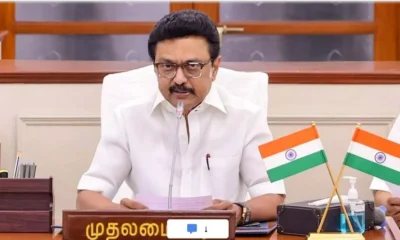
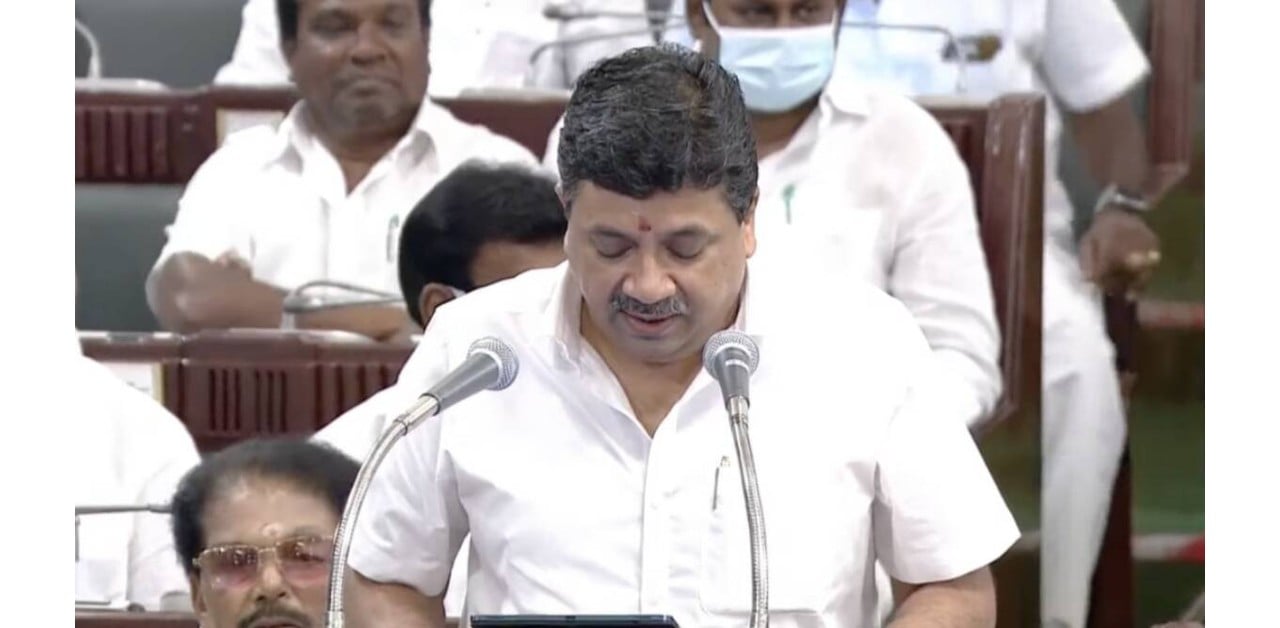
Tamil Nadu Finance Minister Palanivel Thiaga Rajan on Monday presented the Budget for the financial year 2023-24 in the State Legislative Assembly in Chennai.

The CM Stalin-led government said reforms led to the decline in revenue deficit from about Rs 62,000 crore to Rs 30,000 crore.
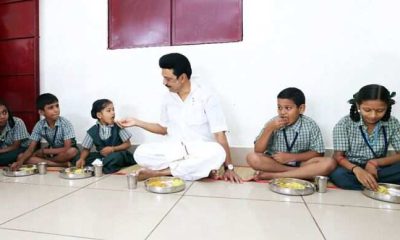
While tabling the budget, Rajan said fare-free travel for women in State-run buses, and a breakfast scheme for government school students are among the several schemes being implemented for the financial year 2023-24.

Read Also: London Mayor Sadiq Khan condemns pro-Khalistan protest at Indian High Commission

Tamil Nadu Budget 2023-24 highlights

  • Monthly financial assistance for severely affected differently-abled persons increased from Rs 1,500 to Rs 2,000.
  • Rs 1,500 crore will be allotted for improving infrastructure in government schools such as constructing new buildings.
  • Free breakfast scheme for primary students.
  • State announces Rs 1,000 per month for eligible women homemakers. Rs 7,000 crore will be allotted this year for the scheme.
  • Chola Museum will be set up in Thanjavur.
  • Rs 5 crore will be allocated to translate BR Ambedkar’s works into Tamil.
  • Rs 305 crore earmarked for bicycles for school students
  • Rs 25 crore will be allocated for factory skill schools and Metro rail projects for Coimbatore and Madurai.
  • Chennai will turn into a hi-tech global sports city.
  • Rs 18,661 crore will be allotted to the health and family welfare department.
  • A New Multispecialty facility will be built in Stanley Medical College Hospital along with a nursing College and hostel.
  • The solatium for defense personnel who sacrificed their lives during duty will be doubled from Rs 20 lakh to Rs 40 lakh.
  • Government colleges and polytechnics to get new classrooms and labs at the cost of Rs 200 crore.
  • Civil service aspirants will get monthly stipend of Rs 7,000 for preparing mains exam
  • Rs 3,993 crore will be allotted for the waiver of various loans including gold and education loans.
  • Rs 10 crore to be allotted to the animal welfare board to strengthen the ABC programme and to control the stray dog population.
  • Rs 2,000 crore announced for Neithal festival project for the restoration of the sea, and beaches.
  • Rural roads covering more than 5,140 km would be laid at a cost of Rs 2,000 crore in FY24.
  • Rs 14,000 crore to be allocated towards subsidy for TANGEDCO.
  • Rs 5,346 crore to be allotted for the old age pension scheme.

Delhi liquor policy case: Telangana CM’s daughter K Kavitha appears before ED for second round of questioning

Farmers to hold massive rally today in Delhi’s Ramlila Ground, check roads to avoid

India News

Delhi court orders release of CJP founder Abhijeet Dipke

A Delhi court on Saturday ordered the conditional release of Cockroach Janta Party founder Abhijeet Dipke, who was detained and subsequently arrested ahead of a planned protest march at Connaught Place.

Published

on

Abhijit Dipke

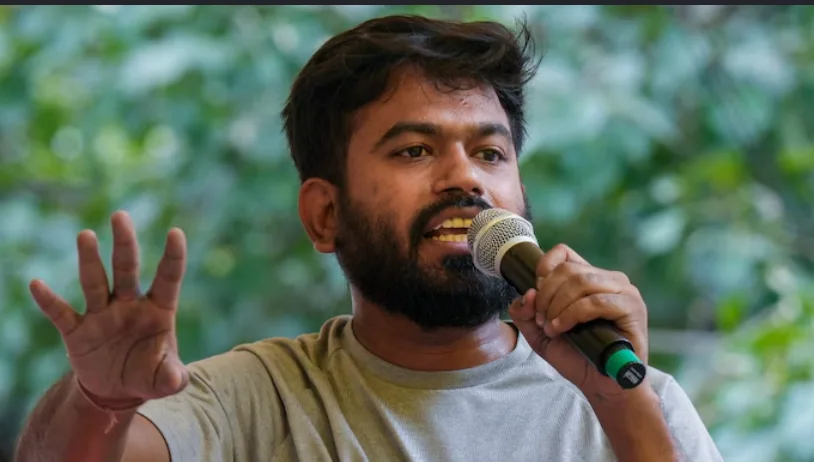
A Delhi court on Saturday ordered the conditional release of Cockroach Janta Party (CJP) founder Abhijeet Dipke, a day after he was detained and subsequently arrested ahead of a planned protest march in the national capital. The march was scheduled to take place at Connaught Place as part of demonstrations against alleged electoral irregularities.

Dipke was asked to furnish a bond and undertake to maintain peace as a condition of his release, according to reports. The court’s order came after he was produced before a Special Executive Magistrate following his arrest on Friday.

Why Abhijeet Dipke was detained

Dipke had planned to participate in the ‘Lehra Do Tiranga’ march at Connaught Place, where participants intended to gather and wave the national flag. The proposed demonstration was part of ongoing protests over alleged irregularities in the Special Intensive Revision (SIR) of electoral rolls and demands for the resignation of Chief Election Commissioner Gyanesh Kumar.

According to the Delhi Police, Dipke was taken into preventive custody before being formally arrested in a case related to the apprehension of a breach of peace. Police cited Sections 126 and 170 of the Bharatiya Nagarik Suraksha Sanhita (BNSS).

Neha Bora was also detained

All India Students’ Association (AISA) president Neha Bora was also detained on Friday ahead of the planned march. She was released early Saturday morning after completing the formalities associated with her detention, according to the report.

Bora criticised the police action and called for the release of protesters who remained in custody. She also demanded an end to the SIR exercise and sought the resignation of Chief Election Commissioner Gyanesh Kumar. These were her demands and allegations, rather than findings established by the court.

Protests over electoral rolls continue

The demonstrations involving CJP, student groups and opposition supporters have centred on allegations of irregularities in the voter-list revision process. Critics have questioned the exercise, while the Election Commission has maintained that its decisions were approved by the Supreme Court. The BJP has criticised the protests, describing them as attempts to spread anarchy, according to the report.

Dipke’s conditional release marks the latest development in the dispute over the planned Delhi protest. The court’s order concerns his release under specified conditions; it should not be interpreted as a judicial finding on the wider allegations surrounding the electoral-roll revision.

Continue Reading

India News

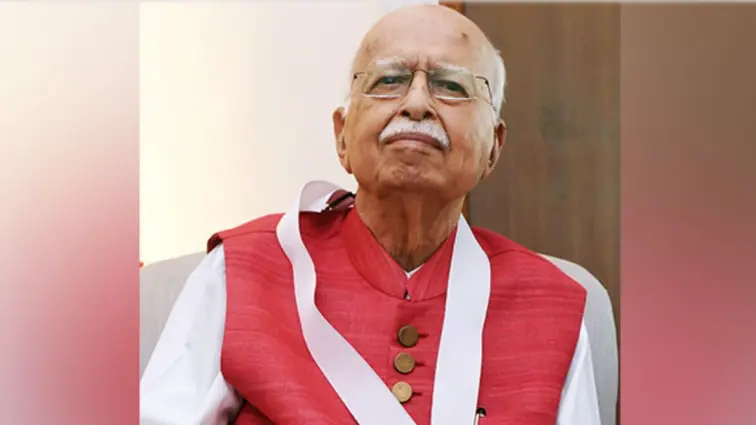
LK Advani, 98, hospitalised in Delhi with chest infection

Veteran BJP leader LK Advani, 98, has been admitted to Delhi’s Indraprastha Apollo Hospital with a chest infection. Hospital officials said his condition was stable.
Published

on

Veteran Bharatiya Janata Party (BJP) leader and former Deputy Prime Minister Lal Krishna Advani has been admitted to Indraprastha Apollo Hospital in Delhi with a chest infection. Hospital officials have said that his condition is stable.

The 98-year-old leader was brought to the hospital at around 7.30 pm on Friday, October 16, and admitted to its pulmonary department. He is receiving treatment and remains under observation by a team of doctors, with medical tests underway.

LK Advani’s recent hospitalisation

Advani was previously admitted to Apollo Hospital in May 2026 because of age-related health complications. He remained under medical care for a few days before being discharged, according to the report.

In December 2024, the veteran BJP leader was admitted to the intensive care unit (ICU) at Indraprastha Apollo Hospital for medical management and investigations. He received treatment under the supervision of a neurologist, and the hospital had described his condition as stable at the time.

On December 17, 2024, the hospital reported gradual improvement and indicated that he was likely to be moved out of the ICU within the next one to two days.

Advani’s political career

Advani has been a prominent figure in the BJP’s rise in Indian politics. He served as the party’s president on multiple occasions and played a significant role in expanding its organisational presence.

His 1990 Ram Rath Yatra became a major event in the country’s political history. He later served as Union Home Minister and was India’s Deputy Prime Minister from 2002 to 2004 in the government led by Atal Bihari Vajpayee.

In recognition of his contribution to public life, Advani was awarded the Bharat Ratna, India’s highest civilian honour, in 2024. He had previously received the Padma Vibhushan in 2015.

Continue Reading

Latest world news

Trump waives Russia-related sanctions, tariffs in relief for India

Donald Trump has waived several Russia-related sanctions, restrictions and duties under a new US law, potentially easing tariff pressure on India and China, two major buyers of Russian energy.

Published

on

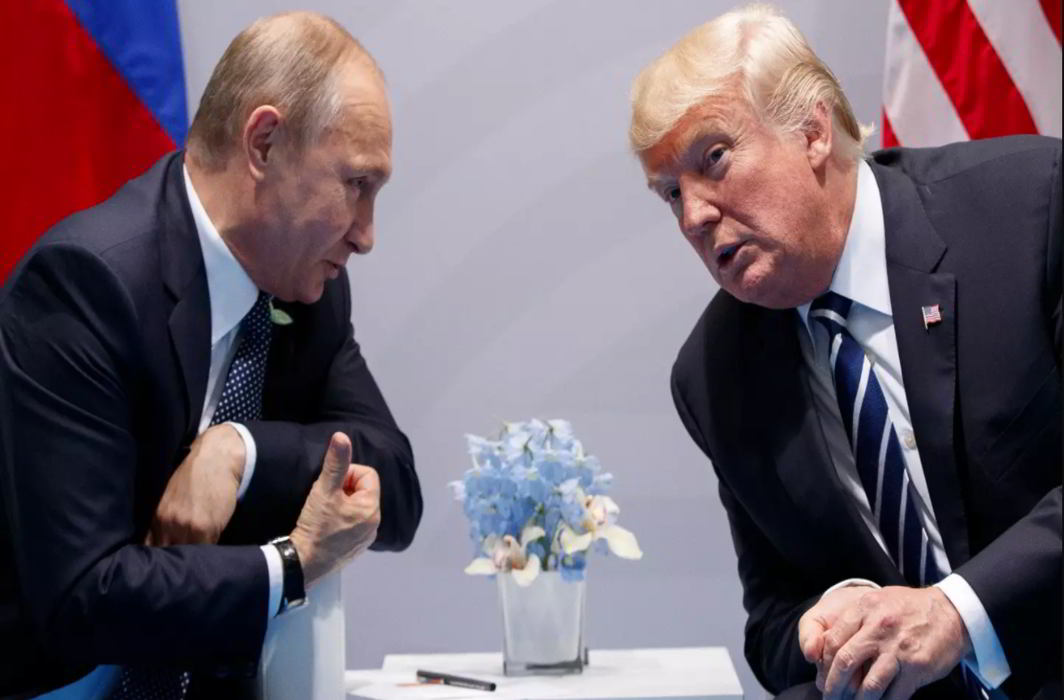
Vladimir Putin and Donald Trump

US President Donald Trump has waived many Russia-related sanctions, restrictions and duties, offering relief to India and China amid the threat of additional tariffs over their purchases of Russian oil and gas.

The waiver came one day before the measures were due to take effect under a bill signed into law by Trump last month. The legislation sought to increase pressure on Russia by enabling additional tariffs on countries buying its oil and gas.

Trump issued an executive order waiving many Russia-related measures, easing the immediate threat of additional tariffs for major buyers of Russian oil and gas, including India and China.

What Trump’s waiver means for India and China

India and China have been among the largest buyers of Russian energy, putting them at risk under the new US legislation.

The law authorised the US president to impose tariffs of up to 100% on goods from major importers of Russian oil and gas. Such penalties were intended to pressure countries to reduce their purchases of Russian energy and limit Moscow’s revenue during the Ukraine war.

The waiver eases the immediate threat posed by those provisions. However, it should not be interpreted as a permanent removal of every possible Russia-related sanction or tariff. The scope of the decision is defined by the measures covered under the executive order.

What is the Lindsey Graham Act?

The Lindsey O. Graham Sanctioning Russia and Iran Act of 2026 was enacted to expand Washington’s ability to penalise Russia and countries supporting its energy trade.

The legislation allows the US president to impose tariffs of up to 100% on goods imported from countries covered by its provisions on Russian oil and gas purchases.  It also provides for sanctions targeting Russian officials, financial institutions and energy interests, alongside measures against entities involved in helping Russia evade existing restrictions.

The legislation is named after the late US Senator Lindsey Graham, who was a prominent advocate of stronger economic pressure on Russia over its invasion of Ukraine.

Importantly, the law gave Trump discretion over the use of its tariff provisions rather than automatically imposing the maximum tariff on every country buying Russian energy. It also included a mechanism allowing the president to waive measures when he certifies that doing so serves US national interests.

Why the decision matters amid the Ukraine war

The US legislation was intended to increase pressure on Russia by targeting both its energy revenues and countries that continued to purchase its oil and gas.

For India, the potential tariffs had added another point of friction in its trade relationship with Washington. New Delhi has maintained that its energy purchasing decisions are guided by national interests and energy security.

China, another major importer of Russian energy, had also faced the prospect of additional trade penalties under the law.

Trump’s decision to waive several measures reduces the immediate tariff threat for affected countries. However, the move does not itself resolve the wider dispute over Russian energy purchases or the continuing war in Ukraine. The administration’s future decisions will determine how the relevant provisions are applied.

Continue Reading

Trending

© Copyright 2022 APNLIVE.com