English हिन्दी
Connect with us

Latest Politics News

Simultaneous polls: four parties for, nine against; BJP, Congress views to come later

Published

on

Simultaneous polls: four parties for, nine against; BJP, Congress views to come later

As the two-day consultation held by Law Commission on the issue of holding Lok Sabha and assembly polls simultaneously ended on Sunday, four political parties supported the idea and nine opposed it.

The two major national parties — the BJP and the Congress — stayed away from the Law Commission’s deliberations. The BJP has, however, written to the Law Commission Chairman, Justice BS Chauhan, stating that Prime Minister Narendra Modi has always argued in favour of simultaneous polls and sought time to submit their detailed response later.

Justice Chauhan is learnt to have asked that all representations be submitted by July 31.

The Congress said it would firm up its stand on the issue only after talking to allies and other political parties.

The NDA ally Shiromani Akali Dal (SAD), the AIADMK, the Samajwadi Party (SP) and the Telangana Rashtra Samiti (TRS) supported the idea.

BJP’s ally Goa Forward Party opposed the concept as did the Trinamool Congress (TMC), Aam Aadmi Party (AAP), DMK, Telugu Desam Party (TDP), CPI, CPI (M), All India Forward Block (AIFB) and the Janata Dal (Secular) (JD-S).

The DMK, JD-S, and AAP were strongly opposed to simultaneous elections and argued that the move was against “basic tenets of the Constitution.”

The TDP said while the One Nation-One Poll may be a “good idea”, it was “incompatible with the Constitution and impracticable.”

DMK Working President MK Stalin’s letter, submitted by party MP Tiruchi Siva, pointed out, “The Working Paper does not seem to have considered that the Lok Sabha is also capable of being dissolved before its five year tenure. If such a situation were to happen, it is unclear whether all Legislative Assemblies will also be dissolved to synchronise the electoral process again.”

“In a federal democracy you cannot think of simultaneous elections. This is a futile exercise. First and foremost poll reform should be to put a ceiling on expenditure but no one’s talking about it,” senior JD-S leader Danish Ali told The Hindu and added that the proposal was aimed against smaller regional players.

The SP, TRS, AAP, DMK, TDP, JD (S) and All India Forward Block met the Law Commission to put forth their views.

The SP, represented by Ram Gopal Yadav, supported the concept. But Yadav made it clear that the first simultaneous poll should be held in 2019, when the term of the 16th Lok Sabha comes to an end.

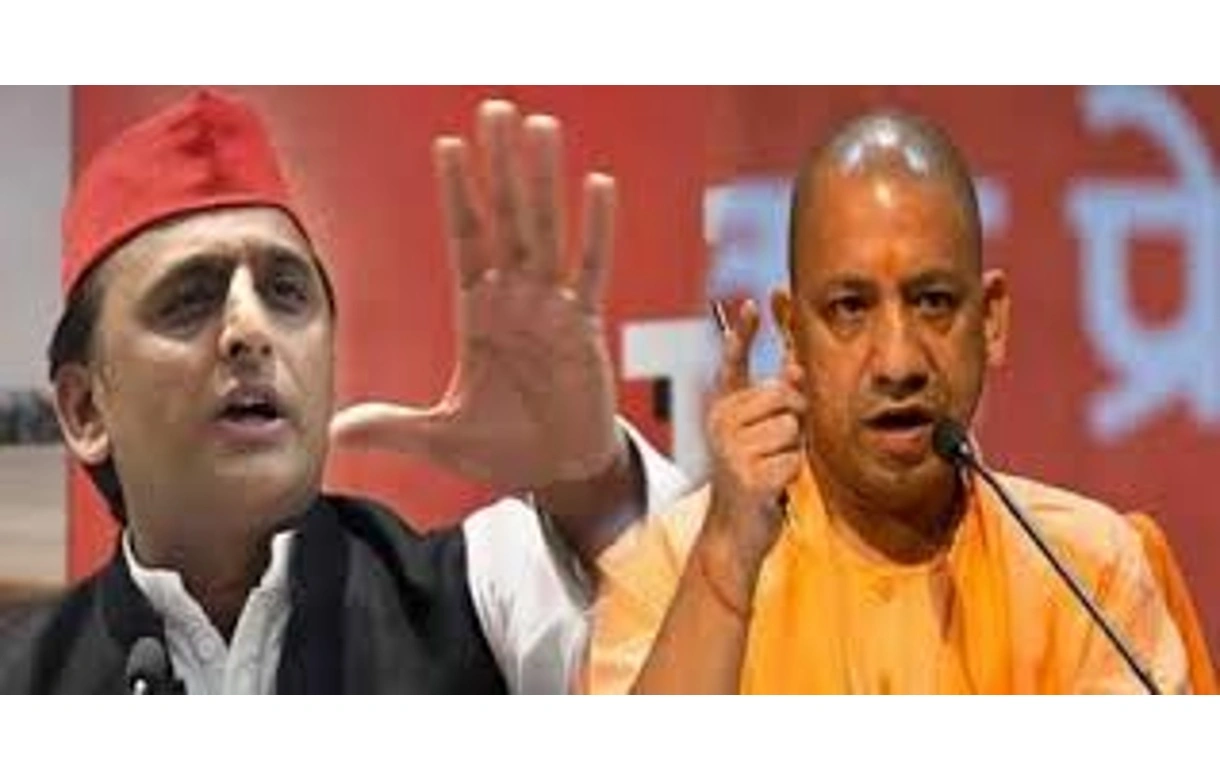
If simultaneous polls are held in 2019, the tenure of the Yogi Adityanath’s BJP government in Uttar Pradesh will be shortened.

AAP’s Ashish Ketan told the law panel that simultaneous polls are a ploy to keep people away from forming a government as the terms of houses will be extended if the two polls are held together.

He also dubbed the idea as a move to impose “managed democracy” in the country, a senior law panel functionary present in the deliberations, said.

He also said Prime Minister Narendra Modi should be governing the country and not addressing rallies if simultaneous polls are held.

In a written response to the law panel, Telangana CM K Chandrasekhar Rao said his party supports the idea as months are spent preparing for polls throughout the year. B Vinod Kumar, who represented TRS at the meeting, said the analysis that local issues would be overshadowed by national issues if simultaneous polls are held, is incorrect. He gave examples of Andhra Pradesh and Tamil Nadu to drive home the point that voters cast ballot keeping in mind both national and local issues.

The TDP also opposed the idea, saying, “Simultaneous elections are no longer feasible in a vast country like ours with different political complexities of the assemblies. It is not possible to cut short the tenure of the Parliament and Assemblies. Simultaneous elections are incompatible with the Constitution and are also impracticable.”

The DMK, JD-S and AIFB also opposed the concept.

JD-S representative Danish Ali told the law panel that the idea is against federal democracy. He said if the government is interested in electoral reforms, it should first implement earlier law panel reports on election reforms and then discuss simultaneous polls.

Yesterday, Shiromani Akali Dal had supported the concept, saying it would reduce expenditure of parties and shorten the period of the model code of conduct which hampers development work.

The AIADMK, represented by Lok Sabha Deputy Speaker M Thambi Durai, had said holding the two polls together is “desirable” but certain “practical” and “serious” issues need to be settled first.

The AIADMK, which rules Tamil Nadu, was of the view that if necessary, simultaneous elections should be held in 2024 and not before that. Sources said the party was also of the view that the TN Assembly should be allowed to complete its term and the Lok Sabha elections should be held as per schedule.

The TMC Congress was represented by Kalyan Bandhopadhyay, a Lok Sabha member, at the meeting. His party too had opposed the concept saying, regional issues would be overshadowed by national issues, and national parties with their “money power” would steal a march over smaller players.

The CPI, AIDUF and Goa Forward Party also expressed similar views.

The CPI(M) had last week told the Law Commission that holding Lok Sabha and Assembly polls together is inherently “anti-democratic” and negates the principles of federalism which is a fundamental feature of Constitution.

CPI(M) General Secretary Sitaram Yechury had written to the panel, listing the party’s objections to the proposal stating that it goes beyond the ambit of law reform entailing major amendments to Constitution, and would run against both the “letter and spirit of our Constitution”.

Yechury had said that it “may not be necessary” that his party attends the consultation.

Seeking to give shape to the government’s concept of “one nation, one election”, the Law Commission’s internal working paper has recommended holding the Lok Sabha and Assembly polls simultaneously but in two phases beginning 2019.

India News

Pawan Khera faces fresh setback as Supreme Court refuses relief in passport row case

Congress leader Pawan Khera faces fresh setback as Supreme Court refuses interim relief and directs him to seek bail from Guwahati High Court.

Published

on

Pawan Khera

Congress leader Pawan Khera suffered another legal setback on Friday after the Supreme Court of India declined to extend protection in a case linked to his remarks about Himanta Biswa Sarma’s wife.

A bench of the apex court refused to interfere with an earlier order that had stayed the transit anticipatory bail granted to Khera by the Telangana High Court. This decision leaves the Congress leader open to possible arrest by Assam Police in connection with the case.

During the hearing, Khera’s counsel sought interim protection, but the court declined the request and advised him to approach the appropriate court in Assam for relief. The bench clarified that the Guwahati High Court should decide any bail plea independently and on its merits.

“Am I a terrorist?” remark during hearing

While seeking protection, Khera’s legal team expressed concern over the urgency of the situation. In court, his counsel remarked, “Am I a terrorist?” highlighting the plea for temporary relief until a fresh bail application could be filed.

The Supreme Court also raised concerns over the submission of incorrect documents during the proceedings, adding another layer to the legal complications faced by the Congress leader.

Case linked to remarks on CM’s wife

The case stems from a press conference held earlier this month, where Khera made allegations regarding the citizenship status and financial assets of the Assam Chief Minister’s wife, Riniki Bhuyan Sharma.

He had claimed that she possessed multiple passports and owned undisclosed overseas properties. These allegations were strongly denied by the Chief Minister’s family, who termed them fabricated and misleading.

Legal battle intensifies

Earlier, the Telangana High Court had granted Khera temporary transit anticipatory bail, allowing him time to seek relief from a competent court in Assam. However, the Supreme Court stayed that order following a challenge by Assam authorities, escalating the legal battle.

With the latest ruling, Khera is now expected to move the Guwahati High Court for anticipatory bail as the case continues to unfold.

Continue Reading

India News

Congress suspends 5 Haryana MLAs over cross-voting in Rajya Sabha polls

Congress suspends five Haryana MLAs for cross-voting in Rajya Sabha elections, citing serious indiscipline and anti-party activities.

Published

on

The Congress has suspended five of its MLAs in Haryana for cross-voting during the recent Rajya Sabha elections, taking disciplinary action over what it described as “anti-party activities”.

The move came after the state unit reviewed the conduct of certain legislators during the polls, where some were found to have voted against the party’s authorised candidate.

Five MLAs suspended after disciplinary process

According to party sources, the MLAs were issued show-cause notices seeking an explanation for their actions. After reviewing their responses, the Congress disciplinary committee recommended suspension.

The decision was approved by the party leadership, including Congress president Mallikarjun Kharge, and has been implemented with immediate effect.

Party calls it ‘grave indiscipline’

Haryana Congress chief Udai Bhan said the action was necessary to uphold party discipline, stressing that defying the official party line during elections weakens organisational unity.

He said the party takes such violations seriously and will continue to act against any form of indiscipline.

Leadership backs strict action

Senior Congress leader and Leader of Opposition Bhupinder Singh Hooda supported the decision, saying it was taken after due consideration.

He noted that while Rajya Sabha elections are conducted through an open ballot system, allowing legislators some flexibility, the party retains the authority to initiate internal disciplinary action in cases of deviation.

Background

The action follows cross-voting reported during the recent Rajya Sabha elections in Haryana, which led to internal concerns within the party. The development has highlighted organisational challenges and prompted the leadership to take corrective steps to reinforce discipline.

Continue Reading

India News

PM Modi assures no discrimination in women’s quota, delimitation debate intensifies in Parliament

PM Narendra Modi has assured that women’s reservation will be implemented without discrimination, amid a heated debate over delimitation in Parliament.

Published

on

PM modi

Prime Minister Narendra Modi has assured that there will be no discrimination in the implementation of women’s reservation, as Parliament witnessed a sharp debate over the proposed linkage between the quota and delimitation exercise.

During the ongoing special session, the government reiterated its commitment to ensuring fair representation while addressing concerns raised by opposition parties regarding the timing and structure of the legislation.

The proposed framework aims to reserve 33 percent of seats for women in the Lok Sabha and state assemblies. However, its implementation is tied to a fresh delimitation exercise, which is expected after the next census.

Opposition questions timing and intent

Opposition leaders have raised concerns that linking the women’s quota to delimitation could delay its implementation. They argue that the process of redrawing constituencies may push the actual rollout further into the future.

The issue has triggered a broader political confrontation, with multiple parties questioning whether the move could alter representation across states.

Some critics have also alleged that the delimitation exercise could disproportionately benefit certain regions based on population, a charge the government has rejected.

Government reiterates commitment to fair implementation

Responding to these concerns, the Centre has maintained that the reforms are necessary to ensure accurate and updated representation based on population data.

Leaders from the ruling side have repeatedly emphasized that the process will be carried out transparently and without bias. The assurance that there will be “no discrimination” is aimed at addressing fears among states and opposition parties.

The debate marks a key moment in Parliament, with both sides engaging in intense exchanges over one of the most significant electoral reforms in recent years.

Continue Reading

Trending

© Copyright 2022 APNLIVE.com