English हिन्दी
Connect with us

Latest Politics News

Women Reservation Bill: Here’s a look at 20 states with 50% quota for women in panchayats, municipalities

At present, there are 15 lakh elected women representatives in panchayats and municipalities across the country. 

Published

on

Women Reservation Bill: Here’s a look at 20 states with 50% quota for women in panchayats, municipalities

Taking a significant step ahead, the Women’s Reservation Bill was introduced in the Lok Sabha during the special session of the Parliament on Tuesday. Prime Minister Narendra Modi urged the Opposition to unanimously pass the bill, Nari Shakti Vandan Adhiniyam. The Women’s Reservation bill was stuck for almost three decades.

While the Women’s Reservation Bill that seeks to provide a 33 per cent quota for women in Lok Sabha and state assemblies remained stuck, around 20 states witnessed 50% reservations for women in local government bodies. As far as reports are concerned, at present, there are 15 lakh elected women representatives in panchayats and municipalities across the country. 
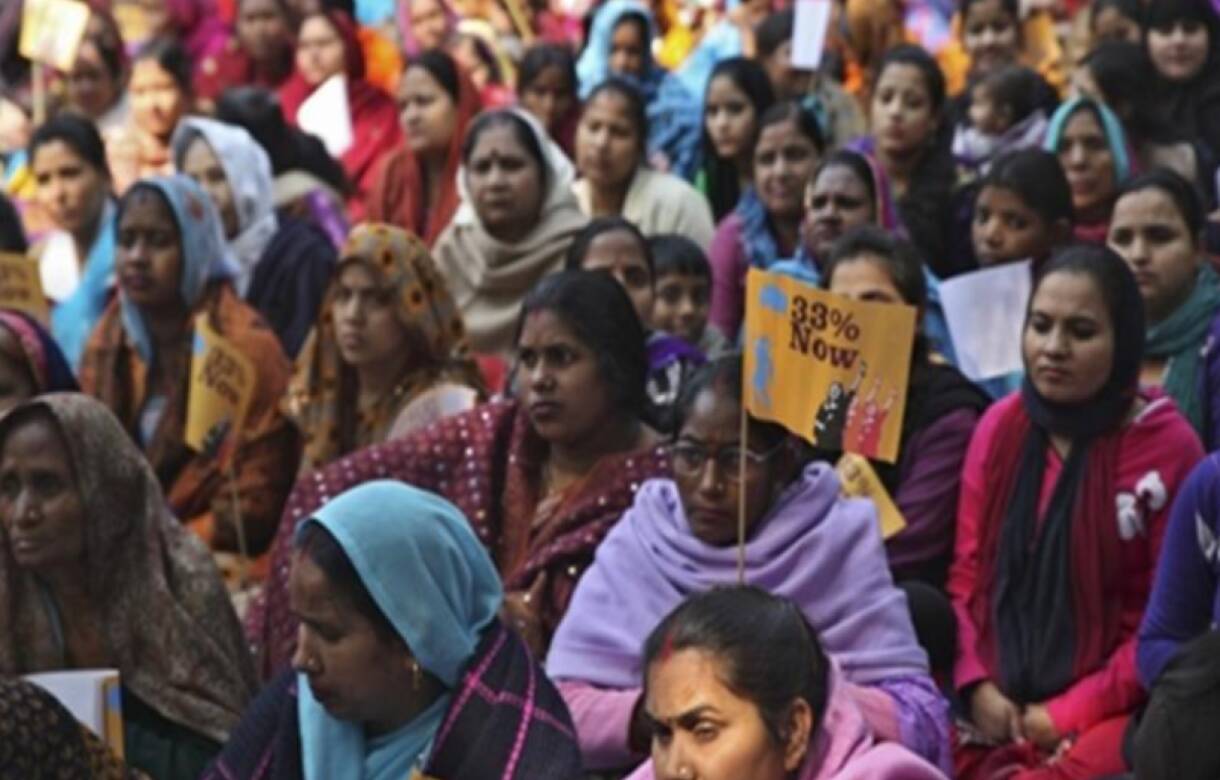
States like Andhra Pradesh, Assam, Bihar, Chhattisgarh, Gujarat, Himachal Pradesh, Jharkhand, Karnataka, Kerala, Madhya Pradesh, Maharashtra, Odisha, Punjab, Rajasthan, Sikkim, Tamil Nadu, Telangana, Tripura, Uttarakhand and West Bengal have made provisions for 50% reservation of women in Panchayati Raj Institutions in their respective State Panchayati Raj Acts. 

Evidently, the move for reservation for women in local bodies dates back to 1992 and 1993, when the then prime minister P.V. Narasimha Rao reintroduced the Constitution Amendment Bills 72 and 73, which reserved one third (33%) of all seats and chairperson posts for women in rural and urban local bodies. The Bills were passed by both the houses. Earlier,  in May 1989, former Prime Minister Rajiv Gandhi introduced the Constitution Amendment Bill to provide one-third reservation for women in rural and urban local bodies. The Bill was passed in Lok Sabha but failed to get passed in Rajya Sabha in September 1989.

Echoing the contribution of the aforesaid leaders in Women’s Reservation, several Congress leaders including Sonia Gandhi, KC Venugopal took the credit of the bill. However, though the Women’s Reservation Bill is introduced in the Lok Sabha, the legislation will come into effect after the next delimitation exercise, which might be carried out after 2026. At present, only 14% of the members in the Indian Parliament are women. 

Furthermore, it is to be noted that in 1988, the National Perspective Plan for Women recommended the provision of reservation for women at various political levels, from Panchayati Raj institutions to Parliament. 

India News

Abhishek Banerjee says will not bow to BJP after nearly 11 hours of ED questioning

After spending nearly 11 hours before the Enforcement Directorate, TMC leader Abhishek Banerjee said he would not bow to the BJP and accused the ruling party of using investigative agencies for political purposes.

Published

on

Abhishek Banerjee

Trinamool Congress leader and Diamond Harbour MP Abhishek Banerjee on Tuesday said he would not bow to the BJP after spending nearly 11 hours being questioned by the Enforcement Directorate (ED) in connection with an ongoing investigation.

Speaking after the questioning, Banerjee alleged that central agencies were being used to target opposition leaders and asserted that he would continue his political fight despite what he described as sustained pressure.

The TMC leader has repeatedly maintained that investigations involving him are politically motivated, a charge he has made on several previous occasions while appearing before central agencies.

His appearance before the ED comes amid a period of heightened political activity and multiple investigations involving leaders in West Bengal. Recent days have also seen Banerjee face summons and questioning in separate matters by state investigative agencies.

After leaving the ED office, Banerjee reiterated that he would not be intimidated and said he remained committed to his political responsibilities. He also accused the BJP of attempting to weaken opposition parties through investigative action, an allegation that the BJP has rejected in the past.

The Enforcement Directorate has not publicly commented on Banerjee’s remarks. The investigation related to the questioning remains ongoing.

Continue Reading

India News

DMK attacks Rahul Gandhi, accuses him of weakening opposition unity

DMK has intensified its criticism of Rahul Gandhi, alleging that the Congress leader’s actions have weakened opposition unity and strained relations within the INDIA bloc.

Published

on

Rahul-Gandhi

The war of words between the DMK and Congress has intensified, with the DMK launching a strong attack on Leader of Opposition Rahul Gandhi and accusing him of contributing to divisions within the opposition alliance. The criticism comes amid strained ties between the two parties following their political split in Tamil Nadu.

According to the DMK, Rahul Gandhi’s political approach has weakened unity among opposition parties. The party’s IT wing mocked the Congress leader on social media, while an editorial published in the DMK’s official mouthpiece Murasoli questioned his recent remarks on opposition solidarity.

DMK questions Rahul Gandhi’s remarks on opposition unity

In its editorial, Murasoli argued that Rahul Gandhi was speaking about opposition unity despite, according to the DMK, contributing to disagreements among alliance partners in several states. The publication cited criticism directed at Congress by various opposition parties and suggested that the party’s actions had often created tensions within the INDIA bloc.

The editorial also referred to past political disputes involving Congress and Left parties, particularly in Kerala, claiming such episodes had raised concerns among opposition allies about Congress’s approach toward its partners.

Tamil Nadu political fallout adds to tensions

The attack comes after a major political realignment in Tamil Nadu. Following the 2026 Assembly elections, Congress ended its alliance with the DMK and joined the government led by Vijay’s Tamilaga Vettri Kazhagam (TVK). The move left the DMK in the opposition and significantly altered the political equation between the two former allies.

The DMK has alleged that Congress benefited from the alliance during the election and later abandoned its partner. The party’s editorial questioned whether assurances from Congress leadership would be trusted by alliance partners after the developments in Tamil Nadu.

Congress rejects allegations

Congress has not issued a detailed official response to the editorial, but party sources have rejected the allegations. According to the party, its decisions in Tamil Nadu were made in line with the mandate delivered by voters and were not intended to undermine either the DMK or the broader opposition alliance.

The latest exchange highlights growing strains between two key opposition parties even as leaders continue to stress cooperation on national issues. Just days earlier, Rahul Gandhi had said that the DMK remained aligned with the opposition on defending the “idea of India” despite political differences.

Continue Reading

India News

Congress, SP send mixed signals on AIMIM’s role ahead of 2027 Uttar Pradesh polls

Congress and Samajwadi Party leaders have responded differently to questions about AIMIM’s role ahead of the 2027 Uttar Pradesh Assembly elections, highlighting ongoing discussions over opposition strategy.

Published

on

Differing responses from Congress and Samajwadi Party leaders have highlighted varying approaches within the Opposition camp regarding the possible role of the All India Majlis-e-Ittehadul Muslimeen (AIMIM) in the run-up to the 2027 Uttar Pradesh Assembly elections.

The discussion gained momentum after AIMIM chief Asaduddin Owaisi launched his party’s campaign preparations for the 2027 elections from Bahraich and reiterated that his party is open to alliances, provided it is treated with respect and as an equal partner.

Different responses from Congress and SP

Reacting to questions about a possible understanding with AIMIM, Congress leader Imran Masood said any decision on alliances would be taken by the party leadership. He also stressed that there could be no compromise with communalism.

On the other hand, Samajwadi Party leader Ram Gopal Yadav adopted a more accommodating tone, stating that anyone capable of defeating the BJP would be welcome. His remarks were viewed as leaving the door open to broader anti-BJP political cooperation.

The differing responses have drawn attention as Opposition parties continue to assess their electoral strategies ahead of the 2027 Uttar Pradesh Assembly elections.

AIMIM steps up preparations

AIMIM has begun expanding its campaign activity in Uttar Pradesh, with Owaisi launching the party’s preparations from Bahraich. The Hyderabad MP has indicated that AIMIM is willing to consider alliances but has maintained that any partnership must be based on mutual respect and equality.

The party is also working to strengthen its organisational presence in the state as it seeks a larger role in Uttar Pradesh politics ahead of the next Assembly election.

No formal alliance announced

Despite the ongoing discussion, no formal alliance or seat-sharing arrangement involving AIMIM and major Opposition parties has been announced so far.

With more than a year remaining before the 2027 Uttar Pradesh Assembly elections, political equations are expected to evolve as parties finalise their strategies and alliance plans.

Continue Reading

Trending

© Copyright 2022 APNLIVE.com