English हिन्दी
Connect with us

Latest Science News

Partial solar eclipse 2025 today: Timings, livestreams, double sunrise effect and safety tips

The first solar eclipse of 2025, occurring today, will not be visible from India but can be watched online via livestreams by NASA and other observatories.

Published

on

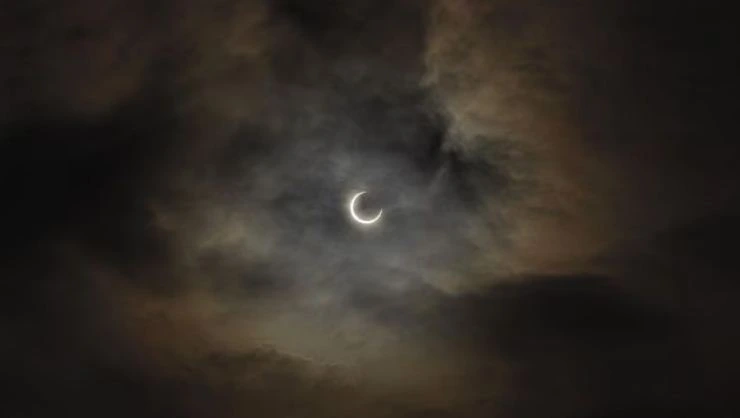
Partial solar eclipse forming crescent Sun in sky

A partial solar eclipse, the first of the year 2025, is set to unfold today, March 29. While this celestial phenomenon will be observable from several parts of the world, it will not be visible from any region in India. The eclipse is expected to start around 2:20:43 PM IST and continue until 6:13:45 PM IST, with visibility dependent on geographic location.

What is a partial solar eclipse?

Unlike a total eclipse where the Moon entirely blocks the Sun, a partial solar eclipse leaves part of the Sun exposed. As the Moon partially covers the Sun, it creates a striking crescent-like shape in the sky. Today’s eclipse is also expected to produce a rare “double sunrise” effect — where the Sun appears to rise, dim briefly, and rise again — typically visible in areas where the eclipse coincides with sunrise.

A global event, but not for Indian skies

According to space data agencies, about 100 crore (1 billion) people will be in locations where they can witness this partial eclipse. However, only around 44,800 people will see at least 90% coverage of the Sun — marking a very limited population for the highest visibility range.

Watch safely — never directly

Experts strongly advise against looking at the Sun directly during any solar eclipse. Viewers should only use certified solar viewing glasses, eclipse glasses, or handheld solar viewers. Watching through regular cameras, binoculars, or telescopes without proper solar filters can lead to severe eye damage.

Livestreaming options for virtual viewing

For those in India and elsewhere who cannot witness the eclipse directly, several global platforms like NASA and SLOOH Observatory are offering live streaming on their websites and social media channels. Indian space authorities like ISRO may also stream the event live. Viewers can access real-time visuals and expert commentary from the comfort of their homes.

The eclipse pairing rule

Astronomers remind us that eclipses always occur in pairs. This solar eclipse follows a total lunar eclipse that occurred just two weeks ago. Another pair of solar and lunar eclipses is expected to occur in September 2025, in line with the seasonal pattern of eclipses occurring roughly six months apart.

Continue Reading

Latest Science News

Indian-origin astronaut Anil Menon begins first mission to International Space Station

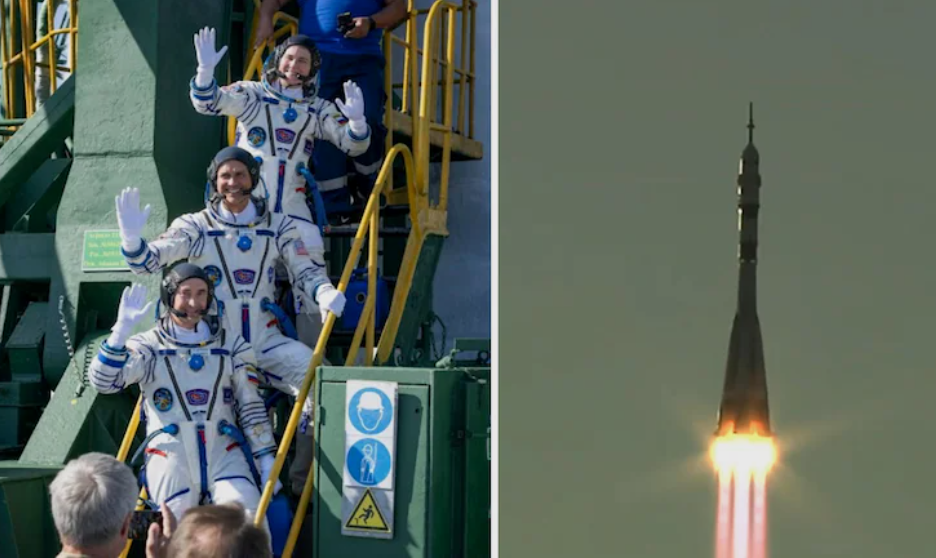
Indian-origin NASA astronaut Anil Menon has launched aboard Soyuz MS-29 on his first mission to the International Space Station, where he is expected to spend around eight months conducting research.
Published

on

Indian-origin NASA astronaut Anil Menon has embarked on his first journey into space after successfully launching aboard Russia’s Soyuz MS-29 spacecraft to the International Space Station (ISS).

The mission lifted off from the historic Baikonur Cosmodrome in Kazakhstan at 8:17 PM on Tuesday. Menon was accompanied by Russian cosmonauts Pyotr Dubrov and Anna Kikina as the three-member crew began their expedition to the orbiting laboratory.

Crew to spend about eight months aboard ISS

The Soyuz MS-29 spacecraft is expected to dock with the International Space Station a little over three hours after launch. Once aboard the ISS, the crew will carry out a range of scientific research and technology demonstration projects during their mission.

The expedition is scheduled to last approximately eight months, with the crew expected to return to Earth in 2027 after completing their planned activities in orbit.

Menon’s maiden spaceflight marks a significant milestone in his astronaut career as he joins the International Space Station crew for long-duration research and operational work.

Continue Reading

Latest Science News

Astronaut Shubhanshu Shukla to meet PM Modi after return from historic space mission

Astronaut Shubhanshu Shukla, who recently returned from the ISS as part of the Axiom-4 mission, will meet PM Modi this evening. Parliament will also hold a special discussion on his historic journey.

Published

on

Subhanshu shukla

Indian astronaut Group Captain Shubhanshu Shukla, the first Indian to visit the International Space Station (ISS), will meet Prime Minister Narendra Modi this evening at his official residence in New Delhi.

PM Modi to host meeting with astronaut

According to officials, the meeting at 7 Lok Kalyan Marg is expected to take place between 5 pm and 5:30 pm. Shukla, who arrived in India on Sunday, will also be part of the National Space Day celebrations scheduled for August 23.

Warm welcome in India

The astronaut was greeted at the airport by his family, Science and Technology Minister Jitendra Singh, Delhi Chief Minister Rekha Gupta, and hundreds of citizens waving the national flag. Shukla had been in the United States for a year, preparing for the Axiom-4 mission, which launched from Florida on June 25 and docked at the ISS the next day. He served as the mission’s pilot.

Emotional note from Shukla

Before his return, Shukla shared an emotional post on Instagram, expressing mixed feelings of leaving his space colleagues while being eager to meet his loved ones and people of India. He also quoted a song from the film Swades, which he had chosen as his anthem on the launch day.

Parliament session on India’s space journey

In honour of Shukla’s mission, the Lok Sabha is holding a special session today to discuss “India’s first astronaut aboard the ISS – critical role of space programme for Viksit Bharat by 2047.” Union minister Kiren Rijiju said the discussion would highlight the importance of India’s space achievements and future goals.

Continue Reading

India News

Shubhanshu Shukla pens emotional note as he returns to India after space mission

Indian astronaut Shubhanshu Shukla penned an emotional Instagram post as he returned to India after his 18-day ISS mission, marking a milestone in India’s space journey.

Published

on

Indian astronaut Group Captain Shubhanshu Shukla has shared an emotional Instagram post as he heads back home after completing his 18-day mission aboard the International Space Station (ISS).

Astronaut reflects on mixed emotions

In his heartfelt message, written from the aircraft, Shukla expressed the whirlwind of emotions he felt while leaving behind his fellow astronauts, who had been his family during the mission. “As I sit on the plane to come back to India, I have a mix of emotions running through my heart. I feel sad leaving a fantastic group of people behind who were my friends and family for the past year during this mission. I am also excited about meeting all my friends, family and everyone in the country for the first time post mission. I guess this is what life is — everything all at once,” he wrote.

Acknowledges support and inspiration

The astronaut thanked everyone for the love and support he received throughout his journey. He also recalled the words of his commander Peggy Whitson, saying, “Goodbyes are hard, but we need to keep moving in life. As my commander Peggy Whitson fondly says, ‘The only constant in spaceflight is change’. I believe that applies to life as well.”

Shukla ended his note with a line from the song Yun Hi Chala Chal from the film Swades, reflecting his spirit of resilience.

Link to India’s space ambitions

Shukla’s return comes at a crucial time as India advances its space programme. Prime Minister Narendra Modi had earlier mentioned that the astronaut would soon return and that he was tasked with documenting his training and ISS stay. This record will serve as a valuable reference for Gaganyaan, India’s first human spaceflight mission.

Over the past year, Shukla trained extensively at NASA, Axiom, and SpaceX facilities. His flight to the ISS as part of the Axiom 4 mission marked a milestone in India’s preparations for future human space exploration.

The Gaganyaan project aims to send Indian astronauts into orbit aboard an indigenous rocket. The government has also outlined plans for a Bharatiya Antariksh Station by 2035 and a crewed mission to the moon by 2040.

Continue Reading

Trending

© Copyright 2022 APNLIVE.com