English हिन्दी
Connect with us

Cricket news

Harry Brook breaks silence on IPL 2025 exit, 2-year ban, says BCCI never informed him

England captain Harry Brook responds to his IPL ban, saying he’s committed to international cricket and hasn’t been formally informed by BCCI.

Published

on

Harry Brook

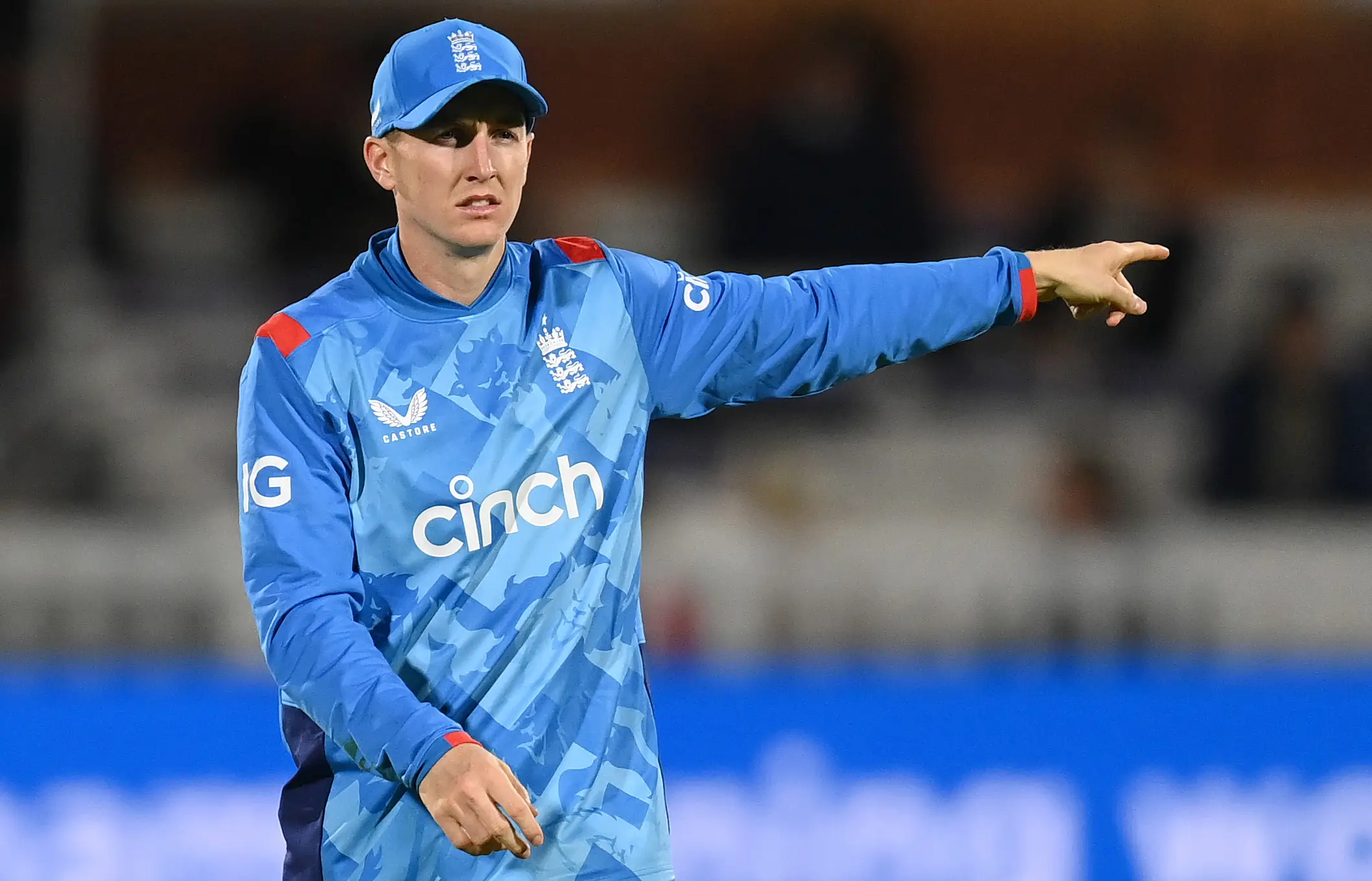
England’s newly appointed white-ball captain Harry Brook has finally spoken out about his two-year ban from the Indian Premier League (IPL), calling his international commitments a greater priority than franchise cricket. The batter was acquired by Delhi Capitals in the IPL 2025 mega auction for Rs 6.2 crore but pulled out days before the season began — a decision that led to his suspension from IPL auctions until 2027.

In an interview with The Mirror, Brook stated that he was at peace with his choice and would continue to prioritise representing England across formats.“This is my priority. England is the way forward for me and franchise cricket can almost take a step back for little while,” said the 26-year-old. “At the end of the day, I enjoy playing cricket for England more than anything else. To lose a little bit of money here and there, I’d take that any day to play for England.”

Brook added that he would not participate in any franchise tournaments in the near future, focusing instead on England’s packed international calendar leading up to the 2026 T20 World Cup.

IPL ban not officially communicated, says Brook

Interestingly, Brook claimed that the Board of Control for Cricket in India (BCCI) had not formally informed him of the two-year IPL ban. “They haven’t told me,” he said, while acknowledging that the decision aligns with the tournament’s rules. “If I do get banned, fair play. That’s the rules they put in place, but I’m completely committed to playing cricket for England,” he added.

The decision comes in the wake of growing club-versus-country debates, especially with star players like Brook having to manage workloads across formats and continents.

Brook was recently named England’s new white-ball captain following Jos Buttler’s departure, with a clear mandate to revitalise the team’s fortunes in both ODI and T20 formats after a string of underwhelming performances at global tournaments.

The young skipper is also a key figure in England’s red-ball setup. With 11 Tests scheduled until the end of the upcoming Ashes in January, and over two dozen white-ball fixtures before the 2026 T20 World Cup, Brook will play a central role in balancing leadership, form, and fitness.

Cricket news

India vs South Africa T20I abandoned due to fog raises questions over BCCI scheduling

Hazardous air quality and dense fog forced the India vs South Africa fourth T20I in Lucknow to be abandoned without a ball bowled, prompting debate over winter scheduling.

Published

on

ind vs sa match abandoned due to fog

Indian cricket saw an unusual situation on Wednesday as the fourth T20I between India and South Africa in Lucknow was abandoned without a single delivery being bowled. The decision came after excessive fog and smog at the Ekana Stadium made playing conditions unsafe, once again bringing the Board of Control for Cricket in India’s scheduling choices under scrutiny.

The match officials inspected the ground multiple times, but visibility did not improve as the evening progressed. With air quality remaining in the hazardous range and a thick blanket of smog covering the stadium, the umpires eventually called off the contest.

Hazardous conditions halt play in Lucknow

The game, scheduled to begin at 7 pm, could not get underway due to poor visibility caused by dense smog. The Air Quality Index in Lucknow stayed above 400 through the day, raising concerns over player safety. Even after at least six inspections, umpires found conditions unsuitable for play.

Indian all-rounder Hardik Pandya was seen wearing a surgical mask during the team’s warm-up, underlining the severity of pollution at the venue. Players eventually abandoned their practice session by around 7:30 pm, while spectators also began leaving the stadium as the delay stretched on. The match was officially abandoned at about 9:30 pm.

Winter scheduling under the scanner

The abandonment has renewed criticism of hosting international matches in northern Indian cities during peak winter months. The India–South Africa series was scheduled across venues such as New Chandigarh, Dharamsala, Lucknow, Ranchi and Raipur in November and December, a period often marked by high pollution levels and fog in several of these regions.

This was not the first instance of challenging conditions during the series. The third T20I in Dharamsala was played in sub-10-degree temperatures, while air quality during earlier matches in New Chandigarh and Dharamsala ranged from poor to severe.

India spinner Varun Chakravarthy, after playing in Dharamsala, admitted that the cold conditions were difficult to cope with, especially for someone not accustomed to such weather.

No reserve day, series moves on

With no reserve day kept for the Lucknow T20I, both teams will now travel to Ahmedabad for the final match of the series on Friday. India currently lead the five-match T20I series 2-1.

During one of the inspections in Lucknow, BCCI vice-president Rajeev Shukla was seen interacting with match officials. His visible disappointment reflected the broader concern around the situation, though no immediate solution was available.

Could the disruption have been avoided?

The situation has sparked debate on whether the board could have planned better by considering historical weather and pollution data. An alternative could have been to allocate northern venues to a different window or swap venues with another international series scheduled later in the season.

Another option discussed is the possibility of afternoon starts during winter to reduce the impact of fog and smog, ensuring at least some play for fans who purchase tickets.

As extreme weather and pollution increasingly affect sporting events, the abandoned T20I in Lucknow serves as a reminder that scheduling decisions need to balance rotational policies with player welfare and local environmental conditions.

Continue Reading

Cricket news

IPL 2026 auction: Uncapped Prashant Veer and Kartik Sharma become costliest Indian buys

IPL 2026 auction witnessed history as uncapped Prashant Veer and Kartik Sharma fetched Rs 14.2 crore each, the highest ever for uncapped Indian players.

Published

on

Two uncapped Indian cricketers rewrote IPL auction history on Tuesday as Prashant Veer and Kartik Sharma attracted record-breaking bids at the IPL 2026 auction held in Abu Dhabi. Chennai Super Kings secured both players for Rs 14.2 crore each, making them the most expensive uncapped Indians ever signed in the league.

The previous benchmark for an uncapped Indian player stood at Rs 10 crore, a record set in 2022. That mark was comfortably surpassed as franchises went all out for young domestic talent during the auction.

Record-breaking bids for young domestic talent

Prashant Veer, a 20-year-old left-arm spin allrounder from Uttar Pradesh, entered the auction with a base price of Rs 30 lakh. His bidding quickly escalated following interest from multiple franchises before Chennai Super Kings closed the deal at Rs 14.2 crore. Veer has featured in nine domestic T20 matches and came into focus after strong performances in the UP T20 League, the Syed Mushtaq Ali Trophy and Under-23 competitions, which also earned him trials with the franchise.

Kartik Sharma, a 19-year-old wicketkeeper-batter from Rajasthan, matched Veer’s price later in the auction. Also listed at a base price of Rs 30 lakh, Kartik witnessed intense bidding before Chennai Super Kings once again emerged successful. Known for his power-hitting ability in the lower order, Kartik has scored 334 runs in 12 T20 matches at a strike rate of 164, including 28 sixes.

Other uncapped players draw big interest

The strong demand for uncapped Indians was not limited to Veer and Kartik. Jammu and Kashmir fast bowler Auqib Nabi was signed by Delhi Capitals for Rs 8.4 crore after competition from several teams. Nabi, 29, has been a consistent performer in domestic cricket and has taken 15 wickets in seven matches in the ongoing Syed Mushtaq Ali Trophy at an economy rate below eight.

Royal Challengers Bengaluru picked up 23-year-old pace allrounder Mangesh Yadav for Rs 5.2 crore. Yadav has limited T20 experience but impressed scouts during the Madhya Pradesh Premier League.

Several other uncapped players also crossed or touched the Rs 1 crore mark, underlining the growing focus on domestic depth at the IPL auctions.

Focus on building a strong local core

Speaking after the auction, the Chennai Super Kings camp highlighted the emphasis on identifying skill-specific players and investing in long-term potential. The franchise pointed to extensive scouting across domestic tournaments and the need to adapt team strategies based on the evolving nature of the game.

The IPL 2026 auction marked a significant moment for uncapped Indian players, with franchises showing willingness to invest heavily in emerging talent alongside established names.

Continue Reading

Cricket news

T20 2026 World Cup tickets go on sale with prices starting at Rs 100

Tickets for the 2026 T20 World Cup go on sale from December 11, with phase one prices starting at Rs100 in India.

Published

on

Ticket sales for the ICC Men’s T20 World Cup 2026 have been announced, with the first phase opening on December 11. The tournament will be hosted jointly by India and Sri Lanka, beginning February 7, and will feature 20 teams competing across 55 matches.

Affordable pricing in first phase

According to media, tickets in phase one will be available at highly accessible rates. Prices start from Rs100 at select venues in India, while tickets in Sri Lanka will be priced from LKR 1000. The ticket window opens at 6.45 pm IST and Sri Lanka time. Details for the second phase of ticket sales are expected to be announced at a later date.

Officials said the pricing strategy is aimed at ensuring wider access to the tournament for fans across different regions and income groups.

Tournament schedule and format

The 2026 edition of the T20 World Cup will follow the same format as the previous tournament. The 20 teams have been divided into four first-round groups, with the top two sides from each group advancing to the Super Eight stage.

Matches will be played in three time slots — morning, afternoon and evening — across venues in both host nations.

First-round groups

  • Group A: India, Pakistan, USA, Netherlands, Namibia
  • Group B: Sri Lanka, Australia, Ireland, Zimbabwe, Oman
  • Group C: England, West Indies, Bangladesh, Nepal, Italy
  • Group D: New Zealand, South Africa, Afghanistan, Canada, UAE

Super Eight and knockout stage

The Super Eight stage will consist of two groups of four teams each, based on first-round qualification. Each team will face the other three sides in its group, with the top two progressing to the semi-finals.

The semi-finals are scheduled for March 4 and March 5, while the final will be played on March 8. Venue arrangements for the knockout matches include Indian cities and Colombo, depending on team qualification scenarios.

Continue Reading

Trending

© Copyright 2022 APNLIVE.com