English हिन्दी
Connect with us

India News

Water row: Bhagwant Mann says won’t tolerate robbery of Punjab’s rights

Published

on

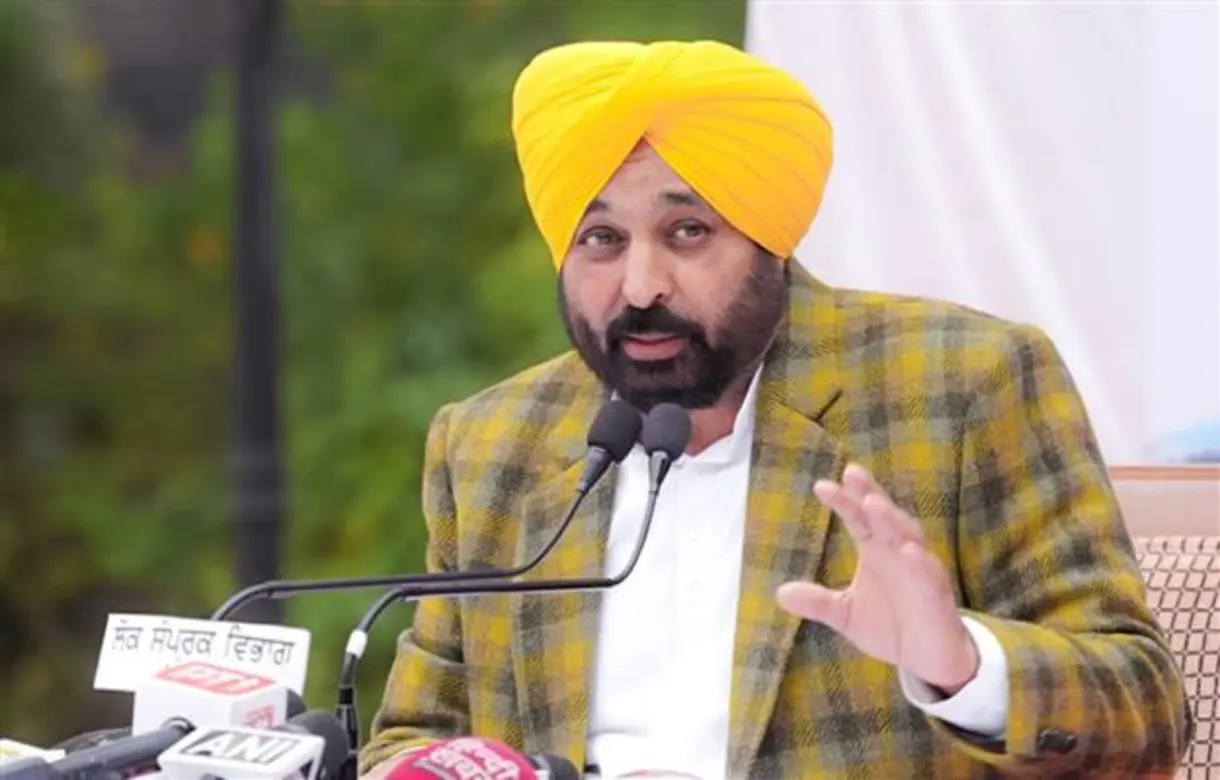
The Bhakra Beas Management Board (BBMB) sparked a fierce controversy by approving the release of 8,500 cusecs of water to Haryana, prompting a sharp rebuke from Punjab Chief Minister Bhagwant Mann.

Labeling the move a “robbery” of Punjab’s water rights, Mann vowed to resist what he described as an unjust decision driven by the BJP-led central government and Haryana.

The decision, finalized during a marathon five-hour BBMB technical committee meeting, has ignited tensions over water distribution from the Bhakra, Pong, and Ranjit Sagar dams, which serve Punjab, Haryana, and Rajasthan for irrigation and other needs.

Punjab officials at the meeting vehemently opposed the allocation, arguing that Haryana had already exhausted its water quota, while water levels in the Pong and Ranjit Sagar dams were lower than the previous year.

Despite their objections, Rajasthan, governed by the BJP, reportedly backed Haryana’s demand, intensifying Punjab’s sense of betrayal.

Mann, in a fiery post on X, declared, “Punjab stands united against this theft of our water rights. The BJP and Haryana are colluding against us, but we will not allow another injustice. The BJP must face our opposition.”

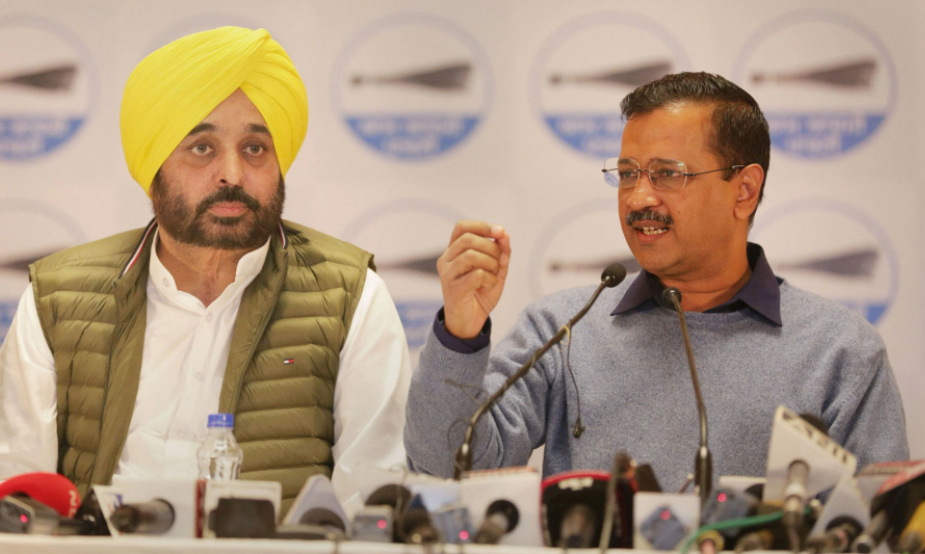
The Aam Aadmi Party (AAP), led by Mann, announced statewide protests against the BJP, accusing it of pressuring the BBMB to favor Haryana.

Earlier, on April 29, Mann had rejected Haryana’s request for additional water, noting that the state had already consumed 103% of its share by March 31. He highlighted Punjab’s critical need for water for the upcoming paddy sowing season, stating that not a single drop could be spared.

Mann also revealed that Punjab had provided 4,000 cusecs daily to Haryana from April 6 as a humanitarian gesture, despite its own constraints.

This year, the BBMB allocated 3.318 million acre-feet (MAF) to Rajasthan, 2.987 MAF to Haryana, and 5.512 MAF to Punjab, but Haryana’s overutilization has fueled the dispute. AAP leaders, including Cabinet Minister Aman Arora, condemned the BJP’s “coercive tactics,” vowing a strong response to protect Punjab’s interests.

Finance Minister Harpal Singh Cheema accused the BJP of “anti-Punjab” bias, further escalating the political showdown. The controversy underscores the delicate balance of water-sharing agreements in India, where inter-state disputes often reflect deeper regional tensions, drawing significant public and political attention.

India News

12 Maoists killed, 3 security personnel lose lives in major anti-Naxal operation in Chhattisgarh

A major anti-Naxal operation in Chhattisgarh’s West Bastar region resulted in the killing of 12 Maoists, while three DRG personnel lost their lives amid intense gunfire.

Published

on

Security forces have intensified their combing operations in the dense West Bastar forests after a fierce encounter left 12 Maoists dead and claimed the lives of three DRG personnel.

A coordinated offensive involving teams of DRG Bijapur-Dantewada, STF, CRPF and CoBRA unfolded deep inside Maoist-dominated terrain early Wednesday. According to Bijapur SP Dr Jitendra Yadav, the forces came under sustained Naxal gunfire around 9 am, triggering a prolonged encounter.

By afternoon, the bodies of 12 Maoist cadres had been recovered, while weapons seized from the area included SLR rifles, INSAS rifles, .303 rifles and other ammunition. Bastar Range IG Sundarraj P confirmed that identification of the deceased Maoists is still underway.

Three DRG personnel killed, two injured

The operation came at a grave cost, with three DRG personnel — Head Constable Monu Waddi, Constable Dukaru Gonde and Jawan Ramesh Sodi — losing their lives. Two others sustained injuries but are reported to be out of danger after receiving medical care.

Chief Minister Vishnu Deo Sai paid tribute to the fallen personnel and lauded the forces, stating that the action reflects a clear weakening of Maoist networks in the region. He said arrangements for treatment of the injured have been ensured and reiterated the government’s commitment to ending Maoist violence.

Forces strengthen search and area sealed

SP Yadav said additional reinforcements have arrived and the encounter zone has been fully cordoned off for intensified operations. Continuous combing is underway to locate remaining Maoist cadres.

Chhattisgarh Home Minister Vijay Sharma noted that forces have been consistently making gains in anti-Naxal missions, calling the latest action a significant strike against Maoist groups.

Continue Reading

India News

IndiGo flight cancellations cross 200 as crew shortage and new duty norms hit operations

IndiGo’s operations witnessed major disruption for the second day, with over 200 cancellations and severe delays triggered by crew shortage under new duty norms.

Published

on

India’s largest airline, IndiGo, is grappling with widespread disruption across major airports as flight delays and cancellations continue for the second consecutive day. With operations strained and punctuality plunging sharply, thousands of passengers have been left inconvenienced across Delhi, Mumbai, Bengaluru and Hyderabad.

IndiGo’s on-time performance dips sharply

Government data showed the airline’s on-time performance had dropped to 35%, a rare slump for the carrier known for punctuality. IndiGo, which operates more than 2,200 flights daily, saw over 1,400 flights delayed on Tuesday, followed by around 200 cancellations by Wednesday afternoon.

Mumbai Airport issued an advisory alerting passengers to check their flight status, citing airline-related operational issues impacting departures and arrivals.

New duty norms trigger severe crew shortage

A major factor behind the disruptions is the implementation of revised Flight Duty Time Limitation (FDTL) rules last month. The updated norms mandate longer rest hours and more humane rosters for pilots and cabin crew. Sources indicated many flights were grounded over the past 48 hours as crew availability dipped sharply.

IndiGo acknowledged a “multitude of unforeseen operational challenges” including technology glitches, winter schedule adjustments, weather-related issues and the new rostering norms. The airline said it has begun calibrated schedule adjustments for the next 48 hours to restore normalcy.

FDTL rules cap crew flying to eight hours a day and mandate a minimum rest period of 10 hours within a 24-hour window, with rest time amounting to twice the flight duration.

Airports across India see cancellations

The ripple effect of IndiGo’s disruptions has been felt nationwide:

  • Hyderabad’s RGIA reported 33 cancellations, leading to long queues and disrupted travel plans.
  • Bengaluru Airport saw 42 cancellations, including 22 arrivals and 20 departures, impacting routes to Delhi, Mumbai, Chennai, Goa and Kolkata.
  • Delhi Airport also saw congestion as a slowdown in the Amadeus system, used for check-ins and reservations, added to delays.

Passengers vent frustration

Several passengers took to social media to share their ordeal.
One traveller stranded in Hyderabad since early morning said they missed an important meeting due to continuous delays. Another flyer complained their Udaipur-bound flight was repeatedly delayed, calling the experience “a joke”.

IndiGo issues apology, offers rebooking

IndiGo said it is offering alternate travel options or refunds to affected travellers and urged passengers to check their flight status before leaving for the airport. The airline reiterated its commitment to stabilising operations “as quickly as possible”.

Continue Reading

India News

Centre withdraws order on mandatory Sanchar Saathi pre-installation after protests

The government has withdrawn its order making the Sanchar Saathi app mandatory on smartphones, following two days of intense criticism from opposition leaders and civil rights groups over privacy concerns.

Published

on

sanchar sathi app logo

The Centre has reversed its directive that required all smartphone manufacturers to pre-install the Sanchar Saathi cybersecurity app, following backlash from opposition leaders, civil rights groups and users who raised concerns over privacy and potential misuse.

Government cites rising downloads, public feedback

According to the government, the order was rolled back as user downloads had surged — with over six lakh installations within 24 hours and 1.4 crore total users. Officials said the mandate was originally intended to push wider adoption, but public feedback prompted a re-evaluation.

The official statement reiterated Communications Minister Jyotiraditya Scindia’s earlier assurance in Parliament that the app is deletable and does not enable snooping. The minister emphasised that in a democracy, every user has the right to remove applications they do not wish to use.

Opposition slams move, flags privacy concerns

Several opposition leaders criticised the initial directive, claiming it risked turning the app into a surveillance tool, echoing earlier privacy controversies. Priyanka Gandhi Vadra called the decision “ridiculous”, while Karti Chidambaram compared the mandate to practices in authoritarian countries. Leaders from other parties also raised objections, describing it as a move that could compromise personal data.

What the Sanchar Saathi app offers

Sanchar Saathi, developed by the Department of Telecommunications, is designed to help users secure their digital identities, report suspicious activity and access cyber safety awareness material. It is available both as a mobile app and a web portal. The government maintains the app has no function beyond safeguarding users from cyber threats.

Continue Reading

Trending

© Copyright 2022 APNLIVE.com