English हिन्दी
Connect with us

Latest world news

Bondi Beach shooting during Jewish festival leaves at least 15 dead

Australia’s Bondi Beach was rocked by the deadliest shooting in decades as a father and son opened fire during a Jewish festival, killing at least 15 people.

Published

on

Bondi shooting Australia

At least 15 people were killed and dozens injured after a mass shooting at Sydney’s iconic Bondi Beach during a Jewish celebration, in what authorities have described as the deadliest gun attack in Australia in almost 30 years.

Police on Monday confirmed that the two attackers were a father and his son. The older man, identified as 50-year-old Sajid Akram, was shot dead by police at the scene, while his 24-year-old son Naveed Akram was injured and is undergoing treatment at a hospital.

The attack occurred during the “Chanukah by the Sea” event, held to mark the beginning of the eight-day Hanukkah festival. Around 1,000 people were attending the gathering in a small park near the beach when gunfire erupted, triggering panic among crowds enjoying a busy summer evening.

What happened at bondi beach

According to authorities, emergency services received the first calls about shots being fired around 6:45 pm. Witnesses said the attack lasted roughly 10 minutes, with people running across the sand and into nearby streets to escape the gunfire.

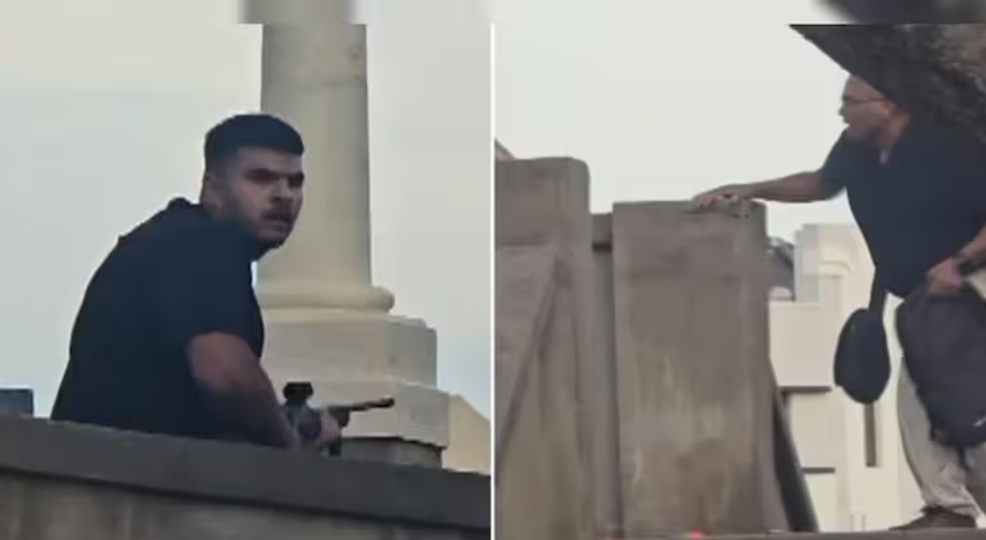
Videos from the scene showed two men firing long guns from a footbridge leading to the beach. Police have not officially confirmed the exact weapons used, though footage suggested a bolt-action rifle and a shotgun.

In one widely shared clip, a bystander was seen tackling and disarming one of the gunmen. The man was later praised by state leadership as a “genuine hero.” A public fundraising effort launched for him had raised over A$200,000 by Monday morning.

Attackers and investigation

Police said one of the attackers was known to security agencies, though there was no prior indication of a planned assault. Authorities later confirmed they were confident only two people were involved.

The younger attacker is an Australian-born citizen. Officials said the father had arrived in Australia in 1998 on a student visa, later transitioning to other residency permits. Investigators also searched the family’s home in Bonnyrigg, in western Sydney, where a heavy police presence remained through Monday.

Victims and community impact

Those killed ranged in age from 10 to 87 years. At least 42 others were hospitalised, several of them in critical condition. An Orthodox Jewish organisation confirmed that one of the victims was Rabbi Eli Schlanger, an assistant rabbi and one of the organisers of the event.

Eyewitnesses described scenes of chaos and fear. A young lifesaver present at the beach said seeing injured people, including children, was deeply distressing and unlike anything he had experienced before.

Community leaders urged unity and calm in the aftermath, stressing the importance of supporting those affected rather than allowing anger to divide communities.

Leaders condemn attack

Australian Prime Minister Anthony Albanese visited Bondi Beach on Monday to pay tribute to the victims, calling the shooting a “dark moment for our nation.” He described the incident as an act of antisemitism and terrorism, assuring the Jewish community of the government’s full support.

Several world leaders, including the US President, the French President and India’s Prime Minister Narendra Modi, condemned the attack and expressed solidarity with Australia.

Authorities said the shooting was the most serious antisemitic attack in the country in decades, coming amid a rise in incidents targeting Jewish institutions since late 2023. Investigations into the motive behind the attack are ongoing.

Continue Reading

Latest world news

US carries out fresh strikes in Iran, downing drones near strategic Strait of Hormuz

The US military launched overnight defensive strikes targeting an Iranian military facility and shot down four attack drones near the Strait of Hormuz, highlighting the vulnerability of ongoing peace negotiations.

Published

on

Donald Trump statement

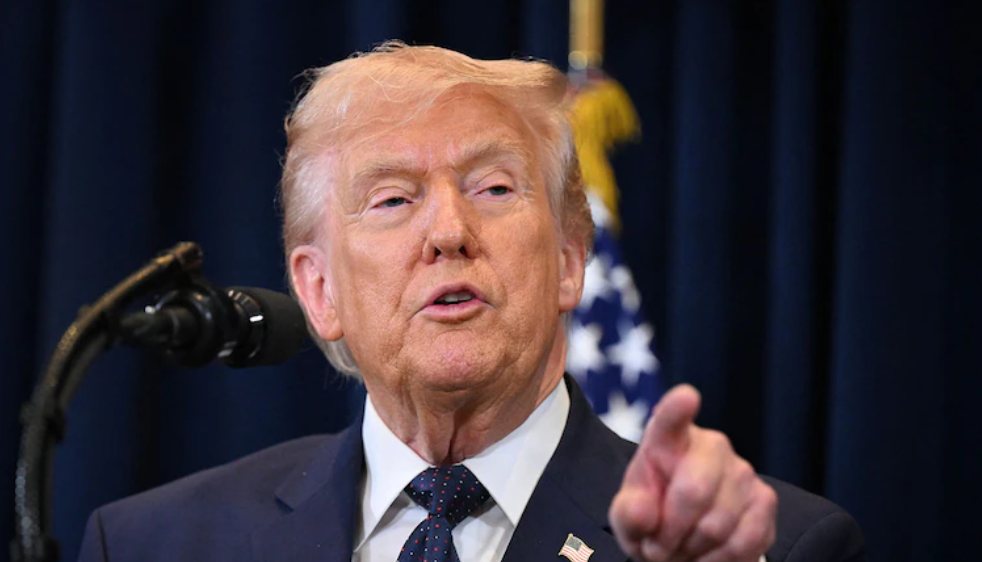
The US military launched overnight strikes inside Iran, targeting a military installation and intercepting multiple attack drones near the critical Strait of Hormuz. The operation comes amid intense diplomatic efforts to end a three-month-old war that has severely impacted global energy markets.

According to media reports citing US officials who spoke on condition of anonymity, American forces shot down four one-way attack drones. Additionally, a ground control facility located in the southern Iranian port city of Bandar Abbas—which was reportedly preparing to launch a fifth drone—was struck. Local residents in Iran reported hearing three distinct explosions east of Bandar Abbas around 1:30 AM local time, prompting the temporary activation of local air defense systems.

Focus on maintaining the ceasefire

US Central Command later confirmed the targeted actions, stating that the intercepted drones posed an immediate threat to American personnel and commercial shipping vessels operating near the strategic waterway. Officials described the intervention as a measured, defensive response aimed strictly at safeguarding international transit routes and preserving the active, yet fragile, ceasefire arrangement.

The Strait of Hormuz serves as a vital artery for global commerce, accounting for nearly one-fifth of global oil shipments before hostitilies erupted on February 28.

Strains on ongoing diplomatic talks

These recent military developments occurred against the backdrop of sensitive negotiations aimed at formalizing a permanent peace agreement. Earlier this week, the US conducted similar self-defense strikes against vessels allegedly deployed to lay naval mines, drawing sharp condemnation from Tehran, which labelled those actions a breach of the ceasefire.

Diplomatic tensions were further compounded on Wednesday when US President Donald Trump publicly dismissed reports claiming that Iran and Oman would jointly manage shipping operations through the Strait of Hormuz under a proposed peace deal, asserting instead that the international waterway must remain entirely open.

Continue Reading

Latest world news

Byju’s founder Byju Raveendran sentenced to six months in jail by Singapore court over asset orders

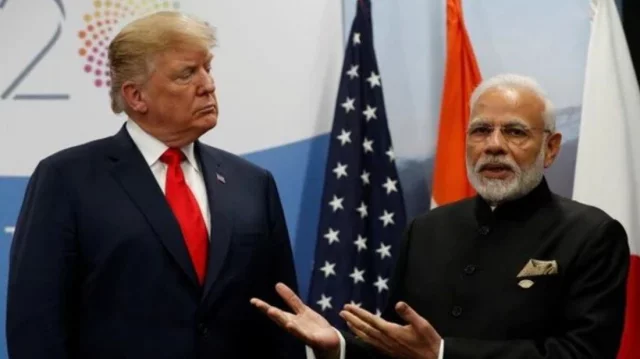
In a major setback, a Singapore court has sentenced Byju’s founder Byju Raveendran to six months in prison for contempt after he failed to comply with multiple court orders regarding his assets.

Published

on

In a massive legal blow to the founder of the failed Indian educational technology firm Think & Learn Pvt (better known as Byju’s), a Singapore court has sentenced Byju Raveendran to six months in jail for contempt of court.

The court ordered the jail term after concluding that Raveendran had deliberately disobeyed multiple judicial directives regarding his personal assets, dating as far back as April 2024.

Disobedience of asset orders leads to prison sentence

According to people familiar with the matter, the Singapore court has instructed Raveendran to immediately surrender himself to the officials. Alongside the six-month prison sentence, the Byju’s founder has been ordered to pay legal costs amounting to S$90,000 (approximately $70,500). Furthermore, he has been mandated to provide documents verifying his official legal ownership of Beeaar Investco Pte, a corporate entity that holds equity shares in a related firm.

At the time of reporting, it remains unclear whether Raveendran is currently residing in Singapore or located elsewhere, and he did not immediately respond to requests for comment.

Escalating global legal battles

This sentencing marks the latest and perhaps most severe setback for the entrepreneur, who once achieved billionaire status amid a massive wave of global capital flowing into Indian start-ups. Today, Raveendran is being rigorously pursued by foreign investors across international jurisdictions. This includes intensifying legal battles in the United States, where global lenders are actively trying to recover heavy financial losses stemming from a defaulted $1.2 billion loan.

Media reports indicate that the ongoing Singapore court proceedings represent a broadening web of legal and financial crises following the operational collapse of the once-celebrated edtech giant.

Continue Reading

Latest world news

US hits Iranian missile sites and mine-laying boats near Strait of Hormuz amid peace talks

US Central Command executed targeted strikes against Iranian missile launch sites and mine-laying vessels near Bandar Abbas, testing a fragile ceasefire even as high-stakes diplomatic talks continue in the region.

Published

on

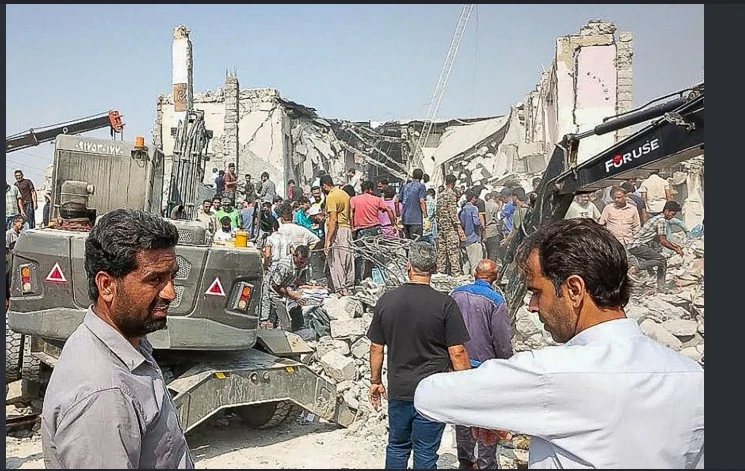
In a major development testing a fragile regional ceasefire, the United States military carried out targeted strikes in southern Iran on Monday. The operation hit missile launch sites and vessels allegedly attempting to lay mines near the crucial Strait of Hormuz, according to statements from the US Central Command (CENTCOM).

The military action took place near Bandar Abbas, a prominent southern port city hosting a primary Iranian naval base. Media reporting indicated that explosions were heard across multiple coastal locations, including Sirik and Jask.

Focus on ‘Self-Defense’ Amid Active Ceasefire

A spokesperson for CENTCOM, Capt. Tim Hawkins, confirmed that the engagement was defensive in nature. “US forces conducted self-defense strikes in southern Iran today to protect our troops from threats posed by Iranian forces,” Hawkins stated. He noted that the operational targets included active missile launch sites alongside Iranian boats attempting to emplace naval mines. Despite the escalation, CENTCOM emphasized that it continues to exercise restraint under the parameters of the ongoing ceasefire brokered in early April.

According to media reports, the tactical response was triggered when two Islamic Revolution Guard Corps (IRGC) boats were detected laying mines in the strategic shipping lane. Additionally, a surface-to-air missile site reportedly targeted American warplanes, prompting US forces to neutralize both the vessels and the missile installations. Media channels citing local updates indicated that four individuals were killed in the strikes, though the complete casualty figures remain unverified.

Diplomatic Dialogue Continues in Parallel

The strikes coincide with a critical phase of diplomatic negotiations aimed at extending the current truce. Top Iranian negotiators traveled to Qatar early this week to discuss a potential 60-day extension of the ceasefire, alongside provisions to keep the Strait of Hormuz fully operational for global trade.

US officials maintain that the military action does not signal an end to the active truce. A senior administration source clarified that the specific operations are “over for now”. US Secretary of State Marco Rubio, speaking from India, affirmed that diplomatic channels remain open and active. Rubio stated that intensive language discussions regarding the initial documents are ongoing, reiterating that the opening of the strategic strait remains a core objective.

Meanwhile, political leaders in Washington have separately reiterated demands for the secured disposal or international transfer of enriched uranium stockpiles as part of any comprehensive long-term agreement.

Continue Reading

Trending

© Copyright 2022 APNLIVE.com