English हिन्दी
Connect with us

LATEST SPORTS NEWS

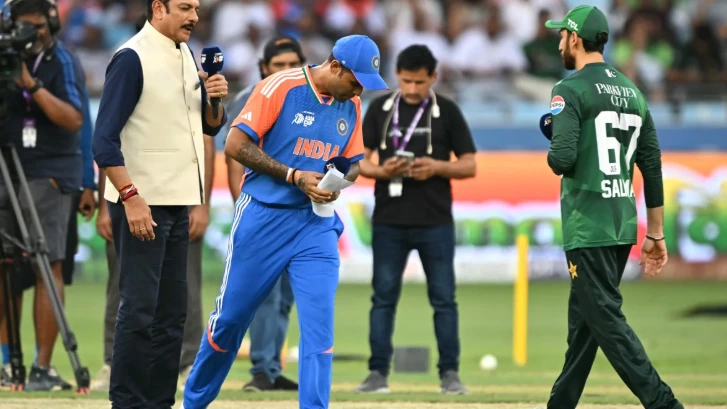
Pakistan looks to force majeure as India boycott threat looms in T20 World Cup

Pakistan’s decision not to take the field against India at the T20 World Cup could hand India two points, with ICC regulations leaving limited scope for exemptions.

Published

on

ind pak

Pakistan’s declaration that it will not take the field against India at the T20 World Cup has pushed the tournament into an unusual and sensitive situation, with ICC playing conditions clearly outlining the sporting consequences of a refusal.

Matches between India and Pakistan carry political significance, but under World Cup regulations, the procedural outcome of a team declining to play is largely unambiguous. If India arrive in Colombo as scheduled, attend training and fulfil all pre-match formalities, the onus rests entirely on Pakistan.

Should Pakistan then refuse to take the field, the fixture would be officially forfeited. India would be awarded two points, while Pakistan would receive none. The forfeiture would also negatively affect Pakistan’s net run rate, a factor that has frequently proven decisive in tightly contested World Cup group stages.

Net run rate impact could prove costly

A forfeit is not treated as a neutral outcome under ICC rules. In a competitive tournament environment, the loss of points combined with a dent to net run rate can have long-term implications, potentially influencing qualification for the semi-finals.

There is only one alternative scenario outlined under the regulations. If India do not travel to the venue, the match would be considered cancelled rather than forfeited, resulting in points being shared by both teams. However, with India expected to meet all logistical and operational requirements, that possibility currently appears unlikely.

Past precedents at ICC events

While forfeitures at World Cups are rare, they are not unprecedented. During the 1996 ODI World Cup, Australia and the West Indies declined to play matches in Sri Lanka following a bomb blast in Colombo, resulting in Sri Lanka being awarded full points.

In the 2003 ODI World Cup, England forfeited their match against Zimbabwe in Harare citing political and security concerns, while New Zealand refused to play Kenya in Nairobi due to safety considerations.

More recent ICC events have also seen withdrawals, including Zimbabwe pulling out of the 2009 T20 World Cup and New Zealand’s Under-19 team exiting the 2022 Under-19 World Cup because of COVID-19 restrictions. In such cases, the ICC has consistently prioritised the integrity of the tournament framework.

Can force majeure apply?

Pakistan’s potential reliance on a force majeure clause forms the crux of the legal debate. Force majeure traditionally applies to unforeseen and unavoidable circumstances such as natural disasters or extreme situations that make participation impossible rather than undesirable.

According to ICC sources, invoking force majeure in this case would be difficult. Such clauses are interpreted narrowly, and political objections alone do not automatically qualify unless there is a demonstrable and immediate threat to safety or feasibility. Without meeting that threshold, a refusal to play would fall outside force majeure protections.

Beyond the immediate match

The implications may extend beyond the scorecard. ICC sources indicate that severe sanctions, including the possibility of suspension, could be considered if a refusal is deemed a breach of participation obligations. Any such action would follow due process rather than being immediate, but precedent exists for firm intervention when competition rules are undermined.

For now, the impact remains primarily sporting. India stand to gain two crucial points without play, while Pakistan risk compromising both their World Cup campaign and their standing within the ICC framework.

What was expected to be the tournament’s most watched fixture could instead become its most consequential non-match, shaped not by runs or wickets but by regulations that leave little room for interpretation.

India News

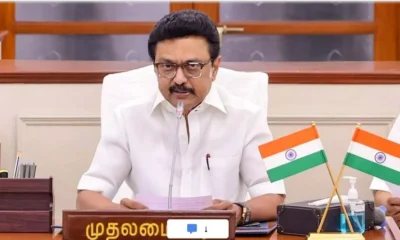
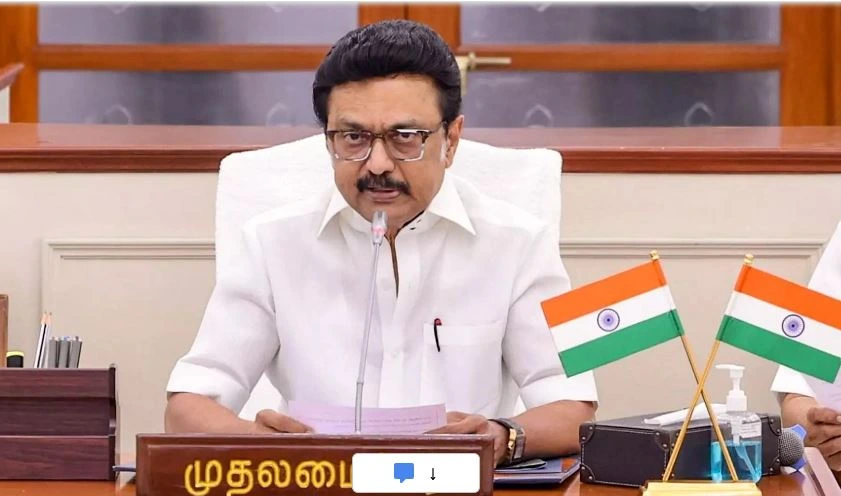
MK Stalin attacks Vijay government over hindi signboard in Tamil Nadu

MK Stalin criticised the Tamil Nadu government over Hindi lettering on a State Highway signboard and warned the Vijay-led administration against interfering with the state’s two-language policy.

Published

on

MK Stalin

The use of Hindi on a highway signboard in Tamil Nadu has triggered a political row, with DMK chief MK Stalin criticising the Vijay-led Tamilaga Vettri Kazhagam (TVK) government over the issue.

The controversy centres on a State Highway signboard that displayed place names in Tamil, English and Hindi. The board was installed on the Alwarthirunagari-Valliyoor State Highway 93 route through Sathankulam in Thoothukudi district.

Stalin objected to the inclusion of Hindi, saying Tamil Nadu has long opposed what he described as attempts to impose Hindi and warning the state government against altering its established two-language policy.

He questioned whether the use of Hindi on the signboard represented the kind of change promised by the TVK government. Stalin also urged the administration not to interfere with Tamil Nadu’s language policy.

Hindi removed from signboard

Following the controversy, the Hindi lettering was removed from the signboard. The state government also suspended two officials from the Highways Department over the matter and initiated departmental action against them.

According to officials, the Assistant Divisional Engineer and Assistant Engineer associated with the project had failed to inform higher authorities about the inclusion of Hindi on the board.

The Tamil Nadu government has said that the use of Hindi on the State Highways Department signboard was against the state’s two-language policy and warned that strict action would be taken against officials violating the policy.

Stalin targets Vijay government

Stalin also stepped up his criticism of the TVK administration, describing it as a “Reels government” and alleging that it was responding to social media trends involving influencers from northern states.

His comments came amid a wider political debate in Tamil Nadu over the state’s established Tamil-English two-language policy and the use of Hindi in government-related signage.

The latest controversy has therefore brought the language policy issue back into focus, with the DMK questioning the TVK government’s handling of the Hindi signboard and the state administration taking action against the officials concerned.

MK Stalin has criticised the Vijay-led Tamil Nadu government over Hindi appearing on a State Highway signboard. The Hindi lettering was later removed, while two Highways Department officials were suspended and departmental action was initiated.

Continue Reading

Cricket news

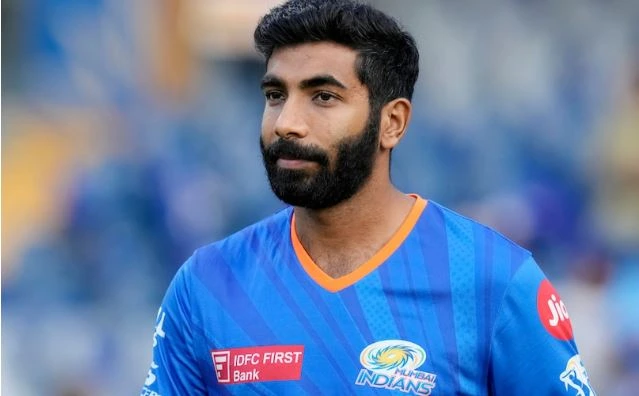
Jasprit Bumrah becomes first Indian to play T20Is in 13 countries

Jasprit Bumrah became the first Indian to play T20I cricket in 13 different countries after featuring against Sri Lanka in Japan.
Published

on

Jasprit Bumrah

Jasprit Bumrah added another milestone to his international career on Thursday after taking the field for India against Sri Lanka in the Asian Games 2026 men’s cricket semifinal in Japan.

Bumrah’s appearance at Nishin made him the first Indian to play T20I cricket in 13 different countries, according to the report. He moved ahead of former India captains Virat Kohli and Rohit Sharma, along with Bhuvneshwar Kumar, who have each played T20Is in 12 countries.

Bumrah’s 13-country T20I record

Before playing in Japan, Bumrah had represented India in T20Is in 12 other countries — India, Australia, Bangladesh, England, Ireland, New Zealand, South Africa, Sri Lanka, the UAE, the United States, West Indies and Zimbabwe.

His appearance in Japan took the tally to 13. Kohli, Rohit and Bhuvneshwar had played in all of those countries except Japan, leaving Bumrah alone at the top of the list.

Kohli and Rohit cannot add to their totals as both have retired from T20I cricket, according to the source.

Bumrah shines against Sri Lanka

Bumrah also made an immediate impact in his first T20I appearance in Japan. He claimed two wickets in his opening over against Sri Lanka and finished with figures of 2/7 in two overs.

India went on to dismiss Sri Lanka for 45 in 9.5 overs and won the semifinal by 124 runs to book a place in the Asian Games 2026 men’s cricket final.

The result set up an India-Pakistan gold-medal clash, scheduled for October 3.

Jasprit Bumrah has become the first Indian to play T20I cricket in 13 different countries. His appearance against Sri Lanka in Japan took him past Virat Kohli, Rohit Sharma and Bhuvneshwar Kumar, who have played T20Is in 12 countries each.

Continue Reading

Cricket news

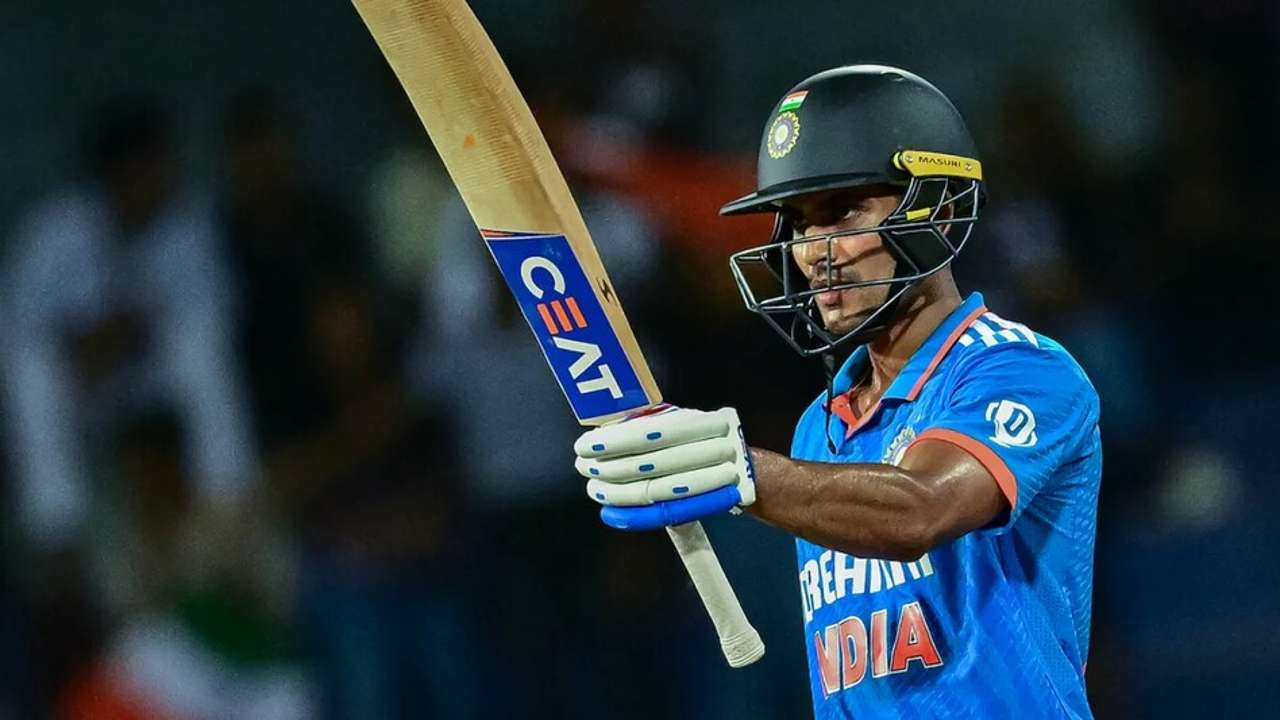
India beat West Indies by 8 wickets, Gill hits record 223

Shubman Gill’s unbeaten 223 and Rohit Sharma’s 101 helped India chase 406 against West Indies and win the second ODI by eight wickets in Guwahati.
Published

on

Shubman Gill

India produced a remarkable batting performance to defeat West Indies by eight wickets in the second ODI in Guwahati, taking an unassailable 2-0 lead in the three-match series.

West Indies posted 405 for 7 in their 50 overs after centuries from John Campbell, Shai Hope and Amir Jangoo. India then produced an emphatic response, reaching 406 for 2 in just 43.3 overs.

Shubman Gill led the chase with an unbeaten 223, while Rohit Sharma provided strong support with a century.

Gill’s record-breaking double century

Gill remained unbeaten on 223 from 133 balls and completed his double century in 117 deliveries.

His innings made him the first batter to score an ODI double century in 117 balls, according to the report. His unbeaten 223 was also recorded as the highest ODI score by an Indian captain and the highest score by an Indian in an ODI chase.

Gill’s innings contained a combination of boundaries and sustained attacking batting as India comfortably reached the target set by West Indies.

Rohit Sharma scores 101

Rohit Sharma also produced a century during India’s chase, scoring 101 from 75 balls.

The innings also saw Rohit reach the milestone of 12,000 ODI runs. He became the third Indian batter to reach the landmark after Sachin Tendulkar and Virat Kohli.

Virat Kohli contributed 29 runs before being dismissed during the chase.

West Indies post 405

Earlier, West Indies put up a huge total of 405 for 7 in their allotted 50 overs.

John Campbell scored 101, while Shai Hope made 104. Amir Jangoo also struck a century, scoring 114.

Despite the three centuries, West Indies could not defend the total as India’s top order produced a dominant chase.

India take 2-0 series lead

India completed the chase in 43.3 overs, finishing on 406 for 2 and securing an eight-wicket victory.

The result gives India an unassailable 2-0 lead in the three-match ODI series, with the second match producing a record-breaking individual performance from captain Shubman Gill.

Continue Reading

Trending

© Copyright 2022 APNLIVE.com