English हिन्दी
Connect with us

India News

Chhattisgarh High Court denies bail to ex-IAS officer in CGPSC paper leak case

The Chhattisgarh High Court has denied bail to retired IAS officer Jeevan Kishore Dhruv in the alleged CGPSC paper leak case, saying competitive exam paper leaks have a devastating impact on the careers of lakhs of aspirants.

Published

on

paper Leak

The Chhattisgarh High Court has rejected the bail plea of retired IAS officer Jeevan Kishore Dhruv, who was arrested by the Central Bureau of Investigation (CBI) in connection with the alleged Chhattisgarh Public Service Commission (CGPSC) recruitment scam.

The court observed that leaking question papers of competitive examinations is “more heinous than murder” because it destroys the careers of lakhs of young aspirants and damages the integrity of the public recruitment process.

High Court cites seriousness of allegations

Justice Bibhu Datta Guru, while rejecting Dhruv’s bail application, noted that the alleged offence had a far-reaching impact on society and could not be treated as an ordinary crime.

The court observed that people involved in leaking competitive examination question papers jeopardise the future of candidates who spend years preparing for government recruitment examinations.

According to the order, the prosecution has, at the prima facie stage, collected material indicating that Dhruv, while serving as Secretary of the CGPSC during the 2020-2022 recruitment process, allegedly retained confidential question papers of the 2021 Main Examination and supplied them to his son.

The High Court also noted that the investigation pointed to the applicant’s alleged involvement through witness statements, documentary evidence and recoveries made during searches.

Considering the gravity of the allegations and their impact on the credibility of the recruitment process, the court said it was not inclined to grant bail.

Defence argues false implication

During the hearing, Dhruv’s counsel argued that the retired IAS officer had been falsely implicated only because he served as the CGPSC Secretary and was not named in the original FIR.

The defence submitted that no incriminating electronic devices or documents, apart from a mobile phone, were recovered from him. It also contended there was no evidence proving that he leaked confidential question papers or shared them with his children.

The counsel further argued that after learning both his sons were candidates in the examination, Dhruv informed the competent CGPSC authorities and requested to be relieved of all confidential work related to the recruitment process. According to the defence, official records showed he was subsequently assigned no confidential examination duties.

The defence also maintained that allegations of favouritism were weakened by the fact that one of Dhruv’s sons failed to qualify, while the other secured a rank below the top position.

CBI opposes bail

Opposing the plea, the CBI argued that the case involved large-scale irregularities that undermined public confidence in the recruitment system.

The agency alleged that Dhruv, along with the then CGPSC chairman, controller of examinations and other accused persons, entered into a criminal conspiracy to leak confidential question papers of the 2021 Main Examination, giving his son an unfair advantage.

According to the CBI, copies of questions and answers related to General Studies Paper VII and the Question-cum-Answer Booklet of the Essay paper were recovered during searches conducted at Dhruv’s residence.

The investigating agency also argued that the retired IAS officer could not claim parity with a co-accused who had received bail from the Supreme Court, as Dhruv was a senior public servant responsible for maintaining the secrecy and integrity of the examination process.

Several others also arrested

Apart from Jeevan Kishore Dhruv, those arrested in the alleged recruitment scam include former CGPSC chairman Taman Singh Sonwani, his nephews Nitesh Sonwani and Sahil Sonwani, former Deputy Controller of Examinations Lalit Ganvir, industrialist Shravan Kumar Goyal, his son Shashank Goyal, and daughter-in-law Bhumika Katiyar.

India News

Asaduddin Owaisi offers Opposition alliance in UP, sets October 2 deadline

AIMIM chief Asaduddin Owaisi offered an alliance to Opposition parties in Uttar Pradesh ahead of the 2027 Assembly election and set October 2 as a deadline for a response.

Published

on

Asaduddin Owaisi

AIMIM chief Asaduddin Owaisi has offered to join hands with Opposition parties in Uttar Pradesh ahead of the 2027 Assembly election, saying his party is willing to work with those seeking to prevent the BJP from returning to power in the state.

Speaking at a public rally in Kanpur, Owaisi said the AIMIM would wait until October 2 for a response from Opposition parties before announcing any possible political alliance.

At the rally held at the Babupurwa Idgah ground in Kanpur’s cantonment area, Owaisi said the AIMIM did not want the BJP to form the government in Uttar Pradesh for a third time.

He invited parties seeking to prevent the BJP from returning to power to join hands with the AIMIM.

Owaisi targets Samajwadi Party

While making the alliance offer, Owaisi also criticised the Samajwadi Party and its chief Akhilesh Yadav.

Referring to the 2013 Muzaffarnagar riots, Owaisi questioned the record of the Samajwadi Party government during that period. He said around 50,000 people were displaced from their homes and villages during the riots.

Owaisi also alleged that political parties, including the Samajwadi Party, had failed to adequately address the social, economic and educational concerns of Muslims and had not provided sufficient political representation.

He said Muslims in Uttar Pradesh needed a political voice and urged voters to strengthen the AIMIM’s presence in the state Assembly.

AIMIM’s earlier alliance offer in Bihar

Owaisi also referred to the AIMIM’s earlier alliance proposal in Bihar ahead of the Assembly polls.

According to Owaisi, his party had offered to contest six seats as part of an alliance, but the proposal was not accepted. He alleged that “false allegations” were subsequently made against the AIMIM.

Opposition parties have previously accused Owaisi and the AIMIM of benefiting the BJP by dividing Muslim votes. Owaisi has rejected those allegations and has accused Opposition parties of fielding candidates who are unacceptable to minorities.

The latest alliance proposal comes ahead of the 2027 Uttar Pradesh Assembly election, with Owaisi setting October 2 as the date by which he expects a response from Opposition parties.

Continue Reading

India News

AAP takes Punjab report card door-to-door after BJP’s anti-drug yatra

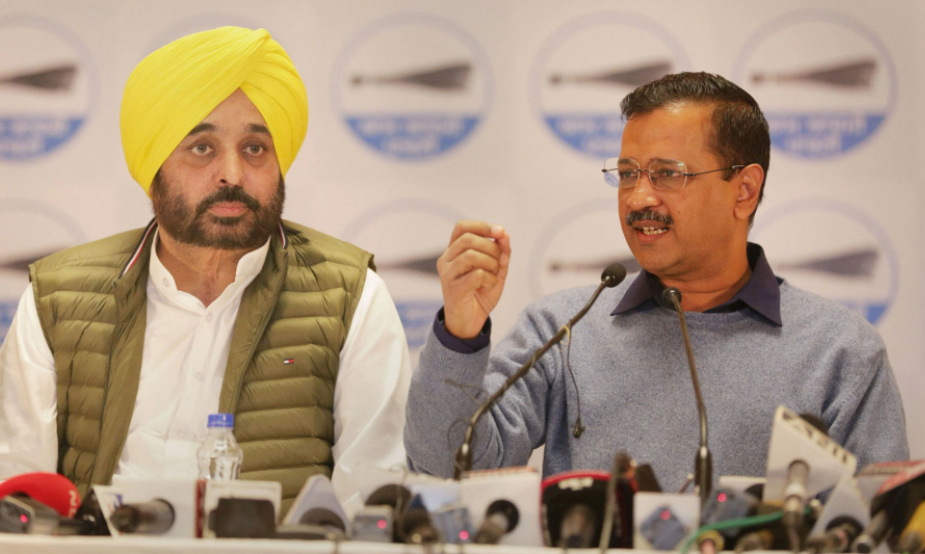
AAP has taken its Punjab government report card door-to-door as the BJP conducts a statewide anti-drug yatra ahead of the 2027 Assembly election.

Published

on

Bhagwant Mann

The Aam Aadmi Party has taken its Punjab government report card directly to households as the BJP steps up its statewide campaign against drugs ahead of the 2027 Punjab Assembly election. Chief Minister Bhagwant Mann began the door-to-door outreach from Dhuri, his Assembly constituency.

The move comes after the BJP launched its “Nasha Mukt Punjab Yatra”, which is focused on the drug menace, law and order and corruption. The BJP’s yatra is planned to cover all 117 Assembly constituencies before concluding in Jalandhar.

AAP is using its “Yudh Nashean Virudh” campaign and the Mann government’s wider governance record as the focus of its grassroots outreach.

AAP’s anti-drug strategy

The Punjab government is highlighting a five-point approach covering police enforcement, prevention in schools, youth engagement, community vigilance and rehabilitation.

According to government figures cited in the report, the Anti-Narcotics Task Force registered 61,824 FIRs and arrested 81,433 people between March 2025 and September 2026.

The government said the seizures during this period included 3,918 kg of heroin, 991 kg of opium, 47 tonnes of poppy husk, 1,416 kg of ganja and 65 lakh tablets and capsules.

In schools, a 14-week anti-drug curriculum is being taught to around 7.5 lakh students across 3,600 schools. The government is also promoting sports, cultural activities, mental-health clubs and other youth programmes.

Village vigilance and rehabilitation

The government said around 1.25 lakh people have joined nearly 15,000 Village and Ward Defence Committees.

It also said more than 51,000 citizen tip-offs received through the Safe Punjab WhatsApp Helpline have contributed to over 25,000 drug-related arrests.

On treatment, Punjab currently has 547 OOAT (Outpatient Opioid Assisted Treatment) centres, 219 de-addiction centres and 91 rehabilitation centres, according to the figures cited by the government.

Admissions to government de-addiction and rehabilitation centres rose from more than 12,200 in 2024 to nearly 34,000 in 2025, the report said.

BJP’s anti-drug campaign

The BJP’s “Nasha Mukt Punjab Yatra” has placed the drug issue at the centre of its political outreach in the state. The campaign is also raising concerns related to law and order and corruption and is planned across all 117 Assembly constituencies.

AAP’s response is to take its own record directly to voters, with the party highlighting action against drugs alongside welfare and development initiatives.

The door-to-door campaign comes as political parties begin intensifying their grassroots mobilisation ahead of the 2027 Punjab Assembly election.

Continue Reading

India News

Ram Temple Donation Theft: 105 instances caught on CCTV, SIT tells Supreme Court

The SIT probing the alleged Ram Temple donation theft told the Supreme Court that 105 instances were identified through CCTV footage. The investigation is nearing completion.
Published

on

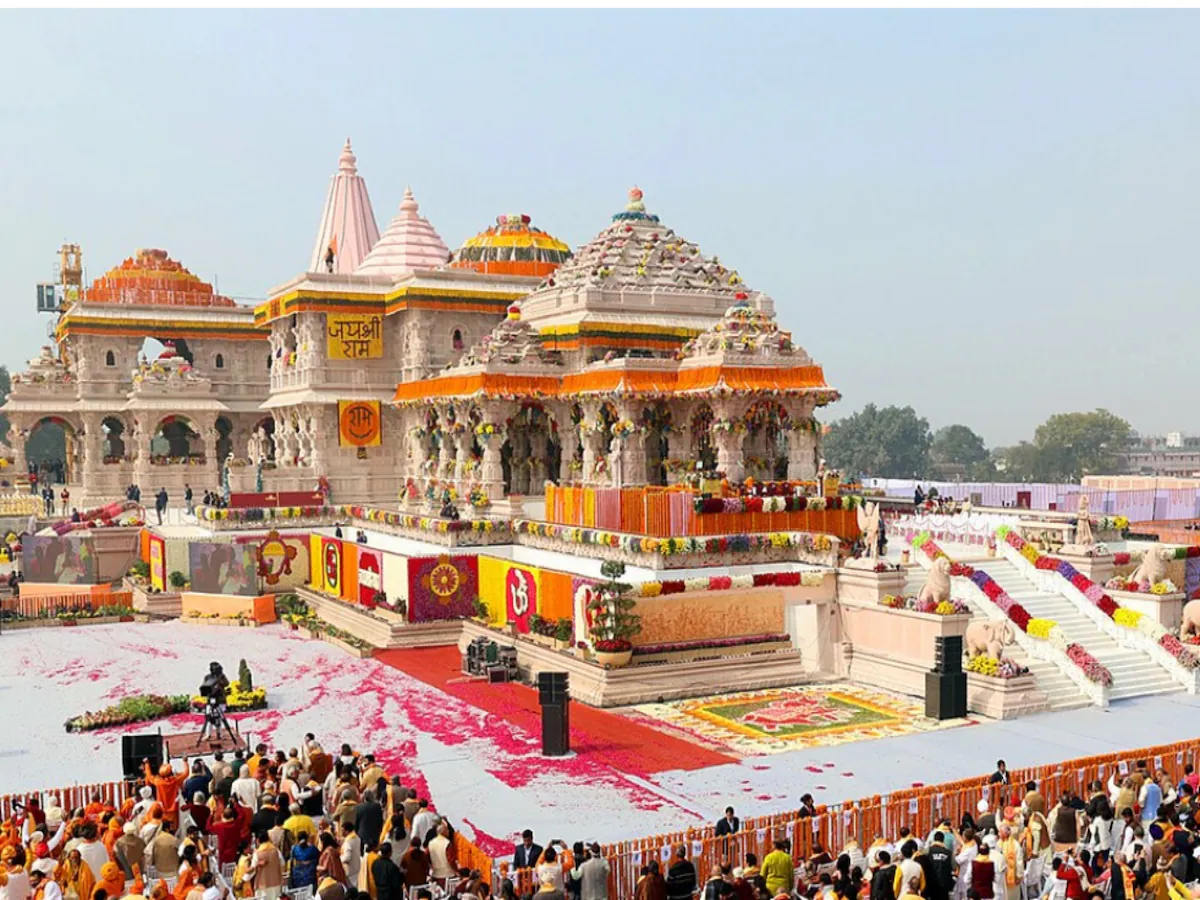
A Special Investigation Team (SIT) probing the alleged donation theft at the Ram Mandir in Ayodhya has identified 105 instances through CCTV footage, the Supreme Court was informed on Monday.

Solicitor General Tushar Mehta, while referring to the SIT’s status report, presented details of the investigation before the top court. The probe is nearing completion and the chargesheet is expected to be filed by September 25.

The Supreme Court reviewed the SIT’s status report during the hearing of the case and took the information presented before it on record.

What the SIT report found

According to the status report, investigators examined CCTV footage along with witness statements and other evidence to identify those allegedly involved in the donation theft.

The report specifically identified 105 incidents of donation theft through CCTV footage.

The court was also informed about the arrests made in the case and the evidence collected during the investigation.

The report further stated that receipts for valuables received as donations are generated through software, while the valuables are kept in a State Bank of India locker.

Supreme Court declines plea for SIT report copy

During the hearing, the petitioners sought a copy of the SIT report. The Supreme Court declined the request, with the bench headed by the Chief Justice saying it did not want to take the matter out of the Sessions Judge’s hands.

The court said it would pass an order if it considered further investigation necessary.

Eight accused arrested

The FIR in the case names eight people — Avinash Shukla, Anukalp Mishra, Lavkush Mishra, Manish Kumar Yadav, Karunesh Pandey, Ramashankar Mishra, Subhash Srivastava and Ram Shankar Yadav alias Tinnu — along with other unidentified individuals.

According to the report, all eight named accused have been arrested and booked under relevant provisions of the Bharatiya Nyaya Sanhita and Section 13(1)(a) of the Prevention of Corruption Act.

SIT probe and changes at Ram Mandir Trust

The three-member SIT, headed by Lucknow Divisional Commissioner Vijay Vishwas Pant, was constituted by the Uttar Pradesh government on June 13 at the request of the Ram Mandir Trust.

The panel submitted its preliminary report to the state government on June 23 and made several recommendations.

Following the donation theft controversy, top Ram Mandir Trust officials Champat Rai and Anil Mishra were removed from their posts. A CEO-led administrative structure has since been introduced, with former military officer Jitendra Mishra appointed as CEO.

The SIT investigation is now nearing completion, with the chargesheet scheduled to be filed by September 25.

Continue Reading

Trending

© Copyright 2022 APNLIVE.com