BJP to hold nationwide protests over Mallikarjun Kharge’s remarks on PM Modi
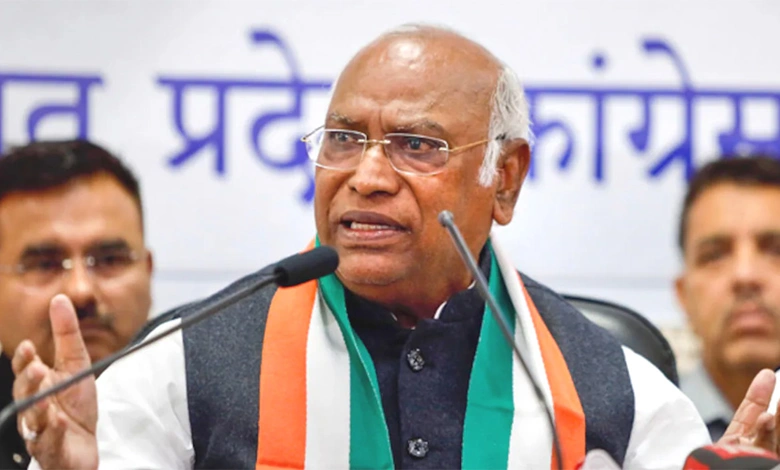
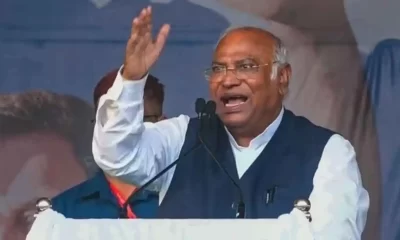
The BJP plans nationwide protests against Mallikarjun Kharge over his remarks at an event in Patna. The party has described the comments as offensive and demanded an apology from the Congress president.
The Bharatiya Janata Party (BJP) has announced nationwide protests against Congress president Mallikarjun Kharge over his remarks about Prime Minister Narendra Modi’s late father at an event in Patna. The demonstrations are scheduled for Monday, October 26, with the party directing its state units to organise protests at their respective headquarters.
The BJP described Kharge’s comments as “insulting, indecent and offensive” and said they amounted to an attack on the dignity of the Prime Minister’s family. The party has also demanded an unconditional apology from the Congress chief.
According to the BJP’s statement, the demonstrations are intended to register the party’s objection to the remarks. The party has instructed its state units to organise peaceful but firm protests.
What Mallikarjun Kharge said
The controversy erupted on Sunday during an event in Patna marking the birth anniversary of Bihar’s first Chief Minister, Shri Krishna Singh.
While Kharge was addressing the gathering, a person in the audience made a remark that was heard as suggesting that Prime Minister Modi would not leave power. Kharge responded with the Hindi phrase, “Modi ka baap bhi jayega”, which was widely interpreted as a reference to the Prime Minister’s late father.
The exchange triggered a political controversy, with BJP leaders criticising the Congress president’s choice of words and accusing him of crossing the boundaries of political decorum.
However, the man at the centre of the exchange later said his full statement had not been heard. Santosh Kumar claimed he had said that Modi would not leave power unless there was a public revolt, suggesting that his original remark had been misunderstood.
BJP demands an apology
Senior BJP leaders have criticised Kharge’s remarks and called on him to apologise. The party has argued that political disagreements should focus on governance and policies rather than personal references to family members.
Union Home Minister Amit Shah also criticised the Congress president, accusing him of disregarding standards of decorum in public life. Other BJP leaders joined the criticism, describing the comment as inappropriate political rhetoric.
The BJP’s planned demonstrations will take place at state party headquarters across the country, according to its announcement.
Congress response to the controversy
The Congress has defended Kharge’s remarks, arguing that the expression was used as an idiom in a political exchange rather than as a literal attack on the Prime Minister’s family.
Congress spokesperson Surendra Rajput said Kharge had used an expression in a political context and argued that Prime Minister Modi had also made controversial remarks in the past.
The dispute has added to the ongoing political confrontation between the BJP and the Congress. The BJP’s nationwide protest announcement follows the exchange in Patna, while the Congress has defended its president’s remarks.
Editorial note: This article reflects the protest announcement made on October 25. Since October 26 is the scheduled protest date, avoid changing “plans to hold” or “has announced protests” to “held protests” unless the demonstrations have been independently confirmed.
Farooq Abdullah’s Kashmir remark wrong, says Ghulam Nabi Azad
Ghulam Nabi Azad has criticised Farooq Abdullah over his remarks on Pakistan’s role in the Kashmir issue, saying successive Indian governments have contributed to Jammu and Kashmir’s development since 1947.
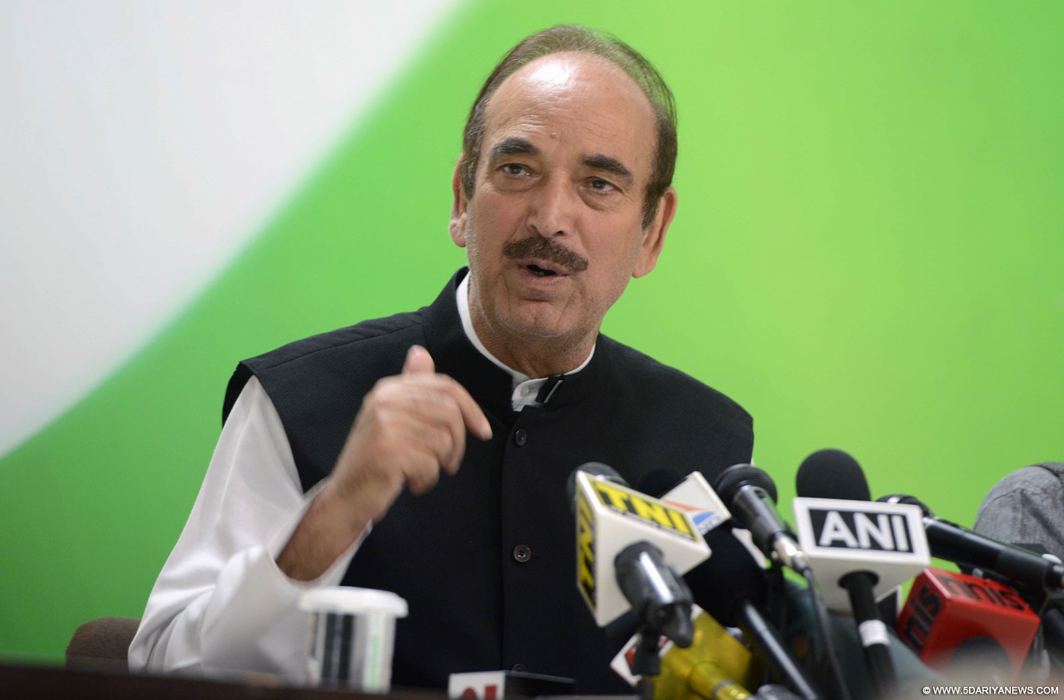
Former Jammu and Kashmir Chief Minister Ghulam Nabi Azad has disagreed with National Conference president Farooq Abdullah’s remarks about Pakistan’s role in the Kashmir issue, calling his statement incorrect. Azad also said successive governments at the Centre had contributed to Jammu and Kashmir’s development since Independence.
Azad was responding to Abdullah’s comments at a party event in Budgam district on Saturday. The National Conference chief had claimed that Pakistan’s continued efforts to raise the Kashmir issue at international forums had helped keep the region safe.
“I respect Farooq sahab, but his statement is completely incorrect. If anyone is an enemy of India and the people of J&K, it is Pakistan,” Azad wrote on X.
Azad also referred to the situation in Pakistan-occupied Kashmir (PoK), pointing to protests by residents demanding their rights. He said successive central governments, from Jawaharlal Nehru to Narendra Modi, had contributed to Jammu and Kashmir’s development irrespective of their political affiliations.
Imran Ansari also criticises Farooq Abdullah
Shia leader and former minister Imran Ansari also criticised Abdullah’s remarks and urged people in Kashmir not to follow his example.
In a post on X, Ansari said Abdullah and a select group of leaders were free to make such statements. He alleged that ordinary Kashmiris expressing similar views would face detention under laws such as the Public Safety Act (PSA) or the Unlawful Activities (Prevention) Act (UAPA).
Ansari also described the National Conference leadership’s position as a “rented rebellion”, according to the report.
BJP demands action against National Conference chief
The Bharatiya Janata Party (BJP) had also criticised Abdullah’s remarks and demanded police action against him.
BJP spokesperson Altaf Thakur described the statement as “seditious and anti-national”. He argued that a leader who had taken an oath under the Indian Constitution should not question the country’s intentions towards its own people while, in his view, lending political legitimacy to Pakistan’s position.
Thakur also accused Pakistan of contributing to decades of violence and targeted killings in Jammu and Kashmir through its alleged sponsorship of terrorism.
The criticism followed Abdullah’s remarks at the party event, where he credited Pakistan’s efforts to raise the Kashmir issue internationally with helping protect the region. Azad, however, rejected that assessment and maintained that Pakistan was an enemy of India and the people of Jammu and Kashmir.
Delhi’s non-BS-VI vehicle ban from November 1 to hit NCR commuters
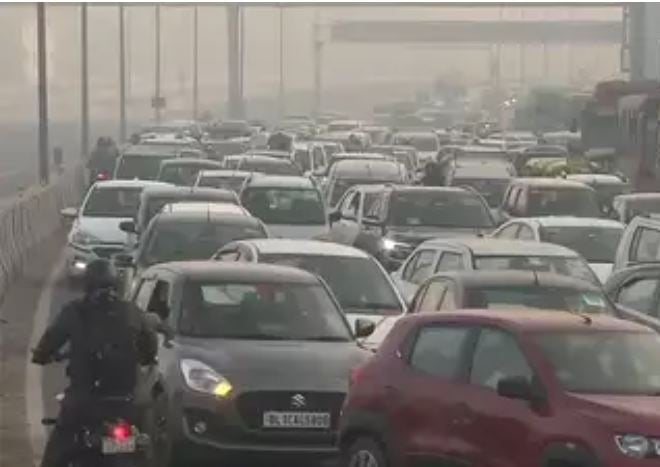
Delhi will restrict the entry of non-BS-VI vehicles registered outside the capital from November 1 to January 31. The move could affect daily commuters from Noida, Greater Noida, Gurugram, Faridabad and Ghaziabad.
Daily commuters travelling to Delhi from neighbouring cities such as Noida, Greater Noida, Gurugram and Ghaziabad may need to reconsider their travel arrangements as the capital prepares to restrict the entry of certain vehicles from November 1.
Under Delhi’s winter pollution-control plan, vehicles registered outside the capital that do not meet Bharat Stage VI (BS-VI) emission standards will be barred from entering the city. The restriction is scheduled to remain in force until January 31, 2027.
Transport department estimates indicate that more than 10 lakh vehicles across Gurugram, Faridabad, Noida, Greater Noida and Ghaziabad fall below BS-VI standards. However, this figure does not represent the number of vehicles that will necessarily be affected by the entry restriction, as the rule applies only to vehicles covered by its specific conditions.
More than 10 lakh vehicles fall below BS-VI norms
The potential scale of the restriction becomes clearer from the figures reported for neighbouring NCR cities.
Gurugram and Faridabad together have nearly two lakh vehicles that do not meet BS-VI emission standards. Around 70 per cent of these vehicles fall under BS-III and BS-IV categories. The two Haryana districts also have approximately 50,000 commercial vehicles below the required standard.
The numbers are higher in Uttar Pradesh’s adjoining cities. Noida and Greater Noida together account for more than four lakh vehicles below BS-VI norms, with BS-IV vehicles making up over half of the total, predominantly petrol cars.
Ghaziabad has around four lakh vehicles that do not meet BS-VI standards, according to a senior official cited in the report.
These estimates highlight the number of older vehicles in the region, although only those falling within the announced restriction will be prohibited from entering Delhi.
Which vehicles will be exempt?
The restriction specifically targets vehicles registered outside Delhi that do not comply with BS-VI emission standards.
Electric and CNG vehicles are exempt, along with ambulances, fire tenders and specified vehicles used for essential services. Vehicles registered outside Delhi that meet BS-VI norms will also be allowed to enter the capital.
Delhi-registered vehicles are not covered by this particular entry restriction. However, other applicable pollution-control measures and vehicle-age rules will continue to apply.
For commuters, the distinction between a vehicle’s registration location and its emission category will be important when determining whether the restriction applies.
Authorities prepare for checks at Delhi borders
Officials are preparing to identify vehicles that do not meet the entry requirements at Delhi’s borders before they enter the capital.
Artificial intelligence-powered Automatic Number Plate Recognition (ANPR) cameras at border checkpoints and selected lanes will scan registration plates and help flag vehicles for further checks.
Authorities are also strengthening entry points for physical enforcement, particularly along routes connecting Delhi with Noida, Gurugram and Ghaziabad.
The arrangements are intended to help enforce the temporary restriction during the winter pollution-control period.
For people travelling into Delhi for work or business, the upcoming rules could make daily journeys more difficult if their vehicles fall within the restricted category. Commuters should establish their vehicle’s emission category and check the applicable requirements before travelling into the capital from November 1.
Delhi’s winter pollution persists despite emergency curbs under GRAP
Delhi has brought back pollution curbs under the Graded Response Action Plan (GRAP), but an analysis of past winters highlights the limits of relying on emergency restrictions without sustained action against pollution sources.
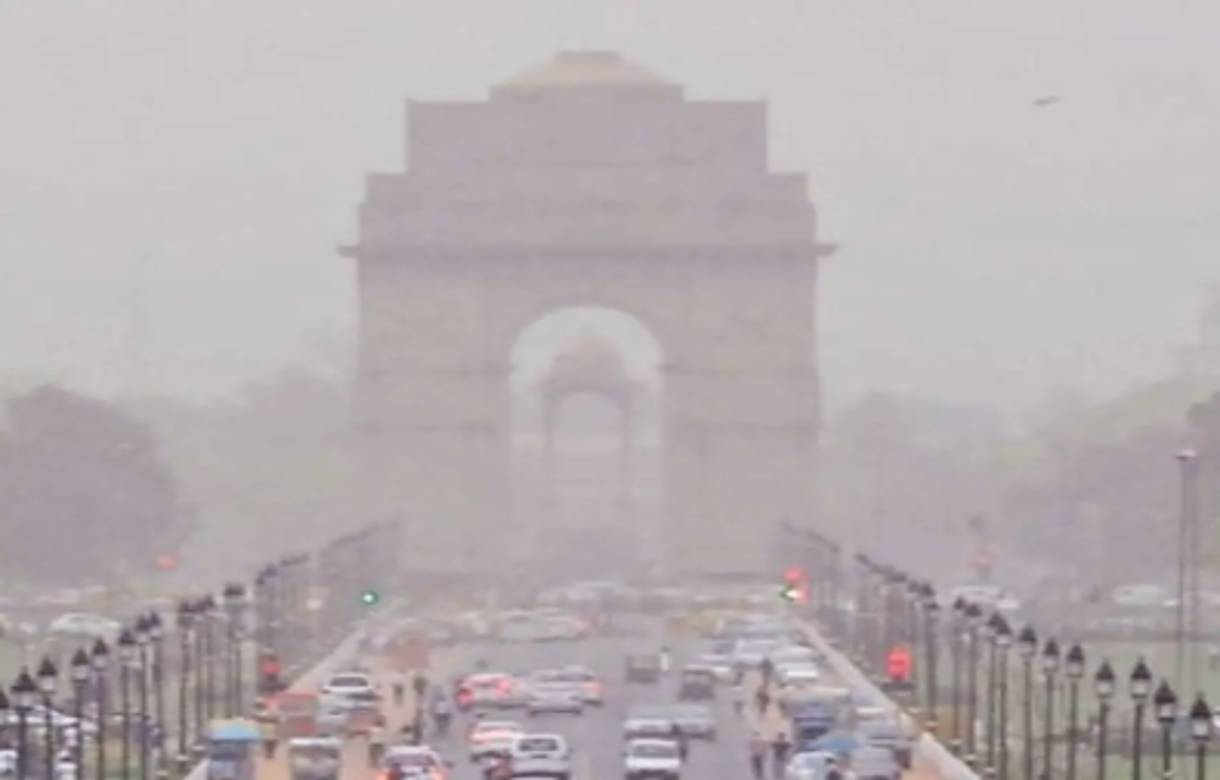
As Delhi’s air pollution worsens during the winter season, emergency restrictions under the Graded Response Action Plan (GRAP) have returned to focus. However, questions remain over whether temporary curbs can deliver lasting improvements without sustained action against pollution sources throughout the year.
However, questions remain over whether temporary curbs under the Graded Response Action Plan (GRAP) can deliver lasting improvements in air quality without stronger action against pollution sources throughout the year.
An analysis by the Centre for Research on Energy and Clean Air (CREA) indicates that Delhi’s winter air quality has not shown consistent improvement over the past four years. The findings also highlight how pollution levels often remain elevated even after stricter GRAP measures are introduced.
What the data says about GRAP’s effectiveness
CREA examined 12 episodes across four winters in which Delhi’s air quality deteriorated from lower GRAP stages to Stage III or Stage IV. In 10 of those episodes, the average Air Quality Index (AQI) during the following week was higher than in the preceding week. The remaining two episodes recorded a decline.
The findings raise questions about the effectiveness of relying on emergency restrictions as the primary response to deteriorating air quality. However, the comparison does not establish that GRAP caused pollution to rise, nor does it show what pollution levels would have been without the restrictions.
The analysis also found no consistent improvement in Delhi’s average winter AQI across the four seasons examined.
Winter season
Average AQI
2022–23
280
2023–24
304
2024–25
285
2025–26
295
The figures show fluctuations rather than a sustained downward trend, reinforcing concerns about the limitations of temporary pollution-control measures.
What is GRAP and when does it apply?
The Graded Response Action Plan is a set of progressively stricter measures designed to address deteriorating air quality across Delhi-NCR. The Commission for Air Quality Management (CAQM) oversees its implementation.
The framework has four stages, with restrictions becoming more stringent as air quality worsens. Measures can include dust-control requirements, restrictions on construction activities, checks on polluting vehicles and curbs on certain industrial activities.
GRAP Stage I was imposed across Delhi-NCR in October 2026 after Delhi’s AQI rose from 179 on October 20 to 244 at 2 pm on October 21, placing it in the ‘Poor’ category.
While these measures are intended to limit further deterioration, the recurring need for stricter restrictions highlights the challenge of preventing pollution before it reaches dangerous levels.
Why emergency restrictions may not be enough
Pollution levels are influenced by multiple factors, including emissions, weather conditions and how effectively restrictions are enforced.
The CREA analysis highlights the limitations of relying primarily on emergency restrictions after air quality deteriorates. Reducing emissions at their source through sustained pollution-control measures is important for addressing Delhi’s recurring air quality problem.
During winter, slower winds and atmospheric conditions can prevent pollutants from dispersing effectively. As a result, pollution from vehicles, industries and other activities can remain concentrated close to the ground.
This means that restrictions introduced after air quality deteriorates may not deliver an immediate improvement, particularly when emissions continue and weather conditions remain unfavourable.
Pollution control needs stronger enforcement
Environmental concerns also extend beyond the announcement of restrictions to whether authorities can enforce them consistently.
The effectiveness of pollution-control measures also depends on how consistently they are implemented. Monitoring compliance with restrictions and enforcing applicable rules are important to ensure that the measures achieve their intended impact.
Vehicle emissions are also only one part of the problem. Road dust, construction activity, waste burning, inadequate waste management and industrial emissions contribute to the city’s pollution burden.
Focusing exclusively on vehicles risks overlooking these other sources. Authorities therefore need to ensure that pollution-control measures cover different sources of emissions and are implemented consistently.
Delhi needs a year-round pollution-control strategy
The recurring winter pollution crisis highlights the need to move beyond a response centred on seasonal restrictions. Emergency measures can help address deteriorating air quality, but they cannot replace sustained efforts to reduce emissions.
Long-term action requires better control of pollution from transport, construction, road dust, waste burning and industrial activities, alongside effective monitoring and enforcement.
The central challenge is to reduce pollution before it reaches severe levels rather than relying mainly on restrictions introduced during an air-quality emergency. Without consistent action throughout the year, Delhi risks continuing to face the same cycle of worsening winter air quality and increasingly stringent curbs.
APN News is today the most watched and the most credible and respected news channel in India. APN has been at the forefront of every single news revolution. The channel is being recognized for its in-depth, analytical reportage and hard hitting discussions on burning issues; without any bias or vested interests.