English हिन्दी
Connect with us

Latest Science News

‘Mystery orbits in outer solar system not caused by ‘Planet Nine’, reveals study

Published

on

[vc_row][vc_column][vc_column_text]The strange orbits of some objects in the outermost reaches of our solar system are not shaped by the hypothesised ‘Planet Nine’, but can be explained by the gravitational force of small bodies orbiting the Sun beyond Neptune, scientists say.

The alternative explanation to the so-called ‘Planet Nine’ hypothesis by researchers at the University of Cambridge in the UK and colleagues proposes a disc made up of small icy bodies with a combined mass as much as ten times that of Earth.

When combined with a simplified model of the solar system, the gravitational forces of the hypothesized disc can account for the unusual orbital architecture exhibited by some objects at the outer reaches of the solar system, according to the study published in the Astronomical Journal.

The new theory is not the first to propose that the gravitational forces of a massive disc made of small objects could avoid the need for a ninth planet. However, it is the first such theory which is able to explain the significant features of the observed orbits while accounting for the mass and gravity of the other eight planets in our solar system.

Beyond the orbit of Neptune lies the Kuiper Belt, which is made up of small bodies left over from the formation of the solar system. Neptune and the other giant planets gravitationally influence the objects in the Kuiper Belt and beyond, collectively known as trans-Neptunian Objects (TNOs), which encircle the Sun on nearly-circular paths from almost all directions.

Since 2003, around 30 TNOs on highly elliptical orbits have been spotted: they stand out from the rest of the TNOs by sharing, on average, the same spatial orientation.

This type of clustering cannot be explained by the existing eight-planet solar system architecture and has led to some astronomers hypothesising that the unusual orbits could be influenced by the existence of an as-yet-unknown ninth planet.

The ‘Planet Nine’ hypothesis suggests that to account for the unusual orbits of these TNOs, there would have to be another planet, believed to be about ten times more massive than Earth, lurking in the distant reaches of the solar system and ‘shepherding’ the TNOs in the same direction through the combined effect of its gravity and that of the rest of the solar system. “The Planet Nine hypothesis is a fascinating one, but if the hypothesised ninth planet exists, it has so far avoided detection,” said Antranik Sefilian, a PhD student at Cambridge University.

“We wanted to see whether there could be another, less dramatic and perhaps more natural, cause for the unusual orbits we see in some TNOs. We thought, rather than allowing for a ninth planet, and then worry about its formation and unusual orbit, why not simply account for the gravity of small objects constituting a disc beyond the orbit of Neptune and see what it does for us?” Sefilian said.

Professor Jihad Touma, from the American University of Beirut, and Sefilian modelled the full spatial dynamics of TNOs with the combined action of the giant outer planets and a massive, extended disc beyond Neptune. The duo’s calculations revealed that such a model can explain the perplexing spatially clustered orbits of some TNOs. They were able to identify ranges in the disc’s mass, its ’roundness’ (or eccentricity), and forced gradual shifts in its orientations (or precession rate), which faithfully reproduced the outlier TNO orbits.

“If you remove planet nine from the model and instead allow for lots of small objects scattered across a wide area, collective attractions between those objects could just as easily account for the eccentric orbits we see in some TNOs,” said Sefilian.

(With PTI Inputs)[/vc_column_text][/vc_column][/vc_row]

Latest Science News

Astronaut Shubhanshu Shukla to meet PM Modi after return from historic space mission

Astronaut Shubhanshu Shukla, who recently returned from the ISS as part of the Axiom-4 mission, will meet PM Modi this evening. Parliament will also hold a special discussion on his historic journey.

Published

on

Subhanshu shukla

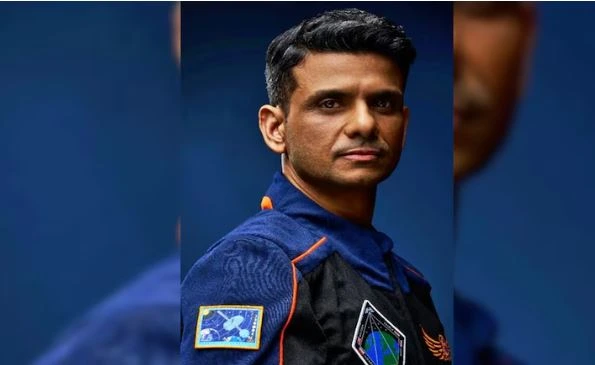
Indian astronaut Group Captain Shubhanshu Shukla, the first Indian to visit the International Space Station (ISS), will meet Prime Minister Narendra Modi this evening at his official residence in New Delhi.

PM Modi to host meeting with astronaut

According to officials, the meeting at 7 Lok Kalyan Marg is expected to take place between 5 pm and 5:30 pm. Shukla, who arrived in India on Sunday, will also be part of the National Space Day celebrations scheduled for August 23.

Warm welcome in India

The astronaut was greeted at the airport by his family, Science and Technology Minister Jitendra Singh, Delhi Chief Minister Rekha Gupta, and hundreds of citizens waving the national flag. Shukla had been in the United States for a year, preparing for the Axiom-4 mission, which launched from Florida on June 25 and docked at the ISS the next day. He served as the mission’s pilot.

Emotional note from Shukla

Before his return, Shukla shared an emotional post on Instagram, expressing mixed feelings of leaving his space colleagues while being eager to meet his loved ones and people of India. He also quoted a song from the film Swades, which he had chosen as his anthem on the launch day.

Parliament session on India’s space journey

In honour of Shukla’s mission, the Lok Sabha is holding a special session today to discuss “India’s first astronaut aboard the ISS – critical role of space programme for Viksit Bharat by 2047.” Union minister Kiren Rijiju said the discussion would highlight the importance of India’s space achievements and future goals.

Continue Reading

India News

Shubhanshu Shukla pens emotional note as he returns to India after space mission

Indian astronaut Shubhanshu Shukla penned an emotional Instagram post as he returned to India after his 18-day ISS mission, marking a milestone in India’s space journey.

Published

on

Indian astronaut Group Captain Shubhanshu Shukla has shared an emotional Instagram post as he heads back home after completing his 18-day mission aboard the International Space Station (ISS).

Astronaut reflects on mixed emotions

In his heartfelt message, written from the aircraft, Shukla expressed the whirlwind of emotions he felt while leaving behind his fellow astronauts, who had been his family during the mission. “As I sit on the plane to come back to India, I have a mix of emotions running through my heart. I feel sad leaving a fantastic group of people behind who were my friends and family for the past year during this mission. I am also excited about meeting all my friends, family and everyone in the country for the first time post mission. I guess this is what life is — everything all at once,” he wrote.

Acknowledges support and inspiration

The astronaut thanked everyone for the love and support he received throughout his journey. He also recalled the words of his commander Peggy Whitson, saying, “Goodbyes are hard, but we need to keep moving in life. As my commander Peggy Whitson fondly says, ‘The only constant in spaceflight is change’. I believe that applies to life as well.”

Shukla ended his note with a line from the song Yun Hi Chala Chal from the film Swades, reflecting his spirit of resilience.

Link to India’s space ambitions

Shukla’s return comes at a crucial time as India advances its space programme. Prime Minister Narendra Modi had earlier mentioned that the astronaut would soon return and that he was tasked with documenting his training and ISS stay. This record will serve as a valuable reference for Gaganyaan, India’s first human spaceflight mission.

Over the past year, Shukla trained extensively at NASA, Axiom, and SpaceX facilities. His flight to the ISS as part of the Axiom 4 mission marked a milestone in India’s preparations for future human space exploration.

The Gaganyaan project aims to send Indian astronauts into orbit aboard an indigenous rocket. The government has also outlined plans for a Bharatiya Antariksh Station by 2035 and a crewed mission to the moon by 2040.

Continue Reading

Latest Science News

Shubhanshu Shukla becomes second Indian in space, lifts off for ISS aboard Axiom-4 mission

Group Captain Shubhanshu Shukla becomes the second Indian astronaut to travel to space after four decades, aboard the Axiom-4 mission to the International Space Station.

Published

on

subhanshu shukla

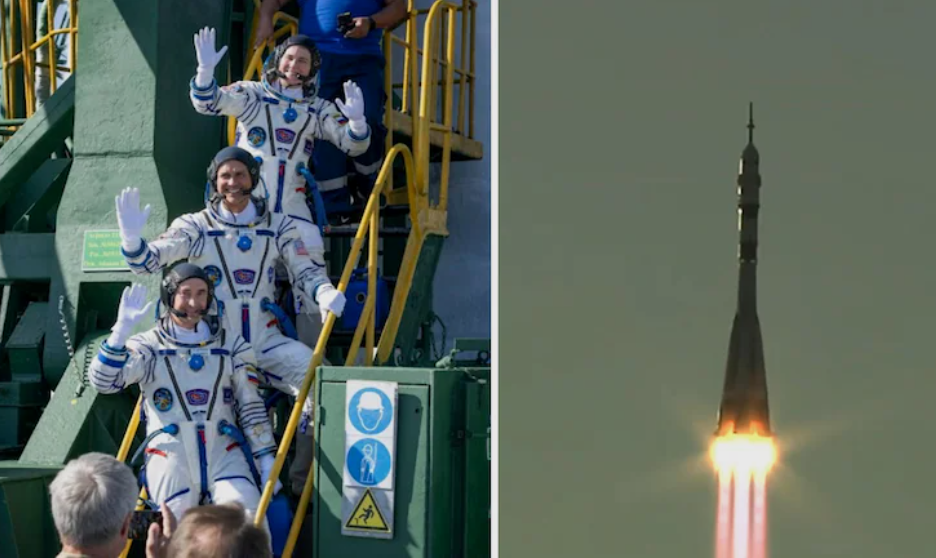
Group Captain Shubhanshu Shukla of the Indian Air Force has etched his name in history as the second Indian astronaut to travel to space. Launching aboard the SpaceX Crew Dragon on the Axiom-4 mission, Shukla began his journey from NASA’s Kennedy Space Center in Florida, from the very launchpad that propelled Neil Armstrong’s Apollo 11 moon mission in 1969.

Four decades after Wing Commander Rakesh Sharma became the first Indian to journey into space in 1984, Shukla’s mission marks a monumental milestone for India’s space ambitions. Speaking ahead of the mission, Shukla expressed the emotional weight of the moment, saying, “I carry with me not just instruments and equipment, but the hopes and dreams of a billion hearts.”

A multinational crew on a scientific journey

Group Captain Shukla is joined by Commander Peggy Whitson from the US, Slawosz Uznanski-Wisniewski from Poland, and Tibor Kapu from Hungary. The four-member crew is on a mission to the International Space Station (ISS), where they are scheduled to arrive after a 28-hour journey and dock around 4:30 pm tomorrow.

The fortnight-long mission includes the execution of 60 scientific experiments, with seven of them designed by Indian researchers. Shukla is also expected to engage in an interaction with a VIP from space during the mission, adding a special human touch to this scientific voyage.

A mission delayed, but not denied

The Axiom-4 launch had faced multiple delays due to unfavorable weather and technical complications. June 25 finally saw the successful launch, marking NASA’s sixth official date announcement for the mission.

Before lift-off, Shukla shared a heartfelt message with his family: “Just wait for me, I’m coming.” The Indian pilot had been under quarantine for over a month in preparation, ensuring he was in optimal health for the journey.

As the spacecraft orbits Earth en route to the ISS, India watches with pride and anticipation, inspired once again by the courage of its space pioneers.

Continue Reading

Trending

© Copyright 2022 APNLIVE.com

Left Menu Icon