
India News
TWITTER WAR OVER FACEBOOK
The issue of Facebook apprently ignoring virulent communal comments belonging to members of party in power in India has spraked off not only a political row, but also a twitter war. Shashi Tharoor is handling the barbs from the BJP.


The issue of Facebook apprently ignoring virulent communal comments belonging to members of party in power in India has spraked off not only a political row, but also a twitter war. Shashi Tharoor is handling the barbs from the BJP.
As BJP MP Nishikant Dubey attacked Tharoor saying he had no right to do so without authorization, Trinamool Congress MP Mahua Moitra backed the Congress MP. Dubey has reportedly urged MPs of the BJP and its allies in the committee to write to Lok Sabha speaker Om Birla against Shashi Tharoor.
The Wall Street Journal report claimed that Facebook deliberately ignored disruptive content from members of the ruling BJP as well as right-wing voices and groups who have been “flagged internally“.

When Congress leader Rahul Gandhi re-tweeted the report on Sunday, Shashi Tharoor posted: “The Parliamentary Standing Committee on Information Technology would certainly wish to hear from @Facebook about these reports and what they propose to do about hate-speech in India.“
To which, the BJP’s Nishikant Dubey, who is a member of the panel, retorted: “The Chairman of the Standing Committee does not have the authority to do anything without discussion of the agenda with its members. Shashi Tharoor, stop Rahul Gandhi’s agenda without authorisation by the Committee and Speaker.”
The BJP member’s comments provoked a sharp response from Trinamool Congress MP Mahua Moitra, also a member of the Standing Committee on IT. “Am IT committee member – agenda item was already agreed and bulletinised with Speaker’s approval at the beginning of the year. When to schedule each item and who to call is the chairman’s prerogative,” she tweeted.
Tharoor, responding to Mahua Moitra’s tweet, posted: “You are absolutely right by imputing motives to my decision, Nishikant Dubey has brought the Committee’s work into disrepute, a matter I will take up.
Read Also: MODI MOVES IN TO CLEAR LOGJAM IN NAGA PEACE TALKS
Nishikant Dubey responded to both. “Please read rule 269, regards,” he said to Mahua Moitra. The rule, according to a screenshot tweeted by Ms Moitra, says: “A witness may be summoned by an order signed by the Secretary-General and shall produce such documents as are required for the use of a committee.” On Mr Tharoor’s tweet, he said: “Thanks for your comment, time will tell who brought the committee’s work into disrepute Mr. Chairman.”










India News
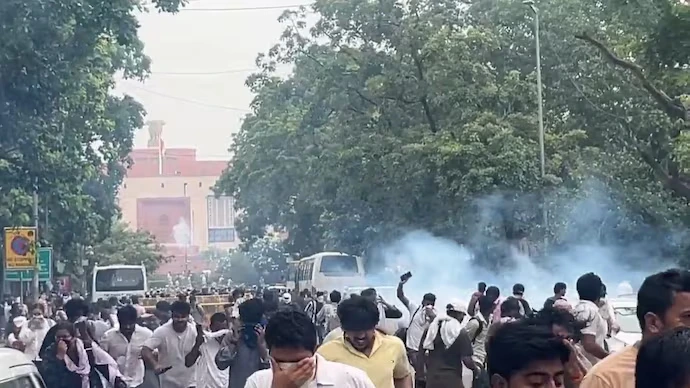
Delhi deploys 25,000 personnel, installs CCTV cameras ahead of CJP march
More than 25,000 police and paramilitary personnel have been deployed in Delhi ahead of the CJP’s planned protest march at Connaught Place. Authorities have also imposed restrictions and stepped up CCTV surveillance.

India News
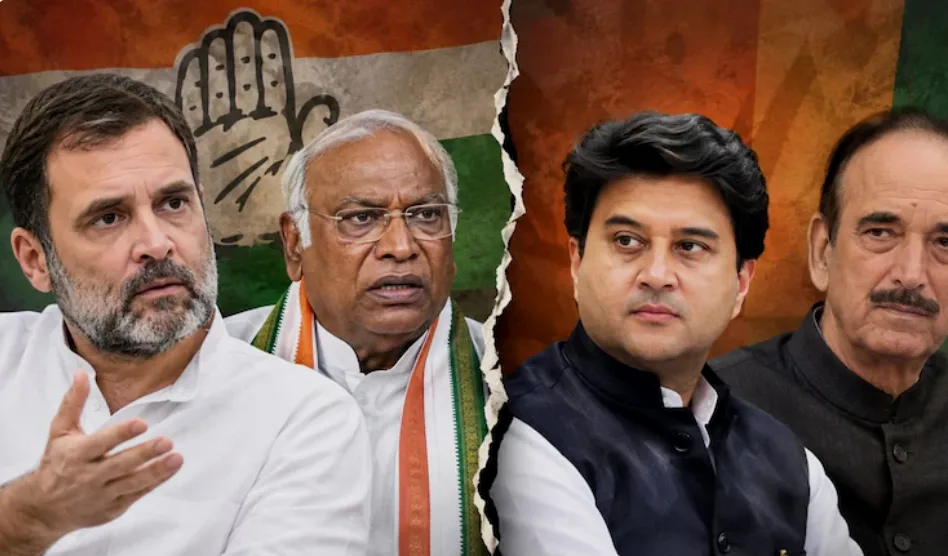
Mallikarjun Kharge’s ‘Your Friends’ jab at Rahul Gandhi over congress exits
Congress president Mallikarjun Kharge took a dig at Rahul Gandhi after the Leader of the Opposition reportedly described former party leaders Jyotiraditya Scindia and Ghulam Nabi Azad as among those who had left the Congress.
India News
Delhi Police offers 11-person limit for CJP’s Connaught Place protest
Delhi Police has offered to facilitate a group of 11 people at Central Park in Connaught Place for the Cockroach Janata Party’s October 16 protest, while warning that violations of prohibitory orders could invite legal action.


India-US trade deal first phase finalised, drafting underway

Election Commission orders voter roll revision in 17 states, UTs

Actor Imran Khan asked to leave India after CJP protest

Delhi Police offers 11-person limit for CJP’s Connaught Place protest

Mallikarjun Kharge’s ‘Your Friends’ jab at Rahul Gandhi over congress exits

Magnitude 7 earthquake strikes Russia’s Kamchatka Peninsula

Delhi deploys 25,000 personnel, installs CCTV cameras ahead of CJP march
Mallikarjun Kharge’s ‘Your Friends’ jab at Rahul Gandhi over congress exits
Delhi Police offers 11-person limit for CJP’s Connaught Place protest
Actor Imran Khan asked to leave India after CJP protest

Afghan Men Try To Hang With The Jet Engine Of The Aircraft in Kabul- Afghanistan News – Kabul News
Trending Top 10 News: 10000 Crore Fine on Flipkart, Apple to Launch Unique Feature, Hdfc Bank Job Ad

Trending Top 10 News: Nokia 6310, Apple sales, Bachpan ka Pyar Video Kid, Dainik Bhaskar IT Raid

Trending Top 10 News: Canada bans Indian flights, Rain in Delhi NCR, AIMIM Twitter hacked, Raj Kundra case

Trending Top 10 News: Shein India, Apple New Service, Pocket Oxygen, Oppo Launched New Phone
-
 India News22 hours ago
India-US trade deal first phase finalised, drafting underway
-
 India News20 hours ago
Election Commission orders voter roll revision in 17 states, UTs
-
 India News20 hours ago
Actor Imran Khan asked to leave India after CJP protest
-
 India News18 hours ago
Delhi Police offers 11-person limit for CJP’s Connaught Place protest
-
 India News7 hours ago
Mallikarjun Kharge’s ‘Your Friends’ jab at Rahul Gandhi over congress exits
-
 India News7 hours ago
Delhi deploys 25,000 personnel, installs CCTV cameras ahead of CJP march
-
 Latest world news6 hours ago
Magnitude 7 earthquake strikes Russia’s Kamchatka Peninsula
