English हिन्दी
Connect with us

India News

Aadhaar, Modi’s magical wand

Published

on

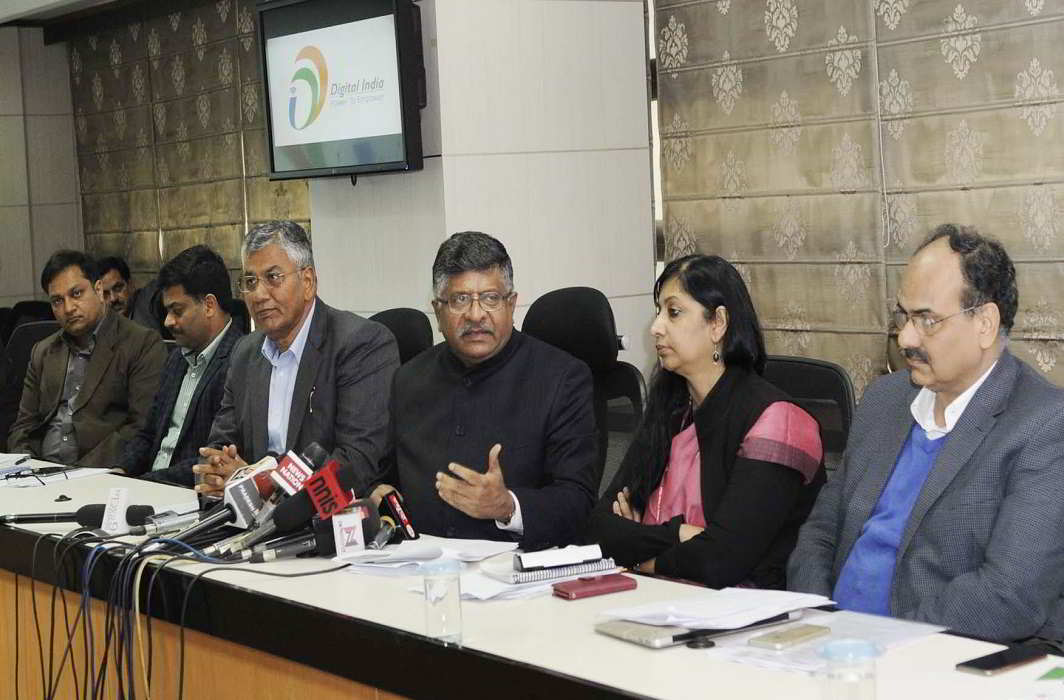
Union minister for electronics & information technology and law & justice Ravi Shankar Prasad addresses a press conference on the ‘Achievements of UIDAI’, in New Delhi on January 27. Also seen are minister of state for electronics & information technology and law & justice PP Chaudhary, secretary, ministry of electronics & information technology, Aruna Sundararajan and the director general and mission director, UIDAI, Dr Ajay Bhushan Pandey

[vc_row][vc_column][vc_column_text]111 crore UID card-holders; NDA government basks in the warmth of sunny numbers

By Parsa Venkateshwar Rao Jr

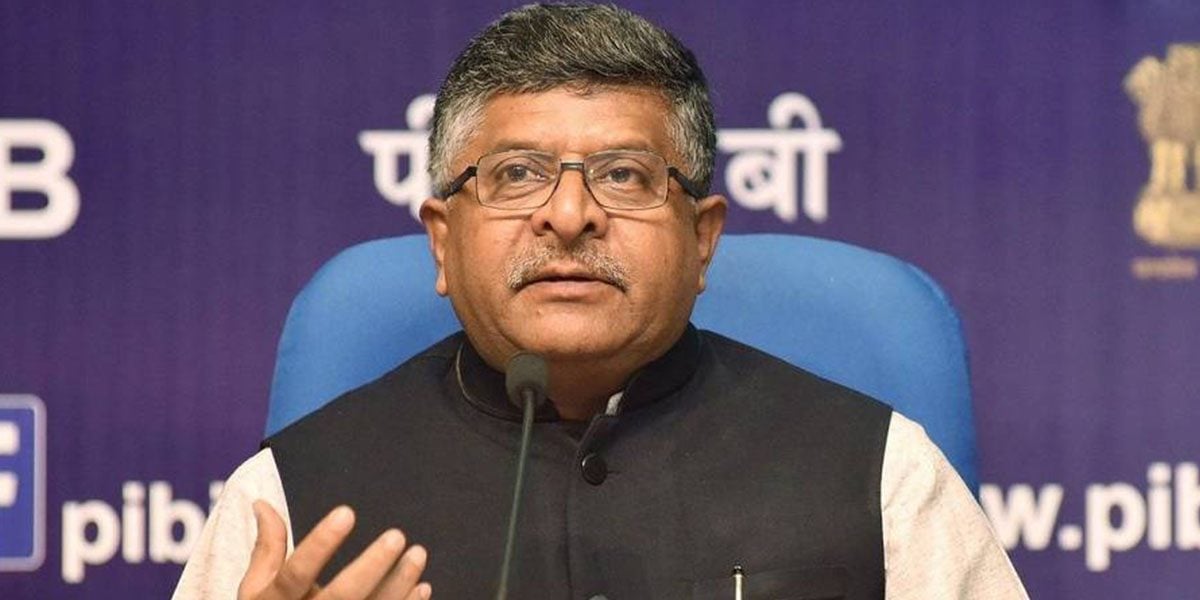
Minister for Information Technology Ravi Shankar Prasad seemed and sounded a happy man. He beamed and announced that the number of people in the country who now possess the Aaadhaar number stands at 111 crore out of a population of 125 crore. Remember that 125 crore Indians is the constant refrain of Prime Minister Narendra Modi’s never-ending loud litany of the achievements of his less-than-three-year-old government. So 111 crore is music to the ears of this over-enthusiastic government.

Prasad rolled out the numbers at a press conference on Friday afternoon at Electronics Niketan here. Describing the government as a “Government of transformation”, and specifying the effort of the government as one of bridging the “digital divide”, he referred to Aaadhaar as the bridge that will decrease and then do away with the divide.

The minister acknowledged that the Aadhaar was the previous government’s (Congress-led UPA under prime minister Manmohan Singh), but he said that under the previous regime it was a mere digital identity marker and nothing more, that it was PM Modi who had used it effectively to make it a tool for financial and social inclusion.

He said now 99 per cent of the adults in the country have an Aadhaar card, and very soon the rest of the non-adults will come under its ambit as well. He explained in detail how Aaadhaar has been dovetailed to push for the less-cash economy, and synchronizing bank accounts with the Aadhaar number, as well as using it for targeting subsidies and for enabling transactions even without ban accounts and debit cards.

But as he revealed the numbers of Aadhaar-synced bank accounts and subsidies, it became clear that there is a quite a distance to cover. What is indisputable is that this government has pushed the Aadhaar enrolment at a great speed. On May 31, 2014 there were 63.22 crore Aadhaar card-holders. That number stood at 111 crore on January 27, 2017, which was an exact increase of 47.8 crore during the ongoing NDA tenure.

The number of Aadhaar card-holders linked to bank accounts was 6.7 crore on May 31, 2014, but it leapt to 38.51 crore by January 15, 2017. Similarly, the Direct Beneficiary Transfer (DBT), which was again a UPA government initiative, stood at a relatively minuscule Rs 6.3 crore on May 31, 2014, it stands at Rs 150.71 crore on January 15, 2017.

It just goes to show that the Modi government has been efficient in carrying forward the initiatives of the UPA government with near speed of light, a hyperbole no doubt but this government has this manic feeling in every good it does, but that it has not done anything new on its own. Even in the matter of banks linked to Aadhaar facility, the figure stood at 311 in May 2014 and it moved up to 869 on January 15, 2017. It is fancifully described in the press release as Aadhaar Payment Bridge (APB).

There is no doubt that the Bharatiya Janata Party (BJP) and Prime Minister Modi embraced Aadhaar without reservations. Under the UPA government, the Unique Identification Authority of India (UIDA) under Nandan Nilekani, one of the founders of information technology major, was set up in 2009 and it attached to the now disbanded Planning Commission. The NDA government under Modi brought in a legislation by which it turned UIDAI into a statutory authority through the Aadhaar (Targeted Delivery of Financial and Other Subsidies, Benefits and Services) Act, 2016, and it was brought under Ministry of Electronics and Information Technology (MeitY).  [/vc_column_text][/vc_column][/vc_row]

India News

Ex-shooter of Mukhtar Ansari gang shot dead in Barabanki, 15 rounds fired

A former shooter linked to Mukhtar Ansari’s gang was killed in Barabanki after attackers fired 15 rounds at his vehicle during a 10-minute assault.

Published

on

A former shooter linked to the gang of Mukhtar Ansari was shot dead in Uttar Pradesh’s Barabanki district after unidentified attackers opened fire on his vehicle.

The deceased, Shoaib alias Bobby, had earlier been associated with Ansari’s criminal network. He was also an accused in the 1999 murder case of Lucknow jailer RK Tiwari.

Attack in Asaini area

According to police officials, the incident took place in the Asaini area when Shoaib was travelling from Barabanki towards Lucknow. A total of 15 rounds were fired at his vehicle during the attack.

Authorities said the firing continued for nearly ten minutes. Eyewitnesses reported hearing multiple gunshots as the vehicle came under sustained fire, creating panic in the locality. The scale of the assault and the number of bullets discharged indicate that more than one attacker may have been involved, police added.

Background of the deceased

Shoaib Bobby had been identified in the past as a shooter for the Ansari gang. He was named as an accused in the 1999 killing of jailer RK Tiwari in Lucknow.

About Mukhtar Ansari

Mukhtar Ansari, who was 63 at the time of his death in 2024, had been booked in 65 criminal cases over the years, including charges of murder and extortion. Despite his criminal record, he was elected five times as a Member of the Legislative Assembly from different political parties.

Born in 1963 into an influential family, Ansari entered organised crime during a period when contract mafia activities were prevalent in parts of Uttar Pradesh. From 2005 until his death, he remained lodged in various jails in Uttar Pradesh and Punjab.

Ansari died of cardiac arrest after being hospitalised in 2024. According to a medical bulletin issued in Hindi, he was shifted from jail in Banda to Rani Durgavati Medical College at around 8.25 pm after complaining of vomiting and being found unconscious.

Police are continuing their investigation into the Barabanki shooting.

Continue Reading

India News

Rahul Gandhi faces expulsion demand in Lok Sabha over trade deal remarks

BJP MP Nishikant Dubey has moved a notice seeking Rahul Gandhi’s expulsion from the Lok Sabha. Here is how the disqualification and expulsion process works.

Published

on

Rahul Gandhi

Nishikant Dubey, a Member of Parliament from the Bharatiya Janata Party, has sought the expulsion of Congress leader Rahul Gandhi from the Lok Sabha. Dubey has submitted a notice calling for a substantive motion against Gandhi over his remarks concerning the India–US trade deal.

The BJP MP has demanded cancellation of Gandhi’s Lok Sabha membership and has also called for a lifetime ban on him from contesting elections. The development has raised questions about the procedure for removing a sitting Member of Parliament from the House.

How can a Lok Sabha MP be expelled

The process for expelling a Member of Parliament involves several procedural steps within the House:

Submission of complaint
The process begins when a member or political party files a formal complaint against a sitting MP.

Reference to committee
The Lok Sabha Speaker may refer the matter to the Committee of Privileges for examination. The committee is tasked with conducting a detailed inquiry into the allegations.

Investigation and findings
The committee can examine evidence, call witnesses, and allow the concerned MP to present a defence. After completing its review, it submits a report outlining its findings and recommendations.

Consideration by the House
The committee’s report is tabled in the Lok Sabha. If it recommends expulsion, a motion is moved in the House to adopt the recommendation.

Voting on expulsion
For the motion to pass, it must secure a majority of members present and voting. If approved, the MP stands expelled from the House.

Rahul Gandhi’s disqualification in 2023

In 2023, a court in Surat sentenced Rahul Gandhi to two years in prison in a criminal defamation case related to a remark about the “Modi surname”. Under Section 8(3) of the Representation of the People Act, 1951, any MP convicted and sentenced to two years or more faces automatic disqualification from Parliament.

Following the conviction, Gandhi was disqualified as a Member of Parliament. However, he later challenged the verdict in the Supreme Court of India, which stayed his conviction. After the stay order, his Lok Sabha membership was restored and he resumed his role as an MP.

Continue Reading

India News

Amit Shah to visit India-Bangladesh border in Assam on February 21

Amit Shah is scheduled to visit the India-Bangladesh border in Assam’s Cachar district on February 21 and participate in the Vibrant Villages Programme event.

Published

on

Amit Shah

Union Home Minister Amit Shah is set to visit the India-Bangladesh international border in Assam’s Cachar district on February 21, in a move that carries political and administrative significance ahead of the upcoming Assembly elections.

According to party sources, Shah will arrive in Assam on February 20 and travel the following morning to Natanpur village in the Katigorah area, located close to the international border. During his visit on February 21, he is scheduled to participate in an event under the Vibrant Villages Programme (VVP).

The visit is notable as action against illegal immigrants from Bangladesh has remained a key electoral issue for the Bharatiya Janata Party (BJP) in the state.

Ahead of the Home Minister’s arrival, State minister Kaushik Rai, Cachar district commissioner Ayush Garg, and senior officials of the Border Security Force (BSF) and police reviewed security arrangements and preparedness in Natanpur village.

Natanpur, situated along the international boundary in Cachar district, has witnessed the apprehension of over 200 illegal migrants in recent years, including individuals from Bangladesh and Myanmar.

The Vibrant Villages Programme, organised by the Home Ministry, focuses on strengthening border areas through livelihood generation, tourism promotion, preservation of cultural heritage, skill development, and support for agriculture and allied sectors.

Continue Reading

Trending

© Copyright 2022 APNLIVE.com