English हिन्दी
Connect with us

Education

Schools and colleges in the NCR will be closed due to severe air pollution said Commission for Air Quality Management (CAQM)

The Commission for Air Quality Management (CAQM) said that all the private schools, colleges, universities and educational institutions will remain closed until the next order of Commission for Air Quality Management (CAQM).

Published

on

Delhi-NCR air pollution

The Commission for Air Quality Management (CAQM) said that all the private schools, colleges, universities and educational institutions will remain closed until the next order of Commission for Air Quality Management (CAQM).

The order for closing private schools, colleges, universities and educational institutions was issued late Tuesday night on November 16, 2021, for the National Capital Region until further orders are issued. Although, the Commission for Air Quality Management has allowed for the online mode of education till the closure.

This step can be a helpful measure in order to prevent air pollution in the National Capital Region. The Commission for Air Quality Management was instructed by the Supreme Court to hold a joint meeting regarding the high levels of air pollutions in Delhi.

The proceedings will be held and heard by today, November 17, 2021, in the Supreme Court.

What is the Air Quality Index in Delhi?

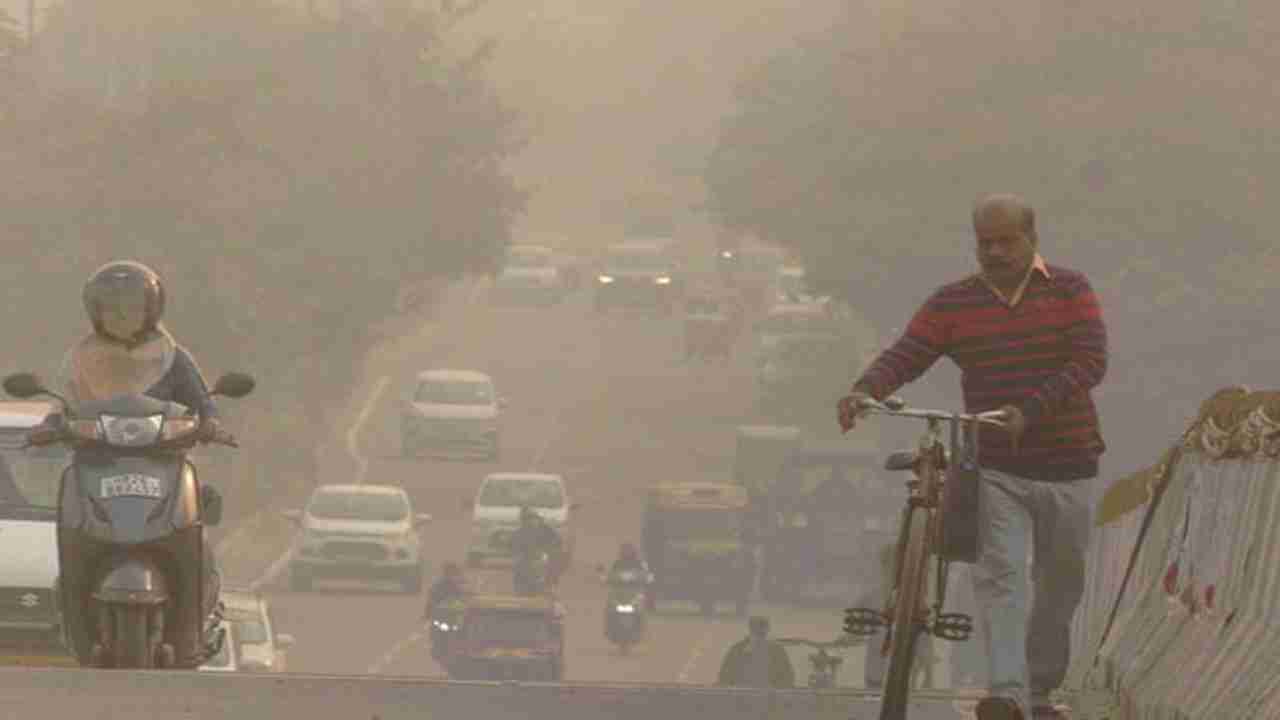
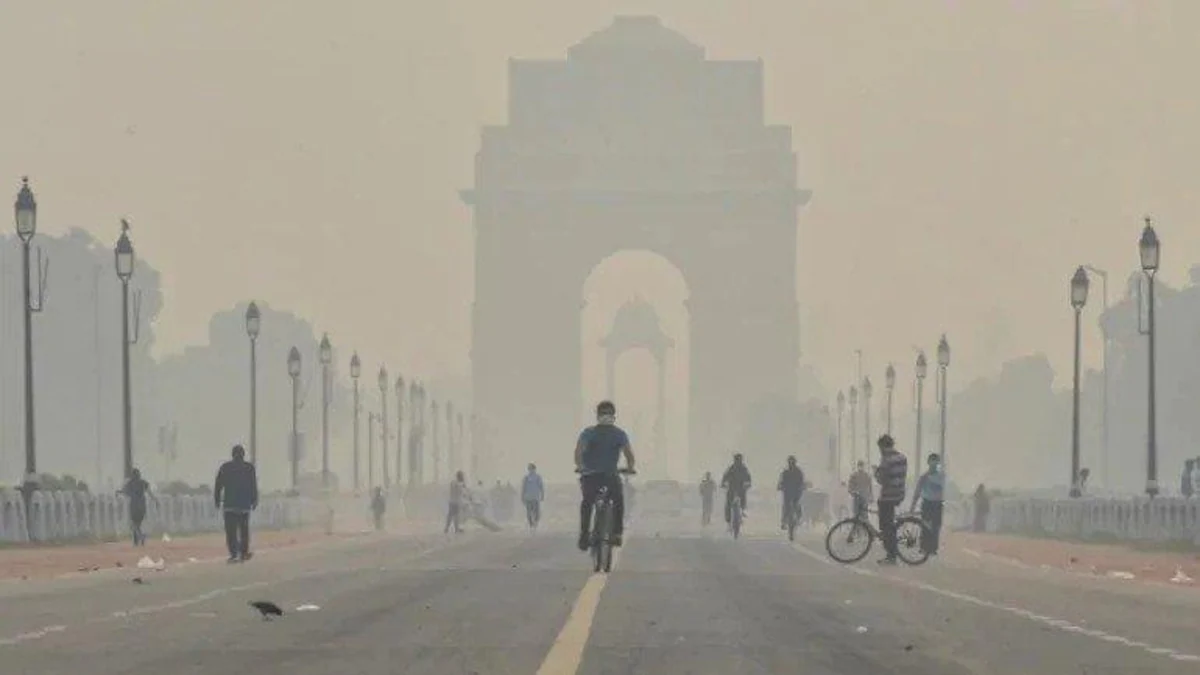
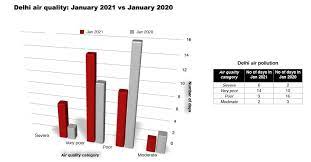
In Delhi, the Air Quality Index (AQI) is very acute right now. After remaining in the very poor category till Tuesday on November 16, 2021, in the morning, when the AQI was recorded at 396, Delhi’s air quality returned to the severe category with a 24-hour average AQI of 403.

Have a look at the Air Quality Index (AQI) in neighbouring cities:

  1. Noida air quality index was 397
  2. Gurugram air quality index was 369
  3. Greater Noida air quality index was 361
  4. Ghaziabad air quality index was 356

The air quality index of the respective cities was observed at 4 pm on November 16, 2021.
Therefore, the government of Delhi NCR has given orders to work from home (WFH). Till Sunday, the people are allowed to work from home and also encouraged the private companies to follow the instructions.

Read Also: Rajasthan CM Ashok Gehlot left surprised after teachers tell him they had to pay bribes for transfer

Due to the rise in the levels of pollution, the Central Government has told the Supreme Court of India to advise the employees to resort to carpooling to reduce the air pollution by reducing the number of vehicles used by them for travelling.

The Commission for Air Quality Management also stated that only five of the 11 thermal power plants within a 300-kilometre radius of Delhi – NTPC Jhajjar, Mahatma Gandhi TPS, CLP Jhajjar, Panipat TPS, HPGCL, Nabha Power Ltd. TPS, Rajpura, and Talwandi Sabo TPS, Mansa – will be operational until November 30.

Education

MCC announces NEET UG Counselling 2026 dates, check complete schedule

The Medical Counselling Committee has released the NEET UG Counselling 2026 schedule. Round 1 registration will begin on August 5, followed by four counselling phases, including the Online Stray Vacancy Round.


Published

on

NEET UG Counselling

The Medical Counselling Committee (MCC) has released the complete counselling schedule for NEET UG 2026 admissions under the 15% All India Quota (AIQ) and 100% seats of Deemed Universities, Central Universities, AIIMS, and JIPMER institutions for the 2026-27 academic session.

The counselling process covers admissions to MBBS, BDS and BSc Nursing courses. According to the official schedule, the Round 1 registration process will begin on August 5, while verification of the tentative seat matrix by participating institutes will be completed on August 4.

Round 1 counselling schedule

Registration and fee payment for Round 1 will be available from August 5 to August 12 until 3 pm. Candidates can complete the payment process up to 6 pm on August 12.

Choice filling will begin on August 6 and continue until August 13, with the window closing at 11 am on August 13. Choice locking will be available from 4 pm on August 12 until 11 am on August 13.

The seat allotment process will be conducted between August 13 and August 16, while the Round 1 result will be announced on August 17. Candidates allotted seats must report to their respective institutes between August 18 and August 22. Institutes will verify the details of joined candidates on August 23.

Round 2 counselling dates

Verification of the tentative seat matrix for Round 2 will be conducted on August 24.

Registration and fee payment will be open from August 25 to August 29 until 3 pm, with payment accepted until 6 pm on August 29. Candidates can fill their choices from August 25 to August 30, while the choice-locking facility will remain available between 4 pm and 11 pm on August 30.

Seat allotment will take place from August 31 to September 1, and the results will be declared on September 2. Candidates can report and join their allotted institutes between September 3 and September 8, while institute verification of joined candidates will be carried out on September 9.

Round 3 schedule

For Round 3, verification of the tentative seat matrix is scheduled for September 10.

Registration and fee payment will remain open from September 11 to September 15 until 3 pm, while the payment window will close at 6 pm on September 15. Choice filling will continue from September 11 to September 16, with choice locking available from 4 pm on September 15 until 11 am on September 16.

The seat allotment process will be conducted between September 16 and September 17, and the results will be announced on September 18. Candidates allotted seats can report to their institutes from September 19 to September 26. Verification of joined candidates by institutes will take place on September 27.

Online stray vacancy round

The Online Stray Vacancy Round will begin with verification of the tentative seat matrix on September 27.

Registration and fee payment will be conducted from September 28 to September 30 until 3 pm, while payments can be completed until 6 pm on September 30. Choice filling will also be available during the same period, with choice locking scheduled between 4 pm and 11 pm on September 30.

The seat allotment process will be held on October 1 and October 2, and the result will be declared on October 3. Candidates allotted seats must report to their respective institutes between October 4 and October 10.

The MCC has also instructed all participating institutes and colleges to treat Saturdays, Sundays and gazetted holidays as working days to ensure that the counselling process is completed within the prescribed timeline.

Continue Reading

India News

Indian Army Agniveer CEE Result 2026 declared, ARO-wise merit list released

The Indian Army has announced the Agniveer CEE Result 2026. Candidates can now download the ARO-wise merit list and check their eligibility for the next stages of recruitment.

Published

on

Indian Army Agniveer Result

The Indian Army has announced the Agniveer Common Entrance Examination (CEE) Result 2026, allowing candidates to check their qualifying status through the official recruitment portal. The Army Recruitment Office (ARO)-wise merit lists have been uploaded on joinindianarmy.nic.in, where candidates can download the PDF corresponding to their recruitment region.

The merit lists contain the names and roll numbers of candidates who have successfully cleared the written examination and become eligible for the next phase of the Agniveer recruitment process.

How to check Indian Army Agniveer CEE Result 2026

Candidates can access their results by following these steps:

  • Visit the official Indian Army recruitment website.
  • Click on the Agniveer CEE Result 2026 link available on the homepage.
  • Select the relevant Army Recruitment Office (ARO) or recruitment region.
  • Download the merit list PDF.
  • Search for your roll number or name to confirm your qualification status.

What happens after the Agniveer CEE result?

Candidates shortlisted in the Common Entrance Examination will now have to undergo the remaining stages of the recruitment process. These include:

  • Physical Fitness Test (PFT)
  • Physical Measurement Test (PMT)
  • Document Verification (DV)
  • Medical Examination

Only candidates who successfully clear every stage will be considered for final selection under the Agniveer recruitment programme.

Candidates advised to verify details carefully

After downloading the merit list, candidates should carefully check all the information mentioned in the document. If they notice any discrepancy related to their result or personal details, they should immediately contact their respective Army Recruitment Office (ARO) for assistance.

Candidates are also advised to keep checking the official Indian Army recruitment portal for updates regarding the schedule, venue and instructions for the upcoming physical tests, document verification and medical examination.

Continue Reading

Education

Board exam marks may get 50% weightage in NEET, JEE admissions under proposed reforms

The Centre is considering giving 50% weightage to board exam marks in admissions based on NEET and JEE. The proposal is part of broader education reforms aimed at reducing exam stress and improving fairness in the admission process.

Published

on

Board examination marks could soon carry greater significance in admissions to medical and engineering courses, with the Centre reportedly considering a proposal to assign 50% weightage to board scores alongside entrance examinations such as NEET and JEE.

The proposal is part of a broader set of education reforms aimed at reducing the pressure associated with high-stakes examinations and making the admission process more balanced.

Education Ministry panel reviewing admission reforms

According to sources, the proposal is being examined by the Ministry of Education’s nine-member committee that was constituted last year. The panel was tasked with studying students’ growing dependence on coaching institutes, the rise of “dummy schools”, and concerns over fairness in major entrance examinations.

The committee is exploring several measures to improve the existing admission system while reducing the emphasis on a single examination.

Why the reforms are being considered

The discussions come in the wake of multiple controversies involving the examination system, including reported evaluation errors and paper leak incidents. These developments have sparked a wider debate over the credibility and reliability of high-stakes entrance examinations.

To address these concerns, the committee is considering giving 50% weightage to board examination marks in the admission merit process.

Other changes under consideration

Apart from increasing the role of board examination scores, the panel is also examining several other reforms.

These include aligning entrance examinations more closely with school syllabi to reduce students’ dependence on coaching centres, allowing multiple attempts for entrance tests, and gradually introducing adaptive, on-demand computer-based examinations.

Current admission process

At present, admissions to medical and engineering programmes are primarily based on candidates’ performance in entrance examinations such as NEET and JEE. Students are also required to secure the prescribed qualifying marks in their board examinations to become eligible for these entrance tests.

The proposed reforms are currently under consideration, and no final decision has been announced.

Continue Reading

Trending

© Copyright 2022 APNLIVE.com