English हिन्दी
Connect with us

India News

Anti-Valentine’s Week 2022: From slap day to break-up day, check complete list here

Anti-valentine’s week has been started. Today is the first day, slap day. Click here to know the full list of anti-valentine’s week.


Published

on

Anti-Valentine's Week 2022

Anti-Valentine’s events begin the day following Valentine’s Day.  It starts on February 15 with Slap Day and ends on February 21 with break-up day. People commemorate kick day, perfume day, flirt day, confession day, and missing day in the meantime. 

Here we are giving you the complete list of the anti-valentine’s week.

February 15: Slap day

This day is for folks who wish to slap their ex for cheating on them or causing them pain. We do not imply that you should slap somebody on face. Instead, it’s the ideal time to slap those feelings away and go on with your life.

February 16: Kick day

Kick Day is the second day of anti-valentine’s week. It is followed by slap day. It falls on February 16th. It is an ideal day to kick out all of your ex’s negativity and bad energies from your life. Also, if you have acquired some gifts from your ex and now causing pain to you, then you should kick them away. 

February 17: Perfume day

The third day of the anti-valentine celebrations is Perfume Day. It falls on February 17. This day is all about pampering yourself.  So, to go out you get the perfume that you have been admiring for a while. Then, reward yourself with a lovely scent. 

February 18: Flirting day

Flirting Day is being followed by perfume day. It falls on February 18 every year. If you’ve been waiting to ask someone out or use that pickup line on someone you like, it is the right time to do so. Inviting that individual out, meeting new people, and trying new things in life are all good things to do on the flirting day.

February 19: Confession day

Confession day is the third last day of the anti-valentine’s week. It comes every year on February 19. If you have a crush on someone, then it is the perfect day to express your feelings to that special person. You can even admit to past faults that you haven’t told anyone about to that special person.

February 20: Missing day

Missing day falls every year on February 20. It is never too late to tell your favourite person how much you miss them and convey your genuine thoughts. It might be a crush, a friend, or a family member. On the missing day, you can express your feelings to those who missed you so much on this day.

Read Also: Happy Valentines Day: Google Doodle celebrates V-Day with 3D game, here’s how to play

February 21: Break up day

Anti-valentine’s week end with the break-up day. It falls every year on February 21. It is the perfect moment to do the same and choose freedom if you are tired of being in a toxic relationship that has ruined your mental serenity.


India News

Lok Sabha passes Bill allowing government to permit charges on UPI and digital payments

The Lok Sabha has passed a Bill amending the Payment and Settlement Systems Act, allowing the government to permit charges on UPI and other notified digital payment modes by removing the legal restriction on Merchant Discount Rate.

Published

on

The Lok Sabha on Thursday passed the Taxation and Other Laws (Amendment) Bill, 2026, paving the way for the central government to permit banks and payment service providers to levy charges on Unified Payments Interface (UPI) and other notified electronic payment modes.

The amendment changes provisions of the Payment and Settlement Systems Act, 2007, removing the existing legal restriction that barred banks and payment system providers from charging Merchant Discount Rate (MDR) on specified electronic payment methods.

The Bill was passed by voice vote after the House resumed proceedings at 2 pm following an earlier adjournment.

What changes under the Bill?

The amendment replaces the reference to electronic payment modes prescribed under Section 269SU of the Income Tax Act with a provision allowing the central government to notify one or more electronic payment modes for which charges may be permitted.

The revised provision states that the government may specify the applicable electronic payment modes through an official notification after the law comes into force.

At present, Section 10A of the Payment and Settlement Systems Act prohibits banks and payment system providers from imposing any direct or indirect charges on prescribed electronic payment modes.

Meanwhile, Section 269SU of the Income Tax Act requires businesses with an annual turnover exceeding ₹50 crore to provide specified digital payment options, including BHIM-UPI QR codes and RuPay debit cards.

UPI remains free for now

While RTGS and NEFT transactions already attract service charges in certain cases, UPI payments have so far remained exempt from Merchant Discount Rate (MDR).

The amendment itself does not immediately introduce charges on UPI transactions. Instead, it authorises the government to notify eligible electronic payment modes and permit charges in the future.

Government cites sustainability of digital payments ecosystem

According to the government, the proposed changes aim to create a sustainable revenue model for banks, payment service providers (PSPs) and payment infrastructure companies that support India’s rapidly expanding digital payments ecosystem.

The proposal seeks to balance the interests of consumers and small businesses while ensuring adequate investment in payment infrastructure.

RBI Governor: Too early to discuss MDR rollout

A day before the Bill was passed, Reserve Bank of India Governor Sanjay Malhotra described discussions on imposing MDR on digital payments as “premature”.

He said investment in payment infrastructure must be funded either through taxation or by adopting a “user pays” model through Merchant Discount Rate.

Malhotra noted that the government is currently bringing the legislative amendment and said it would be appropriate to wait for further developments before drawing conclusions.

He also said that under the user-pays principle, the merchant or person using the service bears the cost, whereas in the absence of MDR, the expenses are effectively supported through public taxation.

Industry has long sought MDR on UPI

The question of introducing MDR on UPI has remained a key issue for banks and payment industry stakeholders, who have argued for a sustainable compensation mechanism as digital payment volumes continue to rise.

Some industry observers have suggested that, if introduced in the future, MDR could apply only to higher-value merchant transactions rather than peer-to-peer UPI transfers. However, the Bill does not specify any such threshold or implementation framework.

Continue Reading

India News

RSS chief Mohan Bhagwat says Gen Z protesters are our own people, not anti-national

RSS chief Mohan Bhagwat said Gen Z protesters should not be called anti-national, describing protests as a democratic form of dialogue and urging engagement with young people.

Published

on

Mohan Bhagwat

The Rashtriya Swayamsevak Sangh (RSS) chief Mohan Bhagwat on Thursday said members of Generation Z (Gen Z) should not be labelled anti-national merely because they participate in protests. Speaking at the Mumbai Conference titled ‘The Role of Youth in Uniting the World, the Indian Way’, he said young protesters are “our own people” and their concerns should be addressed through dialogue.

Bhagwat said that while protests are part of democracy, they should be carried out through democratic means. He also expressed confidence in the younger generation, describing Gen Z and Gen Alpha as more honest and receptive to the values of patriotism and public service.

Bhagwat calls dialogue essential in a democracy

Addressing the conference, Bhagwat said Gen Z should not be viewed as anti-national for raising concerns.

“If the Gen Z is agitating, they certainly aren’t anti-nationals; they are our own people, our next generation,” he said, adding that a sense of belonging and continuous dialogue are necessary to resolve differences.

He also said that while he would not discourage protests, democracy provides appropriate ways to express dissent.

Says protest is a legitimate form of dialogue

Bhagwat described protests as a democratic mechanism when regular communication fails to resolve issues.

He said that if discussions do not produce results, people naturally raise their voices to draw attention to unresolved concerns, calling protests another form of dialogue in a democratic society.

RSS chief compares Gen Z with earlier generations

Reflecting on generational differences, Bhagwat said today’s youth are more inclined to question authority than previous generations.

According to him, earlier generations generally accepted what elders said without questioning, whereas Gen Z and Gen Alpha seek logical explanations before accepting viewpoints.

He also remarked that he considers the younger generation more honest and said he would readily place his trust in Gen Z.

Remarks come after student protests in Delhi

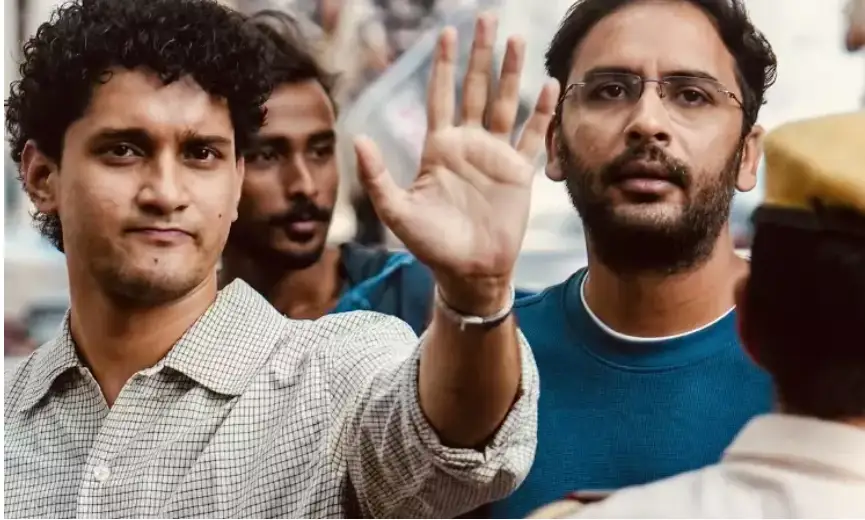
Bhagwat’s comments come days after student protests in Delhi over alleged undergraduate medical entrance examination paper leaks. The demonstrations, led by the Cockroach Janta Party, resulted in the resignation of Education Minister Dharmendra Pradhan.

When asked whether earlier dialogue could have prevented the situation from escalating, Bhagwat said that if an undesirable situation develops, there must have been shortcomings somewhere that need to be identified and corrected.

On pellet gun allegations

Responding to a question about the reported use of pellet guns against protesting students, Bhagwat said he did not have complete information about the incident.

He said he would need to examine the facts before commenting on what happened or determining where responsibility lay.

Continue Reading

India News

Assam floods death toll rises to 95; over 1.6 lakh affected, 14 districts on high alert

Assam’s flood death toll has climbed to 95 after six more fatalities were reported. More than 1.6 lakh people have been affected, while 14 districts remain on high alert as relief operations continue.

Published

on

The flood situation in Assam remained critical on Wednesday after six more people lost their lives over the past 24 hours, taking the death toll during this year’s monsoon season to 95.

According to the state’s Disaster Reporting and Information Management System (DRIMS), widespread flooding continues to affect rural and urban areas, with more than 1.6 lakh people impacted across 563 villages.

Of the six latest deaths, five were linked to the general flood situation. Two fatalities each were reported from Biswanath and Sivasagar districts, while one person died in Golaghat. Another person lost their life due to urban flooding in the Mayong revenue circle of Morigaon district. One person has also been reported missing in Udalguri district.

The Dhansiri (South) river at Numaligarh continues to flow above the danger level, prompting authorities to keep 14 districts on high alert. These districts are Golaghat, Lakhimpur, Charaideo, Sivasagar, Biswanath, Dhemaji, Kamrup (M), Jorhat, Sonitpur, Tinsukia, Nagaon, Darrang, Karbi Anglong and Udalguri.

Sivasagar remains the worst-hit district

Among the affected areas, Sivasagar has recorded the highest number of affected residents, with more than 57,000 people impacted. Golaghat and Jorhat are the next worst-affected districts.

Floodwaters have also caused significant damage to infrastructure. According to DRIMS, seven major embankment breaches have been reported, including five in Biswanath at Brahmajan and two in Darrang’s Mangaldoi area. A steel bridge at Cholapothar in Charaideo and a footbridge in Tangla, Udalguri, have also sustained damage.

Agricultural losses have mounted as nearly 16,951 hectares of cropland remain submerged. The floods have also affected more than 35,000 livestock, while around 8,500 animals, mostly in Sivasagar district, have been washed away.

Urban flooding disrupts normal life

Urban flooding continues to affect Kamrup, Kamrup (M), Morigaon and Jorhat districts, impacting 734 people.

In Kamrup (M), State Disaster Response Force (SDRF) and District Disaster Response Force (DDRF) personnel used boats to evacuate 80 people from waterlogged localities, including Satgaon and Hatigaon. Partial waterlogging continues to disrupt daily life in Guwahati’s Juripar and Anil Nagar areas.

The state government has stepped up relief measures by operating 45 relief camps, where 12,356 people are currently taking shelter. Another 59 relief distribution centres are supplying essential items, including rice, dal, salt and cattle feed, to more than 32,000 people.

Authorities are continuing to monitor river levels as the meteorological department has forecast more rainfall in the catchment areas, raising concerns that the flood situation could worsen further.

Continue Reading

Trending

© Copyright 2022 APNLIVE.com