English हिन्दी
Connect with us

India News

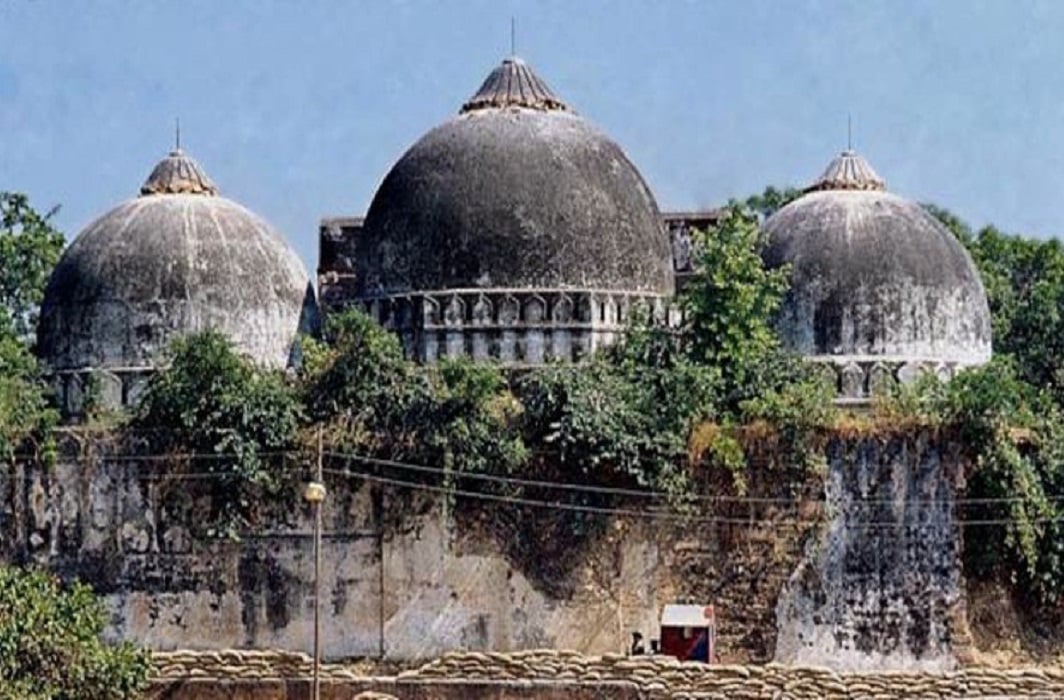
Babri Masjid demolition case: What happened till now?

Published

on

Babri Masjid case

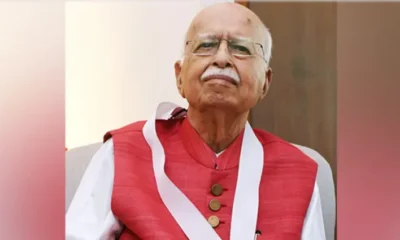
[vc_row][vc_column][vc_column_text]Senior BJP leaders LK Advani, Uma Bharati and Murli Manohar Joshi appears before Special Court in Lucknow for framing of conspiracy charges against them.

1949: Idols of Ram Lalla are secretly placed in the Central dome of  Babri Masjid.

1950: Ram Simla Visharad files first case in Faizabad civil court for granting rights to perform pooja to Ram Lalla.

1950: Paramahansa Ramachandra Das files suit for continuing pooja and keeping idols in the structure.

1959: Nirmohi Akhara files third suit, seeking direction to hand over the site. In 1961, Sunni Central Wakf Board files fourth suit, asking for possession. In the name of Ram Lalla Virajiman, Akhara files the fifith suit in 1989.

1986: District judge orders to remove the locks. Site was opened for Hindu worshippers.

1989: The four suits pending were transferred to the High Court.

1990: The then BJP President LK Advani embarks on a cross-country “rathyathra” to garner support for a Ram temple at the site. Bihar government arrests him on his arrival to the state. BJP withdrew its support for the then Janata government.

December 6, 1992: Karsevaks demolish Babri Masjid, thus creates a shock in the secular fabric of India. Two FIRs filed in the Babri Masjid case.

1993: 67 acres around the area was taken up by Government. It seeks Supreme Court’s opinion whether a Hindu worshipping place existed before the structure was built.

October, 1993: CBI files chargesheet and accuses Advani others of “conspiracy”.

1994: Case goes back to Lucknow High Court.

May 4, 2001: Special CBI court judge S.K. Shukla scraps conspiracy charge against 13 accused, including Advani and Kalyan Singh. Bifurcates Crimes 197 and 198.

May 20, 2010: Advani and other leaders absolved of conspiracy charges.

Allahabad High Court upholds May 24, 2001 judgment of scrapping conspiracy charges, dismisses CBI’s revision petition to proceed with conspiracy charges against Acvani and others.

September 30, 2010: Allahabad HC awards two thirds of disputed land to Hindu parties, and one third to Waqf Board.

February, 2011: CBI moves Supreme Court arguing, “the actual demolition of the Babri Masjid and the continuous assault on media persons form a single connected transaction and can well be a concerted conspiracy”.

May 9, 2011: Supreme Court stays Allahabad High Court verdict.

March 6, 2017: The top court indicates it may revive the conspiracy charge and order a joint investigation of crimes 197 and 198.

March 21, 2017: Chief Justice of India JS Khehar suggests an out-of-court rapprochement in the issue instead of a court battle, offering help to settle the issue amicably.

March 23, 2017: The Supreme Court appoints a bench of Justices P.C. Ghose and Rohinton Nariman for detailed hearing on the CBI appeal against the dropping of the criminal conspiracy charge against LK Advani and other BJP top leaders.

6 April, 2017: SC favours time-bound completion of trial in the Babri case and reserves order on CBI’s plea

April 19, 2017: The Supreme Court reinstates conspiracy charges against LK advani and Murli Manohar Joshi and 13 others in the Babri Masjid demolition case.

May 24: The Special CBI Court orders senior BJP leaders LK Advani, Union Minister Uma Bharti and Murli Manohar Joshi to appear before the court for filing conspiracy charges against them. The court in lucknow grants bail to former Shiv Sena MP Satish Pradhan after he surrenders.

May 26: Denying any exemption from appearing, the Special Court directs the BJP leaders Advani, Bharti and Joshi to appear on May 30 for filing charges.

May 30: Former Deputy Prime Minister LK Advani, Union Minister Uma Bharti, Murli Manohar Joshi appears before the court.[/vc_column_text][/vc_column][/vc_row]

Cricket news

Bowlers may hold the key in high-stakes IPL 2026 Qualifier 1 at Dharamsala

Although the media build-up centers on the batting heavyweight clash between Virat Kohli and Shubman Gill, the IPL 2026 Qualifier 1 in Dharamsala is set to be decided by the bowling consistency of Bhuvneshwar Kumar and Mohammed Siraj.

Published

on

Flat pitches, towering sixes, and relentless run-scoring have defined the Indian Premier League (IPL) 2026 so far. However, when Gujarat Titans (GT) and Royal Challengers Bengaluru (RCB) lock horns in Qualifier 1 at the Himachal Pradesh Cricket Association (HPCA) Stadium in Dharamsala, the contest could ultimately hinge on the bowlers.

The HPCA Stadium has proved to be unforgiving for bowlers due to its short boundaries. A teaser of what could unfold was evident during recent net sessions, where Gujarat Titans’ Jos Buttler and Royal Challengers Bengaluru’s Tim David regularly launched monstrous hits out of the stadium. In the three matches played at this venue this season, teams crossed the 200-run mark five times, with the lowest score being 199/8. An average of nearly 25 maximums per match has been hit here, promising another potential run-fest.

Moving past the Kohli vs Gill narrative

While media attention focuses on the iconic battle between the ‘King’ Virat Kohli and the ‘Prince’ Shubman Gill—hailed as the heir to Indian cricket’s batting legacy—the true deciding factor might lie elsewhere. Both batters look in pristine touch. Gill occupies the second spot in the Orange Cap race with 616 runs from 13 matches, trailing behind his opening partner Sai Sudharsan. Meanwhile, Kohli has bounced back from a brief mid-tournament slump by smashing a sparkling century, taking his tally to 557 runs this season.

Despite the incredible batting firepower on display, the bowling units are expected to dictate which team blinks last. Media interactions with team managements highlighted that consistency and self-belief within the respective bowling departments have been the defining traits of both squads this season.

Powerplay battles to decide the finalist

For RCB, veteran pacer Bhuvneshwar Kumar leads the charge alongside Kagiso Rabada for GT, with both spearheads locked as the joint-highest wicket-takers across the two sides at 24 wickets each. Bhuvneshwar holds a slight edge due to a superior economy rate. Close behind them is GT’s Mohammed Siraj, who has taken 17 wickets so far. With supporting acts like Josh Hazlewood, Jason Holder, Prasidh Krishna, Rasikh Salam Dar, and spinners Rashid Khan and Krunal Pandya in the mix, the match promises an intriguing tactical battle.

Gujarat Titans’ assistant coach Vijay Dahiya acknowledged that negotiating Bhuvneshwar Kumar in the powerplay will be a massive task, but reminded that GT possesses equal firepower in Siraj and Rabada. “If you talk about the powerplay, our numbers are among the best in this tournament,” Dahiya stated.

RCB captain Rajat Patidar echoed similar views, placing immense faith in his bowling attack to stop GT’s prolific opening duo of Gill and Sudharsan. “Our strength is bowling. The way we bowl in the powerplay will be very crucial. We’ll look for early wickets and that is what we have done throughout the tournament,” Patidar remarked.

In a tournament dominated by towering batting displays, the team whose bowling unit holds its nerve under the Dharamsala lights will seal a direct spot in the IPL final.

Continue Reading

India News

External Affairs Minister S Jaishankar and US Secretary of State Marco Rubio review global strategic partnership amid regional conflicts

n a high-stakes meeting in New Delhi, External Affairs Minister S Jaishankar defined India’s multi-alignment stance on West Asia, while US Secretary of State Marco Rubio declared the two nations as global strategic allies.

Published

on

S Jayshankar Marco Rubio meet

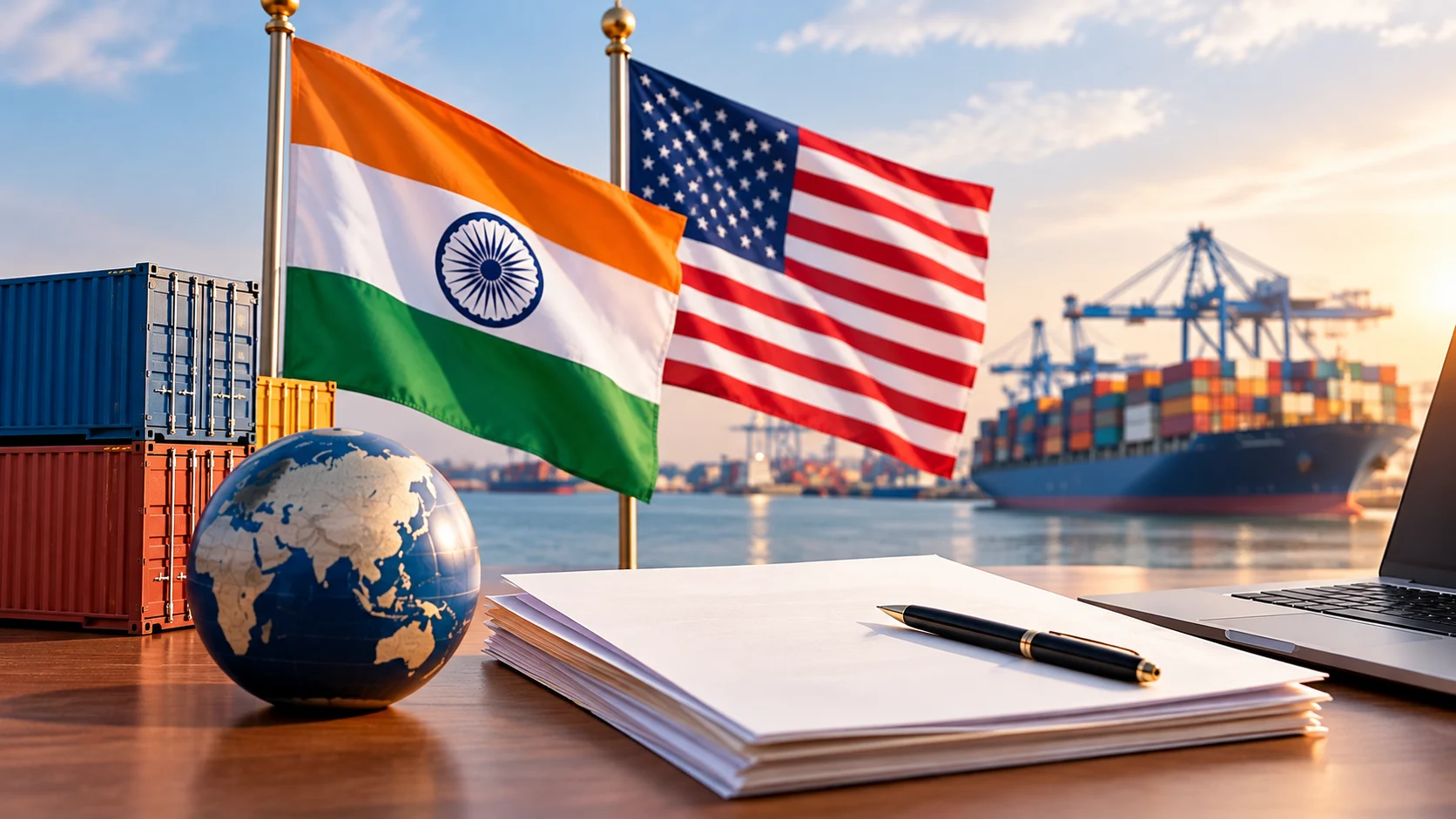
External Affairs Minister S Jaishankar and visiting US Secretary of State Marco Rubio held comprehensive delegation-level talks in New Delhi, emphasizing that the relationship between the two nations remains strong, strategic, and far-reaching. Addressing a joint press conference at Hyderabad House, both leaders rejected suggestions that the bilateral partnership has lost momentum, outlining instead a shared vision for global cooperation.

India outlines ‘multi-alignment’ stance on West Asia conflict

During the high-level discussions, the ongoing conflict in West Asia emerged as a key focal point. Addressing the media, External Affairs Minister S Jaishankar stated that India continues to maintain robust and stable relationships with all key stakeholders in the region, including the United States, Israel, Iran, and Gulf nations.

Jaishankar stressed that India approaches regional conflicts through a distinct policy of “multi-alignment”. He explicitly outlined India’s core operational priorities in West Asia:

  • Ensuring regional peace and stability
  • Safeguarding the welfare of the vast Indian diaspora living and working in the region
  • Maintaining lower energy prices to shield the domestic economy
  • Securing safe and uninterrupted maritime commerce through vital sea lanes

Global strategic allies extending beyond the region

Secretary Rubio strongly backed the depth of the partnership, asserting that the ties between Washington and New Delhi set themselves apart from standard global relationships.

“The US and India aren’t just allies. We are strategic allies and that’s of critical importance,” Rubio stated. “We obviously work with countries all over the world on a variety of issues, but our strategic partnership is what sets this relationship apart because it’s not simply limited to the region, it extends to offer opportunities to cooperate globally in different regions of the world.”

Rubio further revealed that their high-level deliberations, which included a working dinner, covered potential avenues for joint India-US cooperation in the Western Hemisphere and other global theaters.

Clarifications on immigration reforms and visa concerns

The joint press conference also touched upon critical people-to-people and diplomatic friction points. Responding to concerns flagged by media regarding the new US immigration rules—which require certain legal immigrants to leave the US before applying for permanent residency—Rubio reassured the Indian public that the overhaul is a global modernization effort and is not targeted at India.

He acknowledged the profound economic contributions made by Indian professionals and corporations to the American economy. Rubio attributed the policy changes to the broader migration challenges confronting the US, noting that the administration is modernizing the system to regulate how many people enter and when, admitting that the transition period could cause “some bumps”.

When questioned on isolated instances of online racism or prejudice faced by Indians, Rubio took a firm stance alongside Jaishankar. Branding such instances as “dumb” commentary, the top US diplomat remarked, “Every country in the world has stupid people. I’m sure there are stupid people here; there are stupid people in the United States who make dumb comments all the time.” He re-emphasized that the US remains a highly welcoming country whose fabric has been significantly enriched by immigrants from across the world.

Continue Reading

India News

Congress high command steps in to resolve Karnataka leadership impasse with crucial Delhi meeting

The Congress leadership, including Mallikarjun Kharge and Rahul Gandhi, is holding a vital meeting in Delhi with Karnataka Chief Minister Siddaramaiah to find a definitive solution to the state’s prolonged leadership impasse.

Published

on

The top leadership of the Congress party is scheduled to hold a high-level meeting at its headquarters in the national capital today morning to address the long-standing leadership dispute in Karnataka. Senior leaders, including party president Mallikarjun Kharge and MP Rahul Gandhi, will lead the discussions aimed at resolving the continuous friction between Chief Minister Siddaramaiah and Deputy Chief Minister DK Shivakumar.

The ongoing power struggle over the state’s top position has persisted since the party’s electoral victory in 2023. For the current session, only Chief Minister Siddaramaiah has been called to join the discussions in Delhi. When questioned about the agenda by reporters, the Chief Minister stated that he was unaware of the specific subjects to be discussed, noting that political speculation is inevitable.

Background of the internal division

The internal friction intensified significantly in November 2025 when the state government completed its two-and-a-half-year mark in office. Supporters of the Deputy Chief Minister pointed to a purported unacknowledged internal arrangement suggesting a rotational chief ministership split equally across the five-year term. Despite multiple prior interventions by central party leadership to manage the internal friction, a permanent resolution has remained elusive.

While Deputy Chief Minister DK Shivakumar has not been invited to this morning’s initial session, indications suggest that separate individual discussions and a potential joint meeting involving both leaders are planned as part of the broader resolution process. Observers note that several state ministers and legislators have also traveled to the national capital as the party leadership aims to settle the administrative roadmap and finalise leadership plans before the next assembly elections.

Continue Reading

Trending

© Copyright 2022 APNLIVE.com