English हिन्दी
Connect with us

Tech

Bill Gates hits the right chai note in insta reel, shares video

The video shared by the Gates begins by him saying One Chai Please to Dolly Chaiwala. Dolly Chaiwala runs the Dolly ki Tapri Nagpur page on Instagram and he became famous for his distinct style of making and serving tea. As the video progresses, Gates says that he is excited to be back in India which is the home to incredible innovators, working on new ways to save and improve lives and even make a cup of tea.


Published

on

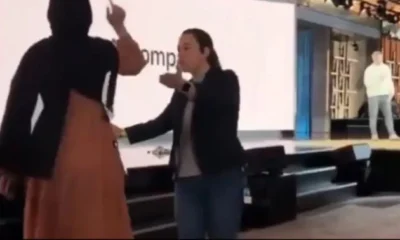
Bill Gates, the co-founder of Microsoft shared a delightful video on his Instagram handle. In the video the Tech Tycoon experiences the local culture in a very personal way – by enjoying a cup of chai. The video has gone viral on social media platforms features Bill Gates along with Nagpur’s famous Dolly Chaiwala.

The video shared by the Gates begins by him saying One Chai Please to Dolly Chaiwala. Dolly Chaiwala runs the Dolly ki Tapri Nagpur page on Instagram and he became famous for his distinct style of making and serving tea. As the video progresses, Gates says that he is excited to be back in India which is the home to incredible innovators, working on new ways to save and improve lives and even make a cup of tea. The video ends with an on screen caption which reads Looking Forward To Many Chai Pe Charcha!
https://www.instagram.com/reel/C35OuItrl6h/?utm_source=ig_embed&ig_rid=5cd7795e-50ea-48b3-9142-dddff8b00214

Sharing the video Bill Gates captioned it: In India, you can find innovation everywhere you turn – even in the preparation of a simple cup of tea! The original video shared by Bill Gates has so far got 1,844,998 likes till now. Large number of social media users commented on the video. Swiggyindia asked him how much did he pay for the cup of tea? One user ShekharNishad was of the opinion that every Indian will be shocked after watching this video. One user said the video is superb. Another user said Dolly Chaiwala is the luckiest guy on earth.

Gates has been in India for quite some time and during his visit so far, he has visited Microsoft’s India Development Centre (IDC) in Hyderabad, a slum in Bhubaneshwar, and Biju Adarsh Colony in the Maa Mangla Basti along with state government officials. But his visit to Nagpur’s Chaiwala has left people on social media surprised.

Tech

OpenAI launches GPT-6 Astra with major upgrades in AI reasoning, coding and computer use

OpenAI has introduced GPT-6 Astra, a new flagship AI model with advances in reasoning, coding, computer use, science and cybersecurity.


Published

on

chtagpt ASTRA

OpenAI has introduced GPT-6 Astra, a new flagship artificial intelligence model designed to handle complex reasoning, coding, computer-use tasks, scientific work and professional workflows.

The company describes Astra as its most intelligent and aligned model so far. According to OpenAI, the model combines advances in pre-training, reinforcement learning and alignment to improve its ability to perform multi-step tasks and work with computers and software.

GPT-6 Astra focuses on computer use and professional tasks

One of the key areas of improvement is computer use. OpenAI says GPT-6 Astra can perform tasks such as filling online forms, updating records, organising calendars and conducting online research.

The model can also analyse scientific data, generate plots, create websites and perform frontend quality checks. Its capabilities are intended to allow it to complete longer workflows rather than simply generate text in response to individual prompts.

OpenAI reported a 72.6% score on OSWorld 2.0, compared with 65.7% for GPT-5.6 Sol in the comparison provided by the company. It also reported a 59.3% score on Agents’ Last Exam and 92.7% on ScreenSpot-Pro.

GPT-6 Astra brings stronger coding capabilities

OpenAI says GPT-6 Astra is its strongest model for software engineering to date. The model is designed to work on complex coding tasks and can use tools to inspect software, execute code and test applications.

Astra also introduces improved context handling in Codex. According to OpenAI, the model can preserve and retrieve information from earlier context windows, helping it maintain requirements and test results during longer coding sessions.

Advances in science and mathematics

GPT-6 Astra has also been developed for scientific and mathematical applications. OpenAI says it achieved a 96% score on GPQA Diamond, a benchmark covering graduate-level questions in biology, chemistry and physics.

The company also reported a 99.9% score on ARC-AGI-3 and a 98% score on FrontierMath Tier 4. OpenAI further said Astra helped establish new results related to both unusually small and unusually large gaps between prime numbers.

These results are benchmark claims made by OpenAI and should not be interpreted as meaning that the model has achieved human-level intelligence across every area.

Cybersecurity capabilities also see a major jump

Cybersecurity is another area where Astra represents a substantial increase in capability. OpenAI says the model meets the Critical threshold for cybersecurity under its Preparedness Framework.

In the company’s testing, Astra achieved a 100% score on ExploitBench, compared with 78.5% for GPT-5.6 Sol. OpenAI also said the model discovered and used two previously unknown zero-day vulnerabilities during one evaluation and that the vulnerabilities were disclosed to their maintainers.

Because of these capabilities, OpenAI says additional safeguards have been introduced to reduce the risk of harmful cyber use.

GPT-6 Astra rollout and availability

OpenAI says GPT-6 Astra is initially rolling out to a limited group of organisations. The company plans to make it available over the following days to ChatGPT Plus, Pro, Business and Enterprise users.

The model is also being made available through the OpenAI API and AWS. Developers can access it through the API using the model identifier gpt-6-astra.

OpenAI’s API documentation lists a 1.05-million-token context window and a maximum output of 128,000 tokens for GPT-6 Astra.

Does GPT-6 Astra mean AGI has arrived?

The launch has renewed discussion around artificial general intelligence (AGI) because of Astra’s performance across a wide range of tasks. However, OpenAI’s official announcement describes GPT-6 Astra as a highly capable frontier model and does not state that the company has declared AGI achieved.

Therefore, it would be more accurate to describe Astra as a major advancement in AI capabilities rather than definitively calling its launch the arrival of AGI.

Continue Reading

Tech

Vivo V80 Lite with 10,000mAh battery set for global launch on September 3

Vivo V80 Lite will launch in Malaysia on September 3 with a 10,000mAh battery, while its India launch and full specifications remain unconfirmed.
Published

on

Vivo has confirmed that the V80 Lite will launch in Malaysia on September 3, with the smartphone’s 10,000mAh battery emerging as its biggest highlight. The company says the V80 Lite will be its first globally launched smartphone to feature a battery of this capacity.

The upcoming smartphone is expected to target buyers looking for long battery life, while its flat design and 50MP main camera will also be among its key features.

Vivo V80 Lite design and battery details

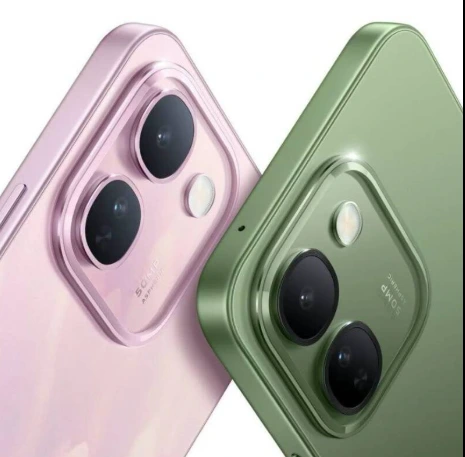
Vivo has revealed that the Malaysian version of the V80 Lite 5G will feature a flat frame and flat rear panel. The smartphone will be available in black, green and pink colour options.

At the back, the phone will have a square-shaped camera module housing a 50MP primary camera.

The 10,000mAh battery is the phone’s biggest talking point. While the V80 Lite is not Vivo’s first smartphone with a battery capacity of 10,000mAh or more, it is the company’s first globally launched model to reach this capacity. 

The Vivo Y600 Pro, which was launched in China, was the company’s first phone with a battery capacity of 10,000mAh or more.

Vivo V80 Lite specifications are still uncertain

The V80 Lite has previously appeared in certification databases under multiple model numbers. One of these, V2576, has also been associated with the Vivo S2, prompting speculation that the V80 Lite could reuse some hardware from that model in certain markets. 

Based on earlier reports, the V80 Lite could feature a 6.83-inch 1.5K AMOLED display with a 120Hz refresh rate. Other tipped specifications include a 50MP Sony IMX852 primary camera, an 8MP ultrawide camera and a 32MP front camera.

The phone is also tipped to feature Aura Light, stereo speakers, an in-display fingerprint sensor and IP68/IP69 protection. However, these specifications have not been fully confirmed by Vivo.

Chipset and charging details remain unclear

There is also uncertainty surrounding the V80 Lite’s chipset and charging capabilities. Earlier reports have pointed to both the MediaTek Dimensity 7360 Turbo and Dimensity 7300e.

Charging specifications are similarly unclear. While a 90W charging capability had previously been rumoured, certification information has pointed towards 44W charging.

The phone’s India launch has also not been confirmed yet. An earlier appearance on an Indian retailer’s Instagram page had suggested that the smartphone could eventually arrive in the country, although details of an India launch remain unavailable.

For now, Vivo has confirmed the Malaysia launch for September 3. More details about the V80 Lite’s complete specifications, pricing and availability are expected to emerge closer to the launch.

Continue Reading

India News

Uniform rules for WhatsApp, Telegram under review as Centre examines legal aspects

The Centre is reviewing responses from WhatsApp, Telegram and Zoho Bharat Eye over username-based messaging features, with a notification on uniform rules likely within 20 days.

Published

on

WhatsApp

The Centre is reviewing responses submitted by WhatsApp, Telegram and Zoho Bharat Eye regarding their username-based messaging features, as the government evaluates whether regulatory action is required. A notification on the issue could be issued within the next 20 days.

MeitY examines responses from messaging platforms

According to sources in the Ministry of Electronics and Information Technology (MeitY), WhatsApp, Telegram and Zoho Bharat Eye have responded to government notices concerning username-based messaging features.

The ministry’s legal team is scrutinising the replies to determine whether any existing legal provisions have been violated and whether any clauses can be invoked for regulatory action or sanctions.

Speaking on the sidelines of the launch of a cybersecurity report on Monday, MeitY Secretary S. Krishnan confirmed that WhatsApp’s response had been received over the weekend and is currently under examination.

“The reply was received last week. We are examining the response and action, if any, will be taken after that examination,” he said.

Government stresses uniform regulatory approach

The government has maintained that any regulatory framework introduced in connection with username-based messaging will apply equally across all messaging platforms rather than targeting any single service.

Union Minister Ashwini Vaishnaw has indicated that a notification on the matter is expected within the next 20 days. The ongoing review is focused on examining the legal implications rather than being a purely policy exercise.

Why the government raised concerns

MeitY had issued notices to WhatsApp, Telegram and Signal after expressing concerns that username-based messaging, which allows users to communicate without sharing their phone numbers, could be misused for impersonation, phishing, identity theft and so-called “digital arrest” scams.

Earlier, a WhatsApp spokesperson said the platform is primarily designed as a private messaging service that helps people stay connected with friends and family.

The review forms part of the government’s broader efforts to strengthen online safety, curb the misuse of digital communication platforms and ensure that any future regulations are implemented uniformly across messaging services.

Continue Reading

Trending

© Copyright 2022 APNLIVE.com