English हिन्दी
Connect with us

India News

Bhopal gas tragedy waste disposal row: Mob pelts stones at incineration unit

These prohibitory measures will remain in effect until January 12, aimed at preventing the display of weapons, celebratory gunfire, and to ensure peace in the vicinity of the incineration site.

Published

on

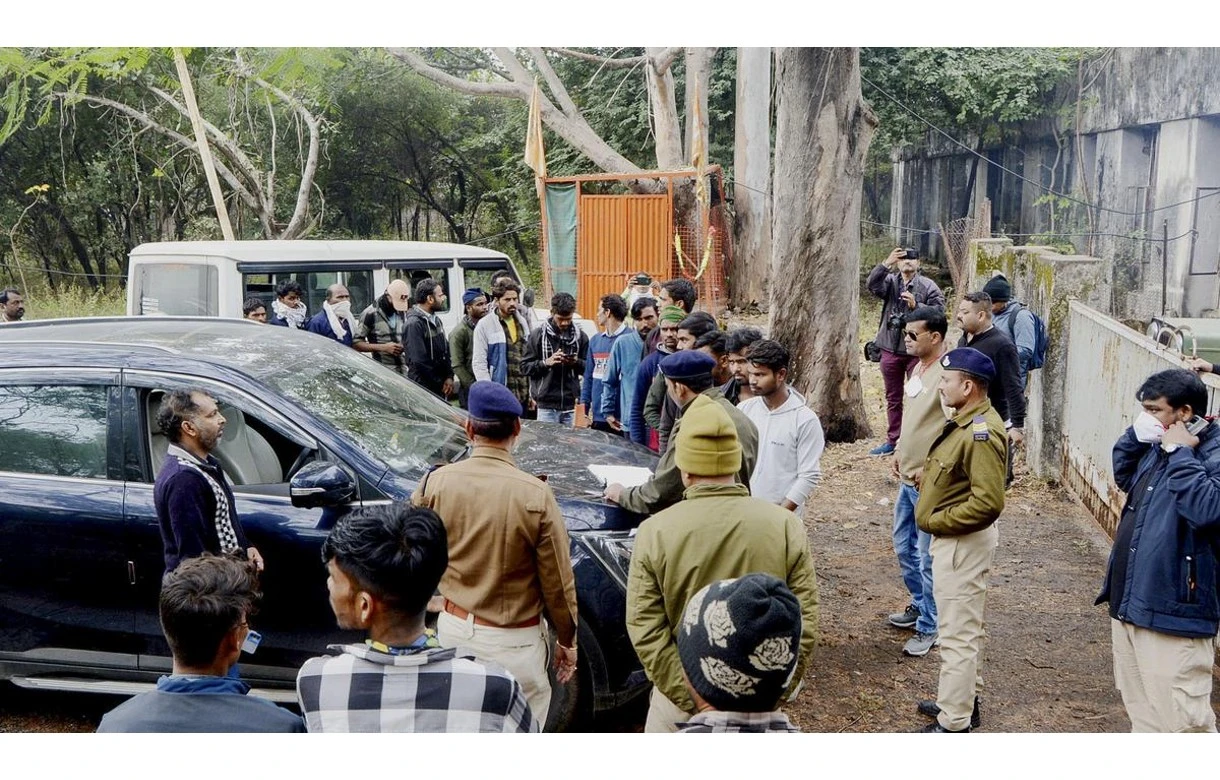
A group of approximately 100-150 people on Saturday threw stones at a facility in Pithampur, located in Madhya Pradesh’s Dhar district, where 337 tonnes of Union Carbide waste associated with the Bhopal gas tragedy is scheduled to be incinerated, according to a police official.

Inspector Om Prakash Ahir of the Pithampur police station reported that the mob targeted the entrance of the facility. Authorities are currently investigating to identify the individuals responsible and to take appropriate legal measures.

This incident follows protests on Friday against the waste disposal plan, coinciding with a bandh called by the Pithampur Bachao Samiti. On that day, a larger mob of 500-600 individuals had marched toward the premises of Ramky Group’s Industrial Waste Management Private Limited, where the waste is intended to be incinerated.

Police were able to disperse the crowd before any major incidents occurred. Later that evening, the district administration enacted prohibitory orders under Section 163 of the Bharatiya Nagarik Suraksha Sanhita (BNSS) around the facility to maintain order and prevent any potential harm to life or property.

These prohibitory measures will remain in effect until January 12, aimed at preventing the display of weapons, celebratory gunfire, and to ensure peace in the vicinity of the incineration site.

The order was issued to mitigate risks following the tragic methyl isocyanate (MIC) gas leak from the Union Carbide pesticide plant in Bhopal on the night of December 2-3, 1984, which resulted in over 5,479 fatalities and countless individuals suffering from long-term health issues. The waste, recently transported from the Union Carbide factory, arrived at the Pithampur incineration site on Thursday.

In light of the protests, Madhya Pradesh police have registered five cases against demonstrators opposing the waste disposal, with some cases naming individuals while others involve unidentified suspects. Superintendent of Police Manoj Kumar Singh confirmed that order was restored in Pithampur by Saturday morning, and all industrial operations were running smoothly.

The registered cases stem from various sections of the Bharatiya Nyay Sanhita (BNS), including unlawful assembly and rioting. Notably, during the protests on Friday, two individuals attempted self-immolation, but quick actions by bystanders averted tragedy, and the individuals were hospitalized.

In response to the escalating situation, Chief Minister Mohan Yadav held a high-level meeting on Friday night to assess the developments. He stated that the state government had adhered to safety regulations in accordance with Supreme Court instructions while transporting the Union Carbide waste and that the government would wait for further court guidance before proceeding.

The court had mandated that the waste be delivered to its designated location by January 4. Yadav emphasized that should public safety concerns arise, the state government would present the matter in court and act accordingly.

Continue Reading

India News

Harivansh set to be elected Rajya Sabha Deputy Chairperson unopposed

Harivansh is set to be elected unopposed as Rajya Sabha Deputy Chairman after no opposition nominations were filed before the deadline.

Published

on

Former Rajya Sabha Deputy Chairman Harivansh is set to be re-elected to the same post unopposed in the election due to be held later today.
The date has been fixed by the Chairman under the relevant rules governing the conduct of business in the Upper House.
According to sources, the deadline for submitting motions for the election was 12 noon on April 16. A total of five notices were received within the stipulated time, all proposing Harivansh for the post.

Multiple nominations, single candidate
The motions were submitted by members across parties, including Jagat Prakash Nadda, Nitin Nabin, Nirmala Sitharaman, Sanjay Kumar Jha, and Jayant Chaudhary, each backed by seconding members.
All five motions explicitly state that Harivansh be chosen as the Deputy Chairman of the Rajya Sabha.

No opposition nomination filed

Notably, no motion was submitted by the Opposition before the deadline. This effectively clears the path for a unanimous election, as there is no contest for the position.
As per parliamentary procedure, motions will be taken up one by one. Once any one motion is adopted by the House, the remaining motions will not be put to vote.

Likely to be elected by voice vote
In line with established practice, the first motion — expected to be moved by Nadda — may be adopted through a voice vote. Following this, the Chairman will formally declare Harivansh as elected Deputy Chairman.
After the declaration, Harivansh will be escorted to the Chair by members from both the Treasury and Opposition benches, adhering to parliamentary convention.

Continue Reading

India News

Amit Shah counters delimitation concerns, says southern states to gain Lok Sabha seats

Amit Shah assures Parliament that southern states will gain Lok Sabha seats after delimitation, countering opposition criticism during the women’s reservation debate.

Published

on

Amit Shah

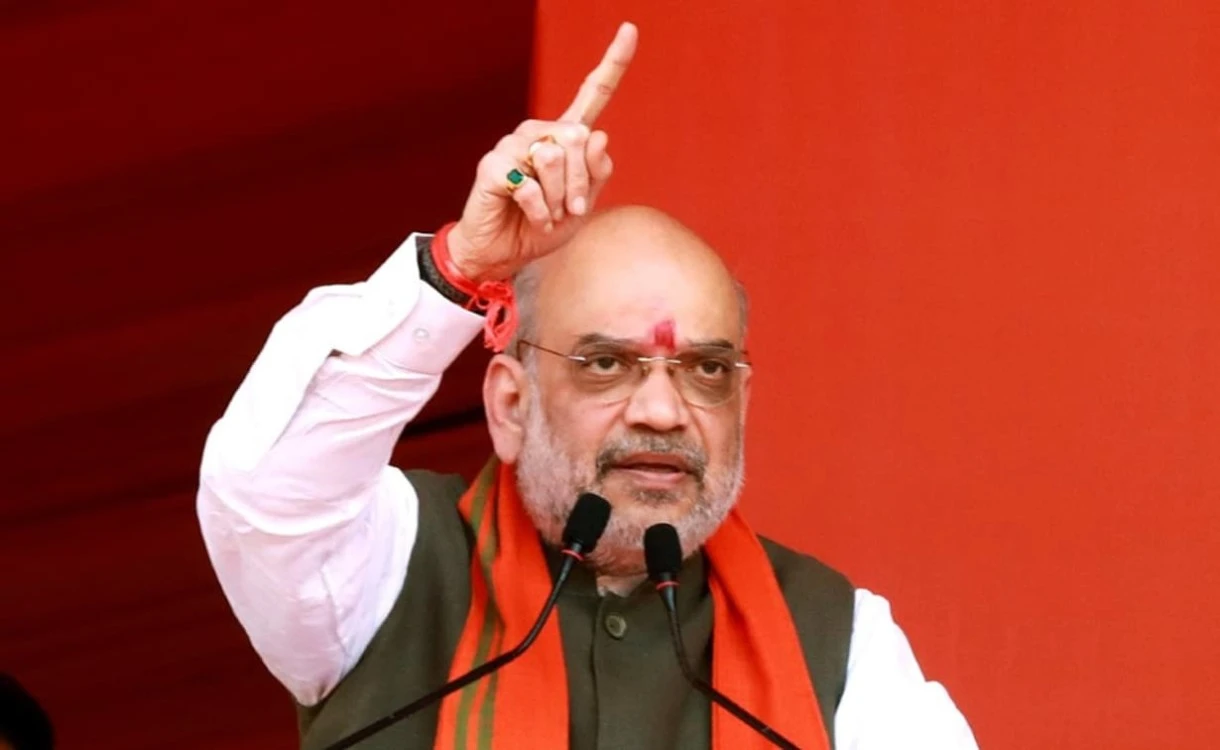
Union Home Minister Amit Shah on Thursday addressed concerns over the proposed delimitation exercise, asserting in the Lok Sabha that southern states will not lose representation but instead see an increase in their number of seats.

His remarks came during a heated debate linked to the implementation of women’s reservation, where opposition parties have raised fears that population-based delimitation could reduce the political weight of southern states.

Shah rejected these claims, calling them misleading, and said the proposed framework ensures fairness while expanding the overall strength of the Lok Sabha.

Seat count to rise with expansion of Lok Sabha

The government has indicated that the total number of Lok Sabha seats could increase significantly as part of the delimitation process. In this expanded House, the combined representation of southern states is expected to rise from 129 seats at present to around 195 seats.

Shah emphasised that no state will lose seats in absolute terms, and the exercise is designed to reflect population changes while maintaining balance across regions.

State-wise projections shared in Parliament

During his address, Shah also provided indicative figures for individual southern states, suggesting notable increases in representation. According to the projections:

  • Tamil Nadu could see its seats rise substantially
  • Kerala, Telangana, and Andhra Pradesh are also expected to gain additional seats
  • Karnataka’s representation may increase as well

These figures were presented to counter the argument that delimitation would disproportionately favour northern states.

Political debate intensifies over linkage with women’s quota

The delimitation exercise has been closely linked to the rollout of women’s reservation, which proposes one-third seats for women in Parliament and state assemblies.

Opposition leaders have questioned this linkage, arguing that tying reservation to delimitation could delay its implementation and raise federal concerns. Some leaders have also warned that the move could impact national unity if apprehensions among states are not addressed.

The government, however, maintains that the reforms are necessary to ensure equitable representation and to align the electoral system with demographic realities.

Centre dismisses ‘false narrative’ on southern states

Shah reiterated that concerns about southern states losing influence are unfounded. He said the delimitation process will increase representation across regions and described the criticism as a “false narrative” aimed at creating confusion.

The issue is expected to remain a key flashpoint as Parliament continues discussions on the women’s reservation framework and related legislative changes.

Continue Reading

India News

PM Modi assures no discrimination in women’s quota, delimitation debate intensifies in Parliament

PM Narendra Modi has assured that women’s reservation will be implemented without discrimination, amid a heated debate over delimitation in Parliament.

Published

on

PM modi

Prime Minister Narendra Modi has assured that there will be no discrimination in the implementation of women’s reservation, as Parliament witnessed a sharp debate over the proposed linkage between the quota and delimitation exercise.

During the ongoing special session, the government reiterated its commitment to ensuring fair representation while addressing concerns raised by opposition parties regarding the timing and structure of the legislation.

The proposed framework aims to reserve 33 percent of seats for women in the Lok Sabha and state assemblies. However, its implementation is tied to a fresh delimitation exercise, which is expected after the next census.

Opposition questions timing and intent

Opposition leaders have raised concerns that linking the women’s quota to delimitation could delay its implementation. They argue that the process of redrawing constituencies may push the actual rollout further into the future.

The issue has triggered a broader political confrontation, with multiple parties questioning whether the move could alter representation across states.

Some critics have also alleged that the delimitation exercise could disproportionately benefit certain regions based on population, a charge the government has rejected.

Government reiterates commitment to fair implementation

Responding to these concerns, the Centre has maintained that the reforms are necessary to ensure accurate and updated representation based on population data.

Leaders from the ruling side have repeatedly emphasized that the process will be carried out transparently and without bias. The assurance that there will be “no discrimination” is aimed at addressing fears among states and opposition parties.

The debate marks a key moment in Parliament, with both sides engaging in intense exchanges over one of the most significant electoral reforms in recent years.

Continue Reading

Trending

© Copyright 2022 APNLIVE.com