
India News
Chhattisgarh CM Bhupesh Baghel pushes for use of cow-dung based paint to whitewash government buildings, says action on violation
On the special initiative of Chief Minister Bhupesh Baghel, a detailed action plan for the manufacture of natural paint has been prepared by the Department of Agriculture


Chhattisgarh Chief Minister Bhupesh Baghel has given strict instructions regarding the use of cow-dung based paint for whitewashing government buildings, corporation offices and those of local bodies.
CM Baghel said that strict action will be taken against the responsible officers who violate the instructions. Despite the instructions issued earlier, the construction departments still expressed displeasure over the use of chemical paint. Chief Minister Baghel also said that the use of cow-dung based paint will also be important from the point of view of strengthening the rural economy and environmental protection.
Read Also: WhatsApp’s new accidental message feature can save you from embarrassment, here’s how to use it
What is cow-dung based paint (or Gobar paint)?
Notably, Chhattisgarh government has a plan to manufacture natural paint (colour) from cow dung being purchased Godhan Nyay Yojana.

Its purpose is to ensure the availability of natural paint in place of chemical paint at a low cost to the people, as well as to economically empower cow-shelters and women’s self-help groups and o provide employment opportunities to the youth in the rural areas.
Now natural paint will be made from cow dung
It is noteworthy that Gothans (cow-shelter homes) have been constructed in the villages by the Government of Chhattisgarh for the protection and promotion of cattle. Cow dung is being procured for Rs 2 per kg under the Godhan Nyaya Yojana, due to which vermi compost, super compost, manure are being manufactured and women groups are preparing other products from cow dung. The project of power generation from cow dung has also been started in the state of Chhattisgarh. Now natural paint will be made from cow dung.
On the special initiative of Chief Minister Bhupesh Baghel, a detailed action plan for the manufacture of natural paint has been prepared by the Agriculture Department. In the first phase, 75 Gothans of the state have also been selected for setting up natural paint manufacturing units. A natural paint manufacturing cum carboxy methyl cellulose manufacturing unit will be established in selected Gothans. The technology of manufacturing natural paint has been developed by Kumarappa National Paper Institute Jaipur, Khadi and Village Industries Commission, Ministry of Micro, Small and Medium Enterprises, Government of India, New Delhi. Carboxy methyl cellulose (CMC) is the main component of natural paint.
About 10 kg dry CMC is formed from 100 kg cow dung. CMC accounts for 30 per cent of the amount of natural paint. About 30 kg of dry CMC is required to make 500 litres of natural paint. Women, skilled labourers and youth of self-help groups will also be trained by Kumarappa National Paper Institute, Jaipur for natural paint manufacturing in Gothans.
SIT to investigate Shraddha Walkar murder case, says Maharashtra Deputy CM Devendra Fadnavis


India News
Mallikarjun Kharge seeks all-party meeting with PM Modi on delimitation
Congress president Mallikarjun Kharge has written to Prime Minister Narendra Modi for the fourth time, seeking an all-party meeting on delimitation. He also flagged the 64-day delay in proroguing Parliament’s Monsoon Session.

India News
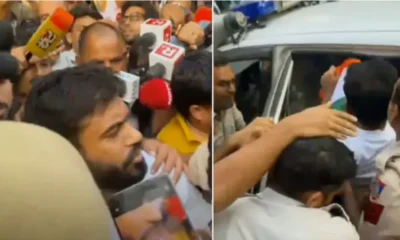
Abhijeet Dipke detained ahead of CJP’s national flag march in Delhi
Cockroach Janta Party founder Abhijeet Dipke was detained by Delhi Police on October 16, 2026, shortly before a planned national flag march. The proposed rally followed the judicial custody of two CJP members who had waved the Tricolour at Jantar Mantar.
India News
Delhi deploys 25,000 personnel, installs CCTV cameras ahead of CJP march
More than 25,000 police and paramilitary personnel have been deployed in Delhi ahead of the CJP’s planned protest march at Connaught Place. Authorities have also imposed restrictions and stepped up CCTV surveillance.

Delhi Police offers 11-person limit for CJP’s Connaught Place protest

Actor Imran Khan asked to leave India after CJP protest

Mallikarjun Kharge’s ‘Your Friends’ jab at Rahul Gandhi over congress exits

Magnitude 7 earthquake strikes Russia’s Kamchatka Peninsula

Delhi deploys 25,000 personnel, installs CCTV cameras ahead of CJP march

Mallikarjun Kharge seeks all-party meeting with PM Modi on delimitation

Abhijeet Dipke detained ahead of CJP’s national flag march in Delhi
Magnitude 7 earthquake strikes Russia’s Kamchatka Peninsula
Delhi deploys 25,000 personnel, installs CCTV cameras ahead of CJP march
Mallikarjun Kharge’s ‘Your Friends’ jab at Rahul Gandhi over congress exits

Afghan Men Try To Hang With The Jet Engine Of The Aircraft in Kabul- Afghanistan News – Kabul News
Trending Top 10 News: 10000 Crore Fine on Flipkart, Apple to Launch Unique Feature, Hdfc Bank Job Ad

Trending Top 10 News: Nokia 6310, Apple sales, Bachpan ka Pyar Video Kid, Dainik Bhaskar IT Raid

Trending Top 10 News: Canada bans Indian flights, Rain in Delhi NCR, AIMIM Twitter hacked, Raj Kundra case

Trending Top 10 News: Shein India, Apple New Service, Pocket Oxygen, Oppo Launched New Phone
-
 India News23 hours ago
Delhi Police offers 11-person limit for CJP’s Connaught Place protest
-
 India News24 hours ago
Actor Imran Khan asked to leave India after CJP protest
-
 India News11 hours ago
Mallikarjun Kharge’s ‘Your Friends’ jab at Rahul Gandhi over congress exits
-
 Latest world news11 hours ago
Magnitude 7 earthquake strikes Russia’s Kamchatka Peninsula
-
 India News11 hours ago
Delhi deploys 25,000 personnel, installs CCTV cameras ahead of CJP march
-
 India News2 hours ago
Abhijeet Dipke detained ahead of CJP’s national flag march in Delhi
-
 India News34 mins ago
Mallikarjun Kharge seeks all-party meeting with PM Modi on delimitation
