India News
BJP sure of 300 in UP; Congress sure of Punjab

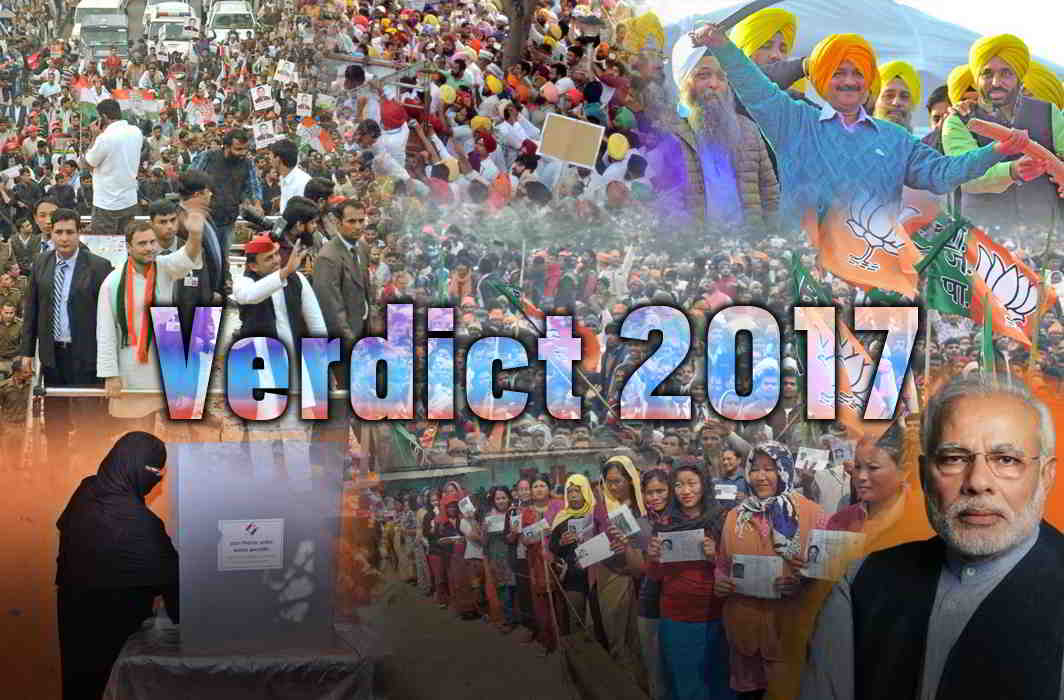
[vc_row][vc_column][vc_column_text]Even as the BJP tsunami swept over Uttar Pradesh and Manipur even, with Goa still in the balance as the clock struck 2:10pm on Saturday (March 11), there were two more observations critical to the elections that have turned all predictions upside down.
The Aam Admi Party (AAP) has failed to find favour with the electorate. It has struggled to find a footing in both Punjab and Goa, where it pushed into, with huge preparations and it certainly failed to become a logical alternative to the BJP except in the urban area of Delhi. It is time for Arvind Kejriwal to introspect and find a reason why it failed at the grassroots.
The Manipur verdict is moving down a path nobody expected it to take. Irom Sharmila’s defeat was a wakeup call, and by the time things started getting less ambiguous, the BJP had crept up into a position where it would not need a helping hand from rebel MLAs.
In Uttar Pradesh, with the BJP striding towards the 300 figure and beyond, the results of the infighting of the Samajwadi Party are showing up. Shivpal Yadav, who was removed just before the elections, appeared in a victory mode, cheering and saying: “Sabhi logon ko badhai.” Earlier, he had tweeted: “Ye ghamand ke haar hai.”
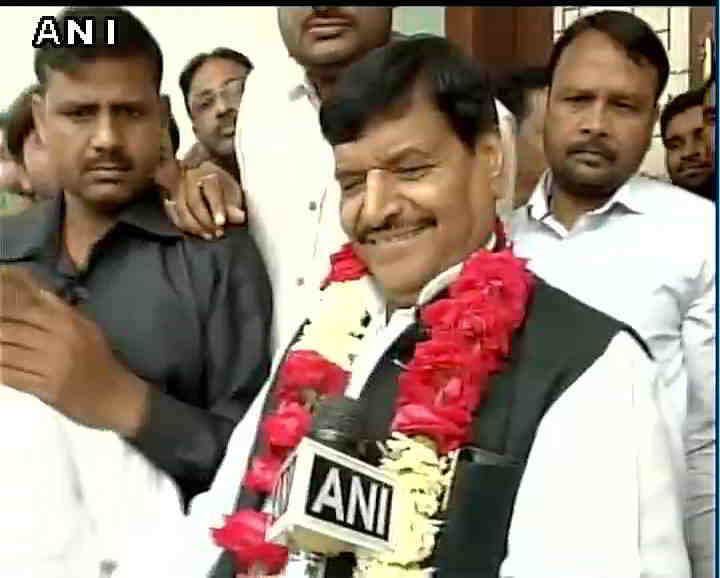
It was a sad reflection of the way things are, and Mulayam Singh Yadav, yet to make a comment, would not be happy with the way things were handled in a complex state by his son Akhilesh. Shivpal’s comments hit right into the heart of the party.
Congress comes in next, not in numbers, but in accountability. They are leading in 7 seats, having won only one. How would Rahul Gandhi explain to the SP their demand of 100 seats and how his party has handled it?
Mayawati Bahujan Samaj Party has been virtually washed away, leading in 16 and having won only 2. She has claimed that the EVMs had been tampered with; she said she wants to go to court, start a movement. All in vain, because the verdicts have been overwhelming.
In Uttarakhand, all early drama was washed away with Chief Minister Harish Rawat losing both seats he contested.
Here are the basics of each state, with some special quotes.
UTTAR PRADESH
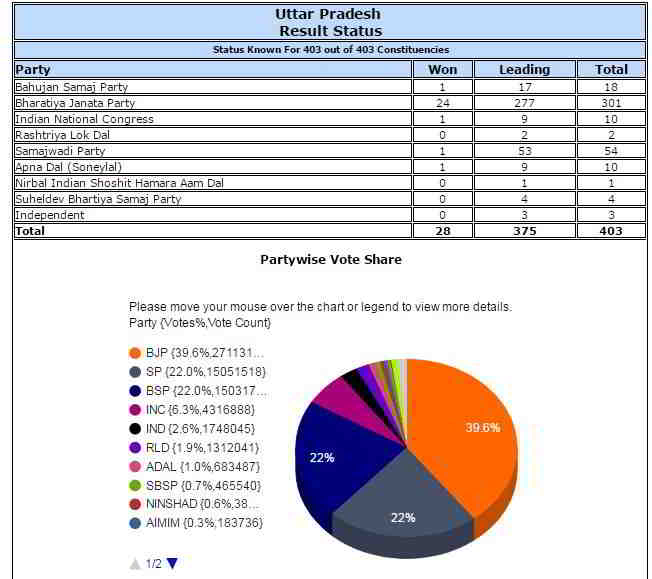 The colour of Holi this year is just one: saffron. So it seems as the Uttar Pradesh results started coming in. all exit polls, as usual were proved wrong in t his state, with the BJP now ahead in 256 seats, having already won 49.
CM Akhilesh Yadav’s SP is leading in a paltry 43, having won only 10, Congress at just 8 and 1 and Mayawati’s BSP at 15 and 2.
Demonetisation has had no effect so far, loss of jobs has not reflected in the showdown and the steady growth of the Modi wave has turned into a tsunami now.
Here are the top leaders:
Kunda: Raja Bhaiyya leading, Gayatri Prajapati trailing;
Moradabad: BJP’s Alaka Roy leading; Varanasi South: Neelkanth Tiwari, BJP, leading.
Quotes:
Somnath Bharti said: “We don’t indulge in politics of religion or caste and never will. Yes, its Modi’s win, but hum log lage rahenge, logon ko aware karne ke liye.”
Surendra Rajput, Congress spokesperson: “It’s Modi’s win and congrats to him for that. But we expect that he will fulfill the promises that he has made, not indulge in jumlas. We do alliances for something constructive. It’s up to the voter to give a stamp of approval on it.”
Pankaj SIngh, Rajnath SIngh’s son, won from NOIDA. Says: “BJP going to break its own record. 1991 Kalyan Singh’s record. Responsibilities increased. Kaam bolta hai issue has become non-issue.”
Anila SIngh: “The way corruption has become rampant. It’s important to open files to set example. this was our promise. To give them a transparent government.”
Voters of India have risen above caste, religion and other factors. People have reposed their faith in Modi. It is a new India: MoS Jitendra Singh. The message is at multiple levels
Deepak Mishra, SP spokesperson: “Every time SP has lost, it has introspected, worked on its shortcomings and emerged stronger next time.”
Mohsin Raza: Congress had given them (Muslims) topi and madarsa. We are giving them Quran in one hand, laptop in anothe
PUNJAB 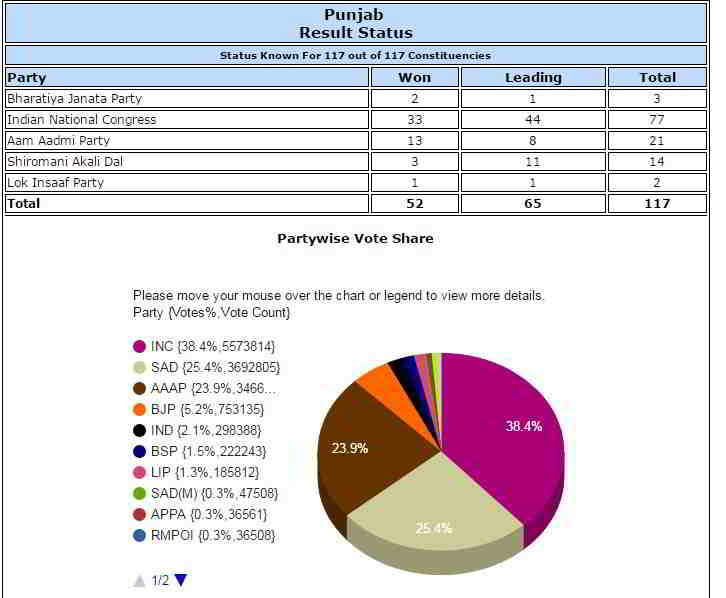
Akali Dal chief Sukhbir Singh Badal is ahead of AAP’s Bhagwant Mann by over 10,000 plus votes.Congress set for victory, leading in 26, having won in 51, BJP leading in none having won 3 and AAP leading in 4, won 17.
Punjab CM Parkash Singh Badal will resign on Sunday itself.
Navjyot Singh Sidhu said: “This is a new year’s gift to Soniaji, Rahul and Captain saab (Amarinder Singh). People have defeated evil forces and dharma has emerged victorious.”
Amarinder Singh: “Punjab voters have made the right choice/Man of the match in Punjab.”
Ambika Soni: “Many contributed to Punjab results.”
UTTARAKHAND 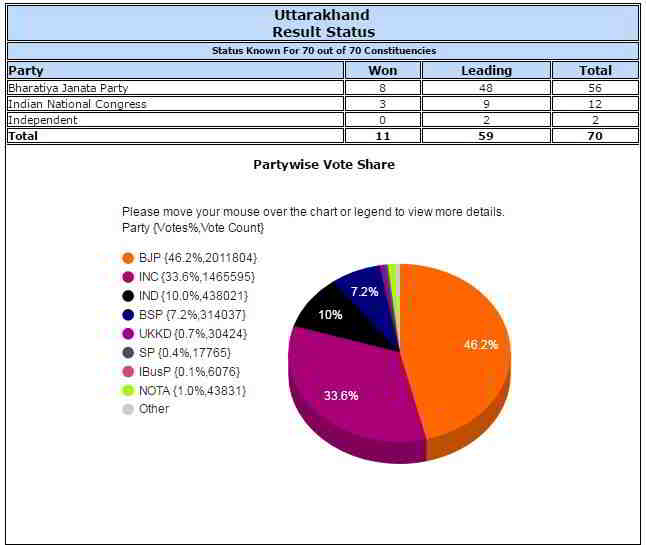
BJP sweeps, leading in 44, having won 12, Congress leading in 9, won 3.
MANIPUR
BJP won or are leading in 26 seats, Congress 25 seats.
Irom Sharmila has lost.
Congress’ Ibobi Singh won.
GOA
The anti-BJP forces were not in the picture with only the Congress still the major force against it.
BJP and Congress are tied at 14 seats.
Laxmikant Parsekar, Goa CM, lost to Congress’ Dayanand Sopte in Mandrem.
Compiled by Sujit Bhar, Meha Mathur, Sucheta Dasgupta,
Prabir Biswas, Punit Mishra, Bhavana Gaur, Kh Manglembi Devi,
Ram Lagan and Amitava Sen
[/vc_column_text][/vc_column][/vc_row]





India News
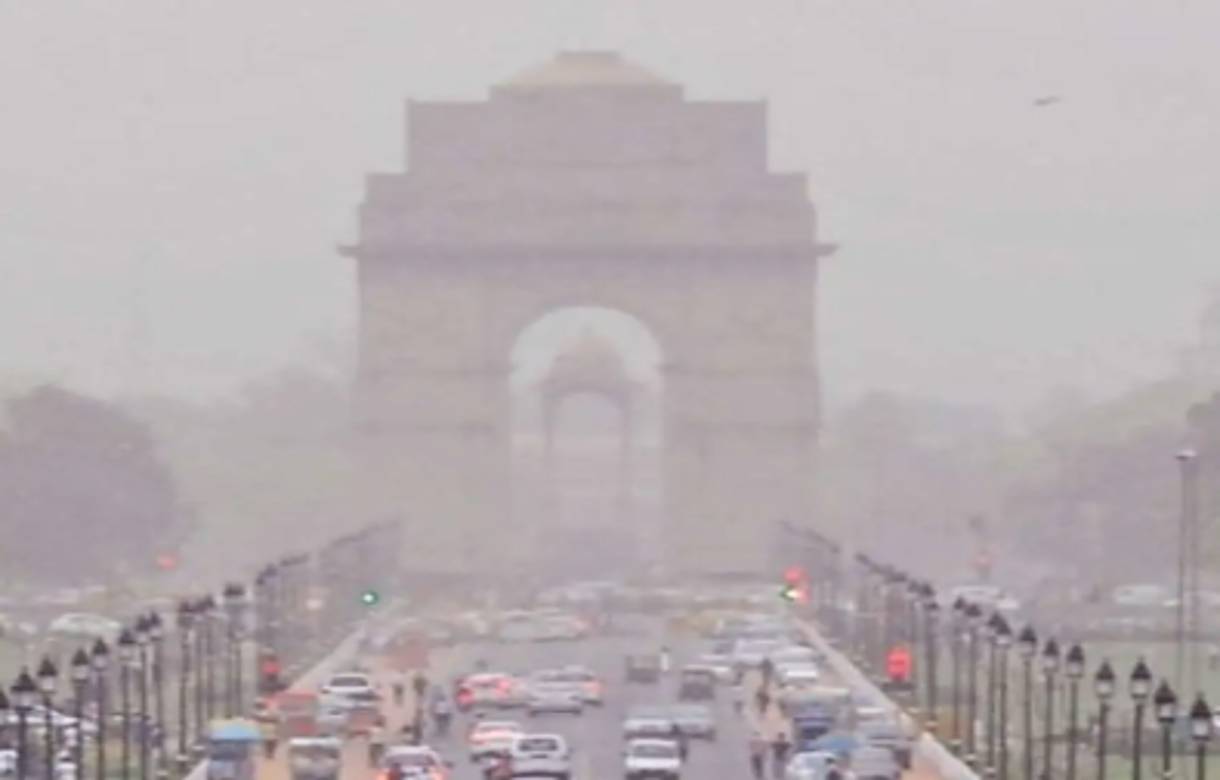
Delhi’s winter pollution persists despite emergency curbs under GRAP
Delhi has brought back pollution curbs under the Graded Response Action Plan (GRAP), but an analysis of past winters highlights the limits of relying on emergency restrictions without sustained action against pollution sources.

India News
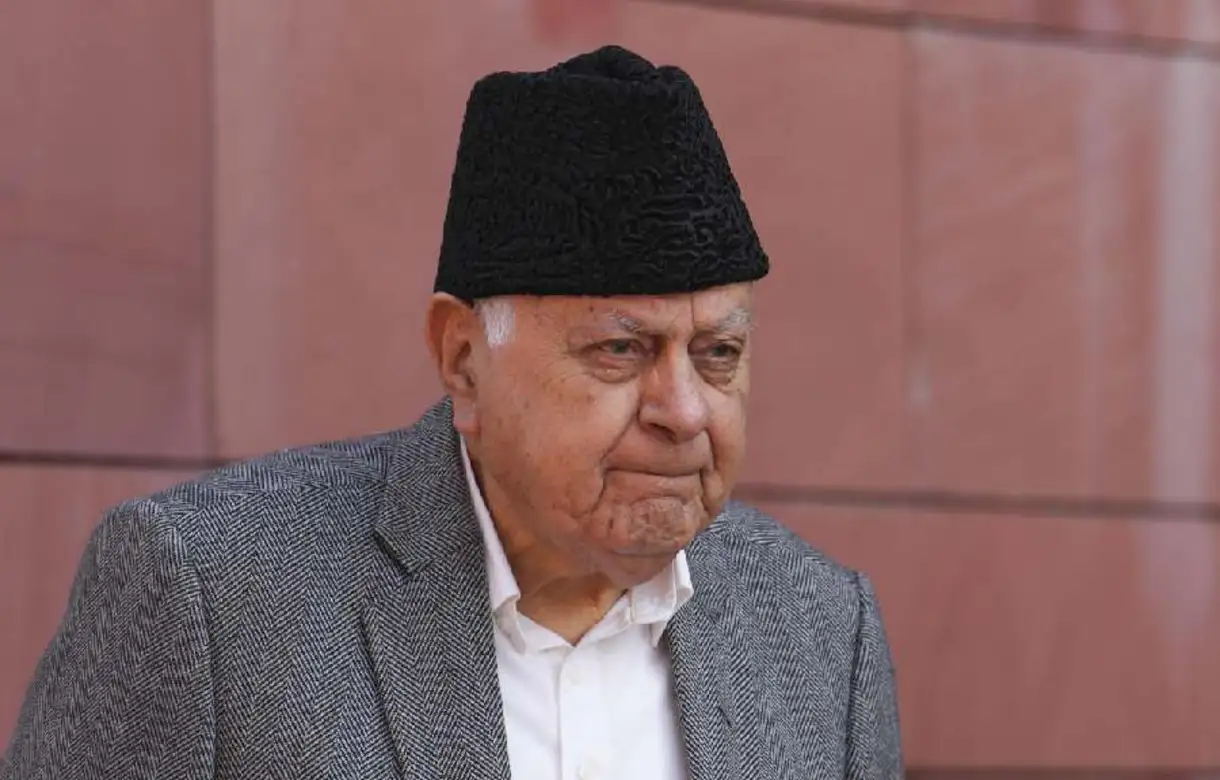
Farooq Abdullah’s Pakistan remarks spark row, BJP demands action
Farooq Abdullah’s remarks about Pakistan’s role in raising the Kashmir issue internationally triggered a political controversy, with BJP leaders accusing him of echoing Pakistan’s narrative and demanding action.
India News
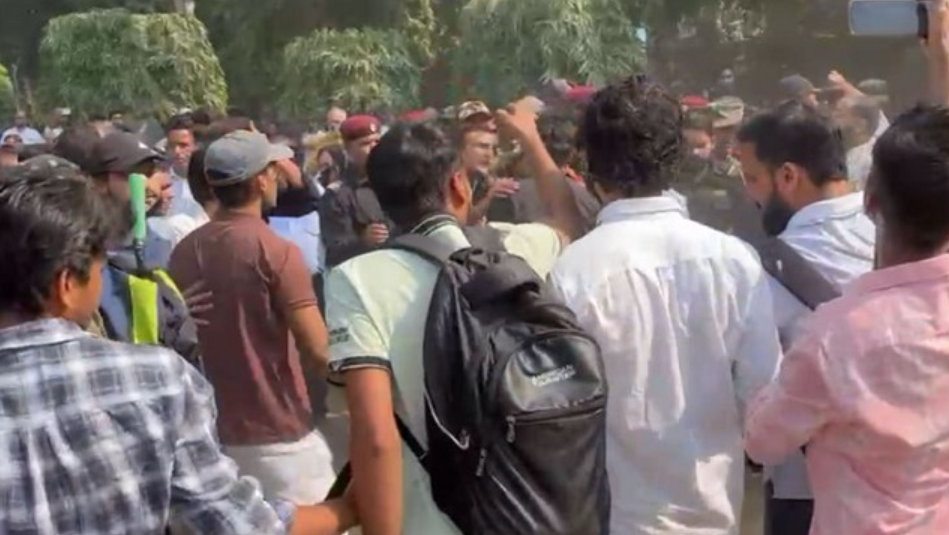
Jamia Millia Islamia shifts classes online after student-guard clash
Jamia Millia Islamia shifted classes online after protesting students clashed with security guards on October 24. The students have been demanding the restoration of the university’s students’ union, which was disbanded in 2006.

Delhi’s winter pollution persists despite emergency curbs under GRAP

Jamia Millia Islamia shifts classes online after student-guard clash

Farooq Abdullah’s Pakistan remarks spark row, BJP demands action
Delhi’s winter pollution persists despite emergency curbs under GRAP
Farooq Abdullah’s Pakistan remarks spark row, BJP demands action
Jamia Millia Islamia shifts classes online after student-guard clash

Congress seeks 175-200 seats in UP, Samajwadi Party stresses on winnability

Thousands bang utensils, beat drums in Manipur protest over continued killings

Afghan Men Try To Hang With The Jet Engine Of The Aircraft in Kabul- Afghanistan News – Kabul News
Trending Top 10 News: 10000 Crore Fine on Flipkart, Apple to Launch Unique Feature, Hdfc Bank Job Ad

Trending Top 10 News: Nokia 6310, Apple sales, Bachpan ka Pyar Video Kid, Dainik Bhaskar IT Raid

Trending Top 10 News: Canada bans Indian flights, Rain in Delhi NCR, AIMIM Twitter hacked, Raj Kundra case