English हिन्दी
Connect with us

India News

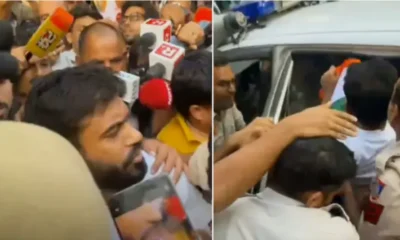
CJP leaders Saurav Das, Ashutosh Ranka to be released after 7 days in jail

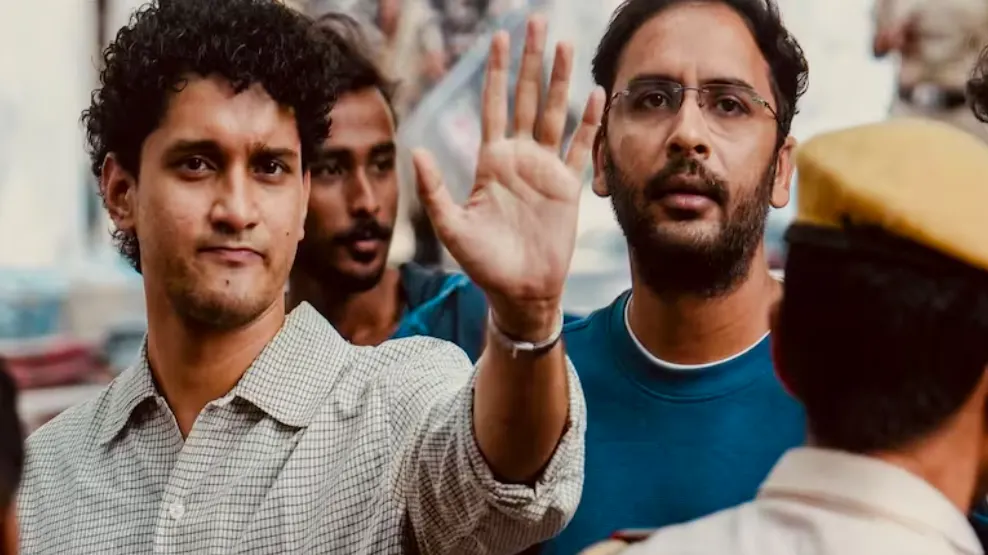
CJP leaders Saurav Das and Ashutosh Ranka are set to be released after seven days in judicial custody following an order by a Special Executive Magistrate in Delhi.

Published

on

Cockroach Janta Party (CJP) leaders Saurav Das and Ashutosh Ranka are set to be released after spending seven days in judicial custody, following an order by a Special Executive Magistrate in Delhi on Wednesday.

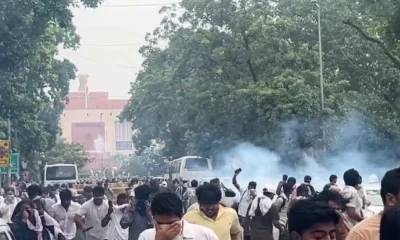
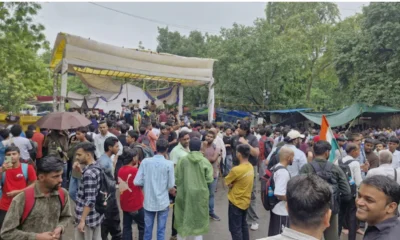
The two leaders had been in judicial custody since October 14 in connection with an incident at Jantar Mantar, which is no longer a designated site for protests. They were accused of entering the restricted protest area and violating conditions linked to maintaining public peace.

The magistrate’s order brings their period of judicial custody to an end after their detention and subsequent remand. Their custody had initially been ordered for five days before being extended by another two days on October 19.

Delhi High Court declines to intervene

Earlier on Wednesday, the Delhi High Court declined to interfere with the judicial custody of Das and Ranka. The court asked them to await the outcome of the proceedings before the Special Executive Magistrate and indicated that they could approach the appellate court if their grievances remained unresolved.

The leaders had challenged the decision to place them in judicial custody. The proceedings came amid continuing legal disputes over police action against protesters at Jantar Mantar.

Why the CJP leaders were detained

Das and Ranka were detained in connection with a protest at Jantar Mantar against alleged irregularities in the Special Intensive Revision (SIR) of electoral rolls. The protest also involved demands directed at Chief Election Commissioner Gyanesh Kumar.

Jantar Mantar had recently been removed from the list of designated protest venues under a Delhi Police order. The police alleged that the CJP members entered the site despite the restrictions and obstructed officials carrying out their duties.

The police also cited alleged violations of previously executed peace bonds. Das and Ranka had earlier been released after furnishing bonds and undertaking to maintain peace.

The authorities initiated proceedings under preventive provisions of the Bharatiya Nagarik Suraksha Sanhita (BNSS). While the two leaders were sent to judicial custody, another CJP member, Ajinkya Shinde, was released on a personal bond during the earlier proceedings.

The latest order directs the release of Das and Ranka after seven days in custody. The case has drawn attention to the restrictions on demonstrations at Jantar Mantar and the legal proceedings arising from the CJP’s protests.

India News

Tiger Shroff firing case: 3 accused sent to police custody till October 31

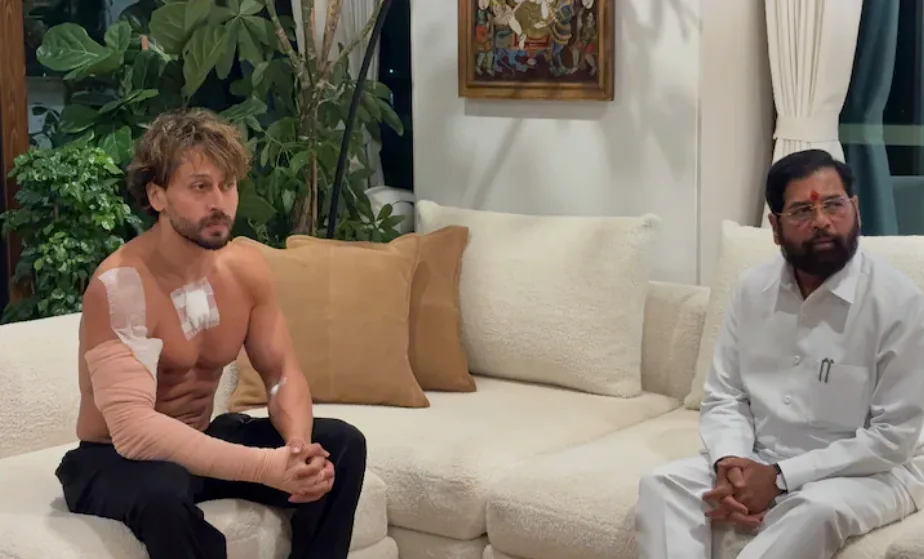
Three accused in the firing at actor Tiger Shroff’s car in Mumbai have been remanded to police custody until October 31. Investigators sought their custody for further questioning and weapon recovery.
Published

on

Three men accused in the firing at actor Tiger Shroff’s car in Mumbai have been remanded to police custody until October 31. A magistrate court passed the order on Wednesday after hearing the police and defence arguments.

The accused were brought to Mumbai from Kota in Rajasthan earlier in the day. The Mumbai Crime Branch, which is investigating the case, had sought 14 days of custody for further questioning and a detailed probe.

The three accused have been identified as Rehan, alias Sukka, from Sonipat in Haryana; Ritik Kurmi, alias Roshan, originally from Begusarai in Bihar and currently residing in Mumbai; and Phool Singh from Haryana.

Why police sought custody

The investigating team told the court that custodial interrogation was required to recover the weapons used in the firing and investigate the suspected conspiracy behind the incident.

Police also informed the court that the accused had destroyed two mobile phones. Investigators said further questioning was necessary to establish the motive behind the shooting and examine the circumstances surrounding the attack.

The defence opposed the request for extended police custody. Lawyers Ajinkya Mirgal and Satyabrat Joshi argued that the accused had already been questioned during transit remand and disputed the need for further custody to recover the weapons.

After hearing both sides, the court remanded all three men to police custody until October 31.

Three accused brought to Mumbai from Kota

According to the report, Kota city police apprehended the trio from a train on Monday after receiving specific information. They were subsequently handed over to Mumbai Police, which formally arrested them and produced them before a magistrate.

A court in Kota had granted transit remand to facilitate their transfer to Mumbai.

What happened in the firing incident

The firing took place in Mumbai’s Juhu area on Sunday evening, when at least two men fired shots at Tiger Shroff’s car before fleeing on a motorcycle.

The actor escaped relatively unhurt, while his driver and a bystander sustained injuries. Mumbai Police said five to six rounds were fired at the vehicle.

A motorcycle allegedly used by the assailants was later found abandoned in Andheri.

Mumbai Police have registered a case under provisions relating to attempted murder and the Arms Act. The investigation is continuing to establish the motive and recover evidence connected with the incident.

Continue Reading

India News

Amit Shah says Naxalism is over, vows to end Punjab drug trade by 2029

Amit Shah said the Centre would work to eliminate Punjab’s drug trade by December 31, 2029. He also called for CBI investigations into two additional cases involving people whose deaths were linked to the fight against drugs.
Published

on

Amit Shah

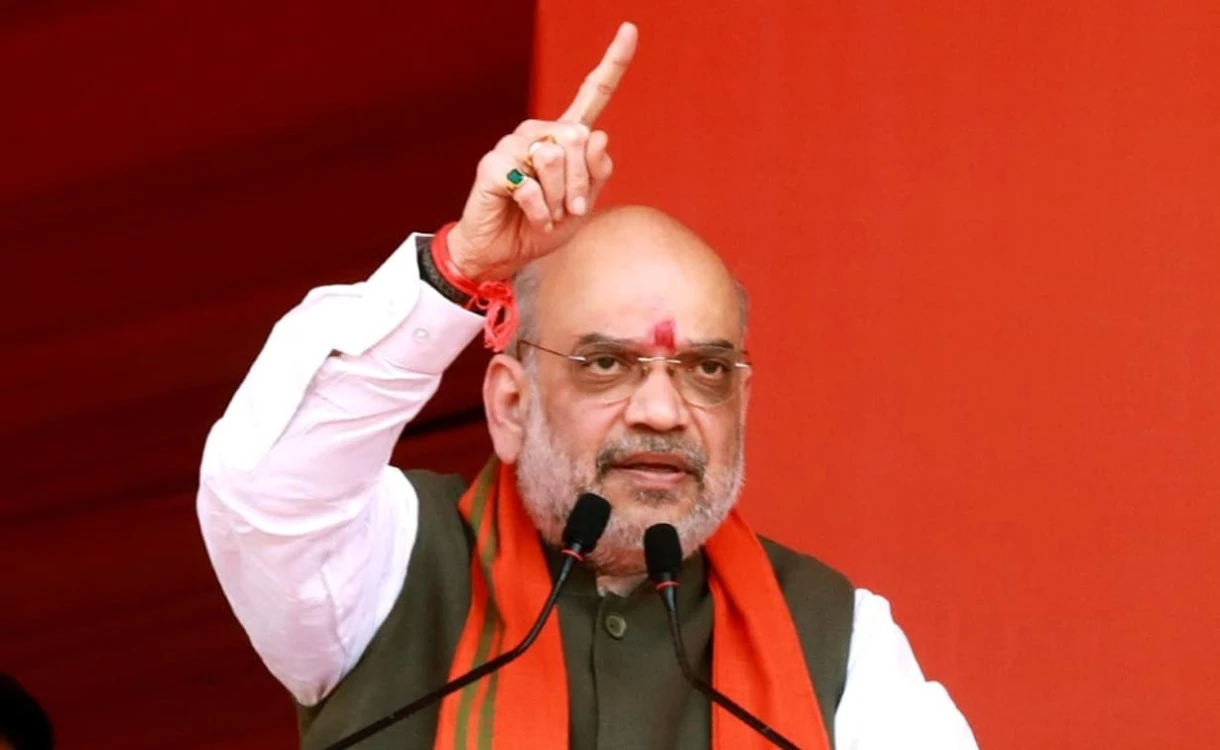
Union Home Minister Amit Shah has reiterated the Centre’s commitment to eliminating the drug trade in Punjab by December 31, 2029, drawing a parallel with the government’s claim that it has ended Naxalism.

Speaking at a Vijayadashami event in Ludhiana on Tuesday, Shah said the fight against narcotics would continue until the drug trade was eliminated. He also called on the Punjab government to transfer two additional cases involving people who had opposed the drug menace to the Central Bureau of Investigation (CBI).

Shah’s remarks came during his visit to Punjab, where he met families affected by deaths linked to the state’s drug problem.

Amit Shah sets 2029 deadline for drug-free Punjab

Addressing the gathering in Ludhiana, Shah said the government had fulfilled several of its commitments, citing the removal of Article 370 and Article 35A, progress against terrorism and the end of Naxalism.

He said the next priority was to eliminate the drug trade.

Shah reiterated his resolve to eliminate Punjab’s drug trade by December 31, 2029, describing the commitment as a tribute to three people whose families he met during his visit.

The Home Minister urged people to share information about the drug trade through the Narcotics Control Bureau’s toll-free helpline, assuring them that the Modi government would take action on the information received.

Shah seeks CBI probes into two more cases

During his Punjab visit, Shah met the families of Bikramjit Singh in Gurdaspur, Gulzar Singh in Sangrur and Parwinder Singh Jhota in Mansa.

Shah met the families and assured them that action would be taken in the cases.

Shah referred to the case involving Parwinder Singh Jhota in Mansa, which had been transferred to the CBI. He urged Chief Minister Bhagwant Mann to transfer the two other cases, associated with Sangrur and Gurdaspur, to the central agency as well.

The Home Minister said the investigations should establish accountability, adding that influential people involved in the cases would not be spared.

Shah criticises Punjab government over drug menace

Shah accused the Aam Aadmi Party-led government in Punjab of failing to control the drug trade. He also criticised the state administration over the treatment of people who had raised concerns about narcotics.

Referring to the spread of ‘chitta’, a term commonly used for heroin in Punjab, Shah said the drug trade had reached villages across the state.

He argued that people speaking out against the menace were facing serious consequences, including death and suicide, and called for stronger action against those responsible.

The Punjab government and the individuals referred to in the allegations should be given an opportunity to respond to specific accusations.

Shah maintained that the Centre would use its available resources to pursue the cases and work towards ending the drug trade in Punjab by the end of 2029.

Continue Reading

India News

Abhijeet Dipke thanks Delhi organisers for cockroach effigy publicity

Abhijeet Dipke, founder of the Cockroach Janta Party, thanked organisers for what he called free publicity after a 30-foot cockroach effigy was burned alongside Ravana in Delhi. The organisers said the effigy was meant to highlight filth and promote cleanliness.
Published

on

Abhijit Dipke

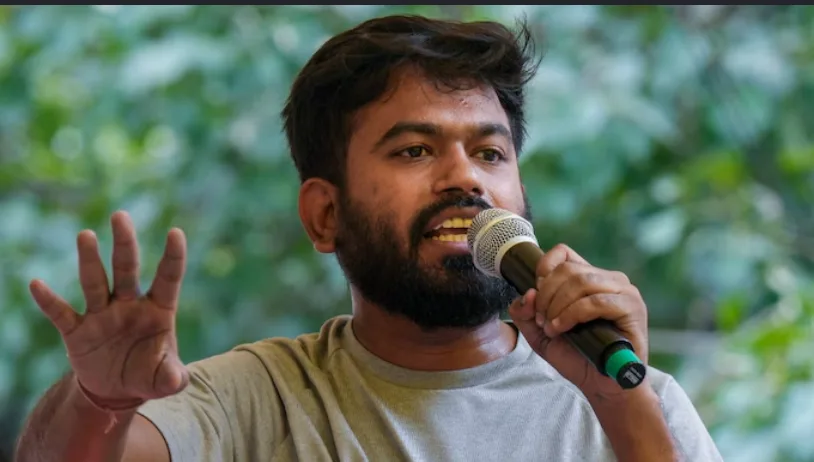
Cockroach Janta Party (CJP) founder Abhijeet Dipke has responded to the burning of a giant cockroach effigy during Dussehra celebrations in Delhi, thanking the organisers for what he described as “free publicity”.

A 30-foot cockroach effigy was burned alongside the traditional effigies of Ravana, Kumbhakarna and Meghnad at the DDA ground in Netaji Subhash Place, Pitampura, on Tuesday evening. The unusual addition attracted attention on social media, with many interpreting it as a reference to Dipke’s pressure group.

Dipke shared a video of the effigy on X and responded with a brief message thanking those behind the display for the publicity.

Why was a cockroach effigy burned in Delhi?

The Shri Keshav Ramlila Committee, which organised the event, said the cockroach effigy was intended to highlight the problem of filth and encourage cleanliness.

Ashok Goel Devraha, the Bharatiya Janata Party’s Model Town MLA and president of the committee, said the initiative was aimed at raising awareness about unhygienic conditions and associated health problems.

He maintained that the effigy was not intended as a dig at any individual, political party, institution or organisation. The organisers said the initiative supported the Swachh Bharat and Swachh Delhi campaigns.

The display came amid speculation online that the cockroach was a reference to the Cockroach Janta Party, which has been involved in protests against the Centre.

CJP leaders react to the effigy

Ratna Singh, the CJP’s head of legal affairs, also criticised the move in posts on X. Describing the episode as a “tamasha”, she suggested that the display reflected concern over the group’s growing impact.

In another post, Singh said burning a cockroach effigy during Dussehra showed that the ruling party was rattled, adding that the group appeared to be viewed as a competitor.

Her remarks reflected the group’s interpretation of the display, while the organisers denied that it was aimed at any political organisation.

CJP’s protest against Chief Election Commissioner

The effigy controversy comes as the Cockroach Janta Party continues its agitation against the Centre, including its demand for the resignation of Chief Election Commissioner Gyanesh Kumar.

Dipke has faced detention amid the group’s protests this month. Two of its members, spokesperson Saurav Das and Ashutosh Ranka, have also been in custody since October 13 in connection with an alleged violation of a peace bond signed with the authorities.

In a video message, Dipke acknowledged the difficulties faced by the group’s volunteers and their families during the agitation. He urged supporters to spend time with their families during the festive period.

The cockroach effigy has consequently become another point of public attention surrounding the group, with Dipke presenting the incident as publicity and the organisers maintaining that their message was about cleanliness.

Continue Reading

Trending

© Copyright 2022 APNLIVE.com