English हिन्दी
Connect with us

India News

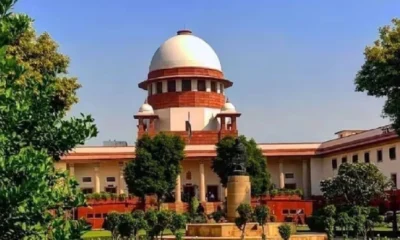
Delhi High Court seeks report from authorities in Asha Kiran shelter deaths, orders water quality test

The matter has been listed for further consideration on August 7.

Published

on

The Delhi High Court on Monday expressed its grave concerns over the recent death of 14 inmates at the Asha Kiran shelter home for the mentally challenged and termed it an “odd coincidence.” The court has asked the secretary of Social Welfare to make an on-the-spot survey of the institution and sought a report regarding the situation.

He then said that almost all the dead were afflicted with tuberculosis. The court ordered the Delhi Jal Board to conduct an inquiry into the water quality at the shelter. It would examine the condition of the water supply and sewage pipelines to check if they are responsible for the health problems in the shelter.

The bench, headed by Justice Tushar Rao Gedela, expressed that there was a dire need for “remedial interventions.” Authorities have been asked to decongest the facility by transferring some of its residents to other institutions, equipped to deal with their problems in case of overcrowding.

As many as 14 people, including a child, had died in the Asha Kiran shelter home in July itself. The court is currently hearing a PIL that has demanded a high-level probe into these deaths. The matter has been listed for further consideration on August 7.

The Asha Kiran center has suffered 25 deaths since February, with 980 “intellectually disabled” inmates, including men, women, and children, according to official records. Many questions have been raised regarding the conditions of the shelter and the sufficiency of the facilities availed to them.

It is now being investigated what the real reasons were for these tragic incidents, and what necessary steps would be taken to avert any further loss of life.

Continue Reading

India News

Harley-Davidson sprint 440 unveiled, developed with Hero MotoCorp

Harley-Davidson has unveiled the Sprint 440, a new entry-level cruiser developed in partnership with Hero MotoCorp. The motorcycle gets a 440cc engine, a 3.5-inch TFT display and a low seat height.

Published

on

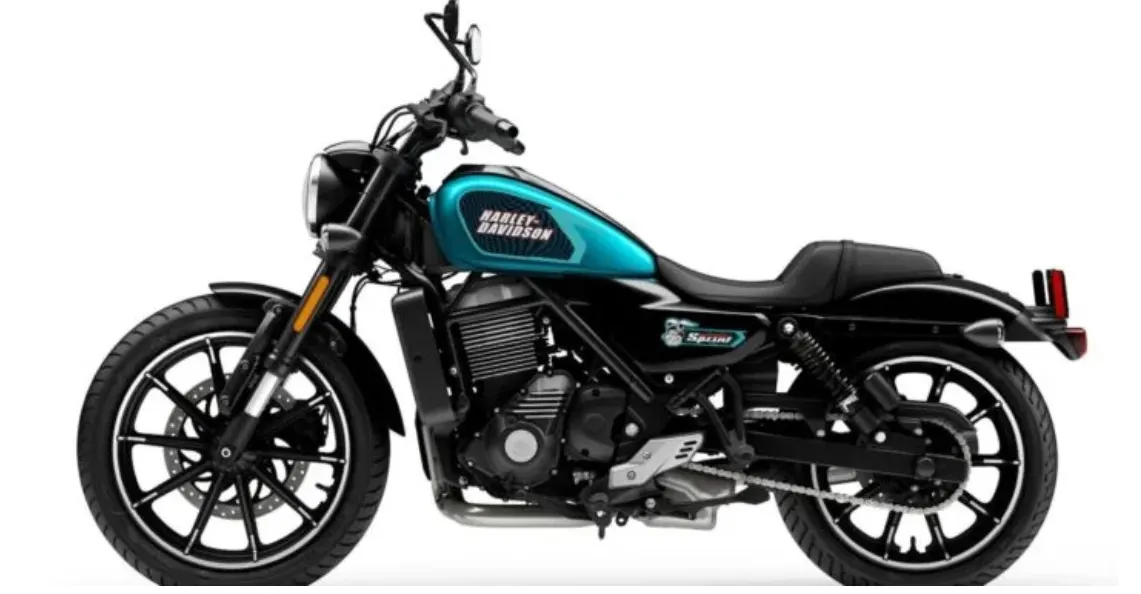
Harley-Davidson has officially unveiled the Sprint 440, a new entry-level cruiser developed in partnership with India’s Hero MotoCorp. The motorcycle brings traditional cruiser styling to the company’s existing 440cc platform, offering a different design approach from the Harley-Davidson X440.

The Sprint 440 will make its public debut at the EICMA 2026 motorcycle show in Milan, Italy. While the motorcycle is being prepared for international markets, deliveries in the United States are scheduled to begin in spring 2027.

Harley-Davidson Sprint 440 design and styling

The Sprint 440 adopts a conventional cruiser appearance, featuring an elongated and low-slung profile. Its design highlights include a teardrop-shaped fuel tank, a scooped rider seat, swept-back handlebars and a shortened rear mudguard.

A stepped pillion section and a low-mounted exhaust further complement its cruiser styling. The motorcycle also features a relatively narrow profile, with its proportions designed to provide a relaxed riding position.

One of its key highlights is the 671mm laden seat height. Harley-Davidson will also offer optional Reach and Tallboy seats to accommodate riders with different seating preferences.

Engine and performance

The new Harley-Davidson Sprint 440 is powered by a 440cc, single-cylinder, air- and oil-cooled engine.

The powertrain produces 26.7 bhp at 6,000 rpm and 38 Nm of peak torque at 4,000 rpm. It is paired with a six-speed gearbox and an assist-and-slipper clutch.

The company claims a combined fuel efficiency of approximately 34 kmpl. The motorcycle also gets a 9-litre fuel tank, which is smaller than the 13.5-litre unit offered on the India-spec Harley-Davidson X440.

Features and equipment

Despite its traditional cruiser styling, the Sprint 440 receives a modern equipment package.

It comes with a circular 3.5-inch colour TFT instrument console, full LED lighting and a USB Type-C charging port positioned above the headlamp.

Harley-Davidson will also offer several optional accessories, including a detachable windscreen, saddlebags, passenger backrest, engine guard and alternative handlebars.

These accessories will allow customers to customise the motorcycle according to their riding and touring requirements.

Harley-Davidson Sprint 440 price and launch timeline

Harley-Davidson has announced a starting price of £4,995 for the Sprint 440 in the UK.

For the US market, deliveries are scheduled to begin in spring 2027. Final assembly for the US-market motorcycle will take place at Harley-Davidson’s facility in York, Pennsylvania.

The motorcycle’s international rollout will follow different schedules depending on the market.

What about the India launch?

The Sprint 440 has a significant connection with India because it has been developed in partnership with Hero MotoCorp, which is also associated with the existing X440 platform.

However, despite its Indian development connection, an India-specific launch date and local pricing have not yet been announced.

The motorcycle brings a more traditional cruiser design to the 440cc platform, distinguishing it from the roadster-oriented X440. More details about its availability in India are awaited.

Continue Reading

India News

Rahul Gandhi accuses Modi of foreign backing, BJP hits back with UK clip

Rahul Gandhi alleged that foreign forces helped Narendra Modi become Prime Minister and continue in power. The Congress leader also challenged Modi to an open debate, while the BJP responded by sharing an old video of his remarks during a UK visit.
Published

on

Rahul Gandhi

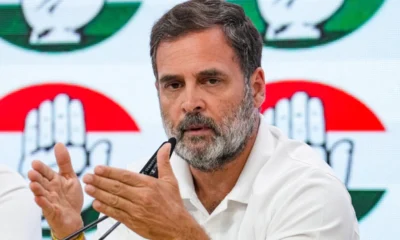
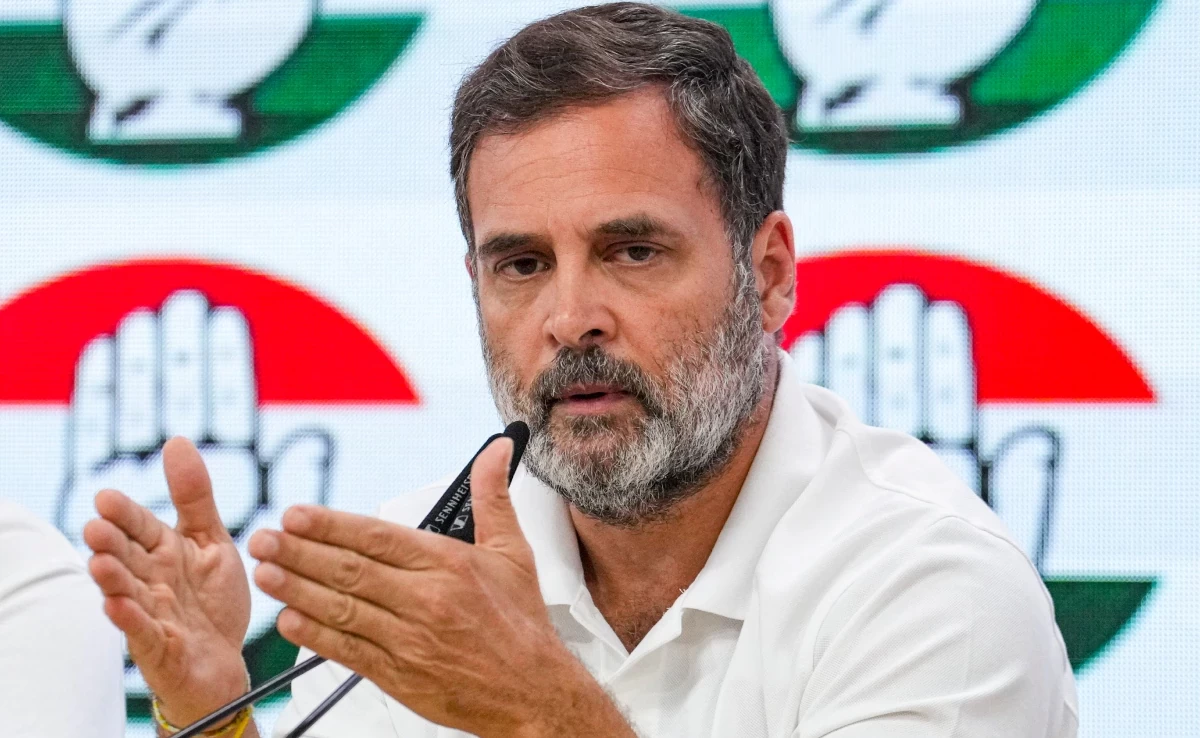
A fresh political confrontation has erupted between the Congress and the Bharatiya Janata Party (BJP) after Leader of Opposition Rahul Gandhi accused Prime Minister Narendra Modi of becoming and remaining in power with foreign assistance.

Gandhi also challenged the Prime Minister to an open debate on the issue, saying he was ready to face him on any platform and at any time.

The BJP responded by bringing up an old video of Gandhi from his visit to the United Kingdom, reviving the controversy surrounding his remarks about India’s democratic institutions and the role of foreign countries.

What Rahul Gandhi said about PM Modi

Gandhi’s remarks came in response to Modi’s recent comments targeting the Opposition during his address at the Rashtriya Ekta Diwas celebrations in Gujarat on October 31.

In a post on X on Monday, Gandhi accused the Prime Minister of relying on foreign support to attain and retain power.

“Mr Modi, stop lying to this nation. You became PM because of foreign help. You remain PM because of foreign help,” Gandhi wrote.

He further alleged that India’s financial system was fully controlled and supported by foreign entities and claimed that foreign social media platforms backed the Prime Minister.

The Congress leader also challenged Modi to discuss the allegations publicly.

“I challenge you to an open debate about this. Any stage, any time. Come if you have the guts,” he said, adding that the Prime Minister would not accept the challenge because of what Gandhi claimed to know about him.

Why PM Modi criticised the Opposition

Gandhi’s response followed Modi’s address at the Rashtriya Ekta Diwas event in Ekta Nagar, Gujarat, marking the 151st birth anniversary of Sardar Vallabhbhai Patel.

During his speech, the Prime Minister accused the Opposition of moving away from its democratic responsibility of questioning the government and instead becoming an obstructionist force.

Modi described the Opposition as an “Avrodh Paksh” rather than a “Virodh Paksh”, alleging that it was creating obstacles to the country’s development.

Without directly naming Gandhi, the Prime Minister also raised questions about the foreign visits of certain political leaders and their alleged connections with forces opposed to India.

“Who is secretly meeting whom abroad? Whom are the anti-India forces supporting? Who is speaking the language of India’s enemies?” Modi asked.

He also expressed concern over the use of social media to spread rumours and attempts to damage India’s image.

BJP brings back Rahul Gandhi’s old UK remarks

The BJP responded to Gandhi’s allegations by sharing an old video from his UK visit, bringing attention back to his earlier comments about India’s democratic institutions and the involvement of foreign countries.

During an interaction at Chatham House in London in March 2023, Gandhi had alleged that several Indian institutions, including the Press, judiciary, Parliament and Election Commission, were under threat.

He had also questioned why Europe and the United States were not doing enough to raise concerns about what he described as threats to democracy in India.

The remarks had triggered a political controversy at the time, with the BJP accusing Gandhi of seeking foreign intervention in India’s internal affairs.

BJP leaders had demanded an apology from the Congress leader over his comments during the UK visit.

The resurfacing of the old video has brought those earlier remarks back into the political debate as the Congress and BJP trade accusations over alleged foreign backing.

Political confrontation intensifies

The latest exchange comes amid an ongoing confrontation between the ruling BJP and the Opposition over several issues, including allegations of electoral irregularities and the role of constitutional institutions.

Gandhi’s challenge to Modi for an open debate has added another dimension to the political dispute, with both parties questioning each other’s alleged connections with foreign forces.

While Gandhi has accused the Prime Minister of benefiting from foreign support, the BJP has repeatedly questioned the Congress leader’s overseas remarks and alleged attempts to involve foreign countries in India’s internal political matters.

Neither side’s allegations about foreign backing should be treated as established facts without supporting evidence.

Continue Reading

India News

Delhi Pollution: GRAP-II curbs imposed across NCR as AQI hits 324

Delhi’s air quality deteriorated to the very poor category on November 2, prompting the CAQM to implement GRAP Stage II across Delhi-NCR. The measures aim to control dust and vehicular pollution.
Published

on

Delhi-Pollution

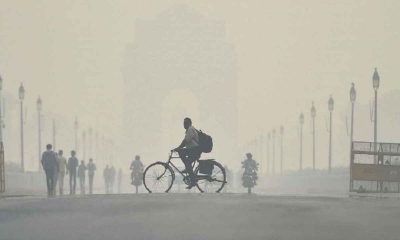
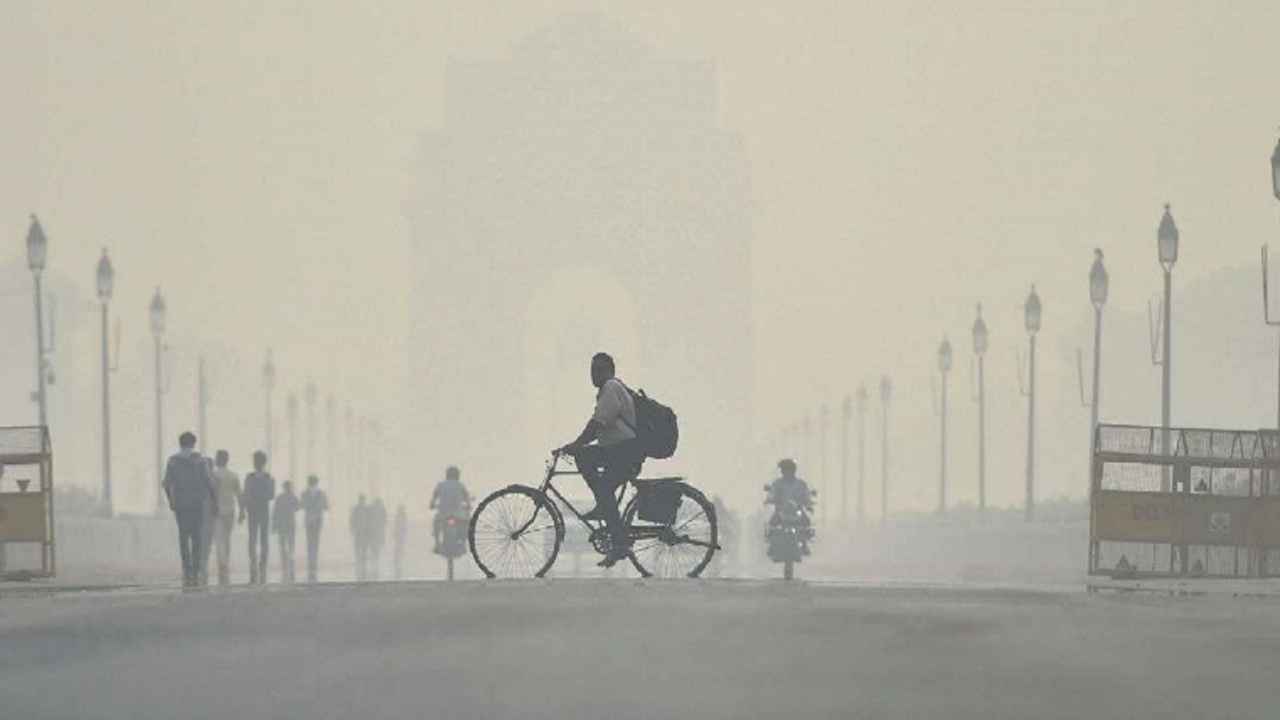
Delhi’s air quality deteriorated to the ‘very poor’ category on Monday, November 2, prompting the Commission for Air Quality Management (CAQM) to invoke Stage II of the Graded Response Action Plan (GRAP) across the National Capital Region (NCR) with immediate effect.

The national capital’s Air Quality Index (AQI) reached 324 at 4 pm, placing it in the very poor category. The deterioration followed a sharp increase in pollution levels over three days, with the AQI rising from 117 on October 31 to 261 on November 1 before crossing the 300 mark on Monday.

The CAQM attributed the worsening air quality to unfavourable meteorological conditions. Forecasts by the India Meteorological Department (IMD) and the Indian Institute of Tropical Meteorology (IITM) also indicated that Delhi’s air quality could remain in the very poor category over the coming days.

What is GRAP Stage II and why has it been imposed?

The Graded Response Action Plan is a set of emergency measures designed to tackle worsening air pollution in Delhi-NCR. It has different stages based on the severity of air quality.

Under the AQI classification, readings between 301 and 400 fall in the very poor category. GRAP Stage II is applicable when air quality reaches this range.

With Delhi’s AQI climbing to 324, the CAQM directed authorities to implement Stage II measures across the NCR. The directions also require agencies to continue implementing measures under the earlier stages of GRAP.

What restrictions come under GRAP Stage II?

The second stage of GRAP focuses on strengthening pollution-control measures, particularly those related to road dust, vehicular emissions and other sources of pollution.

Some of the important measures include:

  • Road cleaning: Authorities are required to intensify mechanical sweeping of roads and water sprinkling to control dust.
  • Traffic management: Traffic police are directed to manage congestion at busy roads and intersections.
  • Vehicle checks: Enforcement teams are required to intensify checks for valid Pollution Under Control (PUC) certificates and take action against visibly polluting vehicles.
  • Parking charges: Higher parking fees are among the measures intended to discourage the use of private vehicles.
  • Diesel generators: The use of diesel generator sets is subject to stricter regulation.
  • Public transport: Authorities are required to encourage the use of public transport to reduce vehicular emissions.

These measures are intended to reduce pollution levels across Delhi-NCR.

Delhi’s AQI worsens over three days

Delhi witnessed a significant deterioration in air quality over a short period.

The AQI stood at 117 on October 31, placing it in the moderate category. It subsequently increased to 261 on November 1, entering the poor category.

On November 2, the reading climbed further to 324 by 4 pm, pushing the national capital into the very poor category.

The situation was also reflected in readings from individual monitoring stations. Several locations recorded AQI levels above 300.

Among the areas reporting high pollution levels were RK Puram, ITO, Akshardham, India Gate, Alipur, Dwarka Sector 8 and Delhi University’s North Campus.

With pollution levels worsening and unfavourable weather conditions expected to persist, authorities have been directed to strengthen enforcement of the prescribed pollution-control measures across the region.

Continue Reading

Trending

© Copyright 2022 APNLIVE.com