
India News
Delhi LG Vinai Kumar Saxena distributes appointment letters to 398 new government servants
The event was held at Delhi’s Vigyan Bhawan which organised by the Services Department,

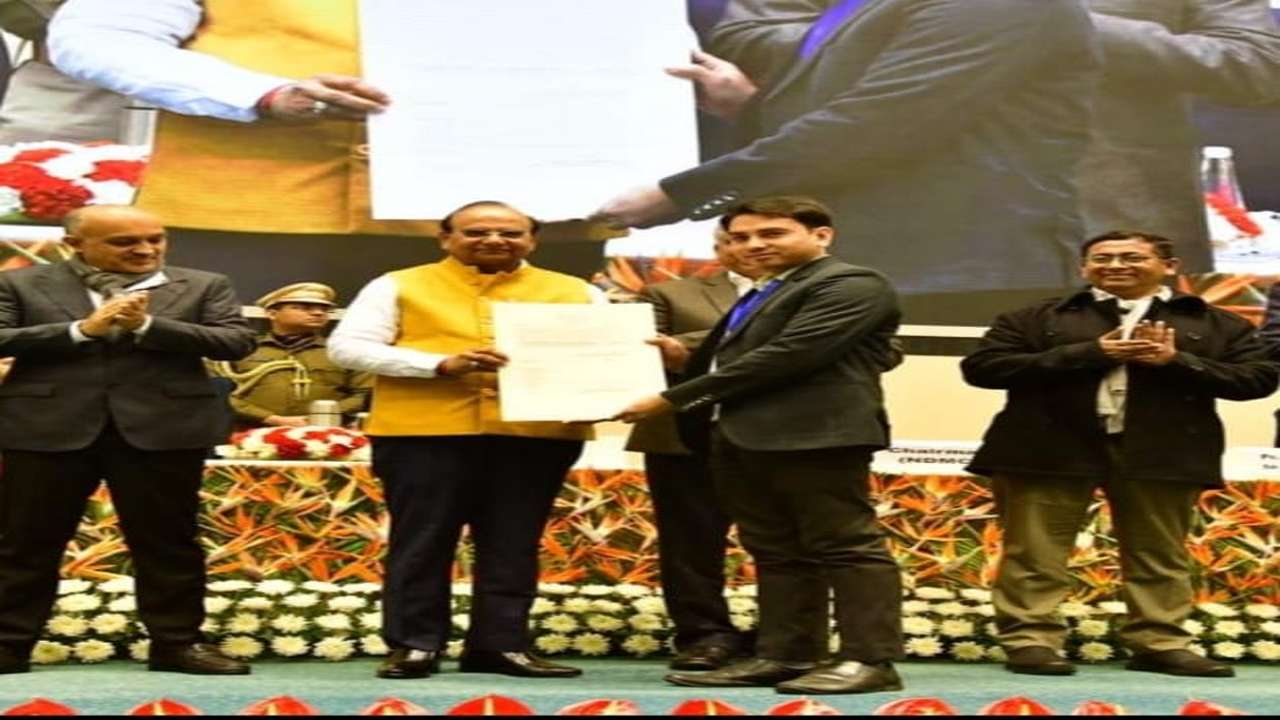
Delhi Lieutenant Governor VK Saxena on Tuesday distributed appointment letters to 398 newly recruited government officials of the Government of the National Capital Territory of Delhi (GNCTD).
With this, the total permanent government recruitments in Delhi government departments and civic agencies has reached 22,000 over the last one-and-a-half years.
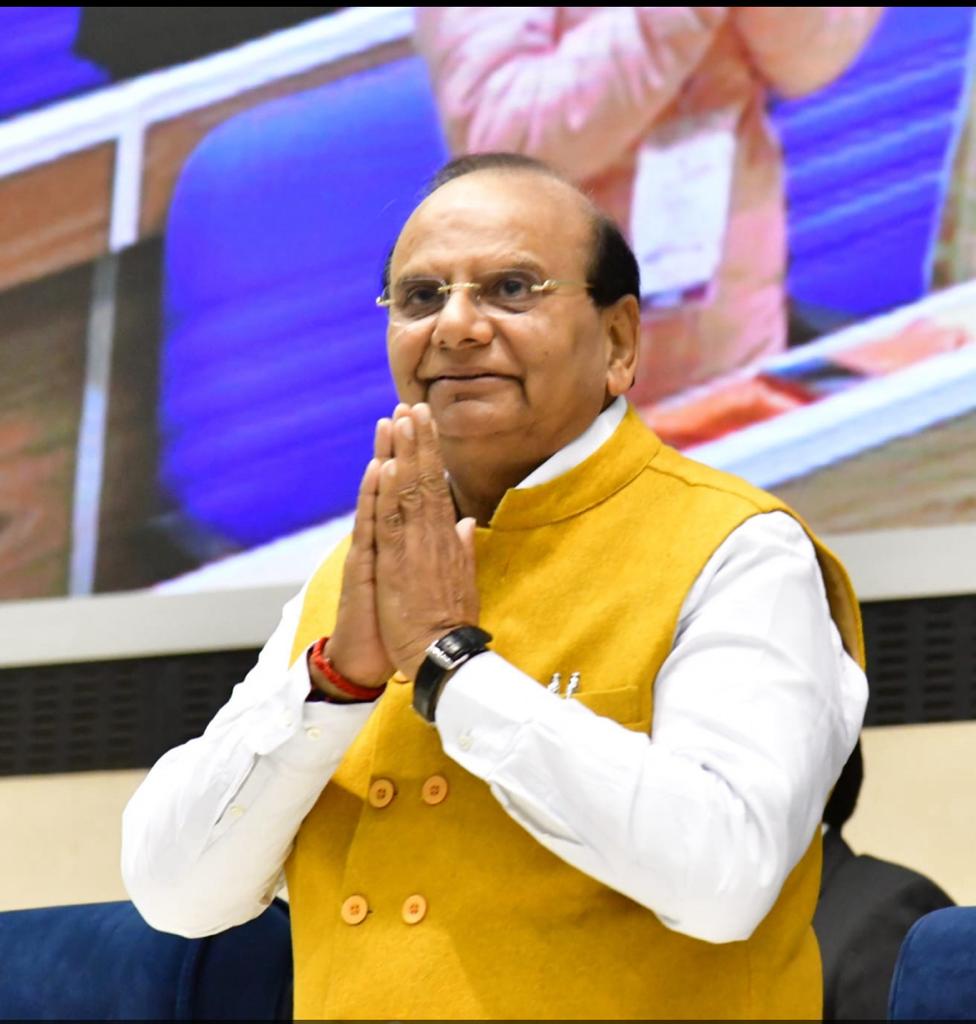
At a function held in Vigyan Bhawan, organised by the Services Department, LG Saxena also gave away the appointment letters to 149 dependent beneficiaries of deceased government servants who were recruited on compassionate grounds and in a transparent, hassle-free manner, said a GNCTD press release.
LG Saxena said 22,000 more vacancies in various departments of the GNCTD will be filled in the one-and-a-half years.
The 398 newly recruited government servants who got their appointment letters today will be appointed in various departments / local bodies / autonomous bodies like Directorate of Education, Department of Information & Technology, Delhi Transport Corporation, Municipal Corporation of Delhi, New Delhi Municipal Council, Labour Department, Delhi Agricultural Marketing Board, and Delhi Jal Board etc.

Of the appointments made on compassionate grounds by Services Department and New Delhi Municipal Corporation, the aspirants comprise women, divyangs and other reserved categories.
Today’s event marked the fourth function of its kind, following the previous ones held on February 24, April 19, and June 30, 2023. During these occasions, the Lt Governor distributed approximately 3,400 appointment letters. The Chief Secretary, Delhi accompanied by the heads of different departments, local bodies and autonomous bodies of the Government of NCT of Delhi, as well as other esteemed guests, graced this event with their presence.
AK Singh, IAS, Principal Secretary (Services), delivered the welcome address and congratulated the new appointees. He informed the audience that it has been possible for Services Department to organize these functions in quick succession due to concerted efforts of all departments concerned.
He said a modified Scheme for Compassionate Appointment in GNCTD has been formulated under the guidance and direction of the Lt Governor, which is not only fair and transparent, but also facilitates a balanced and objective assessment of the financial condition of deceased government servant. He further informed the audience that apart from the recruitment process, Services Department has taken pro-active measures for reframing / amending Recruitment Rules and the rules governing other service related issues as per the visions and priorities set by Lt. Governor, Delhi.
The Chairperson, Delhi Subordinate Services Selection Board (DSSSB), in his report presented today highlighted the achievements of DSSSB in recent times under the supervision and monitoring of the Lt Governor, Delhi.
There has been significant improvement in the efficiency of the Board in the last one and a half years and it has been able put in place an efficient and transparent mechanism for conduct of competitive examinations, which is paperless, contactless, and online with biometric checking at exam centres.
With various steps taken for streamlining the process, the time being taken for declaration of results have been significantly reduced to 6-8 months as compared to 12 months being taken earlier. 10,000 selection have already been made. Selection against 9000 vacancies are at different stages of recruitment and 13000 vacancies are under scrutiny. Around 22,000 more vacancies are going to be filled up within a period of next one and a half year.
Newly appointed government servants also spoke on the occasion and expressed their gratitude and vowed to work with great dedication, honesty and transparency.
The Chief Secretary also addressed the audience. He congratulated the newly recruited government servants on their entry into government service of GNCTD and urged them that they should start working with full passion and enthusiasm from day one. He also urged them to continue their learning process. The Chief Secretary also lauded the efforts of the different departments due to which it has been possible to make new recruitments faster than ever before. He further informed the audience that there has been quantum jump in fresh recruitments during the last one-and-a-half years. All these appointments have been made on permanent basis through an open, fair and transparent recruitment system and the process of contractual and ad-hoc appointments has been put to an end.
Lt Governor Saxena congratulated the new appointees on behalf of the people of Delhi and informed the audience that ever since taking charge, he has been stressing upon permanent appointments against government vacancies instead of ad hoc and contractual recruitment, underlining that such practices lead to favouritism, corruption and exploitation of citizens who rightfully deserve a job. He had headed several meetings to streamline the process of appointments, which led to the recruitment processes by DSSSB, gaining unprecedented momentum.
The Lt Governor especially congratulated the Chief Secretary, under whose supervision permanent job creation in Delhi and recruitment against them had got institutionalized.
He further informed that among the 149 appointment letters given on compassionate grounds, 103 dependents have been appointed by the Services Department and 46 dependents have been appointed by NDMC. Further, during the period between May 2022 and May 2023 only, 15,367 posts were filled through DSSSB mainly in Education Department, NDMC recruited about 4,500 individuals with the help of Central Government, 376 posts were filled through UPSC of which 324 posts were of Principals / Vice-Principals lying vacant in Delhi, apart from positions in FSL Delhi. Another 500 posts in Delhi Fire Service were filled through DSSSB along with positions in DTC and Labour Department.
The Lt Governor appreciated the efforts of Services Department for formulating a fair and transparent scheme of compassionate appointment in GNCTD which make it possible for realistic and objective assessment of the degree of indigence among the applicants for compassionate appointments. The Lt Governor further informed the audience that in a first, the letters of appointment issued to dependents on compassionate grounds, went through an entirely transparent process wherein, the selections once made were put out in public domain, for all to see and raise any genuine objection or grievance. This process apart from helping the hapless dependents secure a job, also ensured that they were not harassed and favouritism or corruption did not come into play.
The Lt Governor added that no job is small or big, it is the responsibility towards the job which matters and one has to show their commitment, dedication and sincerity towards whatever job they are assigned to, with conviction. The Lt Governor further emphasized that a government job is not just a means of livelihood, but an opportunity to serve the country and make an important contribution to the progress of our country.
The function ended with a vote of thanks by the District Magistrate (New Delhi).




India News
Supreme Court questions EC over missing records in Sringeri election dispute
The Supreme Court questioned the Election Commission over missing video footage of the 2023 counting in Karnataka’s Sringeri constituency. The case involves a revised result following a recount of postal ballots.

India News
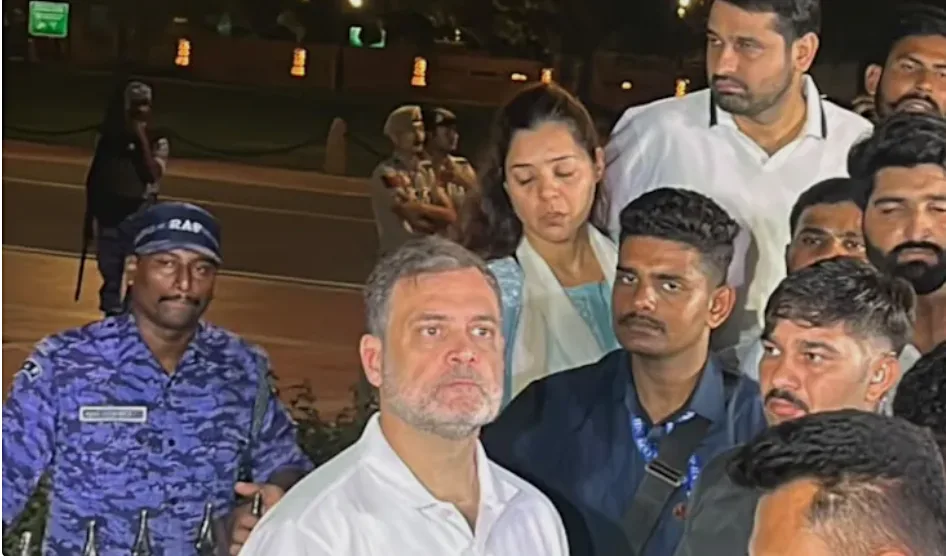
Rahul Gandhi joins India Gate protest by Ankita Bhandari’s parents
Rahul Gandhi joined the protest by Ankita Bhandari’s parents at India Gate in New Delhi on October 14. The demonstration has brought renewed attention to the 2022 murder case and the family’s concerns following Dushyant Gautam’s appointment as Sikkim Governor.
India News
Meerut murder: Muskaan Rastogi and Sahil Shukla get death sentence
A Meerut court has sentenced Muskaan Rastogi and Sahil Shukla to death in the blue drum murder case involving the killing of merchant navy officer Saurabh Rajput in March 2025.

CJP leaders Saurav Das, Ashutosh Ranka, Ajinkya Shinde sent to 5-day judicial custody

PM Modi speaks to Mark Carney as India and Canada push to strengthen ties

S Jaishankar says India is a natural option for Russia amid Europe tensions

Meerut murder: Muskaan Rastogi and Sahil Shukla get death sentence

Rahul Gandhi joins India Gate protest by Ankita Bhandari’s parents

Supreme Court questions EC over missing records in Sringeri election dispute
Rahul Gandhi joins India Gate protest by Ankita Bhandari’s parents
Meerut murder: Muskaan Rastogi and Sahil Shukla get death sentence
PM Modi speaks to Mark Carney as India and Canada push to strengthen ties
S Jaishankar says India is a natural option for Russia amid Europe tensions

Afghan Men Try To Hang With The Jet Engine Of The Aircraft in Kabul- Afghanistan News – Kabul News
Trending Top 10 News: 10000 Crore Fine on Flipkart, Apple to Launch Unique Feature, Hdfc Bank Job Ad

Trending Top 10 News: Nokia 6310, Apple sales, Bachpan ka Pyar Video Kid, Dainik Bhaskar IT Raid

Trending Top 10 News: Canada bans Indian flights, Rain in Delhi NCR, AIMIM Twitter hacked, Raj Kundra case

Trending Top 10 News: Shein India, Apple New Service, Pocket Oxygen, Oppo Launched New Phone
-
 India News22 hours ago
CJP leaders Saurav Das, Ashutosh Ranka, Ajinkya Shinde sent to 5-day judicial custody
-
 India News22 hours ago
PM Modi speaks to Mark Carney as India and Canada push to strengthen ties
-
 Latest world news22 hours ago
S Jaishankar says India is a natural option for Russia amid Europe tensions
-
 India News11 hours ago
Meerut murder: Muskaan Rastogi and Sahil Shukla get death sentence
-
 India News10 hours ago
Rahul Gandhi joins India Gate protest by Ankita Bhandari’s parents
-
 India News10 hours ago
Supreme Court questions EC over missing records in Sringeri election dispute
