
India News
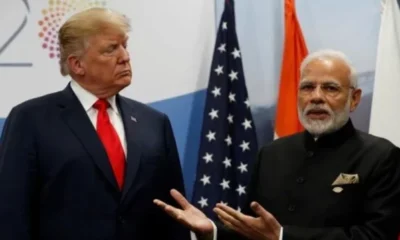
Donald Trump Turns down India’s Republic Day Invitation


[vc_row][vc_column][vc_column_text]Million Dollar Question- Who Will Accept Invitation as Second Choice?
Amidst growing tension on India’s purchase of Russian S-400 air defence missile system and unhindered oil import from Iran despite Washington’s sanction threats, US President Donald Trump has declined the invitation to be the chief guest at the Republic Day, 26 January 2019, celebrations,
According to reports, this was conveyed in t a letter from US authorities to National Security Advisor (NSA) Ajit Doval. The report, initially carried out by Times of India, was later removed from their website, saying “This story has been removed due to inadequate information.”
This leaves Prime Minister Modi in a tough position, as he has to find a replacement, one who might be willing to risk public perception as the ‘second choice’ candidate. This would a test for Indian diplomacy as to which wodld leader could be roped in to grace the occasion.

PM Narendra Modi had invited President Trump for a bilateral visit while he visited Washington in June last year. A joint statement at that time said, “President Trump gladly accepted Prime Minister Modi’s invitation to visit India.” A fresh invitation was sent to President Trump to be the chief guest at the Republic Day celebrations.
Read More: India displays its might and culture on 69th Republic Day, with ASEAN leaders as chief guests
It is believed that if Trump accepted the invitation it could serve a major boost to ties between the two strategic partners in key areas of defence, security and trade.
The refusal from Washington came at a time when the ties between India and US are witnessing some strain. India had pressed Washington for a waiver from US sanctions on military procurement from Russia. The US had earlier announced sanctions against Russia for its alleged meddling in the presidential election in 2016.
After withdrawing from multilateral Iran nuclear deal, also known as JCPOA, President Trump has threatened countries importing oil from Iran to bring it down to zero by November 4.[/vc_column_text][vc_column_text]India, being the second largest oil buyer from Iran, had also sought a waiver from US sanctions. The US has been pushing for deeper strategic cooperation with India, especially in the Indo-Pacific region where China was expanding its influence.

Every year, India invites world leaders to attend its Republic Day celebrations. Japanese PM Shinzo Abe was Chief Guest in 2014, Barack Obama, the then US President in 2015, French President Francios Hollande in 2016, Abu Dhabi’s Crown Prince Mohammed bin Zayed Al-Nahyan in 2017 while in 2018- leaders from ten ASEAN countries attended the Republic Day celebrations.
The heads of state and government who have attended India’s Republic Day celebrations also include Nicolas Sarkozy, Vladimir Putin, Nelson Mandela, John Major, Mohammed Khatami and Jacques Chirac.[/vc_column_text][/vc_column][/vc_row]










India News
Delhi Police offers 11-person limit for CJP’s Connaught Place protest
Delhi Police has offered to facilitate a group of 11 people at Central Park in Connaught Place for the Cockroach Janata Party’s October 16 protest, while warning that violations of prohibitory orders could invite legal action.


India News
Actor Imran Khan asked to leave India after CJP protest
Actor Imran Khan has been asked to leave India by October 28, days after participating in a protest called by the Cockroach Janta Party (CJP) in Mumbai.

India News
Election Commission orders voter roll revision in 17 states, UTs
The Election Commission has ordered a Special Summary Revision of electoral rolls in 17 states and Union Territories. Draft rolls are scheduled for November 12, with final rolls due on January 4, 2027.


Dhruv Rathee gets fresh summons in 2018 BJP IT cell video case

Nobody can browbeat judiciary, Chief Justice warns over Rahul Gandhi’s march

India-US trade deal first phase finalised, drafting underway

Election Commission orders voter roll revision in 17 states, UTs

Actor Imran Khan asked to leave India after CJP protest

Delhi Police offers 11-person limit for CJP’s Connaught Place protest
Actor Imran Khan asked to leave India after CJP protest
Election Commission orders voter roll revision in 17 states, UTs
India-US trade deal first phase finalised, drafting underway
Nobody can browbeat judiciary, Chief Justice warns over Rahul Gandhi’s march

Afghan Men Try To Hang With The Jet Engine Of The Aircraft in Kabul- Afghanistan News – Kabul News
Trending Top 10 News: 10000 Crore Fine on Flipkart, Apple to Launch Unique Feature, Hdfc Bank Job Ad

Trending Top 10 News: Nokia 6310, Apple sales, Bachpan ka Pyar Video Kid, Dainik Bhaskar IT Raid

Trending Top 10 News: Canada bans Indian flights, Rain in Delhi NCR, AIMIM Twitter hacked, Raj Kundra case

Trending Top 10 News: Shein India, Apple New Service, Pocket Oxygen, Oppo Launched New Phone
-
 India News13 hours ago
Dhruv Rathee gets fresh summons in 2018 BJP IT cell video case
-
 India News9 hours ago
Nobody can browbeat judiciary, Chief Justice warns over Rahul Gandhi’s march
-
 India News5 hours ago
India-US trade deal first phase finalised, drafting underway
-
 India News3 hours ago
Election Commission orders voter roll revision in 17 states, UTs
-
 India News2 hours ago
Actor Imran Khan asked to leave India after CJP protest
-
 India News1 hour ago
Delhi Police offers 11-person limit for CJP’s Connaught Place protest
