G20 Summit: 7 Delhi Metro stations to remain closed from September 8-10
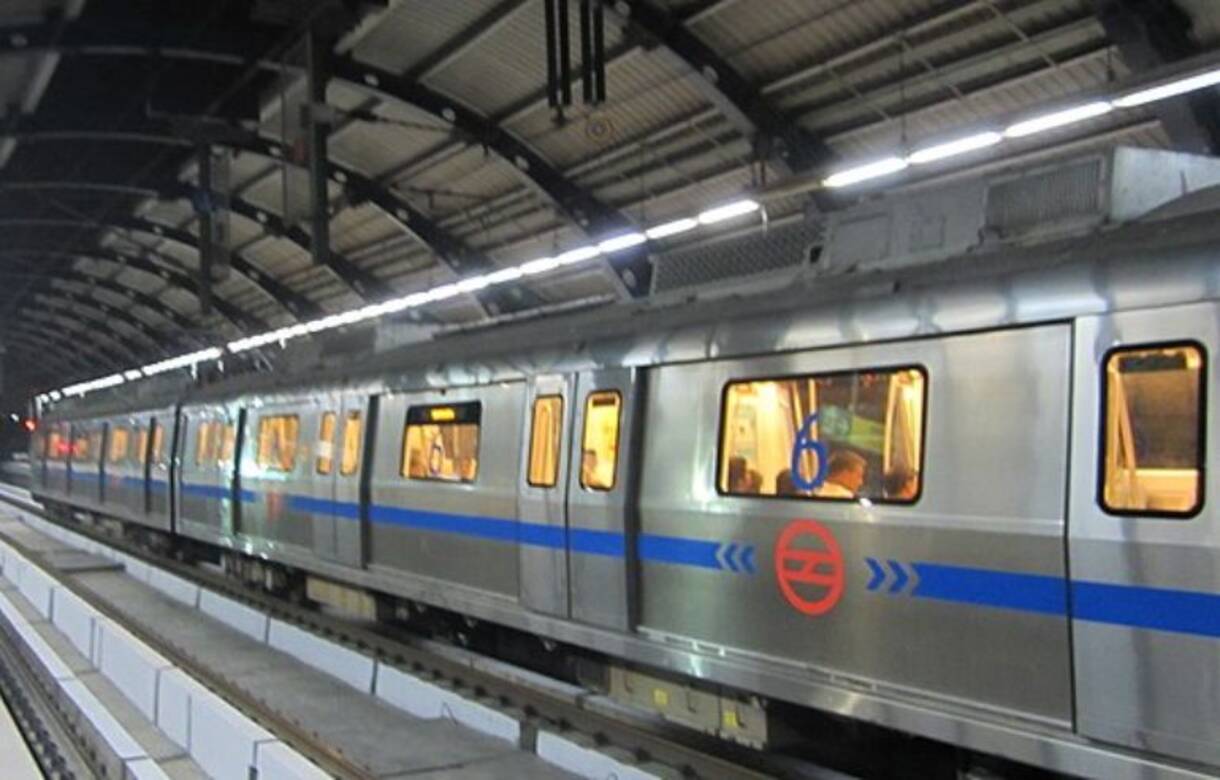
As per the order issued by the Delhi Metro Police, traffic will be completely closed at Moti Bagh, Bhikaji Cama Place, Munirka, RK Puram, IIT and Sadar Bazar Cantonment Metro stations.
At the end of this week, India which holds the G20 presidency will conduct the high level G20 Summit 2023 on September 9-10 at Bharat Mandapam at Pragati Maidan in New Delhi. In order to ensure safe and secure meet, the concerned authorities have taken multiple steps including public holiday, travel restrictions etc.
Owing to the same, the Delhi metro has issued a new advisory for the commuters. It has noted in its advisory that the entry and exit gates of some sensitive stations will remain closed from September 8 to September 10. However, the commuters can continue to use one or two gates at some stations. Meanwhile, the other routes will continue to operate normally.
The advisor stated that in order to maintain foolproof security arrangements during the G20 Summit, scheduled to be held in Delhi from September 9 to 10, the Delhi Police metro unit asked the Chief Security Commissioner to close some metro station gates that open towards the VVIPS Routes or venue of Summit from September 8 to 10.
As per the order issued by the Delhi Metro Police, traffic will be completely closed at Moti Bagh, Bhikaji Cama Place, Munirka, RK Puram, IIT and Sadar Bazar Cantonment Metro stations. The Supreme Court Metro Station, the nearest metro station to the venue will also remain completely closed.
Furthermore, the Delhi Police in its order have kept Dhula Kuan, Khan Market, Janpath, Supreme Court and Bhikaji Cama Place metro stations on the lists of sensitive places. People who are travelling to Delhi’s Indira Gandhi International Airport (IGIA) from September 7 to September 11, have been advised to use the Metro.
Notably, the Delhi Traffic Police has also released a detailed advisory on the traffic movement during the G20 Summit. In addition, traffic restrictions will also come into effect from the night of September 7 and will remain in place till September 11.
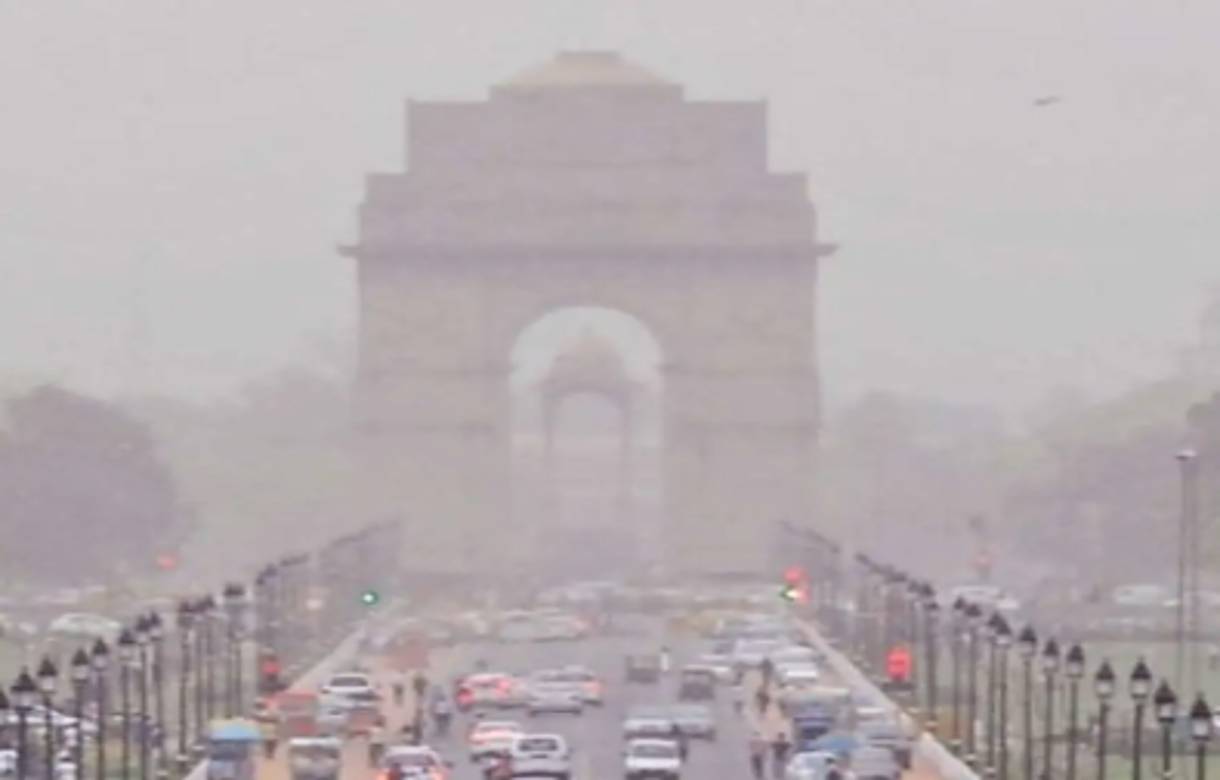
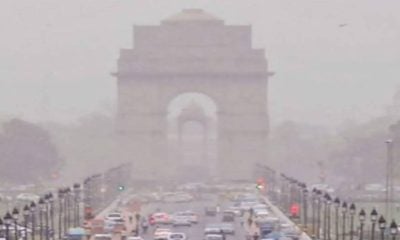
Delhi’s winter pollution persists despite emergency curbs under GRAP
Delhi has brought back pollution curbs under the Graded Response Action Plan (GRAP), but an analysis of past winters highlights the limits of relying on emergency restrictions without sustained action against pollution sources.
As Delhi’s air pollution worsens during the winter season, emergency restrictions under the Graded Response Action Plan (GRAP) have returned to focus. However, questions remain over whether temporary curbs can deliver lasting improvements without sustained action against pollution sources throughout the year.
However, questions remain over whether temporary curbs under the Graded Response Action Plan (GRAP) can deliver lasting improvements in air quality without stronger action against pollution sources throughout the year.
An analysis by the Centre for Research on Energy and Clean Air (CREA) indicates that Delhi’s winter air quality has not shown consistent improvement over the past four years. The findings also highlight how pollution levels often remain elevated even after stricter GRAP measures are introduced.
What the data says about GRAP’s effectiveness
CREA examined 12 episodes across four winters in which Delhi’s air quality deteriorated from lower GRAP stages to Stage III or Stage IV. In 10 of those episodes, the average Air Quality Index (AQI) during the following week was higher than in the preceding week. The remaining two episodes recorded a decline.
The findings raise questions about the effectiveness of relying on emergency restrictions as the primary response to deteriorating air quality. However, the comparison does not establish that GRAP caused pollution to rise, nor does it show what pollution levels would have been without the restrictions.
The analysis also found no consistent improvement in Delhi’s average winter AQI across the four seasons examined.
Winter season
Average AQI
2022–23
280
2023–24
304
2024–25
285
2025–26
295
The figures show fluctuations rather than a sustained downward trend, reinforcing concerns about the limitations of temporary pollution-control measures.
What is GRAP and when does it apply?
The Graded Response Action Plan is a set of progressively stricter measures designed to address deteriorating air quality across Delhi-NCR. The Commission for Air Quality Management (CAQM) oversees its implementation.
The framework has four stages, with restrictions becoming more stringent as air quality worsens. Measures can include dust-control requirements, restrictions on construction activities, checks on polluting vehicles and curbs on certain industrial activities.
GRAP Stage I was imposed across Delhi-NCR in October 2026 after Delhi’s AQI rose from 179 on October 20 to 244 at 2 pm on October 21, placing it in the ‘Poor’ category.
While these measures are intended to limit further deterioration, the recurring need for stricter restrictions highlights the challenge of preventing pollution before it reaches dangerous levels.
Why emergency restrictions may not be enough
Pollution levels are influenced by multiple factors, including emissions, weather conditions and how effectively restrictions are enforced.
The CREA analysis highlights the limitations of relying primarily on emergency restrictions after air quality deteriorates. Reducing emissions at their source through sustained pollution-control measures is important for addressing Delhi’s recurring air quality problem.
During winter, slower winds and atmospheric conditions can prevent pollutants from dispersing effectively. As a result, pollution from vehicles, industries and other activities can remain concentrated close to the ground.
This means that restrictions introduced after air quality deteriorates may not deliver an immediate improvement, particularly when emissions continue and weather conditions remain unfavourable.
Pollution control needs stronger enforcement
Environmental concerns also extend beyond the announcement of restrictions to whether authorities can enforce them consistently.
The effectiveness of pollution-control measures also depends on how consistently they are implemented. Monitoring compliance with restrictions and enforcing applicable rules are important to ensure that the measures achieve their intended impact.
Vehicle emissions are also only one part of the problem. Road dust, construction activity, waste burning, inadequate waste management and industrial emissions contribute to the city’s pollution burden.
Focusing exclusively on vehicles risks overlooking these other sources. Authorities therefore need to ensure that pollution-control measures cover different sources of emissions and are implemented consistently.
Delhi needs a year-round pollution-control strategy
The recurring winter pollution crisis highlights the need to move beyond a response centred on seasonal restrictions. Emergency measures can help address deteriorating air quality, but they cannot replace sustained efforts to reduce emissions.
Long-term action requires better control of pollution from transport, construction, road dust, waste burning and industrial activities, alongside effective monitoring and enforcement.
The central challenge is to reduce pollution before it reaches severe levels rather than relying mainly on restrictions introduced during an air-quality emergency. Without consistent action throughout the year, Delhi risks continuing to face the same cycle of worsening winter air quality and increasingly stringent curbs.
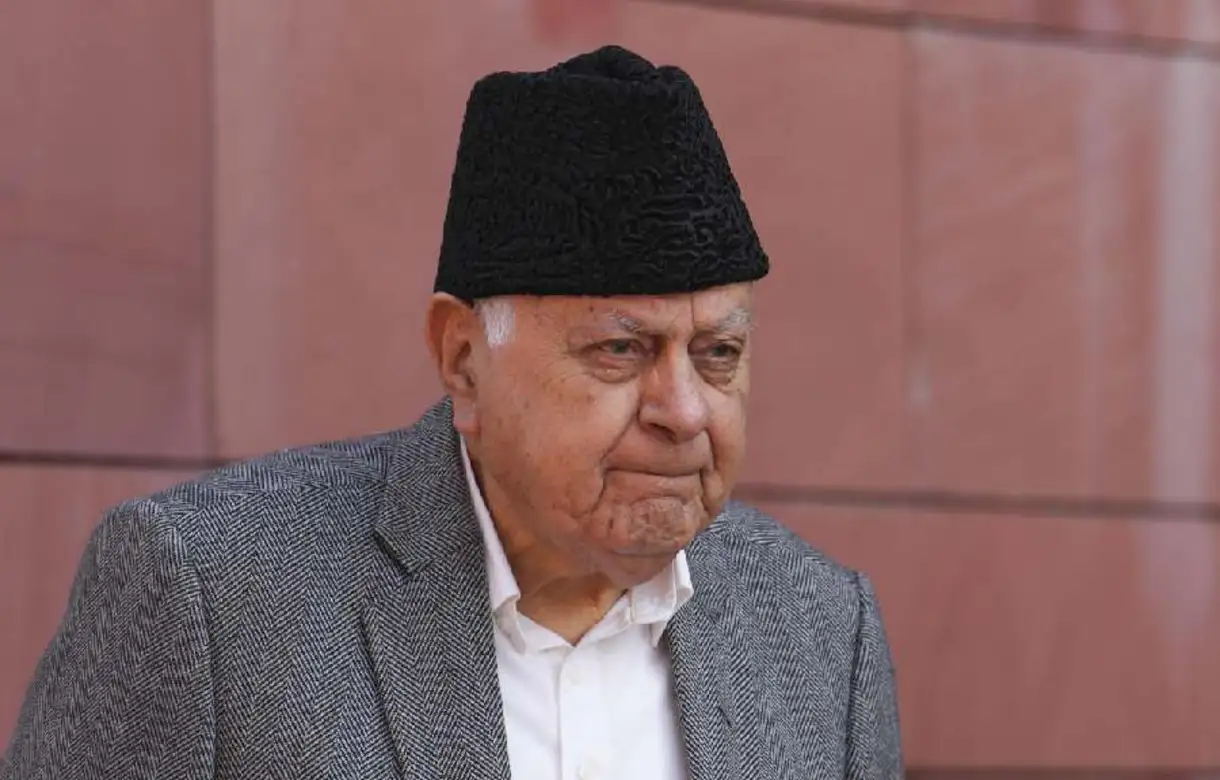
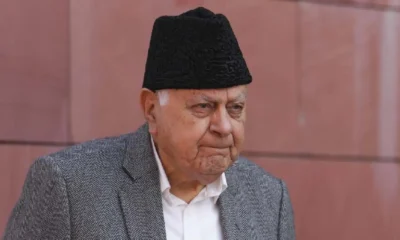
Farooq Abdullah’s remarks about Pakistan’s role in raising the Kashmir issue internationally triggered a political controversy, with BJP leaders accusing him of echoing Pakistan’s narrative and demanding action.
National Conference president Farooq Abdullah has triggered a political controversy with his remarks about Pakistan’s role in raising the Kashmir issue internationally. The BJP criticised the veteran Jammu and Kashmir politician, with some party leaders describing his comments as seditious and demanding action against him.
Abdullah, who is also a former chief minister of Jammu and Kashmir, made the remarks while addressing a party workers’ convention in Baramulla on Saturday. He questioned the Indian government’s intentions towards the people of Jammu and Kashmir and credited Pakistan’s diplomatic efforts with helping bring their concerns to international attention.
What Farooq Abdullah said about Pakistan
During his address, Abdullah said Pakistan continued to raise the Kashmir issue at international forums and suggested that pressure from the international community had influenced the Indian government’s response.
He said the neighbouring country was speaking about the unresolved Kashmir issue at different forums and claimed that this was helping protect the people of Jammu and Kashmir.
Abdullah also questioned whether people in the region could expect justice from the government in New Delhi. He urged them to stand up for their rights and warned that failing to do so could threaten their identity.
BJP accuses Abdullah of echoing Pakistan’s narrative
The BJP responded sharply to Abdullah’s comments, with party leaders accusing him of making statements favourable to Pakistan.
BJP national spokesperson RP Singh asked Abdullah to look across the border and consider the condition of Kashmiris on the other side. Singh attributed Jammu and Kashmir’s economic progress and integration with India to the abrogation of Article 370. He also cited tourist arrivals as an indicator of the region’s development.
BJP national council member Yamini Sharma also criticised the National Conference chief. She alleged that his remarks insulted the Indian Constitution and the people of Jammu and Kashmir, and accused his party of echoing Pakistan’s position.
BJP MLA Yudhvir Sethi went further, describing Abdullah’s comments as seditious. He demanded that the former chief minister apologise and called for a sedition case against those making statements he considered anti-national.
The demand for legal action was made by BJP leaders in response to Abdullah’s remarks. The report does not establish that a case had been registered against him.
Kashmir issue remains at the centre of political differences
The controversy reflects continuing political disagreements over Jammu and Kashmir’s relationship with the Union government, the region’s political identity and Pakistan’s efforts to raise the Kashmir issue internationally.
Article 370, which had granted special status to the erstwhile state of Jammu and Kashmir, was abrogated by the Centre in August 2019. The former state was subsequently reorganised into the Union Territories of Jammu and Kashmir and Ladakh. The BJP has defended the decision as a step towards Jammu and Kashmir’s fuller integration with India.
Abdullah’s remarks have drawn criticism from BJP leaders, who have accused him of supporting Pakistan’s narrative. The dispute has once again brought competing political positions on Kashmir into focus.
Jamia Millia Islamia shifts classes online after student-guard clash
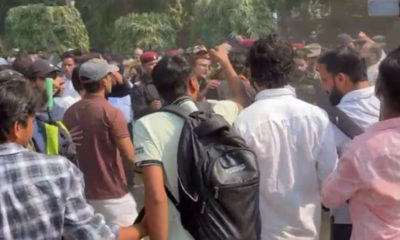
Jamia Millia Islamia shifted classes online after protesting students clashed with security guards on October 24. The students have been demanding the restoration of the university’s students’ union, which was disbanded in 2006.
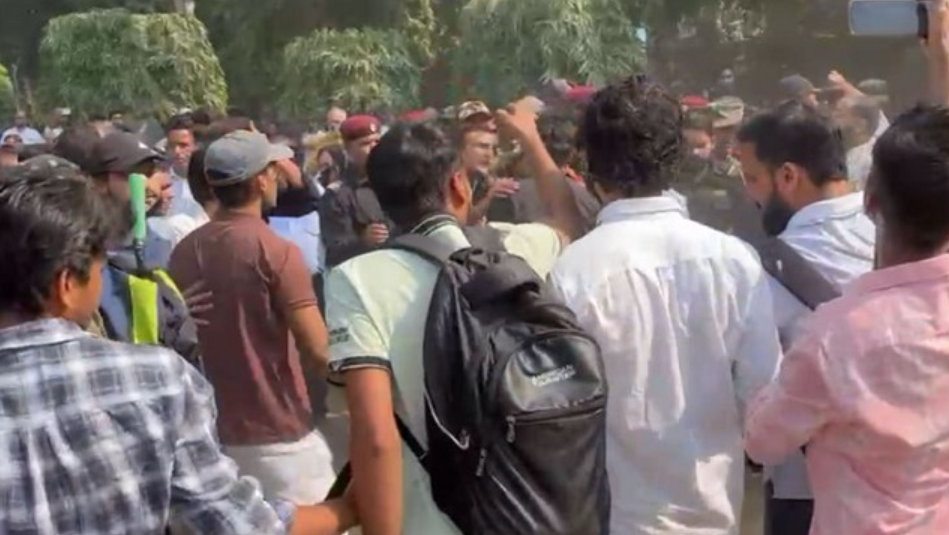
Jamia Millia Islamia in Delhi shifted classes to online mode on October 24 after students protesting for the restoration of student union elections clashed with campus security guards. The confrontation came amid an ongoing agitation over the university’s students’ union, which has been disbanded since 2006.
The protest has continued since October 12, with students seeking the reinstatement of the Jamia Millia Islamia Students’ Union (JMISU). The university had discontinued the union following campus violence that resulted in disruptions to academic activities, according to the report.
Why Jamia students are protesting
The students are demanding the restoration of their union and the resumption of student union elections. Their agitation has included a hunger strike, while the university administration has sought to address the matter through a committee tasked with working on the union’s constitution.
The situation escalated on Saturday when students and security guards clashed on campus. The developments prompted the university to shift classes online as tensions continued around the protest.
The All India Students’ Association (AISA), a student organisation, alleged that the administration acted against students who were on hunger strike without provocation. The university administration rejected the allegation, according to the report.
Jamia registrar makes allegations against Congress MPs
Jamia Registrar Mahtab Alam Rizvi alleged that Congress MPs Imran Pratapgarhi and Imran Masood had visited the campus on October 23 and disturbed the university environment, contributing to the situation surrounding the protest.
Rizvi also alleged that the two leaders entered the campus by jumping over a wall. He said a complaint had been filed with the Delhi Police. These are allegations attributed to the registrar and should not be presented as independently established facts.
The university’s decision to move classes online comes as the dispute over the restoration of the students’ union continues.
APN News is today the most watched and the most credible and respected news channel in India. APN has been at the forefront of every single news revolution. The channel is being recognized for its in-depth, analytical reportage and hard hitting discussions on burning issues; without any bias or vested interests.